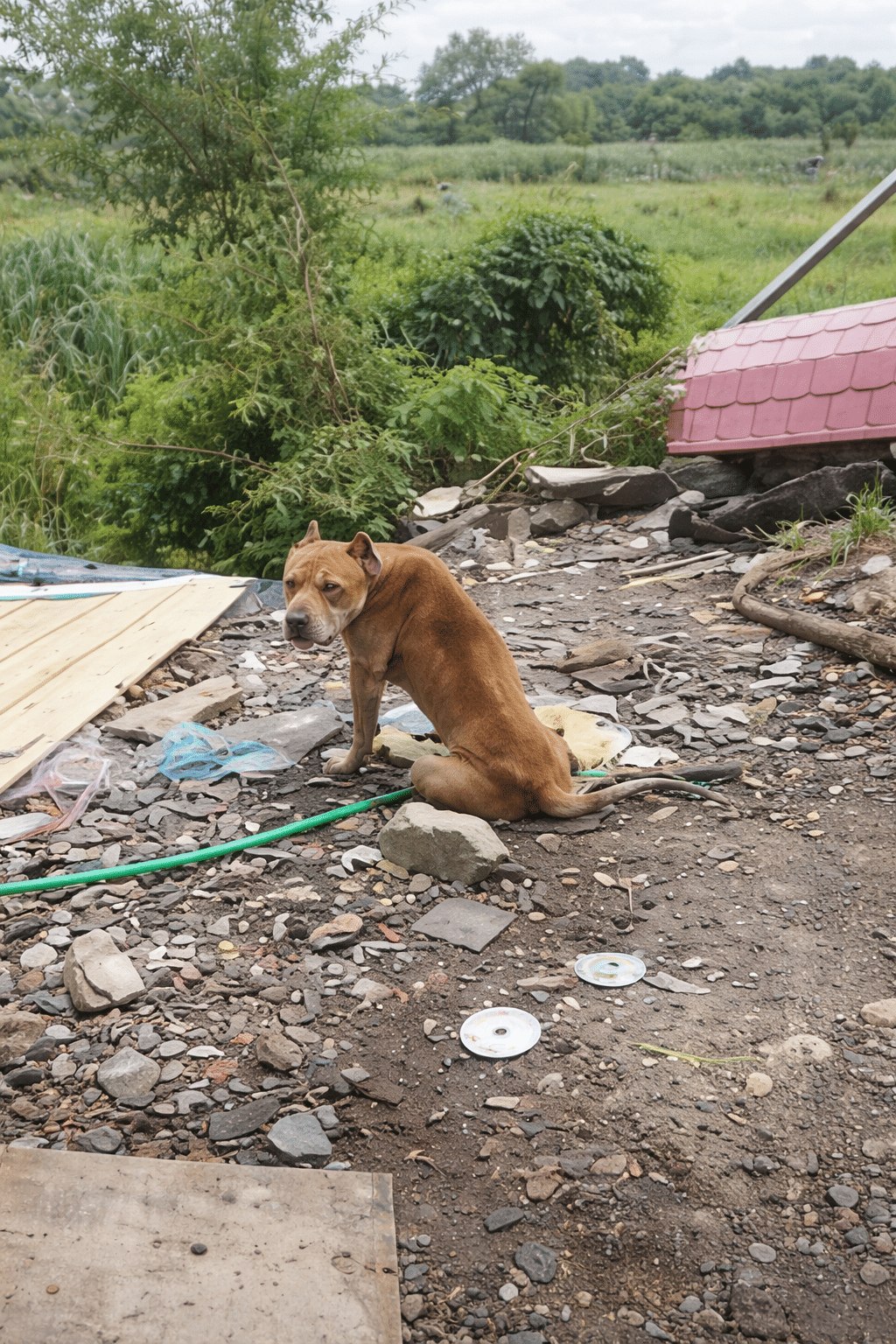
The chains were short.
So were the lives the six dogs had been allowed to live.
On a neglected property in Samut Prakan, Thailand, six Pit Bulls were found tethered among mud, discarded belongings, and waste. Clean water and proper food appeared scarce, and several of the dogs were painfully thin.
Their bodies showed signs that the situation had continued for far too long.
Some had wounds requiring treatment.
Others seemed so depleted that even lifting their heads took effort.
But when rescuers entered the property, they did not begin by demanding anything from the dogs.
They brought food.
They moved slowly.
And one by one, they began removing the chains that had kept the dogs confined.
Six Dogs Were Living Within the Length of Their Chains
The dogs had very little control over their surroundings.
Each was tethered to a limited area, leaving them to eat, rest, and remain within the same neglected space.
Around them were piles of trash and muddy ground.
Their physical condition immediately concerned the rescue team.
They were underweight.
Some had visible wounds.
Flies gathered around areas of irritated skin.
Several dogs appeared exhausted from prolonged lack of proper care.
The source identifies them as Look, Iron, Booster, Isis, Helena, and Serena.
Until rescuers arrived, each dog’s world had been defined largely by the length of a chain.
That was about to change.
Video: Six Pit Bulls Are Freed From Their Chains — Then Their Recovery Begins
The Rescuers Did Not Rush Toward Them
Approaching six neglected dogs required caution.
No one could assume how they would react to unfamiliar people entering their space.
So the team slowed down.
Voices remained calm.
Movements were deliberate.
The rescuers gave each dog time to observe what was happening before coming closer.
Then they began removing the chains.
One dog at a time.
For animals accustomed to being tethered, the sudden absence of restraint did not immediately mean they understood they were safe.
Some remained hesitant.
Others watched the rescuers carefully.
The team did not expect instant trust.
Their first responsibility was simpler.
Get the dogs away from the property.
Give them food.
And bring them somewhere their medical needs could finally be assessed.
A Meal Became the First Sign of How Much They Needed Help
Food was offered before the dogs were transported.
Their response revealed how hungry they had been.
They ate eagerly, focusing on the bowls in front of them while rescuers remained nearby.
For the team, feeding them was not the end of the rescue.
It was the first step.
These dogs needed far more than one meal.
Their thin bodies required careful nutrition.
Their wounds needed veterinary attention.
Their hydration and overall health had to be evaluated.
And after living in such restricted conditions, they would need time to adapt to a completely different environment.
Once the team could safely handle them, the dogs were placed into transport crates.
For the first time, leaving the property did not mean following the limit of a chain.
They were being carried away from it.
At the Hospital, Every Dog Needed Individual Care
The six Pit Bulls arrived at veterinary care with multiple concerns.
According to the rescue account, the team treated problems including dehydration, malnutrition, infection, and open wounds.
Fluids were provided where needed.
Wounds were cleaned and dressed.
Medication was given as part of their treatment.
Nutrition also became a priority.
Dogs that have been underfed for an extended period cannot simply be expected to return to good condition immediately.
Recovery would require consistency.
Meals.
Medical monitoring.
Rest.
And time.
Each dog had arrived from the same property, but each body had experienced that neglect differently.
So treatment had to be adapted to the individual animal in front of the veterinary team.
The chains had been removed quickly.
Healing would take much longer.
Trust Returned More Slowly Than Strength
Physical care was only one part of the work ahead.
At first, the dogs could be cautious around human contact.
Some flinched when touched.
That response did not require anyone to invent a complicated story about what they remembered.
It simply showed that unfamiliar handling could make them uncomfortable.
So caregivers continued using the same approach that had helped during the rescue.
Patience.
Quiet voices.
Gentle contact.
No unnecessary pressure.
Little by little, the dogs began responding differently.
A cautious sniff became a closer approach.
A dog that once pulled away remained nearby.
A tail moved.
Someone accepted a gentle stroke without retreating.
These were small moments.
But trust is often rebuilt through small moments repeated many times.
Their Bodies Began to Look Different
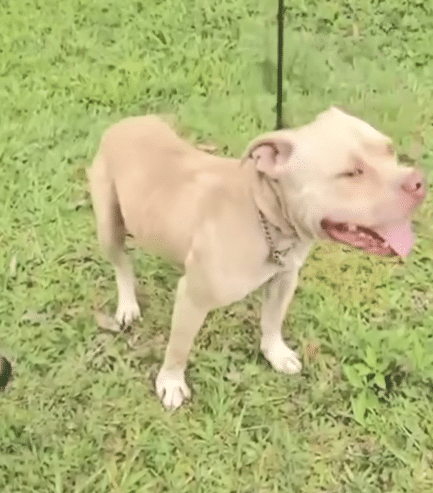
With regular meals and medical treatment, changes became easier to see.
The dogs began gaining strength.
Their coats improved.
Their eyes appeared more alert.
They no longer looked as depleted as they had on the property.
The transformation was gradual.
There was no single morning when six neglected dogs suddenly became completely healthy.
Instead, recovery appeared through a collection of ordinary changes.
Better appetite.
More stable movement.
Greater interest in their surroundings.
Longer periods of activity.
And eventually, enough energy to do something they had previously had little opportunity to enjoy.
Play.
For dogs that had spent so much of their lives confined to small areas, freedom was beginning to mean more than the absence of a chain.
It meant having room to move simply because they wanted to.
Then They Started Running
As Look, Iron, Booster, Isis, Helena, and Serena became stronger, their personalities began appearing more clearly.
They explored.
They interacted.
They moved through open spaces instead of circling the same few feet of ground.
Some began playing with an energy that would have been difficult to imagine when rescuers first saw them.
That may have been the most striking part of their recovery.
Their bodies were healing, but they were also discovering experiences that confinement had limited.
Running without reaching the end of a chain.
Following something interesting.
Choosing where to lie down.
Approaching a person on their own.
These are ordinary freedoms for many dogs.
For these six, they represented a completely different way of living.
The rescue had not simply changed where they slept.
It had changed how much choice existed in their daily lives.
Authorities Also Became Involved
The rescue account states that authorities took action in connection with the dogs’ treatment and that the person considered responsible was arrested.
Meanwhile, the animals remained focused on a much simpler task.
Recovering.
They continued receiving veterinary care, proper nutrition, and vaccinations.
Their immediate future was no longer tied to the property where they had been found.
Plans were being made for something very different.
Permanent homes.
Homes where meals would arrive regularly.
Where medical needs would be noticed.
Where movement would not end at the length of a chain.
The source describes adoption planning as part of the next stage for the six dogs, rather than presenting every adoption as already completed.
For now, they had already crossed the most important boundary.
They were safe and under care.
Freedom Began the Moment the First Chain Came Off
The six Pit Bulls did not recover because of one dramatic moment alone.
Their transformation depended on everything that came after the rescue.
The person who noticed the situation.
The team willing to enter the property.
The hands that removed the chains.
The food placed in front of hungry dogs.
The veterinarians who treated wounds and dehydration.
The caregivers who returned each day.
And the people preparing them for lives beyond the rescue center.
When they were found, Look, Iron, Booster, Isis, Helena, and Serena could move only as far as their restraints allowed.
Over time, those same dogs began exploring, playing, and running.
Their past did not disappear when the chains were cut.
But it stopped controlling every step they took.
Once, each dog’s world ended where a piece of metal became tight.
Now, when they move forward, there is finally space in front of them.


