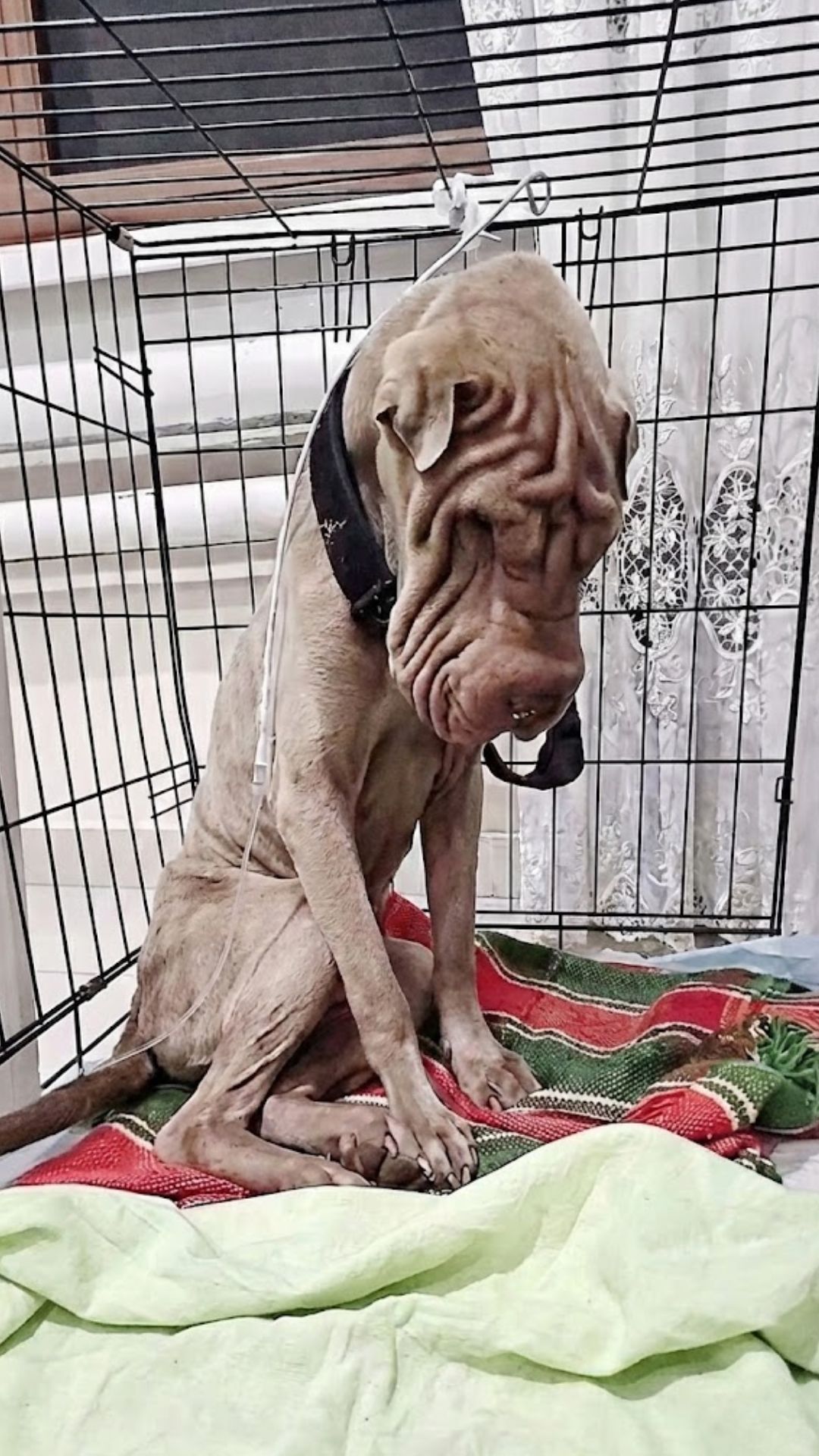
Bulkins had already learned how easy it was to become invisible.
After losing the home and person he once depended on, he began surviving wherever he could—along quiet streets, beneath changing weather, and in places where no one expected him to stay for long.
He was painfully thin.
His body had been weakened by hunger and illness.
And according to those who eventually rescued him, some people did not simply ignore the stray dog.
They threw stones to drive him away.
So Bulkins kept moving.
Not because he knew where safety was.
Only because staying in one place had rarely brought it.
Then someone finally approached without trying to chase him away.
That encounter brought Bulkins to a veterinary clinic.
And what doctors discovered made his future deeply uncertain.
The Dog Who Had Learned to Make Himself Small
When Bulkins was first brought into care, he did not behave like a dog expecting affection.
He trembled.
He kept his body low.
When someone held him close, he often tucked his head away rather than leaning forward for attention.
His physical condition was impossible to miss.
There was very little weight on his frame.
His coat reflected months of poor nutrition and exposure.
His muscles had weakened.
Even resting seemed to take most of the energy he had left.
The people caring for him could not know exactly what he had experienced before rescue.
But they could see the result.
Bulkins was cautious around almost everything.
So they did not ask him to trust immediately.
First, they needed to find out whether his body could recover at all.
Video: After Being Abandoned and Chased Away, Bulkins Finally Meets a Hand That Doesn’t Push Him Aside
The Examination Brought Difficult News
At the veterinary clinic, Bulkins underwent a more complete evaluation.
The findings were serious.
He was severely malnourished.
Bloodwork showed significant anemia.
There were also concerns involving his kidneys and spleen.
His body had been surviving under strain for a long time, and the veterinarian worried that some of the damage might be difficult to reverse.
According to his rescuer, the initial outlook was heartbreaking.
The veterinarian believed Bulkins might have only a few months remaining.
There was no dramatic certainty about what would happen next.
No promise that treatment would restore everything.
The dog was weak, medically fragile, and already exhausted from trying to survive outside.
But his rescuer decided that whatever time Bulkins had should not be spent alone.
He was brought home.
And for the first time in a long while, survival would no longer depend entirely on him.
At Home, Nobody Asked Him to Be Brave
Bulkins did not transform the moment he entered a house.
He remained cautious.
He searched for quiet places where he could lie without being disturbed.
Medication became part of his routine.
So did carefully prepared meals and regular monitoring.
His caregiver stayed nearby without forcing interaction.
There was no expectation that Bulkins immediately wag his tail.
No demand that he accept hugs.
No attempt to turn recovery into something faster than his body or temperament could handle.
Some nights were simply spent sitting near him.
Speaking softly.
Making sure he had eaten.
Making sure he had taken his medicine.
Watching him sleep.
For a dog coming from uncertainty, routine gradually became important.
Morning came.
Food appeared.
The same person returned.
Then evening came, and the house remained quiet and safe.
Nothing frightening followed.
The pattern repeated.
And slowly, Bulkins began to settle into it.
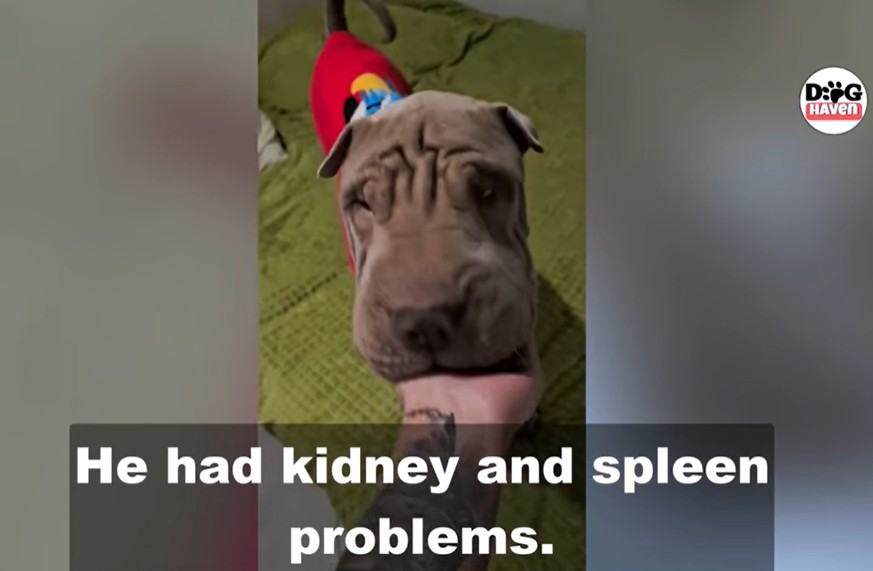
The First Changes Were Almost Too Small to Notice
Recovery did not arrive as one dramatic breakthrough.
It appeared in small details.
Bulkins began eating more consistently.
His weight slowly increased.
His coat started looking healthier.
The weakness associated with severe malnutrition began to ease.
He remained a medically vulnerable dog, but he was no longer declining in the same way.
Then his behavior started changing too.
His head stayed lifted a little longer.
He watched his caregiver instead of always looking away.
He became more comfortable resting in open spaces.
The dog who once seemed determined to disappear into the smallest corner began allowing himself to be seen.
None of these changes guaranteed the future.
But together, they suggested something important.
Bulkins was responding.
His body had not stopped trying.
The Vet Saw a Very Different Dog at His Return Visit
Eventually, Bulkins returned to the clinic for another examination.
This time, the dog standing before the veterinarian looked noticeably different from the one who had first arrived weak and severely underweight.
He had gained strength.
His posture had improved.
His coat looked healthier.
And his overall condition suggested that treatment and nutrition were making a meaningful difference.
The medical concerns had not simply vanished.
But according to his story, the problems involving his kidneys and spleen had become more manageable.
His anemia had improved as well.
The early fear that he might have only a few months was no longer the only possible outcome.
Bulkins had exceeded those first expectations.
For his caregiver, the change meant far more than improved test results.
The dog she had brought home because she wanted his remaining time to be gentle was now beginning to build a life.
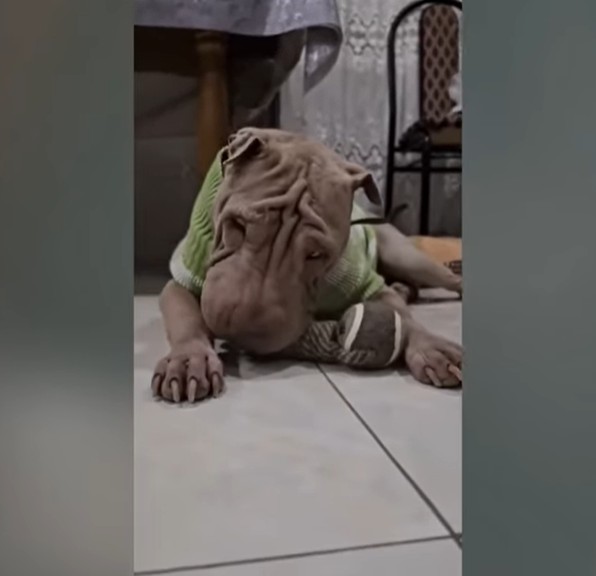
Trust Began Appearing Alongside His Strength
Physical recovery gave Bulkins enough energy to engage more with the world around him.
That was when another transformation became visible.
He began interacting with the other dogs in the home.
He showed more interest in food and everyday routines.
He accepted affection more easily.
Instead of lowering his head whenever someone came close, he gradually learned that touch could also be calm and predictable.
There were no shortcuts to that trust.
It came from repetition.
The hand that brought medicine also brought food.
The person who approached in the morning was still there in the evening.
A bed remained his.
Meals returned every day.
Nobody threw anything to make him leave.
The home did not disappear.
And somewhere inside those ordinary days, Bulkins stopped living like a visitor who might be sent away at any moment.
He began behaving like he belonged there.
He Was No Longer Just a Rescue Case
As Bulkins recovered, the relationship between him and his caregiver changed too.
He was no longer simply a dog receiving temporary treatment.
He had become part of the household.
His rescuer described the bond in deeply personal terms, eventually referring to Bulkins as her son.
The frightened stray who once tucked his head away now had familiar companions around him.
He could eat without searching for his next meal.
He could sleep indoors.
He had other dogs to spend time with.
And there was always a person nearby who knew his medical history, his habits, and the small changes that showed whether he was having a good day.
For a dog whose future had once been measured in uncertain months, those ordinary routines became something extraordinary.
They became a life.
The Stones Were Gone — And Nobody Was Asking Him to Leave
Today, Bulkins looks very different from the dog first brought into care.
He has gained weight.
His health has improved.
His coat has recovered.
And the withdrawn behavior that defined his earliest days has softened considerably.
He plays with the other dogs in his family.
He enjoys regular meals.
At night, he has a bed and a home where he can rest without being exposed to rain or forced to keep moving.
His story does not prove that love alone can cure serious illness.
Veterinary treatment, medication, nutrition, monitoring, and time all played important roles in his recovery.
But care gave those treatments a chance to work.
Someone noticed a dog who had been pushed aside.
Someone brought him to a clinic even when the first prognosis was frightening.
And when there was no guarantee of a long future, that person brought him home anyway.
Bulkins did not need to become extraordinary to deserve that chance.
He did not need to prove how loyal he could be.
He did not need to survive hardship gracefully.
He simply needed someone to decide that his life was worth caring for.
Once, people threw stones because they wanted him to disappear.
Now, when Bulkins lifts his head, the faces around him are familiar.
The door is not closing behind him.
The bed is still there.
Dinner will come again tomorrow.
And nobody is asking him to leave.


