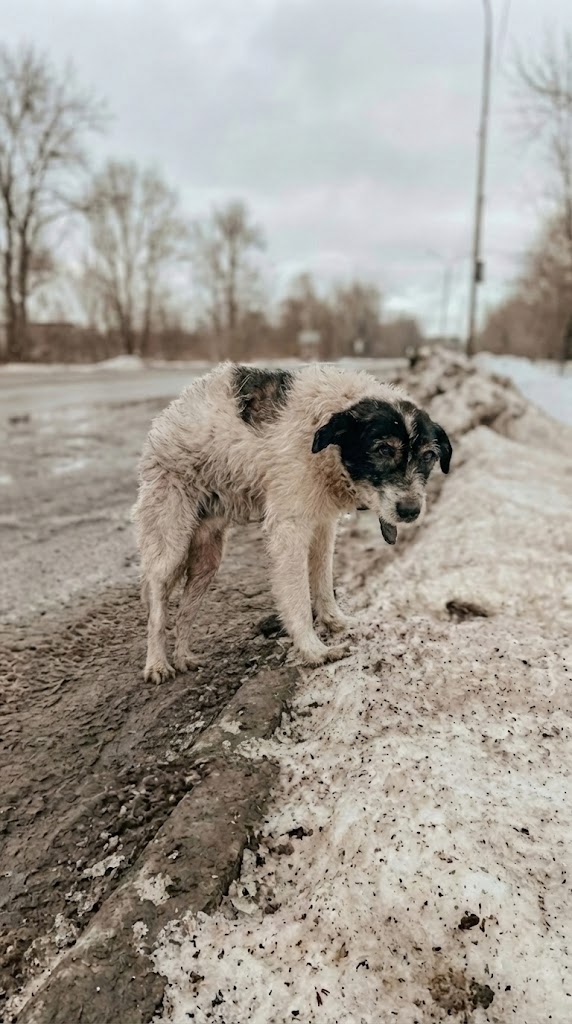
At first, the dark shape beside the snowbank looked like something the wind had pushed against the roadside.
Then it moved.
A small dog was curled tightly against the frozen ground, snow clinging to his coat while his body remained stiff from the cold.
He barely lifted his head when someone approached.
Later, rescuers would call him Rio.
And according to people familiar with the situation, he had been staying near that same spot for almost three days.
Whatever had brought him there, by the time help arrived, Rio was too weak to keep waiting much longer.
He Had Been Staying Beside the Road Through Freezing Nights
The winter weather had covered everything in snow.
Temperatures were low enough that remaining outside for hours would have been difficult for any dog.
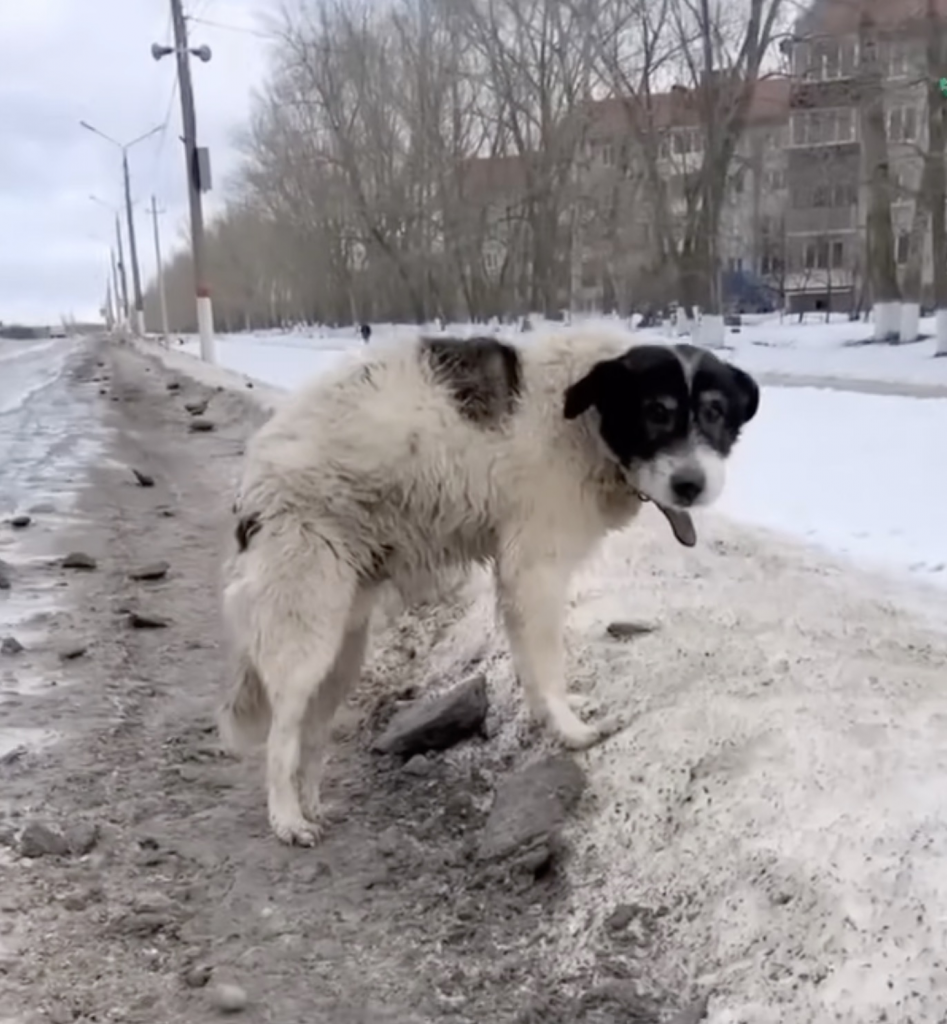
Rio had reportedly been there for much longer.
The original account says his previous owner had left him near the roadside after telling him to “stay.”
That detail is presented as part of the story, but the source does not independently verify exactly what happened before Rio was found.
What could be seen was clear enough.
He remained in approximately the same area.
His body was cold.
His movements were slow.
And by the time rescuers reached him, standing had become difficult.
Video: Rio Is Found After Nearly Three Days on a Freezing Roadside
He Was Too Weak to Walk Away
The rescuer approached carefully through the snow.
Rio did not run.
He barely had the strength for much movement at all.
When the person came close enough to lift him, his body felt extremely cold.
His muscles were tense.
One side of his head also appeared sensitive, suggesting there may have been an injury that needed examination.
Rather than asking him to walk, the rescuer carried him.
For the first time since he had been noticed beside the road, Rio was moving somewhere warm.
The Veterinary Team Found Severe Dehydration and Malnutrition
At the clinic, Rio underwent several examinations.
X-rays were performed to check for fractures.
Blood tests showed significant dehydration and poor nutritional condition.
An ultrasound was also used to assess his internal organs.
According to the original rescue account, his organs were still functioning, but his body had been placed under considerable stress.
The team began warming him gradually.
Blankets and heating pads helped raise his body temperature.
Fluids were administered.
Pain relief was provided.
And because of how weakened he had become, the source states that Rio also received a carefully monitored blood transfusion.
The Shaking Slowly Began to Stop
During the first hours of treatment, the changes were small.
Rio’s breathing became steadier.
The intense trembling eased.
His body temperature gradually improved.
No one expected him to become energetic immediately.
The priority was stabilization.
Warmth.
Hydration.
Rest.
And enough medical support to help his body begin recovering from prolonged exposure and hunger.
Once those basic needs were addressed, the next question was whether Rio would start eating.
His First Proper Meal Became an Important Sign
When food was finally placed in front of him, Rio ate eagerly.
That response gave caregivers something positive to work with.
Regular meals could now begin rebuilding the weight and energy he had lost.
As his condition improved, he was also bathed carefully to remove dirt and residue from his coat.
The change did not happen in one afternoon.
But day by day, the difference became easier to see.
His posture relaxed.
His movements improved.
The limp noted earlier became less noticeable.
And his coat began looking healthier.
He Started Staying Close to the People Caring for Him
As Rio became physically stronger, his behavior around people changed too.
At first, he remained cautious.
Then he began resting his head near caregivers.
He followed familiar staff through the clinic.
When someone spoke to him, his tail sometimes moved.
There is no need to assume exactly what Rio understood about the people around him.
What could be observed was enough.
He was becoming increasingly comfortable in their presence.
The same dog who had once remained alone beside a frozen road was now choosing to stay close to people.
Once He Was Strong Enough, the Search for a Home Began
Rio’s recovery eventually reached a point where emergency treatment was no longer the focus.
He could walk.
Eat normally.
Move with far greater confidence.
And interact comfortably with caregivers.
That meant the rescue team could begin looking for a permanent home.
A family eventually stepped forward.
They were prepared to give Rio the routine and stability that had been missing when he was found.
He left the clinic not as a critically weakened dog, but as one ready to begin another stage of recovery.
Warm Beds Replaced the Snowbank
In his new home, Rio had to adjust to another unfamiliar environment.
But this time, the changes were far gentler.
He had soft places to sleep.
Regular meals.
A yard to explore.
People who returned every day.
Soon, Rio began playing.
He ran across the grass.
Chased toys.
And settled beside his new family during quieter parts of the day.
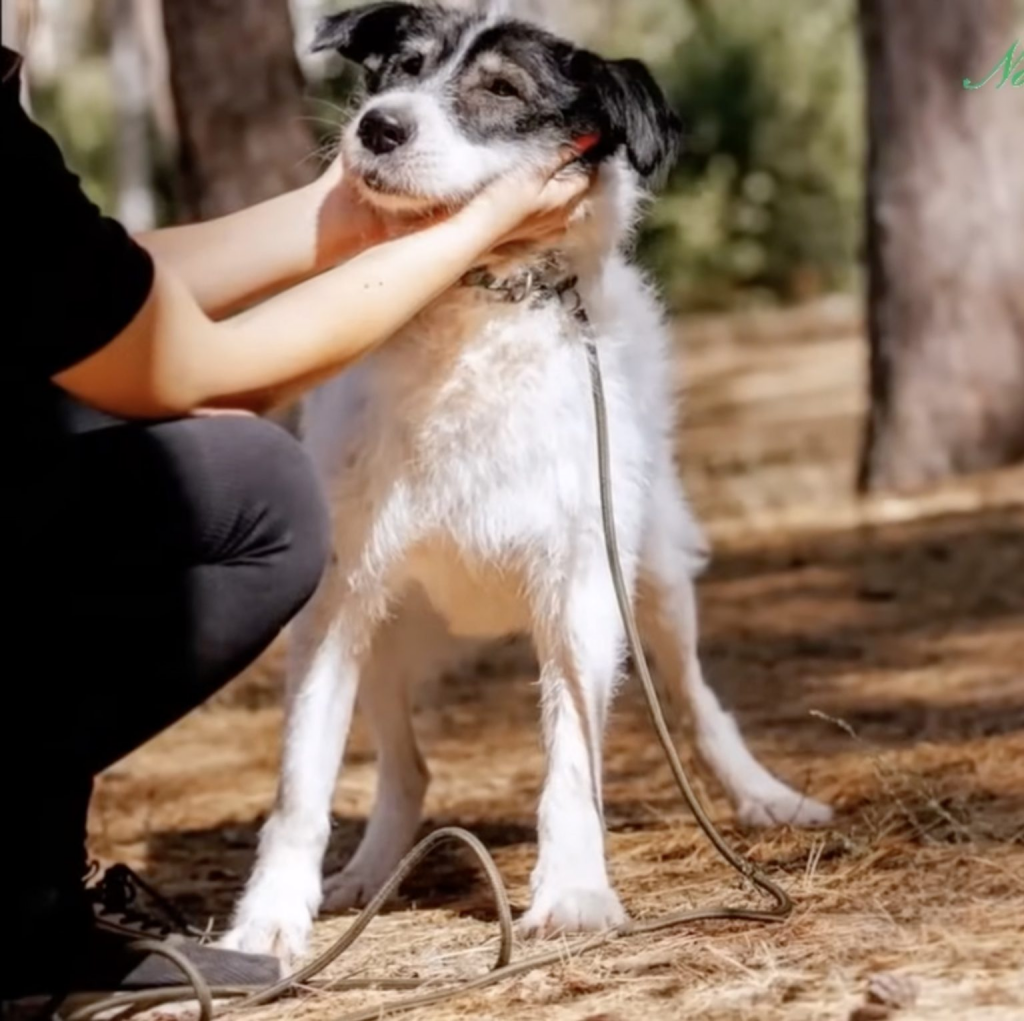
The contrast with the beginning was difficult to miss.
The dog who had barely been able to lift his head beside the snow was now moving freely.
No One Knows Exactly What Rio Was Waiting For
One part of Rio’s story remains difficult to verify.
The original account says he had been told to stay by the person who left him.
Whether Rio truly remained there because of that command cannot be known from the footage alone.
What is known is that he stayed near the same roadside location for an extended period during freezing weather.
He became dangerously cold.
Dehydrated.
Malnourished.
And too weak to leave easily.
Then someone finally stopped.
That led to veterinary care.
Warmth.
Food.
A blood transfusion.
Days of recovery.
And eventually, a home.
Once, Rio remained beside a snowbank with no one returning for him.
Now he has something far more reliable—
a place where familiar footsteps actually do come back.


