The streets were no longer streets.
After days of heavy rain in Rio Grande do Sul, Brazil, floodwater spread through neighborhoods, surrounding homes and covering roads that people had used every day.
Families were evacuating.
Boats replaced cars.
And among the buildings, fences, and rooftops were animals with nowhere dry left to go.
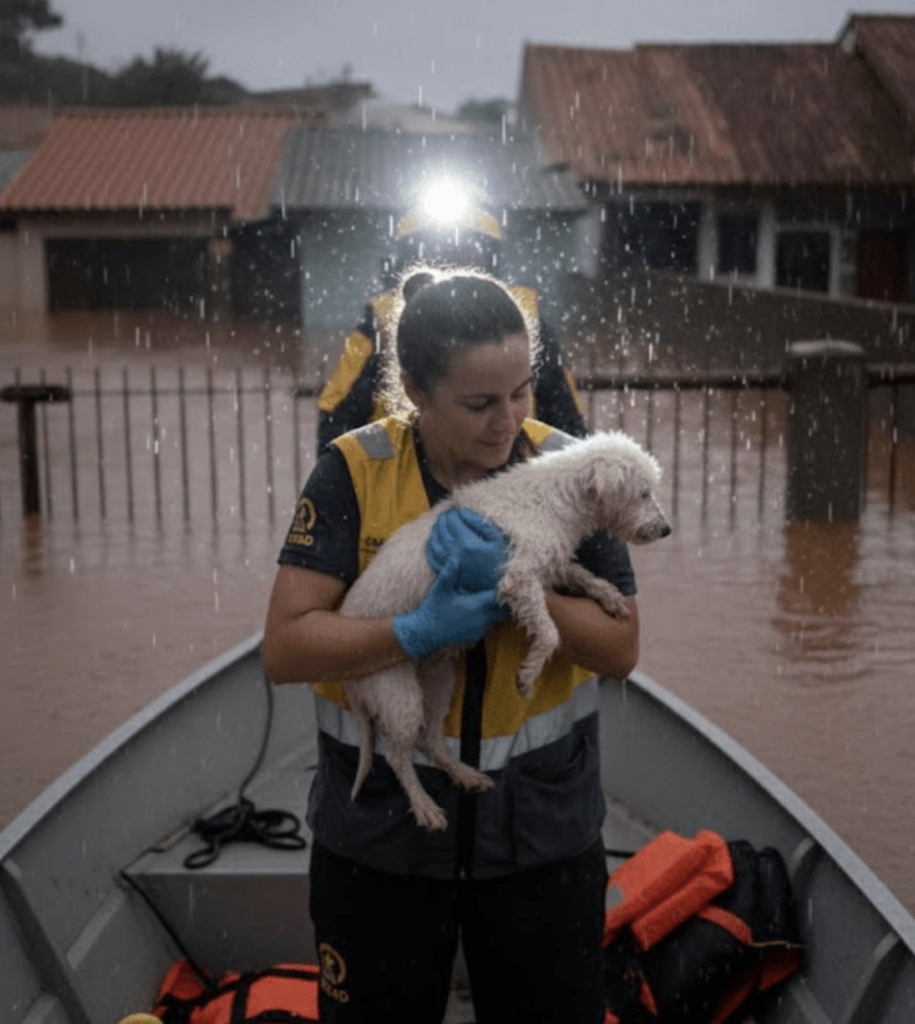
During one rescue trip, veterinarian Dr. Carla and volunteers working with GRAD moved slowly through the flooded area.
Then someone on the boat noticed a small white shape ahead.
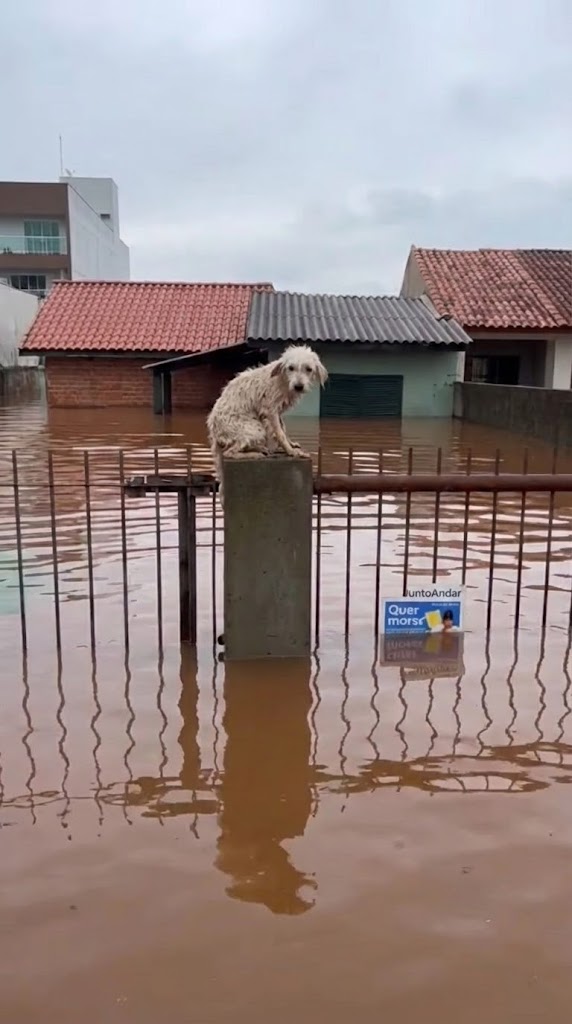
A dog was standing on top of a narrow concrete post.
Almost everything around her was underwater.
The Flood Left Animals With Fewer Places to Stand
As the water rose, animals became stranded in places that normally would never have been considered shelter.
Some remained near houses.
Others climbed onto higher structures.
Dogs could be seen on rooftops and walls.
Cats stayed near windows or whatever elevated surfaces remained available.
Farm animals were also caught in areas where dry ground had almost disappeared.
The scale of the flooding meant rescue teams could not simply drive from one location to another.
They needed boats.
And each trip through the submerged neighborhoods brought another animal into view.
Video: GRAD Volunteers Search Flooded Streets for Animals Left Behind in Rio Grande do Sul
Esperança Para Cachorros Deixados Para Trás na Enchente no Rio Grande do Sul
Dr. Carla and the Team Entered the Flooded Neighborhoods by Boat
According to the original account, Dr. Carla was working alongside GRAD, an animal rescue group active during the disaster.
Their role focused on animals that could not leave flooded areas on their own.
Small boats allowed volunteers to move between submerged houses and narrow passages.
The work required caution.
Floating debris could strike the boats.
Currents changed from one street to another.
Structures that appeared stable from a distance were not always safe when the team approached.
Despite those conditions, the volunteers continued searching.
Then came the rescue that became one of the most memorable moments in the story.
A White Dog Was Standing on a Concrete Post
The dog was easy to miss.
She was small.
White.
And positioned on top of a narrow concrete fence post rising just above the floodwater.
There was barely enough space for all four paws.
Her fur was soaked.
Her body appeared to be trembling.
And there was nowhere obvious for her to step down safely.
The surrounding ground had disappeared beneath the water.
So the boat slowed.
The rescuers avoided sudden movements that might make her jump.
They moved close enough for someone to reach toward her.
One Careful Lift Took Her Off the Post
Once the boat was positioned correctly, a rescuer reached out.
The dog was lifted from the concrete and brought into the boat.
According to the source, she did not struggle significantly once she was secured.
She was wrapped in a towel.
For the first time since the team had seen her, she no longer needed to balance above the water.
That rescue took only a short time compared with the larger disaster.
But the same situation was happening throughout the region.
Other animals were still stranded.
So the boat continued moving.
The White Dog Was Only One of Many
The GRAD team encountered animals in very different circumstances.
The original account describes dogs stranded near damaged properties.
Kittens found in flooded areas.
And larger animals trapped on shrinking patches of dry ground.
Each rescue required a different approach.
Some animals could be lifted quickly.
Others were frightened and needed time before anyone could handle them.
Larger animals required more people and more planning.
The common problem was the same.
Water had removed the usual escape routes.
And animals that might normally have walked away had nowhere left to go.
Rescue Continued After Animals Reached Dry Ground
Pulling an animal into a boat was only the first stage.
Once rescued, animals needed somewhere safe to go.
Some were cold.
Some had been without food.
Others needed veterinary attention after spending long periods in contaminated floodwater or exposed conditions.
Volunteers provided food, basic treatment, and temporary shelter.
They also tried to identify owners when possible.
For animals separated from families during evacuation, reunification became another part of the work.
The flooding had scattered people and animals at the same time.
Finding one often meant searching for the other.
As the Water Receded, Another Phase Began
Eventually, flood levels began falling in some areas.
That made previously inaccessible streets easier to reach.
But lower water did not mean the emergency was over.
Damaged buildings remained.
Mud covered homes.
Animals were still being discovered in places rescuers had not been able to reach earlier.
Teams continued feeding, transporting, and treating them.
Some animals were reunited with their families.
Others remained in temporary care while information about their owners was gathered.
The little white dog rescued from the fence post was also moved somewhere warm and dry.
One Small Dog Showed How Quickly Ordinary Ground Can Disappear
Before the flood, the concrete post would have been an unremarkable part of a fence.
During the disaster, it became the only dry surface available to one small dog.
That contrast is what makes the rescue so striking.
She did not need a dramatic leap.
She needed a boat to get close enough.
Someone to see her.
And a pair of hands steady enough to lift her away from the water.
Her rescue lasted minutes.
The flooding around her lasted far longer.
The Boats Kept Going Because More Animals Were Still Waiting
The white dog’s story was only one moment inside a much larger rescue effort.
Dr. Carla and the GRAD volunteers continued moving through flooded neighborhoods, looking for animals that had become isolated by the rising water.
Some were highly visible.
Others were almost hidden.
That meant the work depended on repeatedly checking places that might otherwise have been passed.
A rooftop.
A window.
A patch of grass.
A fence post.
Each could hold an animal waiting for the water to go down.
For this little dog, it never had to.
The rescue boat reached her first.


