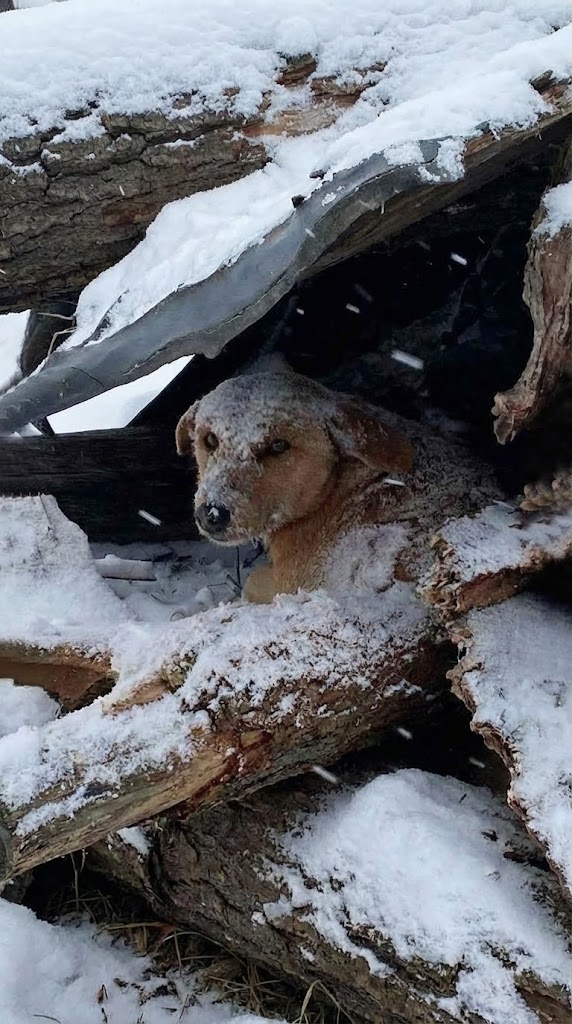
The field was almost completely white.
Snow covered the ground, the path, and the frozen grass around it.
Then someone heard a faint sound.
Near the edge of the path lay a small dog, partially surrounded by snow and barely moving.
His name would later be Teo.
His body was cold.
His hindquarters appeared weak.
And when he tried to shift position, movement seemed difficult.
The cold was dangerous enough.
But at the veterinary clinic, X-rays revealed that Teo was dealing with something far more serious.
A Faint Sound Led Someone Off the Frozen Path
The passerby almost missed him.
At first, the sound blended into the winter wind.
Then it came again.
Following it through the snow, the person found Teo lying low against the frozen ground.
He did not get up.
He did not try to run.
His body looked thin, and the rear part of his body was not moving normally.
There was no way to know how long he had been outside.
The rescuer wrapped him in a blanket and carried him away from the field.
Video: Teo Is Found Alone in the Snow—Then X-Rays Reveal Metal Fragments Near His Spine
The X-Rays Explained Why His Hind Legs Were So Weak
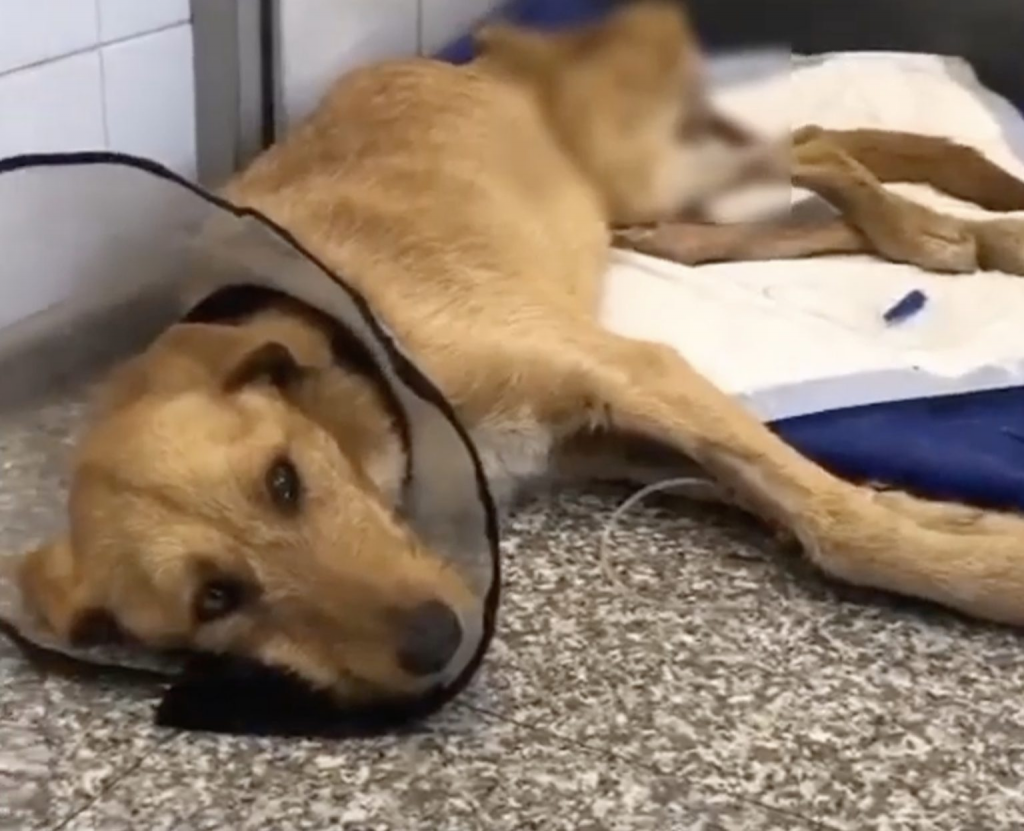
At the clinic, Teo was warmed and examined.
Veterinarians performed X-rays.
According to the original rescue account, the images showed small metal fragments lodged close to his spine.
The source attributes those fragments to a previous gunshot injury.
It does not provide enough additional evidence to independently reconstruct exactly when or how that injury occurred.
What the medical findings did explain was Teo’s mobility problem.
The damage near the spine had affected the nerves controlling his hind legs.
There was also muscle loss in the rear part of his body, suggesting the problem had been present for some time.
Recovery Started With Basic Medical Care
The first goal was not to make Teo walk.
It was to stabilize him.
He needed warmth after being found in the snow.
His wounds required care.
He needed food.
Rest.
Pain management.
And close monitoring.
According to the source, Teo ate when food was offered.
That was an encouraging sign for a dog arriving in such poor condition.
Once his immediate condition was more stable, the veterinary team could begin thinking about longer-term rehabilitation.
Physical Therapy Brought Progress in Small Amounts
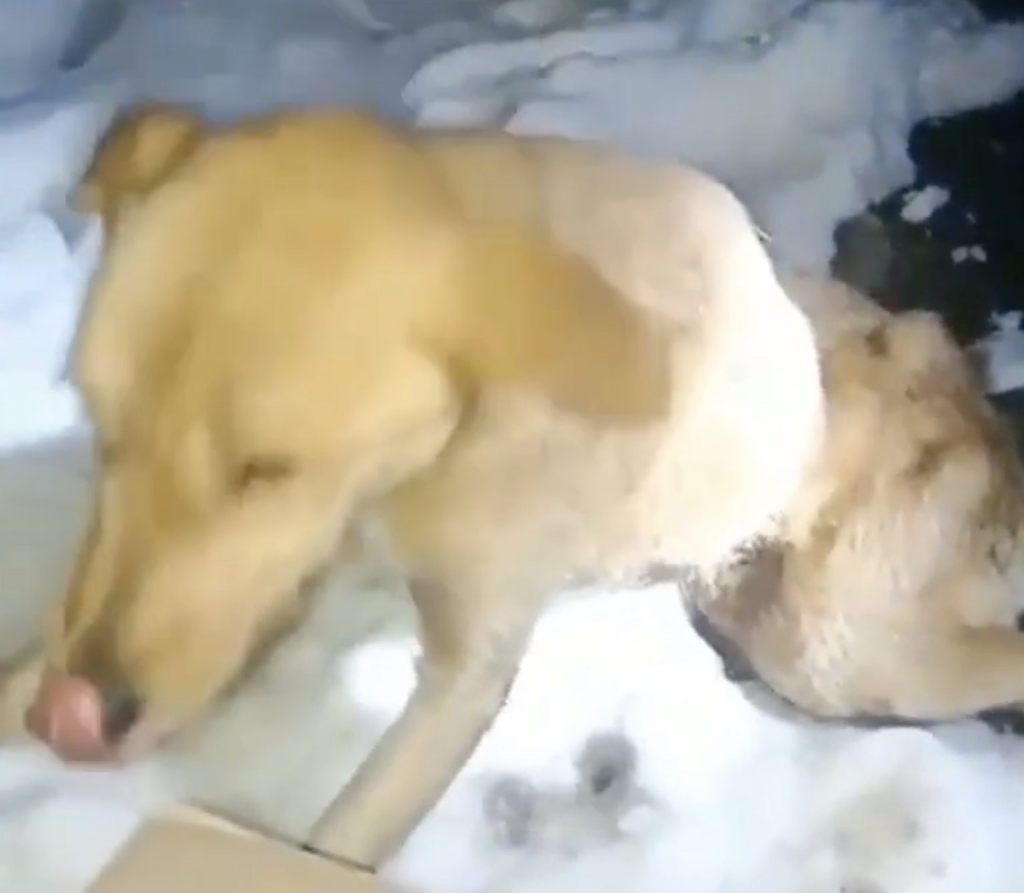
Teo began a slow recovery program.
Treatment included wound care and physical therapy aimed at maintaining as much strength and flexibility as possible.
There was no sudden improvement.
Progress came gradually.
His appetite became more consistent.
His overall condition improved.
He became stronger through the front half of his body.
And he grew increasingly comfortable with the people caring for him.
The staff could help Teo become healthier.
But the damage to his spine created limits that treatment could not simply erase.
Doctors Eventually Confirmed the Damage Was Permanent
After weeks of treatment and observation, the prognosis became clearer.
According to the rescue account, Teo would not regain normal use of all four legs.
The spinal damage was considered permanent.
That changed the goal of his recovery.
Instead of waiting indefinitely for his hind legs to begin working normally, the team began looking for another way to give him mobility.
The answer was a wheelchair.
A Custom Cart Had to Fit His Body
Teo’s wheelchair was built to support the rear of his body while allowing his front legs to provide the movement.
The fit mattered.
If the frame was too high, too low, or poorly balanced, it could create new pressure or make movement harder.
Once Teo was placed into the properly fitted cart, he had to learn how it worked.
At first, he hesitated.
Then his front paws moved forward.
The wheels followed.
Another step came.
Then another.
Soon, Teo could move across the floor without dragging his hindquarters behind him.
The Wheelchair Changed What He Could Explore
With the cart supporting him, Teo could cover much more ground.
He began going outside.
The source shows him moving along paths and spending time in open areas.
He could stop beneath trees.
Follow scents.
Move through grass.
And participate in outings that would have been exhausting without the wheelchair.
The device did not cure his spinal injury.
It gave him another way to move despite it.
Familiar Routines Helped Him Settle
Teo also became increasingly comfortable with his rescuer.
Before walks, his coat was brushed.
He rested close to familiar people.
And he reacted more calmly to everyday handling than he had during the earliest stage of rescue.
These routines mattered because Teo’s life was no longer centered around an emergency.
There were predictable meals.
Regular care.
Walks with the cart.
Places to rest.
And people he saw repeatedly.
His disability remained.
His daily life became much more ordinary.
The Snow Was Where Teo Was Found, Not Where His Life Stopped
Teo’s story can easily be framed around the worst part of what happened to him.
The frozen field.
The metal fragments.
The permanent spinal injury.
But those facts are only the beginning.
Someone heard him.
He reached veterinary care.
His body stabilized.
Physical therapy helped him regain strength where he still could.
And when normal walking was no longer considered realistic, a custom wheelchair gave him a practical alternative.
Teo did not need his body to return to the way it had once been for his life to continue.
He needed care designed around the body he had.
The snow left him almost unable to move.
The injury left permanent damage.
But once someone stopped and carried him away, Teo was given another way forward.


