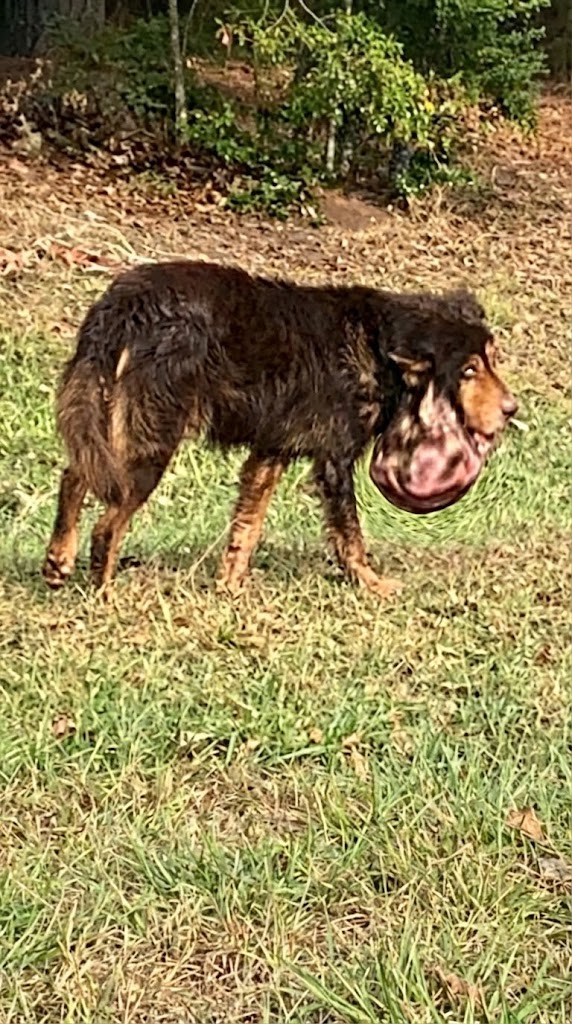
For years, people in Cleveland, Texas, had seen Bear wandering through neighborhoods.
He had no collar.
No permanent home.
And a severe problem on one side of his face that made him difficult to forget.
But remembering a stray dog and helping one are very different things.
Bear kept his distance from people.
When someone approached, he usually moved away.
That pattern continued for years.
Then a small group decided they were not going to let him disappear again.
Getting close enough to help would take almost three hours.
His Face Had Changed Long Before Anyone Could Treat It
According to the original rescue account, Bear had been living on the streets for nearly eight years.
During that time, an untreated injury or growth on his face had progressed significantly.
The source does not clearly establish how the original damage began.
By the time rescuers became involved, however, the affected area was impossible to miss.
His face had become badly distorted.
One ear area was involved.
And the condition had clearly gone far beyond something that could resolve without veterinary care.
Bear also appeared physically worn down from years outside.
Video: Bear Spent Years Avoiding People Before Rescuers Finally Got Close Enough to Help
Years on the Street Had Made Him Difficult to Approach
Bear did not immediately understand that the people following him wanted to help.
When they moved too close, he ran.
So the rescuers changed their approach.
They stopped chasing.
Kept their movements slow.
And allowed Bear time to decide how close he could tolerate them being.
The process lasted nearly three hours, according to the source.
Little by little, the distance became smaller.
Eventually, Bear stopped trying to escape long enough for the rescuers to secure him.
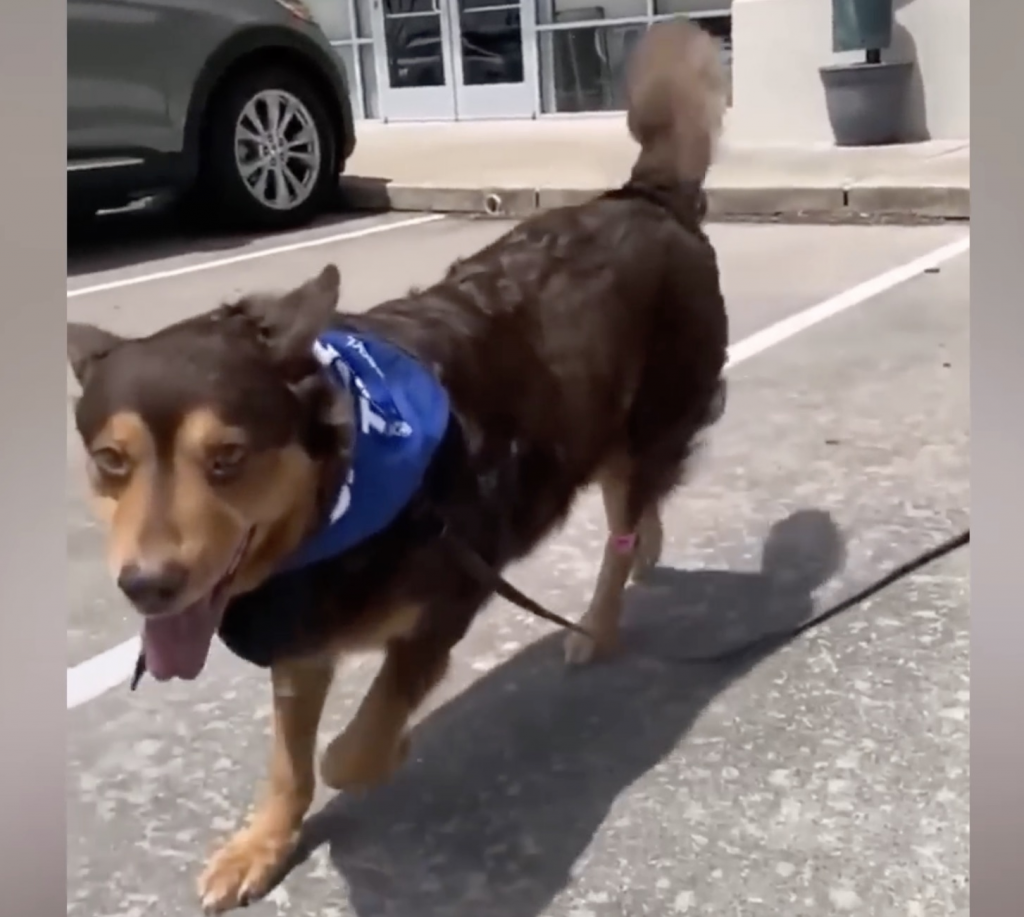
After years of living outside, he was finally going somewhere his face could be properly examined.
Specialists Focused First on the Damage Around His Face
Bear was taken to BluePearl Animal Care Center.
Veterinary staff began assessing the extensive growth and damaged tissue around his face.
The treatment was complicated because the affected area was close to important structures.
According to the original account, the veterinary team was able to preserve Bear’s ear canal while treating the damaged area.
That was an important outcome.
The goal was not simply to make Bear look different.
It was to remove or manage unhealthy tissue while preserving as much normal function and comfort as possible.
After years without consistent care, Bear now had a medical team watching him closely.
Eight Days Later, Another Diagnosis Changed the Plan
Bear had only been in care for about eight days when another serious problem was discovered.
He was diagnosed with lymphoma.
The source identifies the disease specifically as lymphoma, a form of cancer affecting the lymphatic system.
That meant Bear’s recovery would no longer focus only on the visible condition of his face.
He needed cancer treatment too.
Chemotherapy was started.
The original account also says Bear received laser therapy and ozone treatments alongside the primary treatment plan.
Those therapies are reported as part of his rescue story; the article does not provide enough clinical detail to evaluate their individual effect.
Treatment Continued for Months
Chemotherapy was not a one-time procedure.
Bear continued receiving care over several months.
His appetite was monitored.
His energy was watched.
And caregivers paid attention to how he responded after each round of treatment.
The source describes him as remaining gentle throughout the process.
He ate.
Rested.
And gradually became more comfortable around the people treating him.
The dog who once ran whenever someone tried to approach was now spending much of his time surrounded by veterinary staff and rescuers.
That adjustment happened slowly.
Ordinary Rest Became Part of His Recovery
One of the biggest changes in Bear’s daily life was also one of the simplest.
He could sleep somewhere safe.
He no longer needed to remain alert to traffic, weather, or unfamiliar people approaching from the street.
Meals arrived regularly.
A comfortable place to lie down was always available.
And familiar caregivers returned every day.
The visible changes were small at first.
A more relaxed posture.
A steadier appetite.
A tail movement when someone familiar appeared.
Then Bear began approaching people rather than automatically moving away.
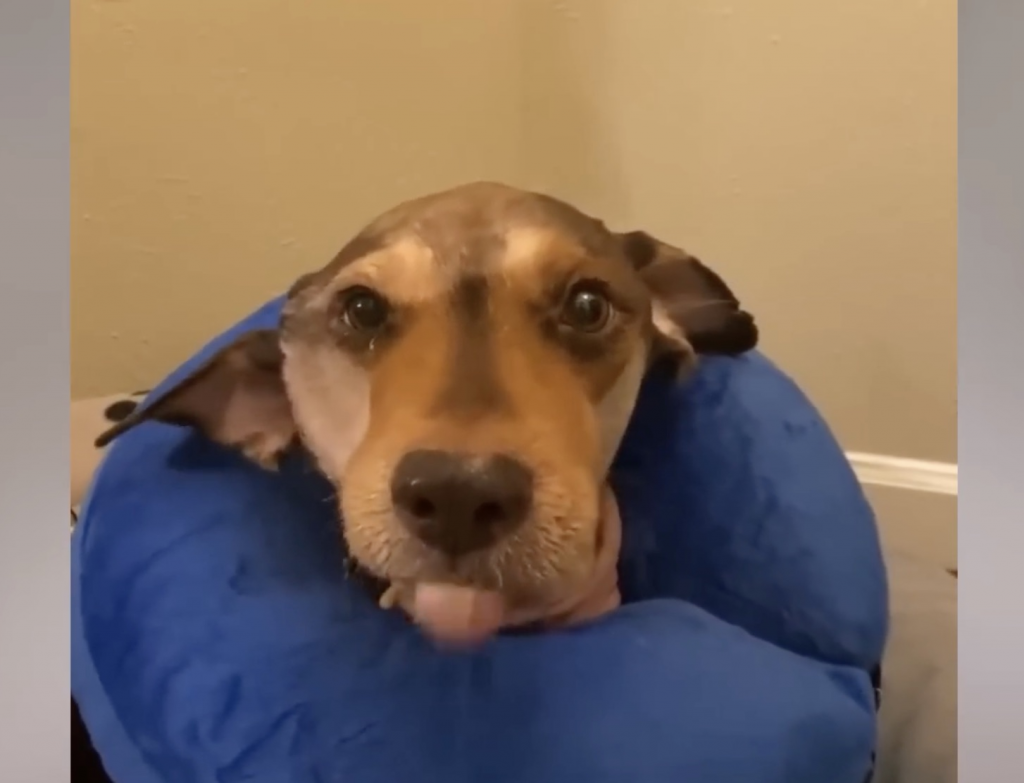
Six Months Later, Chemotherapy Was Finished
According to the rescue account, Bear completed approximately six months of chemotherapy.
By that point, his life looked very different from the years he had spent roaming through neighborhoods.
He could walk without constantly trying to create distance from people.
He explored outdoor spaces while caregivers remained nearby.
He accepted affection.
And familiar voices began producing a very different response than they once had.
Instead of running, Bear often stayed.
Then the medical team had to determine how well his cancer had responded.
At Eleven Months, Bear Was Reported to Be in Remission
About eleven months after his rescue, the news came.
Bear was in remission.
That did not erase everything he had experienced.
Nor did it guarantee that lymphoma could never become a concern again.
But it meant his treatment had produced the outcome everyone had been working toward.
The dog who had spent years outside with an untreated facial condition had now survived months of cancer treatment.
There was one more major change ahead.
This one did not happen in a clinic.
One of His Rescuers Decided Bear Was Already Home
The man who had helped with Bear’s original rescue remained involved as his recovery continued.
Eventually, he made the relationship permanent.
He adopted Bear.
For the first time in the story, Bear had a home rather than a temporary place to recover.
Regular meals became routine rather than treatment.
Soft bedding was simply where he slept.
Walks no longer ended with him disappearing back onto the streets.
He had somewhere to return.
Nearly Eight Years of Being Seen Was Not the Same as Being Helped
Bear’s story is striking because he was not completely invisible.
People had seen him for years.
They knew the dog with the damaged face was around.
But intervention came much later.
Once rescuers finally stayed long enough to earn his tolerance, everything changed quickly by comparison.
Veterinary treatment.
Care for the facial growth.
A lymphoma diagnosis.
Six months of chemotherapy.
Remission.
Then adoption.
Bear did not need everyone in Cleveland to suddenly understand him.
He needed a few people willing to spend nearly three hours getting close.
That was enough to move him from eight years on the street to a home where someone now expects him to come back.


