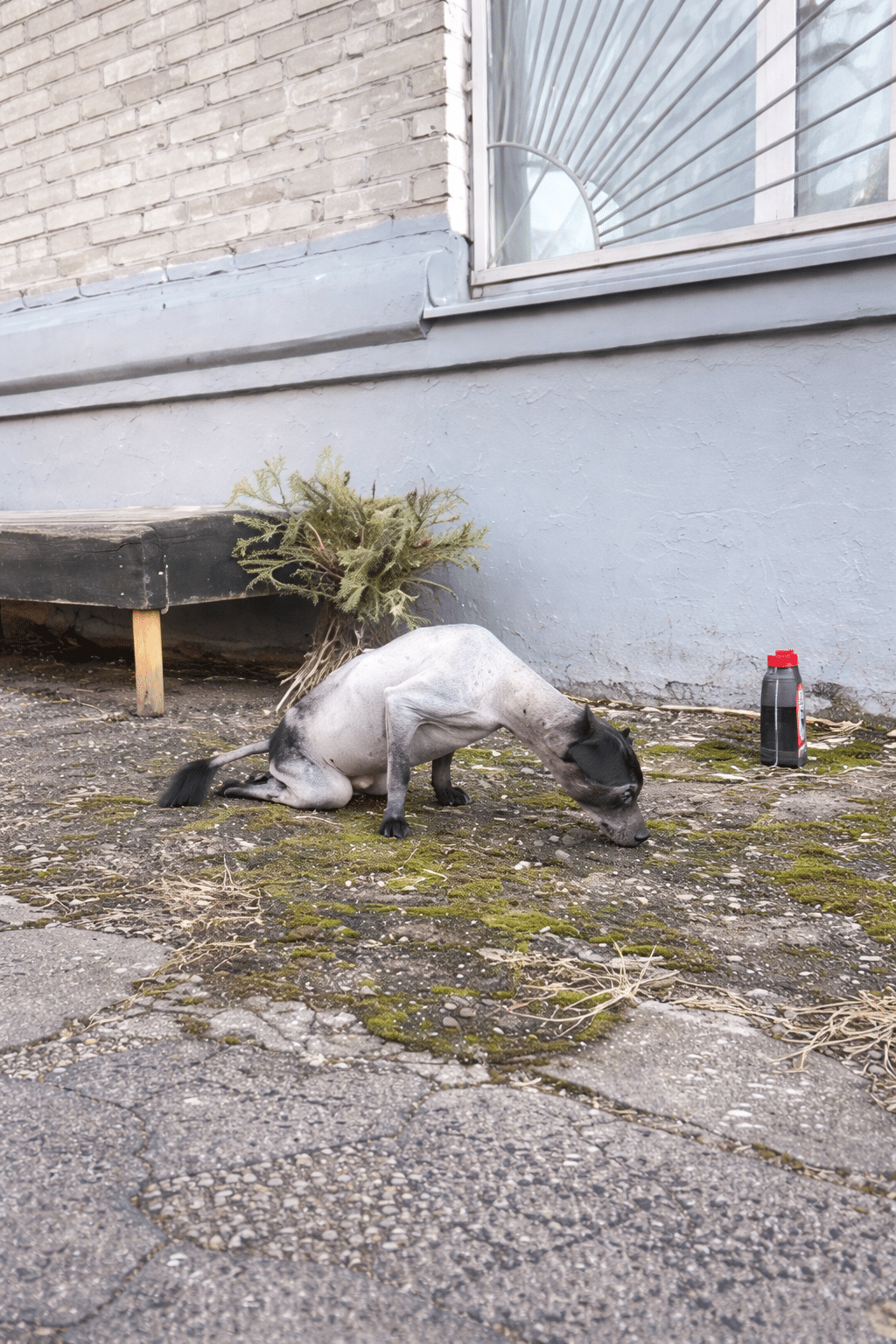
Not every rescue begins with a dramatic call for help.
Sometimes it begins with a puppy barely visible beneath a street.
Sometimes with a dog sitting quietly beside the road while two enormous growths weigh down the front of his body.
Sometimes with an animal people have already seen—but no one has yet picked up.
The six stories below are different in almost every way.
One dog needed veterinary care.
Another needed rehabilitation.
One needed nothing more complicated than food offered at the right moment.
But each story changed because of the same simple decision.
Someone noticed.
And instead of continuing past, they acted.
A Tiny Black Puppy Was Hidden Beneath the Street
The first puppy was easy to miss.
He was trapped inside a narrow drainage channel beneath the road, surrounded by dirty water and scattered debris.
His black fur was soaked against his tiny body.
The steep sides of the drain gave him no obvious route back to street level.
He could move inside the channel.
What he could not do was climb out.
Then someone spotted him.
Rescuers reached down and lifted the puppy from the water, removing the one problem he had no way to solve by himself.
Once he was safe, he was cleaned and dried.
The muddy coat disappeared.
Soft black fur emerged underneath.
But the most important change came afterward.
A family offered him a home.
The puppy who had first appeared trapped below street level eventually had dry floors, a soft place to rest, and people responsible for his care.
Then came one of the simplest signs that everything had changed.
A tennis ball rolled across the floor.
The puppy chased it.
The dog who once had almost nowhere to move was now running simply because he wanted to.
VIDEO: Six Rescue Stories That Changed the Moment Someone Finally Stopped
Two Enormous Tumors Covered a Stray Dog’s Chest and Shoulder
Another rescue began beside a road.
A white stray dog sat quietly near the pavement with two large masses extending across the front of his body.
The growths altered the shape of his chest and shoulder and added visible weight to his frame.
He was not making a scene.
He was simply there.
That made him easy to pass if someone was not looking closely.
Eventually, his condition was reported to Saahas For Animals.
An animal ambulance arrived.
Instead of rushing toward him, one rescuer crouched nearby, spoke softly, and allowed the dog time to remain calm.
A leash was placed around him.
He followed the rescuers into the vehicle without the situation becoming a chase.
At the veterinary clinic, the dog was fitted with a protective muzzle so staff could examine him safely.
His vital signs were checked.
Samples were collected from the masses.
The team now had something the dog had not had beside the road:
a way to begin finding out what the growths were and what treatment might be possible.
There was no instant transformation.
The tumors remained.
But after the examination, the dog was placed on a soft blanket and allowed to rest while his caregivers considered the next medical steps.
His story had not reached an ending.
It had reached care.
An Older Dog Had Been Lying on the Asphalt for Two Days
Elsewhere, another dog had already attracted the attention of people nearby.
He was older and too weak to get up from the roadside.
According to the account, he had remained there for roughly two days.
Someone had placed a blanket over him.
Food had been left nearby.
These gestures mattered.
But they could not answer the question of why he was unable to stand.
When rescuers finally arrived and began examining him, the dog cried out.
His response suggested that something more serious than simple exhaustion was happening.
That changed the urgency immediately.
He needed veterinary attention.
The rescuer carefully lifted him and transported him to a clinic rather than waiting to see whether another night of food and rest would solve the problem.
Sometimes kindness means leaving water.
Sometimes it means offering a blanket.
And sometimes the most important act is recognizing when those things are no longer enough.
For this dog, the roadside could not provide the care he needed.
The clinic could at least begin looking for answers.
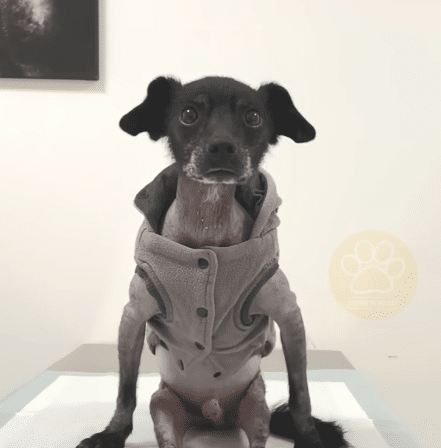
Dua Would Not Regain Full Movement — But She Would Not Be Left Without Care
A dog named Dua entered rescue under very different circumstances.
She was found crying in pain on a busy sidewalk with serious injuries involving her leg and spine.
Veterinary treatment could address some of the immediate problems.
But eventually, the medical team reached a difficult conclusion.
Dua was not expected to fully regain movement in the lower half of her body.
There was no dramatic moment in which she suddenly stood and walked away.
Her story required a different kind of rescue.
Long-term care.
Support.
A safe environment adapted to what her body could still do.
Dua remained under shelter care, where people helped provide food, medical attention, and daily comfort.
Supporters also contributed through sponsorship programs.
Her condition did not disappear because people cared about her.
That is not what rescue always means.
Sometimes rescue means accepting that an injury may be permanent—and deciding that the animal still deserves security, comfort, and consistent care.
Dua’s life continued within those limits.
But it continued with people taking responsibility for her needs instead of leaving her on the sidewalk where she had been found.
One Man Couldn’t Fix the Dog’s Legs — So He Gave Him Something He Could
Another dog was seen dragging himself along the side of a road.
His back legs were not supporting him.
Like many dogs with severe mobility problems, he relied on his front legs to pull the rest of his body forward.
There was no rescue ambulance in the scene.
No veterinary team.
No complicated equipment.
There was simply a passerby who noticed him.
The man stopped.
He poured milk into a paper plate.
Then placed it where the dog could reach it.
The dog drank.
It was not a cure.
It did not restore movement to his legs.
It did not turn the scene into a complete rescue story with an adoption at the end.
But it met one immediate need.
The dog was hungry.
Someone nearby had something he could offer.
So he offered it.
Among six dramatic rescues, this may be the smallest action.
That is precisely why it belongs beside the others.
Helping an animal does not always begin with being able to solve everything.
Sometimes it begins with doing the useful thing that is possible right now.
Mickey’s Spine Was Still Intact — And That Changed His Recovery Plan
The final story followed a dog named Mickey.
By the time rescuers found him, severe neglect and lack of nutrition had left him extremely weak.
Movement was difficult.
At first, there was concern that damage to his spine might explain why he could barely use his body normally.
If the spinal injury were severe and permanent, the path ahead could be very different.
Veterinary examination, however, offered a reason to keep working.
Mickey’s spine was reportedly still intact.
His weakness appeared to leave room for rehabilitation.
That did not mean he would stand up the next morning.
His body had lost strength over time.
Rebuilding it would require proper nutrition and repeated physical exercises.
So that became the plan.
Feed him.
Support him.
Exercise the muscles carefully.
Then repeat.
Day after day.
Progress came slowly.
Small attempts mattered.
A little more strength.
A better response during an exercise.
More control than the previous week.
Mickey’s recovery was not based on one dramatic moment.
It was built through repetition.
The same dog who had once barely been able to move was now being given a structured chance to rebuild what neglect had taken away.
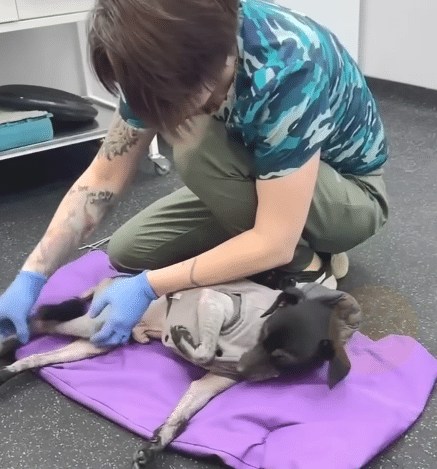
Six Different Problems Needed Six Different Kinds of Help
There is a temptation to make every rescue story follow the same pattern.
Animal suffers.
Rescuer arrives.
Everything becomes perfect.
These six stories do not fit that formula.
The puppy from the drain eventually found a home and chased a tennis ball.
The dog with two enormous tumors had only reached the beginning of veterinary investigation.
The older roadside dog needed urgent examination because a blanket and food were not enough.
Dua faced permanent mobility limitations but gained ongoing care.
A paralyzed stray received something as simple as a plate of milk.
Mickey entered a rehabilitation process that depended on time rather than an instant cure.
Different problems required different responses.
What connected them was not a perfect ending.
It was intervention.
Someone decided the animal in front of them should not simply be left in the same condition.
Sometimes that decision meant driving to a clinic.
Sometimes it meant funding long-term care.
Sometimes it meant weeks of therapy.
And sometimes it meant kneeling beside the road with a paper plate.
None of Them Needed the Same Miracle — They Needed Someone to Act
At the beginning of these stories, each animal was limited by something it could not solve alone.
A drain too steep to climb.
Tumors that required veterinary evaluation.
Pain severe enough to keep an older dog on the pavement.
Spinal injuries that would permanently change Dua’s mobility.
Hind legs that could no longer carry a stray toward food.
A body weakened so badly that Mickey needed to relearn strength one exercise at a time.
No single kind of rescue could have helped all six.
What mattered was that somebody responded to the problem that was actually there.
The little black puppy needed hands reaching down.
The dog with the tumors needed an ambulance and a clinic.
The older dog needed someone to recognize that waiting was no longer safe.
Dua needed people prepared to keep caring even when full recovery was not possible.
The roadside dog needed food within reach.
Mickey needed time.
That is what ties the stories together.
Not the idea that kindness magically fixes every injury.
Something more practical.
Someone sees an animal in trouble.
Stops.
Looks closely.
And asks a simple question:
What can I do for this animal right now?
For six different dogs, the answer was different every time.
But each answer moved a life in a better direction.


