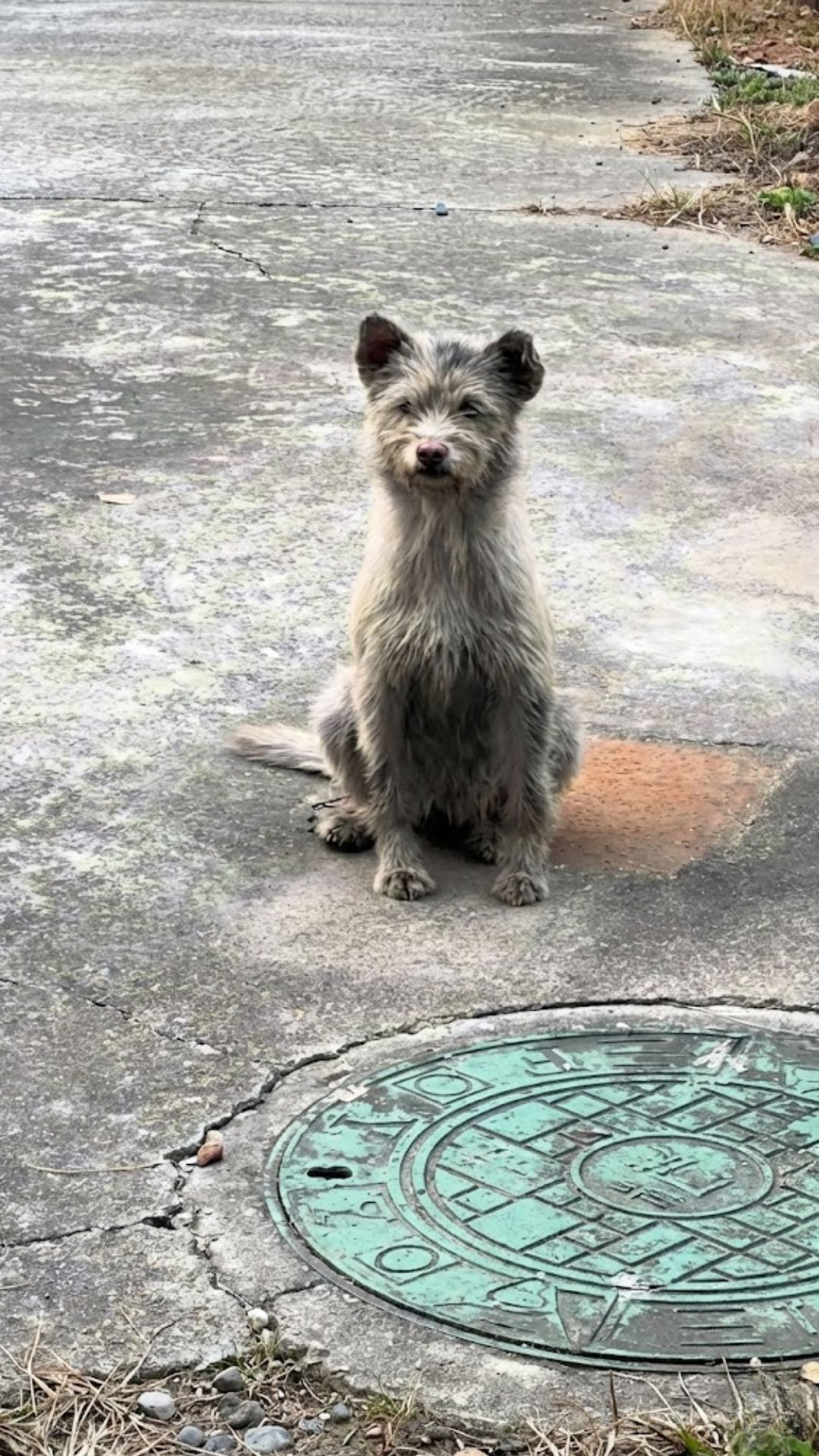
For five days, she would only eat after I walked away.
The older white dog had begun appearing outside the factory quietly, always keeping several steps between herself and anyone who tried to approach.
Her body was thin.
Gray had already begun spreading across her muzzle.
Whenever food was placed on the ground, she watched carefully from a distance.
Then came the routine.
I set the bowl down.
I stepped back.
She waited.
Only when enough space opened between us would she move forward and eat.
It happened again the next day.
And the next.
Then, on the sixth day, something changed.
She did not retreat when I came closer.
For the first time, I was able to touch her.
That was when I noticed her stomach.
It was suddenly swollen and firm.
And what looked at first like an approaching birth would soon become something very different.
For Five Days, Trust Meant Keeping My Distance
The dog lived close enough to the factory to return for food, but not close enough to people to accept contact.
There was no dramatic first meeting.
No immediate rescue.
Building trust happened through repetition.
Food appeared.
No one chased her.
The same person came back.
Again and again.
Slowly, the distance she needed became smaller.
By the sixth day, she allowed a hand close enough to stroke her.
That small change made something else impossible to miss.
Her abdomen did not match the rest of her body.
She was still thin.
But her belly had become noticeably distended.
Her chest also appeared fuller than before.
The changes suggested one obvious possibility.
Pregnancy.
Perhaps she had been carrying puppies all along.
Perhaps the sudden swelling meant delivery was close.
At that point, there was no way to know from appearance alone.
She needed a veterinary examination.
VIDEO: Everyone Expected Puppies — Then the Veterinarian Looked at the Ultrasound Screen
The Ride to the Clinic Was Her First Step Away From the Factory
Leaving her outside was no longer reasonable.
A colleague came to help, and together we carefully lifted the dog into the vehicle.
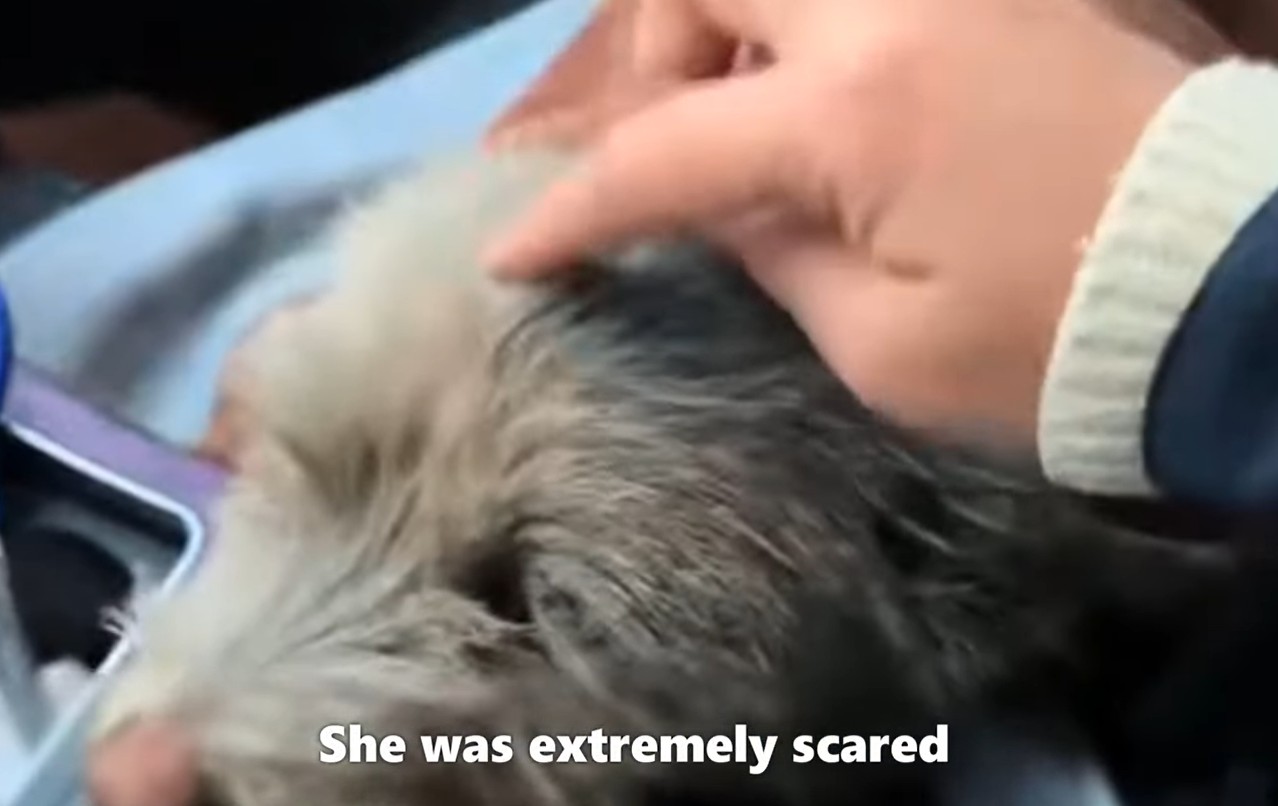
The unfamiliar environment made her visibly uneasy.
She trembled.
Her eyes followed movement around the car.
So someone remained beside her during the ride, gently touching her head while the vehicle continued toward the clinic.
Nothing about the trip could explain to her what was happening.
One moment she had been beside the factory.
Now she was surrounded by unfamiliar smells, movement, and people.
The only thing the rescuers could do was keep the handling calm.
At the clinic, the swollen abdomen became the focus immediately.
Everyone wanted the same answer.
Were puppies inside?
The ultrasound would tell them.
The Screen Did Not Show What Everyone Expected
The veterinarian placed the ultrasound probe against her abdomen.
The team watched the monitor.
At first, the expectation was straightforward.
If she was carrying viable puppies, the examination should reveal fetal activity and heartbeats.
The veterinarian moved the probe.
Then checked another area.
There was no reassuring rhythm.
The examination continued.
Still nothing.
According to the rescue account, the veterinarian eventually delivered the news quietly:
“There’s no heartbeat.”
The physical changes had been real.
Her abdomen had enlarged.
Her body had begun producing milk.
But the puppies had not survived.
The situation was no longer simply about confirming a pregnancy.
The contents of the uterus were now creating a medical risk for the mother herself.
Treatment could not be postponed.
The Priority Changed From the Puppies to Saving Her
Once the ultrasound findings were clear, the veterinary team shifted focus.
The puppies could not be saved.
The mother still could.
According to the source account, immediate surgery was necessary because the condition was beginning to threaten her health.
The procedure was performed successfully.
That did not mean recovery was immediate.
After surgery, the dog remained physically weak.
Her behavior was also noticeably subdued.
She spent long periods lying with her head down.
She showed little interest in food.
The rescuers stayed nearby rather than trying to force interaction.
There was no need to decide exactly what she was feeling or assign human words to it.
The visible facts were enough.
She had experienced major physical changes.
She had undergone surgery.
She was tired.
She was not eating normally.
For the next several days, recovery had to happen quietly.
For Days, She Barely Wanted to Eat
Food was offered.
She often ignored it.
People sat beside her.
Sometimes they spoke softly.
Sometimes they simply remained there.
Her body needed to recover from both the underlying condition and the procedure that followed.
That process could not be rushed.
The rescuers did not expect a dramatic transformation the morning after surgery.
They watched instead for small signs.
Was she more alert?
Would she lift her head?
Would she show interest when food was placed nearby?
Days passed with little visible change.
Then came day nine.
That morning, Snowy did something different.
She stood.
Nine Days Later, Her Tail Moved
The first change was small.
Snowy got to her feet.
Then her tail moved.
Only a little.
But after days of staying mostly withdrawn, the movement was noticeable.
She walked toward the food bowl.
Then began eating.
Not a cautious bite.
Not a few mouthfuls before turning away.
According to the account, she finished the meal.
For the people caring for her, that moment mattered because it showed something measurable.
Her appetite was returning.
She had enough strength to stand and move on her own.
The quiet dog who had spent days resting after surgery was beginning to participate in the world around her again.
That did not erase what had happened at the clinic.
But it did change what the next few days looked like.
Snowy Became Xiaobai — And the Factory Was Left Behind
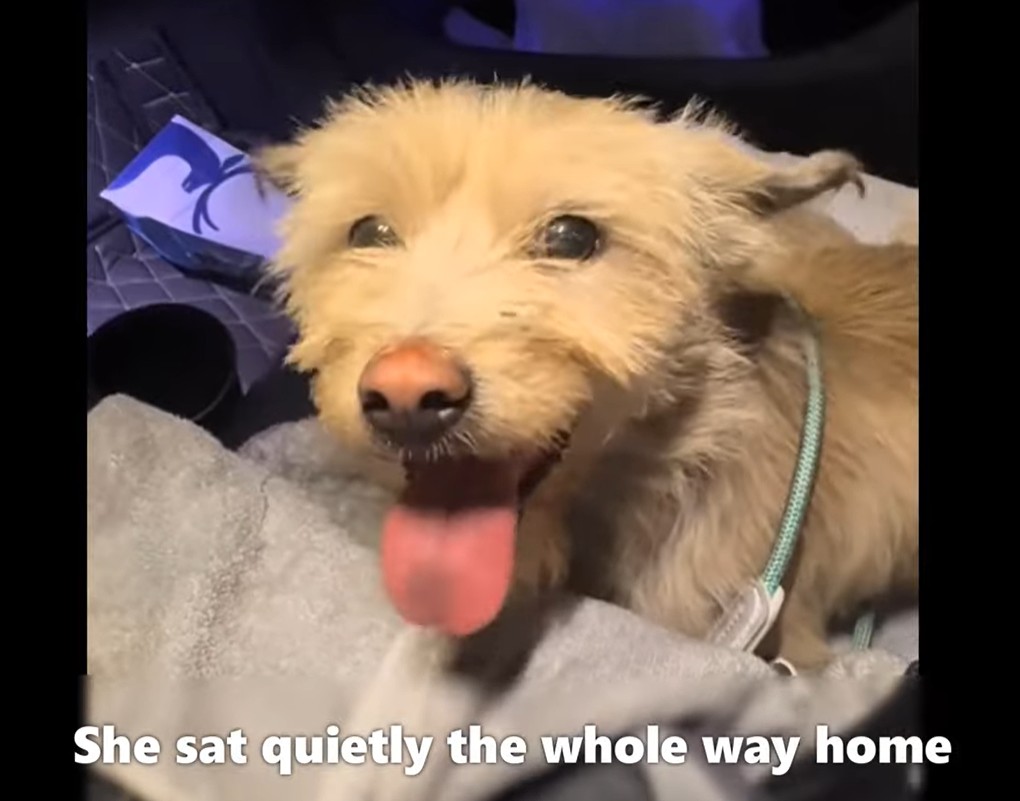
Not long afterward, the dog came home with the person who had first earned her trust outside the factory.
There, she received a name used affectionately in the story:
Xiaobai.
The home was very different from the place where she had spent her days as a stray.
There was a soft bed.
Food appeared regularly.
People knew where she was.
She no longer needed to wait until someone walked far enough away before deciding whether it was safe to eat.
There was already another resident in the house as well.
A cat.
The cat was reportedly less enthusiastic about the newcomer.
Xiaobai, however, settled into the household.
She began developing routines that had never been possible outside the factory.
Resting indoors.
Following familiar people.
Moving through rooms that stayed the same from one day to the next.
The Dog Who Once Stayed Several Steps Away Began Following Everywhere
The clearest sign of how much Xiaobai had changed came from her relationship with the person who rescued her.
In the beginning, five days of feeding had barely been enough to close the distance between them.
Later, that distance almost disappeared.
Xiaobai began following from room to room.
If her person moved across the house, she moved too.
She would stop occasionally and look back or check where they were before continuing.
The behavior was simple.
But it stood in complete contrast to the beginning.
Outside the factory, she would not approach until a person backed away.
Inside the home, she chose to stay close.
That change had not happened because one comforting sentence convinced her.
It came through repetition.
Food.
Handling that stayed gentle.
Medical treatment.
Recovery.
A home that remained there the next morning.
The Ultrasound Was Not the End of Her Story
The most difficult moment in Snowy’s rescue happened in a quiet examination room.
Everyone had entered expecting puppies.
Instead, the veterinarian found no heartbeat.
The physical signs of pregnancy had led rescuers toward one story.
The ultrasound revealed another.
What followed was not the ending anyone had imagined.
There was surgery.
Days of weakness.
Meals left unfinished.
Long stretches of rest.
Then, nine days later, Snowy stood.
Her tail moved.
She ate.
And eventually, she left the factory behind.
Today, the strongest contrast in her story is not between “sadness” and “happiness.”
It is something easier to see.
At first, she would only approach food once people moved away.
Later, as Xiaobai, she followed the person who rescued her from room to room.
The dog who once needed distance to feel safe had finally found somewhere she no longer needed to keep it.


