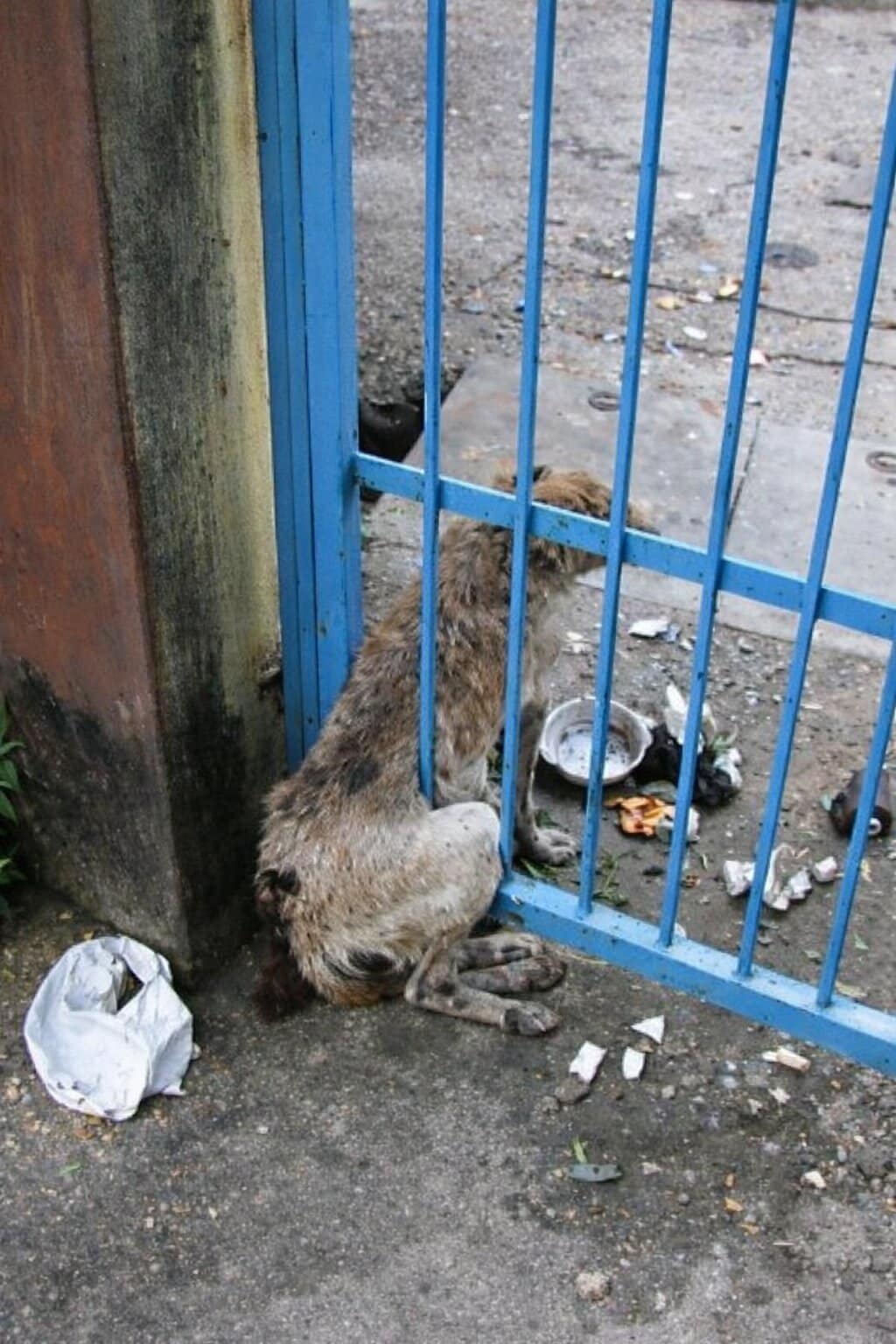
At first, rescuers could barely understand how the elderly dog had become trapped.
Her body was wedged tightly between the iron bars of a heavy metal gate.
She could not move forward.
She could not pull herself backward.
Every attempt to struggle appeared to have left her weaker.
By the time help arrived, the dog was exhausted.
Her body was frail.
Several wounds needed immediate attention.
And there was no safe way to simply pull her through the narrow gap without risking further injury.
The rescuers would later call her Dotty.
At that moment, however, there was only one priority.
Get her out.
The team examined the gate.
Then they reached a difficult conclusion.
If Dotty could not pass through the bars, the bars would have to move instead.
Pulling Her Free Could Have Made Everything Worse
The space around Dotty was extremely narrow.
Her body had already been pressed against the metal for an unknown amount of time.
Trying to drag her out by force could cause additional injuries, especially with several areas of her skin already damaged.
So the rescuers slowed everything down.
One person stayed close to Dotty.
Others examined where the metal could be cut safely.
The goal was to create enough room without allowing the equipment to come dangerously close to her body.
A cutting tool was brought in.
As it touched the iron, sparks appeared around the gate.
The sound was loud.
The dog remained trapped only inches away.
Rescuers kept a hand near her and spoke calmly while the work continued.
Little by little, one of the bars began to separate.
The opening grew wider.
Then, after several careful minutes, the team finally had enough space to move Dotty.
They supported her body.
Lifted slowly.
And guided her away from the metal.
For the first time since she had become trapped, there was nothing pressing against her sides.
But freedom from the gate did not mean the danger was over.
VIDEO: Rescuers Had to Cut Through an Iron Gate to Free Elderly Dotty
Once She Was Free, Her Condition Became Even More Concerning
Away from the bars, rescuers could see Dotty properly.
She was extremely weak.
Her body showed signs of dehydration.
Several wounds had deteriorated and needed urgent cleaning and treatment.
The team could not tell exactly how long she had been trapped.
But her physical condition suggested that she had been struggling without adequate help for some time.
Dotty was transported immediately to the rescue center.
There, the medical team began with the most urgent needs.
Fluids were given to help address dehydration.
Her wounds were carefully examined.
Some areas showed evidence of infestation and infection, so medication was applied and the damaged tissue was cleaned thoroughly.
The team worked slowly.
For an older dog already weakened by exhaustion, treatment itself can be stressful.
Everything needed to be done with as little additional discomfort as possible.
Once the immediate cleaning was complete, Dotty was given a quiet place to rest.
Then food was offered.
No one expected a dramatic recovery in a single night.
They simply needed her body to begin responding.
The First Meal Was a Small but Important Sign
Dotty had already experienced enough that day.
The gate.
The cutting equipment.
The trip to the rescue center.
Medical examination.
Wound care.
Fluids.
By the time food was placed near her, she was tired.
Still, she showed interest.
She ate.
It was a simple action.
But for the caregivers watching her, it mattered.
Eating meant her body was still willing to take in energy.
That energy would be essential for everything that came next.
Healing damaged skin requires nutrition.
Rebuilding strength requires calories.
An older dog recovering from dehydration and infection needs both rest and consistent support.
So meals became part of Dotty’s routine.
Small enough to tolerate.
Regular enough to help.
Fresh water remained available.
Her wounds were checked again.
Then the process repeated the next day.
And the day after that.
There was no shortcut.
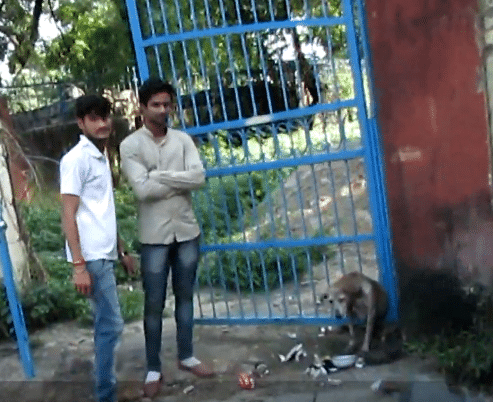
Daily Wound Care Became the Center of Her Recovery
Dotty’s injuries could not be treated once and forgotten.
They required ongoing attention.
Every day, rescuers examined the affected areas.
The wounds were cleaned.
Medication was applied.
The team monitored for signs that infection was improving rather than spreading.
Because some of the damaged areas had been severe, the healing process was gradual.
Healthy tissue had to replace what had been injured.
Inflammation needed time to decrease.
Dotty also needed to avoid reopening the wounds as she began moving more.
During those early days, much of her time was spent resting.
Caregivers stayed near her without demanding interaction.
Some offered gentle touch when she appeared comfortable with it.
Others simply sat nearby.
There was no need to force affection from a dog recovering from pain.
Dotty’s progress could be measured in much smaller things.
A stronger appetite.
A steadier posture.
More interest in what was happening around her.
The ability to remain upright for a little longer.
Then one day, she took a few more confident steps.
Strength Returned Before Confidence Did
As Dotty’s physical condition improved, her movement became steadier.
At first, she walked carefully.
Her body had been weakened by both age and the ordeal at the gate.
She needed time to regain balance and muscle strength.
The rescue team allowed her to move at her own pace.
Short distances.
Rest.
Then another attempt later.
Over time, the difference became visible.
The elderly dog who had once been unable to free herself from a narrow gap could now cross the rescue area without assistance.
Her wounds continued closing.
Her appetite remained stable.
Her body looked stronger.
But another change took longer.
Dotty had arrived in a state of pain and exhaustion.
Even after the immediate medical problems improved, she was initially reserved around people.
Caregivers noticed that she watched them carefully.
She did not always approach immediately.
So they kept the routine predictable.
Food.
Cleaning.
Rest.
Gentle voices.
The same people returning again.
Gradually, Dotty began responding differently.
A Tail Wag Revealed a Different Side of Dotty
One of the first emotional changes the team noticed was small.
A caregiver approached.
Dotty’s tail moved.
Not dramatically.
Just a gentle wag.
For the people who had seen her trapped between iron bars, that tiny movement meant a great deal.
Soon, it happened more often.
Dotty began leaning toward familiar hands.
She accepted affection more comfortably.
When people entered the rescue area, she appeared interested rather than withdrawn.
As her body stopped hurting as much, more of her personality became visible.
She was not simply an injured senior dog.
She was affectionate.
Curious.
Responsive.
And increasingly comfortable around the people caring for her.
The difference between the first day and the later weeks was striking.
At the gate, Dotty had barely been able to move.
Now she could walk around the rescue center.
And before long, walking was no longer enough.
She wanted to move faster.
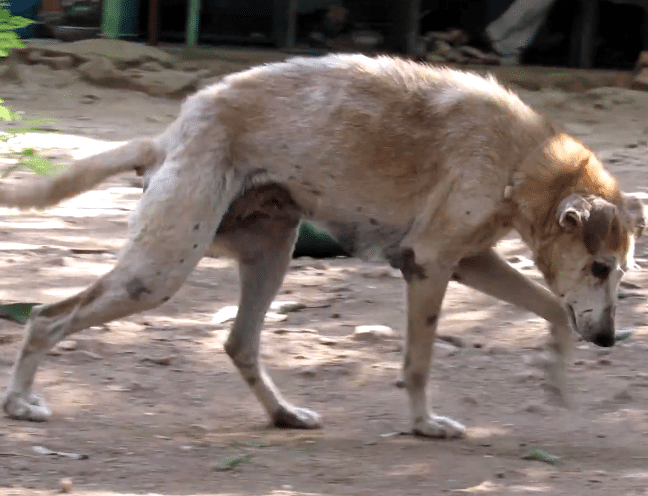
The Dog Who Could Not Escape the Gate Began Running Again
Weeks into recovery, Dotty’s transformation became difficult to miss.
Her wounds had healed significantly.
Her movements were stronger.
Her body no longer carried the same exhausted posture.
Then came a moment that would have seemed impossible on the day she was found.
Dotty ran.
It was not the sprint of a young puppy.
She was still an elderly dog.
But she moved freely across the ground under her own power.
There were no iron bars holding her in place.
No narrow gap preventing her from turning around.
No rescuers needing to lift her body.
Dotty could choose where she wanted to go.
That freedom became one of the clearest signs of how far she had come.
She wandered around the rescue center.
She approached volunteers.
She accepted hugs and gentle attention.
Her tail moved more easily.
The dog whose rescue had begun with cutting metal was now spending her days doing something far more ordinary.
Living.
Dotty’s Recovery Was Built From Hundreds of Quiet Moments
The dramatic part of Dotty’s story lasted only minutes.
The gate.
The sparks.
The bar being cut.
The moment rescuers finally lifted her free.
Recovery took much longer.
It was built from days of routine care.
Fluids when she was dehydrated.
Medication for damaged skin.
Repeated wound cleaning.
Meals.
Rest.
Monitoring.
Short walks.
Then longer ones.
A little more strength.
A little more trust.
Those quieter moments rarely look as dramatic as a rescue itself.
But they are often what determine whether a vulnerable animal truly recovers.
Dotty did not become healthy because one person cut through a metal bar.
That action gave her the opportunity to heal.
Everything afterward made that opportunity matter.
The Gate Is Gone, but the Moment Someone Noticed Still Matters
No one knows exactly how long Dotty had been trapped before help arrived.
The rescue account does not provide a clear timeline.
What it does show is what happened once someone recognized that the situation could not be ignored.
People came.
They evaluated the risk.
They chose not to pull her out carelessly.
They cut through the gate.
They carried her to safety.
Veterinary caregivers treated the wounds that had gone unattended.
Volunteers returned every day while those wounds healed.
And eventually, the elderly dog who could barely move began walking freely again.
Today, Dotty is no longer defined by the image of her body wedged between iron bars.
She can move where she wants.
She can rest comfortably.
She can approach the people she has learned to recognize.
She can run through open space instead of struggling against metal.
Her story does not require us to imagine what she was thinking while she was trapped.
The difference between then and now is visible enough.
Once, Dotty could not move forward or backward.
Now, when she sees someone she knows, she can simply walk toward them.
And nothing stands in her way.


