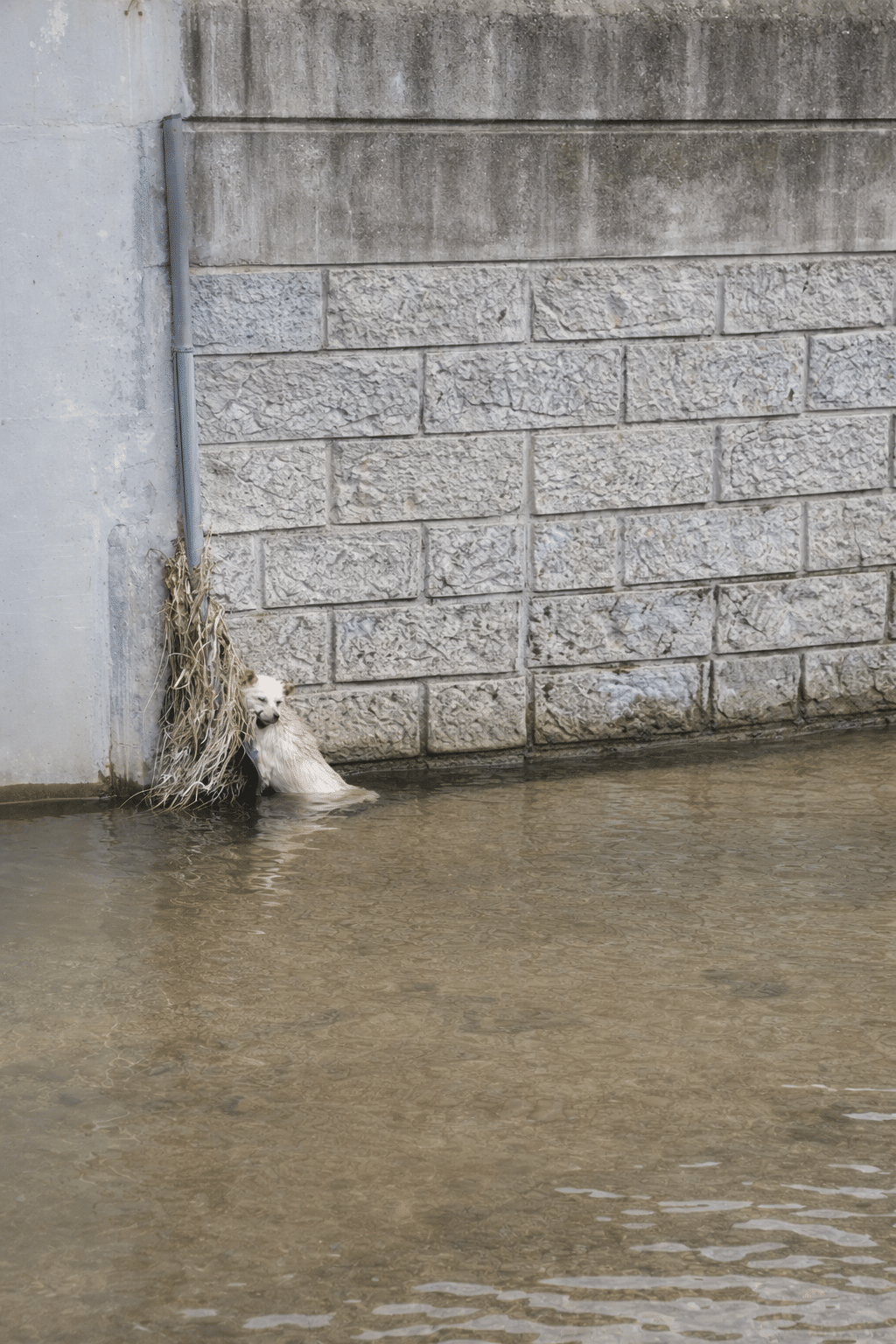
The photograph was difficult to look at.
A tiny puppy stared toward the camera with thick black tape wrapped tightly around his muzzle.
Layer after layer covered his mouth.
He could not open it.
He could not eat normally.
He could not drink.
And no one viewing the image knew how long he had already been living that way.
The picture began circulating online.
People shared it repeatedly, hoping someone close enough would recognize the location and reach the puppy before his condition became worse.
Eventually, rescuers found him.
Only then did they realize the tape had caused far more damage than the photograph could show.
The tissue around his mouth had been badly injured.
His body was dehydrated.
He was weak from being unable to eat properly.
The puppy needed the tape removed immediately.
But simply pulling it away could tear already damaged skin even further.
So the rescuers began slowly.
One layer at a time.
Removing the Tape Had to Be Done Millimeter by Millimeter
The tape had been wrapped tightly enough that the skin underneath had become fragile.
Rescuers could not rush.
They supported the puppy’s head while carefully loosening each section.
The adhesive pulled against irritated tissue.
Every movement had to be controlled.
The puppy remained surprisingly still while they worked.
Eventually, the final layer came free.
For the first time since the tape had been placed around his muzzle, his mouth could open again.
But relief quickly gave way to concern.
The tissue around the muzzle was badly damaged.
According to the rescue account, nearly half of the delicate area around his mouth had been affected.
He was also severely dehydrated.
Days without normal access to food or water had left his small body with very little strength.
Rescuers offered him a small amount of food.
Despite the condition of his mouth, he showed immediate interest.
He ate carefully from their hands.
That first meal did not mean the crisis was over.
It meant there was something to work with.
The puppy wanted food.
Now veterinarians had to make eating possible without causing further damage.
VIDEO: Black Tape Sealed His Mouth Shut—Then Rescuers Saw How Badly the Skin Had Been Damaged
The Injury Around His Mouth Required More Than Cleaning
At the veterinary clinic, the extent of the damage was examined more closely.
This was not a superficial injury that would heal with a little ointment.
The tissue around the puppy’s mouth had been torn and compromised badly enough that surgical repair was needed.
Because the muzzle is involved in eating, drinking, breathing, and normal jaw movement, the veterinary team had to be especially careful.
Their goal was not only to close damaged tissue.
They also needed to preserve as much normal function as possible.
During the first week following the rescue, the puppy underwent two surgical procedures.
Veterinarians carefully repaired the injured areas surrounding his mouth.
The work required precision.
Too much tension on healing tissue could create additional problems.
Too little support could interfere with proper recovery.
After surgery, the puppy entered another delicate stage.
The procedures were finished.
Healing had only begun.
Soft Food, Medication, and Quiet Days Followed the Operations
The days after surgery were structured around protection and recovery.
The puppy received pain medication.
Antibiotics were used as part of the treatment plan.
His wounds were monitored closely.
Food needed to be soft enough that eating would place minimal strain on the healing area.
Caregivers watched how he opened his mouth.
They watched whether he could swallow comfortably.
They checked the surgical sites for signs of inflammation or infection.
And they paid attention to something equally important.
His appetite remained strong.
The puppy continued eating.
As hydration and nutrition improved, his energy gradually returned.
He also remained calm during much of the handling required for treatment.
Rather than assume this meant he had somehow forgotten what happened before rescue, caregivers simply responded to what they saw.
A young dog accepting food.
Allowing treatment.
Growing stronger.
Those repeated behaviors earned him an affectionate nickname among the team.
The little warrior.
It was not because he behaved dramatically.
It was because his body kept responding to care.
By Day 21, the Puppy Who Arrived Weak Was Running Around the Rescue Center
Three weeks can make an enormous difference in a young dog receiving proper treatment.
By approximately day 21, the change was difficult to miss.
The swelling and injuries around the puppy’s mouth had improved significantly.
The surgical areas were healing.
He had regained strength.
And the animal who had once arrived dehydrated and unable to use his mouth normally was now moving around the rescue center with the energy expected from a puppy.
He ran.
He explored.
He became interested in the other dogs.
Play replaced much of the quiet recovery routine that had dominated his first days.
This was one of the clearest signs that treatment was working.
Running requires energy.
Play requires curiosity.
Interaction requires enough comfort to pay attention to something beyond pain.
The puppy now had all three.
Caregivers began seeing more of his personality.
He approached.
He investigated.
He joined the activity around him.
The dark tape that had once hidden most of his muzzle was gone.
In its place were healing scars and a puppy learning how much larger the world could be.
Another Dog Named Hanah Had Survived a Similar Kind of Restraint
The case reminded rescuers of another dog they had helped.
Her name was Hanah.
In Hanah’s situation, a plastic container had reportedly been placed over her muzzle and secured with tape.
Fortunately, rescuers reached her quickly.
They cut the container away before the restraint caused the same level of damage seen in the puppy’s case.
Hanah recovered.
Later, she was adopted.
Her story did not need to take over the puppy’s journey.
But it carried an important reminder.
Restricting an animal’s mouth can become dangerous very quickly.
Dogs need unrestricted access to water.
They need to regulate body temperature normally.
They need to eat.
They need to open their mouths without obstruction.
The difference between rapid intervention and delayed help can determine how serious the injuries become.
For the little warrior, help had not come early enough to avoid surgery.
But it had come in time to give him another chance.
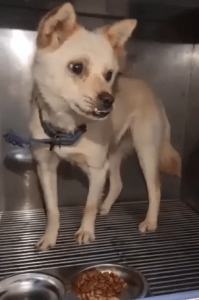
As His Wounds Closed, His Life Began Looking Like a Puppy’s Life Again
Once the immediate medical crisis had passed, the rescue team’s goals changed.
At first, success had meant getting the tape off.
Then it meant stabilizing dehydration.
Then surgery.
Then wound healing.
Now the goal was much simpler.
Let him be a puppy.
He spent time with other dogs.
He ran around the rescue area.
He played.
He rested when tired.
Meals no longer required the same level of caution as his mouth continued healing.
The scars remained visible.
But they were no longer the first thing that defined every moment of his day.
His caregivers could focus less on the injury and more on the dog himself.
That shift is one of the most meaningful parts of many rescue stories.
A patient becomes a puppy again.
A medical chart becomes a personality.
A dog known for what happened to him becomes known for what he enjoys.
For this little dog, the transition happened quickly.
Only weeks separated the photograph of the taped muzzle from scenes of him running freely.
Eventually, Someone Chose Him for the Life Beyond Recovery
Medical recovery was not intended to be the final destination.
The puppy still needed a permanent home.
A rescue center could give him treatment, safety, and temporary companionship.
But the hope was that someone would eventually see him as more than an animal who had survived something terrible.
A family did.
The little warrior was adopted.
He left the rescue environment and began living with people who would care for him as a companion rather than a patient.
In later scenes of his story, he could be seen running outdoors beside his new owner.
His tail moved freely.
He explored the park.
There were no bandages.
No tape.
No treatment table.
Only a young dog moving through open space.
Faint scars remained around his muzzle.
Those marks recorded part of what happened.
But they did not interfere with eating, playing, or following the people around him.
His body had healed enough for ordinary life to take over.
The Photograph That Alarmed Thousands Is No Longer the Image That Defines Him
At the beginning, almost everyone saw the same thing.
Black tape.
A tiny face.
A mouth that could not open.
The photograph spread because people immediately understood that something was wrong.
But rescue gave the puppy a chance to create entirely different images.
A bowl of food finally within reach.
A veterinarian repairing damaged tissue.
A puppy resting after surgery.
Day 21.
Running.
Playing.
Meeting other dogs.
Then walking into a home of his own.
None of those moments erased what happened before.
They simply prevented the worst moment of his life from becoming the last one.
His recovery was built through practical acts of care.
Someone shared the photograph.
Someone located him.
Hands removed the tape carefully instead of ripping it away.
Veterinarians repaired the injuries.
Caregivers provided medication and soft meals.
People monitored the wounds.
Then a family made room for him.
What began with a puppy unable to open his mouth eventually became a story about a dog free to run wherever his curiosity took him.
The scars may always remain faintly visible.
But today, they are only one small part of a much larger picture.
The little warrior survived.
And now, instead of wondering when he will eat or whether he can drink, he gets to spend his days doing exactly what a young dog should—
playing, exploring, and going home with someone who is waiting for him.


