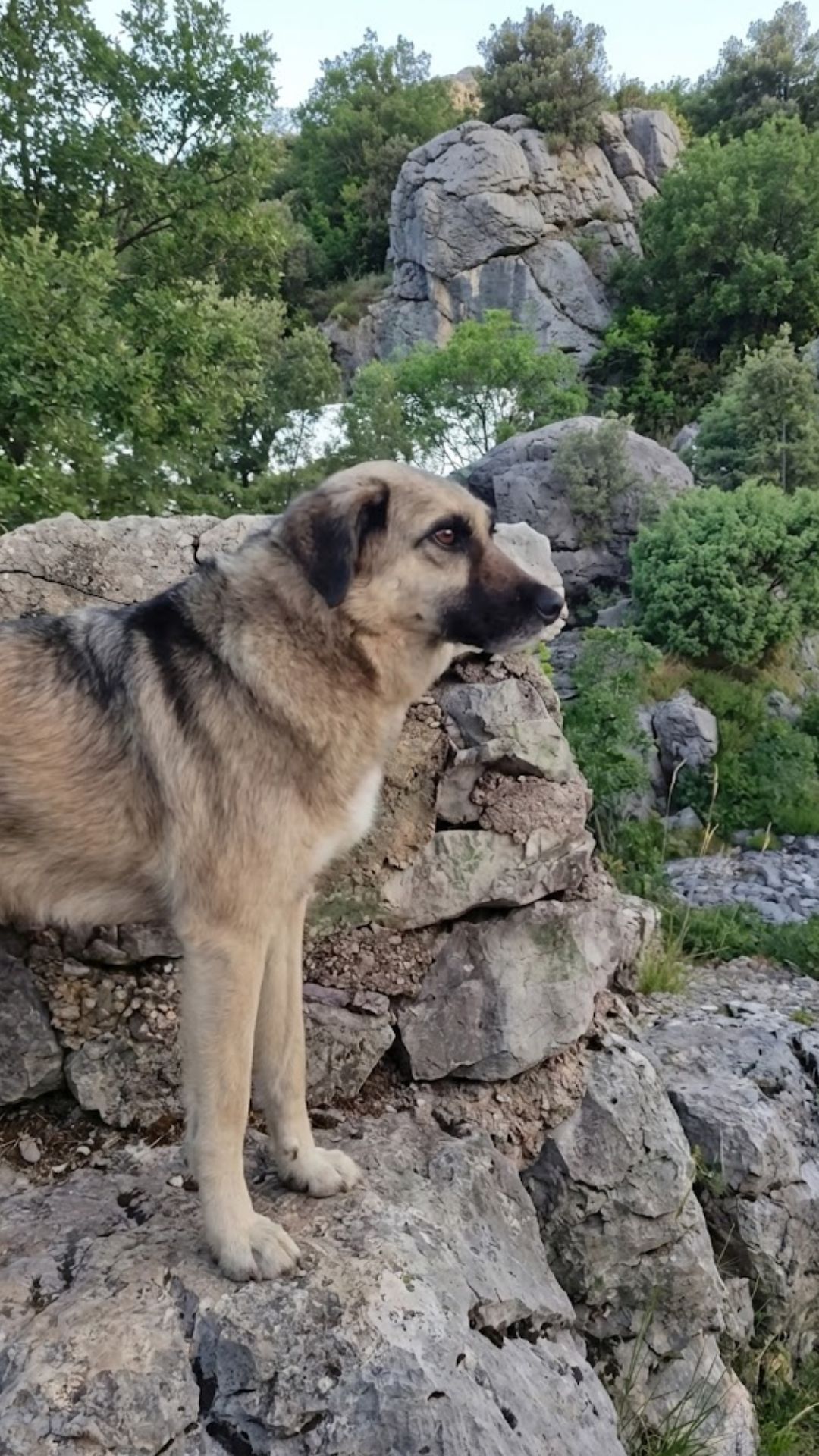
At first, she did everything she could to avoid him.
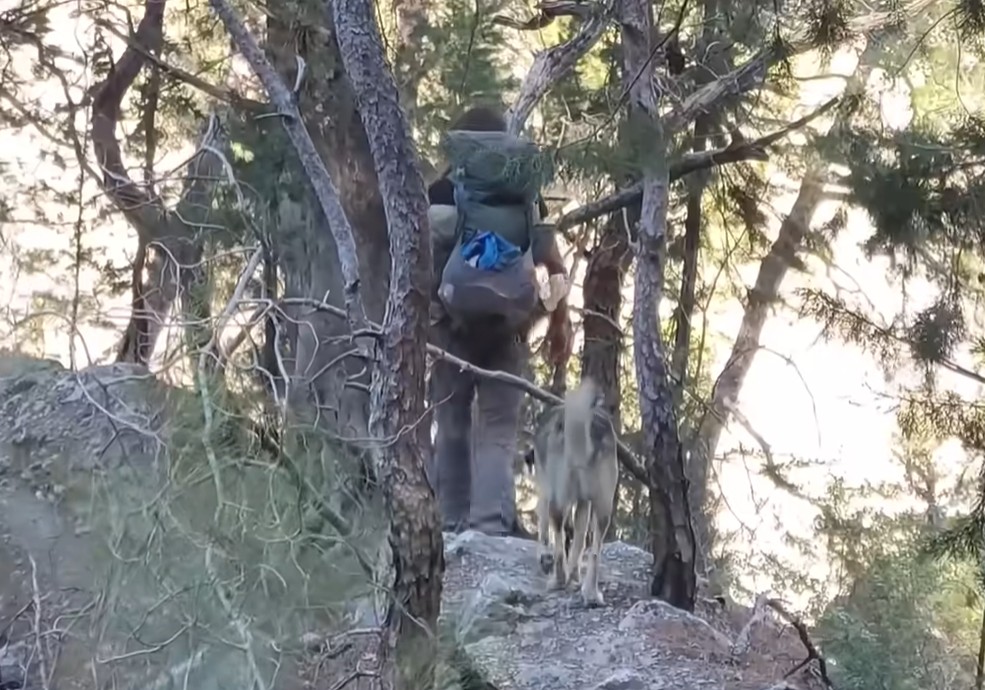
The stray dog had appeared somewhere along Turkey’s Lycian Way, quietly falling into step behind a woman hiking the rugged trail alone.
He did not bark for attention.
He did not jump on her.
He simply followed.
She tried walking faster.
She tried ignoring him.
At one point, she even hid, hoping he would eventually lose interest and attach himself to someone else.
He didn’t.
Hours later, the same dusty dog appeared near her campsite.
His ribs showed faintly beneath his coat.
He looked tired.
And he was still there.
That evening, she finally shared some food with him.
Then she reached down and scratched behind his ears.
She named him Lissien, after the trail where their paths had crossed.
The arrangement was supposed to last only a little while.
Then Lissien disappeared.
And the woman who had tried so hard not to care suddenly realized how much his presence had already begun to matter.
He Chose to Follow the Person Who Kept Walking Away
The Lycian Way stretches through dramatic coastal and mountain landscapes in Turkey.
For a solo hiker, long portions of the trail can feel remote.
That was where Lissien appeared.
He was a stray.
No collar.
No obvious person calling him back.
Just a dog who seemed to decide that this particular traveler was worth following.
At first, she resisted the attachment.
She later admitted that she did not want another responsibility.
More than that, she did not want to become attached to something she might eventually lose.
So she tried creating distance.
Lissien kept closing it.
When she moved down the trail, he followed.
When she stopped, he remained nearby.
Even when she attempted to hide from him, he eventually found her campsite.
By then, hunger had clearly taken its toll.
She offered him food.
Then a little attention.
Under the night sky, what had begun as unwanted company slowly became companionship.
She gave him his name.
That simple act made the relationship feel less temporary.
Even if she was not ready to admit it yet.
Video: A Stray Dog Followed Her Across the Lycian Way—And Refused to Stay Behind
Then Lissien Vanished
After days of having him nearby, the absence was immediate.
Lissien was simply gone.
The woman searched.
Waited.
Replayed their time together.
And found herself thinking about something she had noticed in his behavior.
Lissien seemed especially determined to follow people who tried to create distance from him.
That pattern struck a personal chord.
She later described recognizing something of herself in him—the tendency to pursue connection even when it was not being returned in the way she hoped.
The realization was emotional.
Not because a dog had somehow explained her life to her.
But because watching him had given her a way to see an old pattern from a different angle.
The animal she had originally tried not to care about had become unexpectedly important.
Then, outside her tent, she heard movement.
A familiar shape appeared again.
Lissien had returned.
Their Bond Was Built Through Repeated Goodbyes
That first disappearance was not the last time they became separated.
According to her account, it happened twice more during their journey.
Each separation forced the same question.
Was this where their paths finally divided?
Each time, she tried to convince herself that perhaps it was better that way.
Lissien was a stray dog in his own country.
She was a traveler continuing along a long trail.
Their lives had not been designed to fit together.
Yet somehow, Lissien kept finding his way back.
The repeated reunions changed the meaning of their relationship.
He was no longer simply a dog walking in the same direction.
She had begun expecting him beside her.
Listening for him.
Checking where he was.
Sharing food.
Making decisions with his presence in mind.
Without planning it, she had taken on responsibility for another life.
And Lissien, in return, had become a constant presence during a journey she had begun alone.
The Motorcycle Ride Forced a Decision
The clearest turning point came when she needed to leave a small town.
She accepted a ride on the back of a motorcycle.
The engine started.
The motorcycle pulled away.
Then she looked behind her.
Lissien was running.
He had spotted her leaving and was sprinting down the road after the motorcycle.
Dust rose beneath his paws.
He kept going even as the distance stretched.
The woman watching from the bike could see that the effort was exhausting him.
Still, Lissien did not stop.
The motorcycle slowed.
He kept running.
Finally, he caught up.
He was panting heavily.
His body was tired.
But he had made it.
For the woman, that moment settled something she had been resisting since the first day on the trail.
She was no longer willing to leave him behind.
Caring for Lissien Changed the Shape of Her Journey
Before meeting Lissien, the woman described struggling significantly with her mental health.
She had also become socially isolated.
Traveling alone felt easier than navigating relationships and everyday social interaction.
Lissien complicated that isolation.
A dog needs water.
Food.
Safe places to rest.
Sometimes information.
Sometimes help.
Caring for him meant she could no longer move through every situation without speaking to anyone.
She had to ask strangers questions.
Find water.
Explain the dog traveling beside her.
Accept help.
Interact with people she otherwise might have avoided.
None of those moments functioned as treatment.
But together, they changed the rhythm of her days.
Lissien gave her a practical reason to participate in the world around her.
The focus was no longer always inward.
There was another living being beside her whose needs were immediate and simple.
Is he hungry?
Does he have water?
Where is he?
Is he safe?
Those questions created movement.
And movement created connection.
He Became a Mirror Without Knowing It
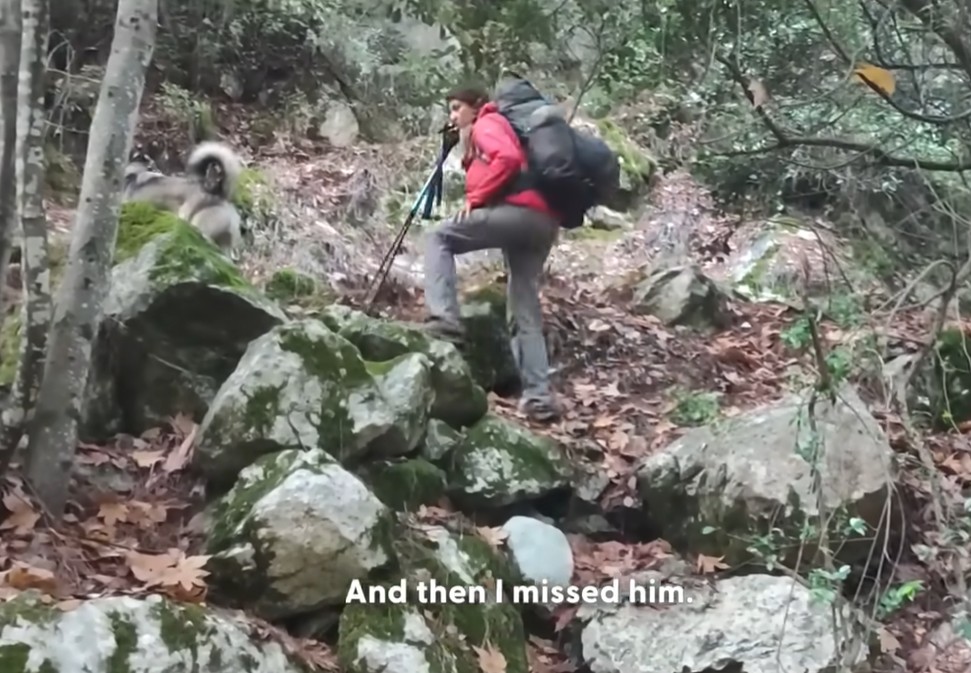
The woman later spoke about Lissien as a kind of reflection.
Not because their lives were literally the same.
But because certain patterns in his behavior felt familiar to her.
She saw the way he kept following when people pulled away.
She recognized her own history of seeking closeness in places where she often felt unwanted.
Seeing that pattern in a dog made it easier to observe without the usual explanations she might have attached to herself.
Lissien was not ashamed of wanting companionship.
He simply wanted to stay near someone.
That simplicity affected her.
There was no diagnosis in his behavior.
No complicated language.
Just a dog who valued connection.
The experience did not erase the struggles she carried onto the trail.
What it gave her was another perspective.
A reminder that needing companionship did not automatically make someone weak.
And that sometimes the most meaningful relationships begin before either side understands what they are becoming.
The Dog She Tried to Avoid Became the Reason She Reached Out
Lissien’s influence was practical before it was emotional.
Because of him, she talked to people.
Because of him, she asked for help.
Because of him, she entered situations she might otherwise have avoided.
That mattered.
Social isolation can make the outside world feel increasingly distant.
Re-entering it does not always begin with a large decision.
Sometimes it begins with something almost inconveniently small.
Asking a stranger where to find water.
Explaining why a stray dog is following you.
Finding someone willing to help with food.
Stopping instead of passing by.
Lissien created those moments simply by existing beside her.
He did not understand the role he was playing.
He did not need to.
He was a dog.
He needed care.
And in caring for him, the woman found herself participating more fully in the journey around her.
Their Rescue Story Went in Both Directions
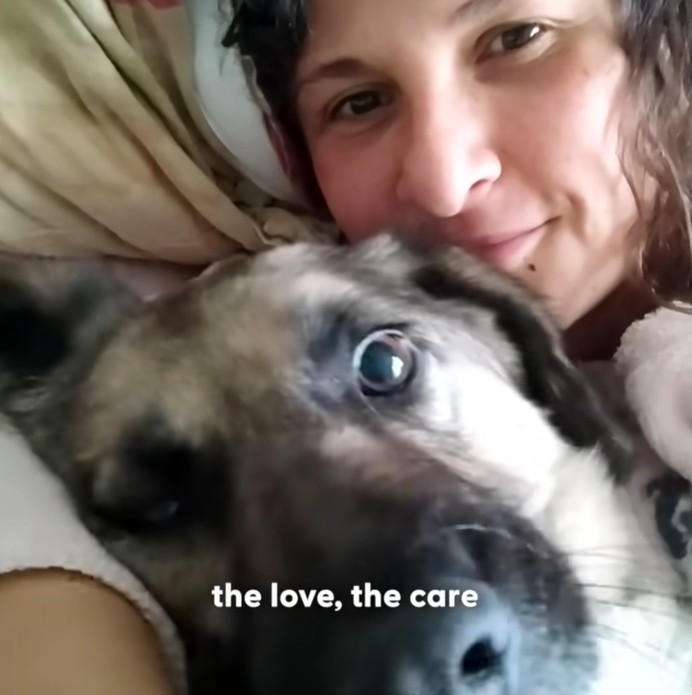
It is tempting to describe stories like this by asking one simple question:
Who rescued whom?
The answer is not quite that neat.
Lissien was a stray dog.
The woman gave him food, companionship, protection, and eventually a permanent place in her life.
Those things mattered.
But she also described his presence as meaningful during a period when she had been struggling and withdrawing from others.
Lissien did not become a substitute for professional mental health care.
He did not erase difficult experiences.
What he did was offer companionship without complicated expectations.
He needed her to show up.
And showing up for him helped her show up in other parts of life as well.
That mutual dependence became the heart of their story.
She helped a stray dog leave behind uncertainty.
He helped make the world around her feel more approachable.
They Started the Trail as Strangers
The beginning of their relationship almost became the end several times.
She tried to avoid him.
Lissien disappeared.
They became separated again.
She rode away on a motorcycle.
Each moment offered an easy place for the relationship to stop.
Instead, they kept finding each other.
By the time Lissien ran after the motorcycle, the question was no longer whether he would continue following her.
It was whether she would finally accept what had already happened.
She had grown attached.
He belonged in her decisions.
The stray dog she once hoped would choose someone else had become the one she was no longer prepared to leave behind.
The Lycian Way eventually ended.
Their relationship did not.
The mountains moved into the past.
The dog remained.
And the woman who began the journey trying not to form another attachment finished it with a companion who had repeatedly shown up beside her.
Lissien did not arrive with a plan to change anyone’s life.
He was simply a stray dog who chose to follow a hiker.
She was simply a traveler who eventually stopped trying to make him leave.
Sometimes that is how the most important bonds begin.
Not with certainty.
Not with a promise.
But with someone walking beside you long enough that one day, when you look back and see them running to catch up, you realize you no longer want to keep going without them.


