Dean Cresswell was only walking his dogs.
It was December 2015 in Windsor, Canada, and the afternoon was bitterly cold. Nothing about the walk suggested that within minutes he would become part of a rescue story that would spread far beyond that quiet patch of grass.
Then his dogs began pulling him away from the path.
They had noticed something.
Dean followed.
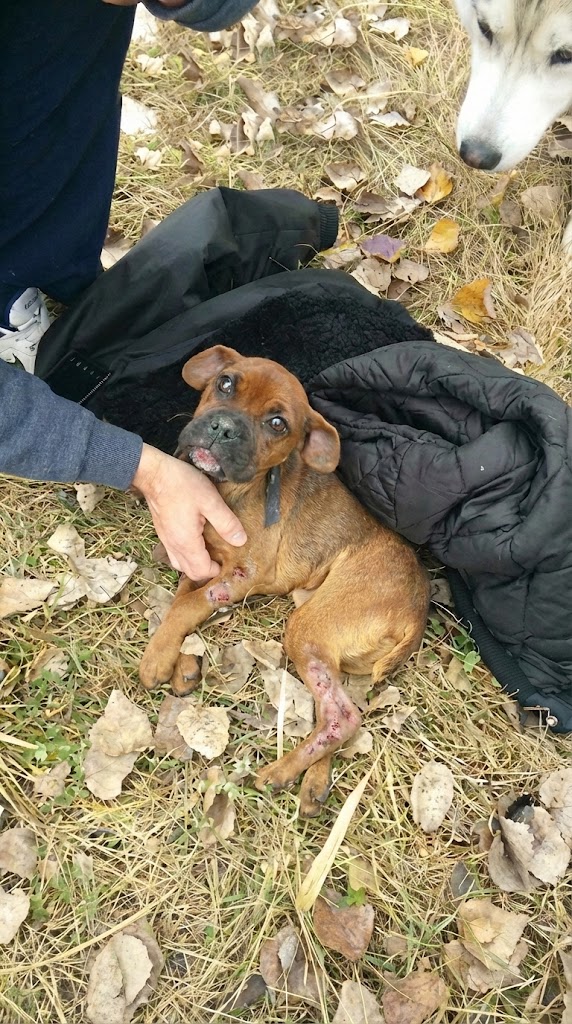
Lying on the ground was a small dog weighing barely 13 pounds.
At first, the animal hardly moved.
Then Dean saw why.
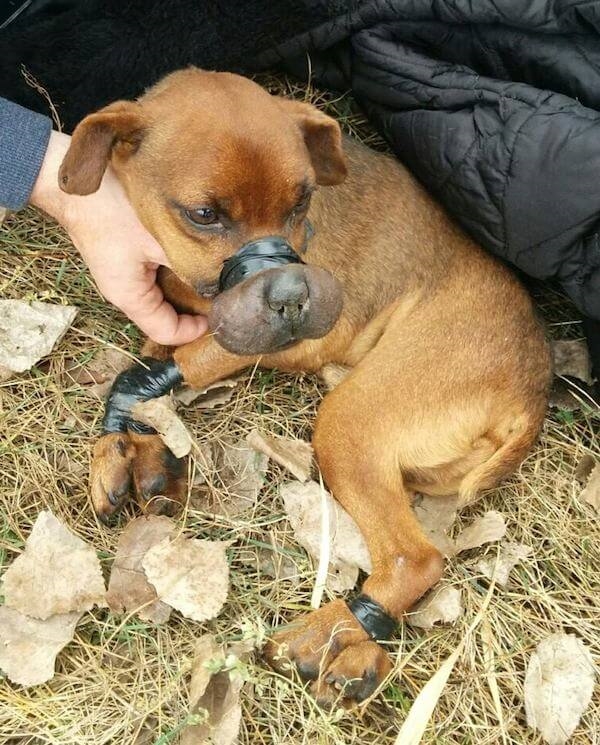
Black electrical tape had been wrapped tightly around the dog’s muzzle.
His paws were bound.
Another section of tape was around his neck.
He could not bark for help.
He could barely move.
Someone had left him there in the cold.
Dean immediately realized that this was not a dog who could simply be untied and sent home.
He needed emergency help.
The little dog would soon be given a name that seemed almost impossible to separate from everything that followed.
Justice.
Dean’s Dogs Found Him When He Couldn’t Call for Anyone
Justice had no way to attract attention.
His muzzle had been sealed so tightly that even making ordinary sounds was difficult.
His paws had been bound together, preventing him from walking away.
He was simply lying there.
Cold.
Restrained.
Waiting for someone to notice.
Dean might easily have continued along his normal route if his own dogs had not become interested in the area beside the path.
Instead, they pulled him closer.
That small change in direction may have saved Justice’s life.
Help was called.
Humane Society rescuers arrived and began dealing with the bindings.
The electrical tape had been wrapped tightly enough that removing it required care.
As the material came away, the damage underneath became visible.
Justice’s muzzle was badly swollen.
So were his paws.
The pressure from the tape had irritated and injured the skin beneath it.
But the injuries caused by the bindings were only the beginning of what veterinarians would discover.
Video: Justice Is Found Bound With Electrical Tape and Rushed Into Emergency Care
The Tape Came Off — But the Damage Couldn’t Be Removed So Easily
Once Justice reached veterinary care, the medical team could examine him properly.
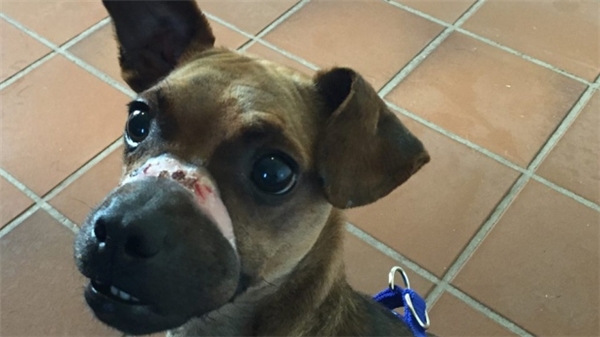
The constriction around his muzzle had caused significant injury.
Parts of the tissue around his jaw had been damaged badly enough that doctors eventually had to remove tissue that could no longer recover.
Justice would require repeated procedures.
Not one operation.
Four separate surgeries.
The medical team also discovered that he was dealing with other health problems unrelated to the tape.
Justice had heartworm.
He also had serious dental disease.
For a dog already physically weakened by what had happened to him, those additional conditions complicated treatment.
The veterinary team had to consider his overall condition every time another procedure was planned.
Recovery would not happen quickly.
For a period, Justice was so weak that even standing was difficult.
Pain medication and careful monitoring became part of his routine.
Much of his day was spent resting.
Yet as treatment continued, the people around him began noticing small behaviors that did not fit the image of a dog completely shutting down.
Justice ate.
Then he started showing more interest in his surroundings.
And eventually, his tail began to move when familiar caregivers approached.
Four Surgeries Later, His Tail Was Still Moving
A tail wag cannot tell us exactly what a dog is thinking.
But for the people caring for Justice, it was difficult not to notice.
This was a dog who had arrived unable to use his mouth normally and struggling physically after being left restrained outdoors.
Now he was responding to the people around him.
He began eating with increasing enthusiasm.
He watched caregivers enter the room.
He participated in the daily routine.
None of those changes erased the seriousness of his injuries.
Justice still needed medical care.
His jaw still had to heal.
His heartworm and dental condition still required attention.
But the dog inside the case file was becoming easier to see.
He was not simply lying still while treatment happened around him.
He was engaging.
Recovering.
Learning the rhythm of being cared for.
And while that recovery continued inside the clinic, something else was happening outside.
People were learning what had been done to Justice.
The story spread.
And thousands began asking the same question.
Would the person responsible face consequences?
More Than 45,000 People Demanded Accountability
Justice’s case attracted widespread attention.
As details of his rescue became public, reaction grew quickly.
More than 45,000 people signed a petition calling for the strongest possible punishment for the person responsible.
For many people following the case, Justice had become more than one injured dog.
He represented a broader concern about how seriously deliberate cruelty toward animals should be treated.
The legal process moved forward while Justice continued recovering.
Then, in February 2016, the person responsible pleaded guilty.
According to the account of the case, the sentence included two years in prison and a 25-year prohibition on owning animals.
At the time, the punishment was described as a particularly strong response to an animal cruelty case.
For those who had followed Justice from the beginning, the courtroom outcome mattered because the suffering discovered in that field had not simply been forgotten once the dog survived.
There were consequences.
And Justice’s name remained attached to the public conversation surrounding them.
His Body Was Healing — But Ordinary Life Still Had to Be Learned
Medical treatment addressed Justice’s physical injuries.
That did not mean he immediately behaved like a dog who had experienced nothing unusual.
According to his rescue story, Justice struggled with anxiety and heightened alertness during recovery.
He needed predictability.
Quiet handling.
Routine.
He needed repeated experiences in which nothing frightening followed when people came near.
His rehabilitation included patient behavioral work and clicker training.
Progress was gradual.
Justice learned the people around him had regular patterns.
Meals arrived.
Training sessions ended safely.
Hands could approach without causing pain.
Rest could happen without constantly watching the room.
This part of rescue was less visible than surgery.
There were no dramatic before-and-after photographs for every small improvement.
But those quieter changes were what would make the next chapter possible.
Justice was preparing for a home.
In July 2016, Justice Finally Became Someone’s Family Dog
A few months after he had been discovered outside in the cold, Justice reached another milestone.
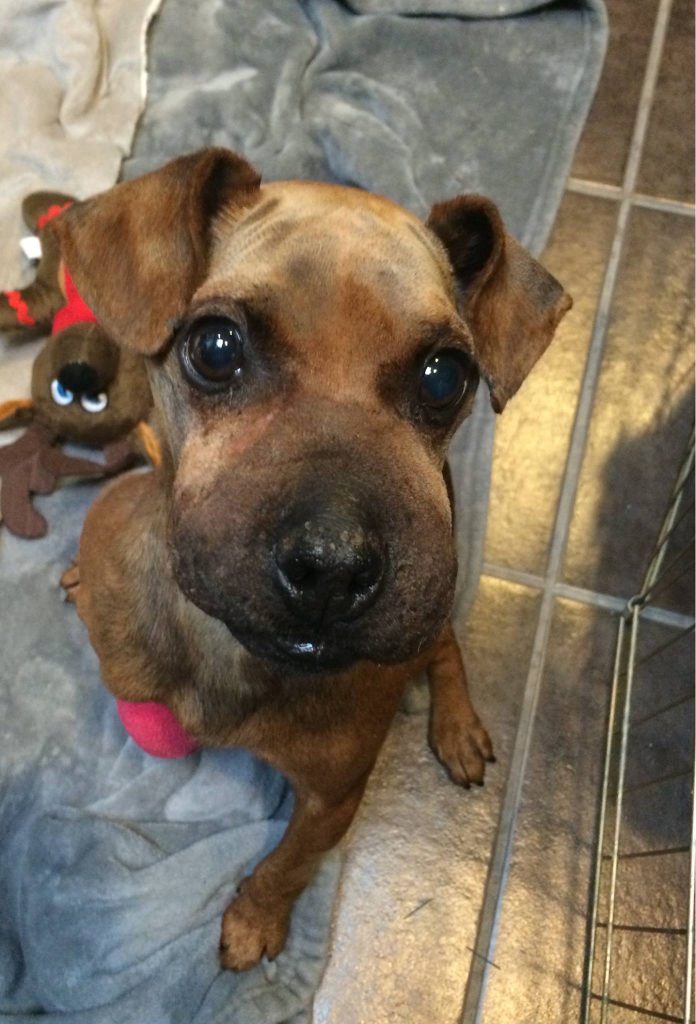
In July 2016, he was adopted.
His new family was not taking home an anonymous cruelty case.
They were taking home Justice.
A dog with preferences.
Habits.
Quirks.
And a personality that had continued emerging throughout rehabilitation.
His life began filling with the ordinary things rescue workers had been working toward all along.
Soft places to sleep.
Toys.
Affection.
Familiar people.
According to those who knew him, Justice even developed the mischievous habit of trying to sneak sips of coffee when he had the opportunity.
That detail may seem trivial beside everything he survived.
In many ways, that is what makes it meaningful.
Justice was no longer defined only by what had been done to him.
He was doing ordinary dog things.
Getting comfortable.
Being curious.
Looking for treats.
Spending time with his family.
The animal once found unable to make a sound had finally been given space to live a much larger life.
The Dog From the Field Became a Symbol People Remembered
Justice’s case stayed with people long after his adoption.
Part of that came from the severity of what rescuers found.
Part came from his recovery.
And part came from the legal response that followed.
His story showed several systems working one after another.
Dean’s dogs noticed him.
Dean stopped.
The Humane Society responded.
Veterinary teams treated him through multiple surgeries.
Thousands of people followed the legal case.
A court imposed a prison sentence and a long prohibition on future animal ownership.
Then a family gave Justice something the courtroom could never provide.
A home.
It would be an overstatement to say that one dog completely transformed animal cruelty law on his own.
But Justice unquestionably became a powerful public symbol of why serious cruelty cases deserve attention and meaningful consequences.
His name made the issue harder to treat as something abstract.
There was a face attached to it.
A small dog.
Barely 13 pounds.
Found in the cold because two other dogs happened to pull their owner toward the grass.
Justice’s Final Chapter Came Six Years Later
Justice lived for years after the day he was discovered.
His life extended far beyond the clinic photographs and courtroom headlines.
Then, in October 2021, at the age of 11, Justice passed away peacefully while surrounded by the people who loved him.
The ending could hardly have been more different from the beginning.
In December 2015, he had been lying outside unable to free himself or call for help.
By the end of his life, he had a family beside him.
That does not erase what happened.
Nor does rescue need to pretend that terrible experiences disappear simply because good years follow.
Justice’s past remained part of his story.
It just stopped being the only part.
One Walk, One Discovery, and a Life That Continued for Years
Justice survived because several things happened in sequence.
Dean’s dogs pulled him off the path.
Dean followed them.
He looked closely enough to understand that the small body in the grass needed immediate help.
Rescuers came.
Veterinarians worked through difficult medical problems.
Rehabilitation continued long after the first emergency had passed.
The legal system addressed the person responsible.
Then a family opened its home.
Any one of those moments could easily dominate the story.
But taken together, they show something larger.
Rescue is rarely one dramatic act.
It is a chain of people deciding that what happens next matters.
For Justice, that chain began on a cold afternoon in Windsor.
A dog who could not bark was noticed.
A dog who could not walk away was carried out.
A dog known first for one terrible act of cruelty eventually became known for something very different.
Recovery.
Family.
And a case that thousands of people refused to forget.
Justice’s life began that chapter bound and silent in the cold.
It ended years later with people beside him who knew exactly who he was.
Not a headline.
Not a case number.
Not merely a symbol.
Justice.
A dog who finally got to belong.


