The man never expected the dog to take him seriously.
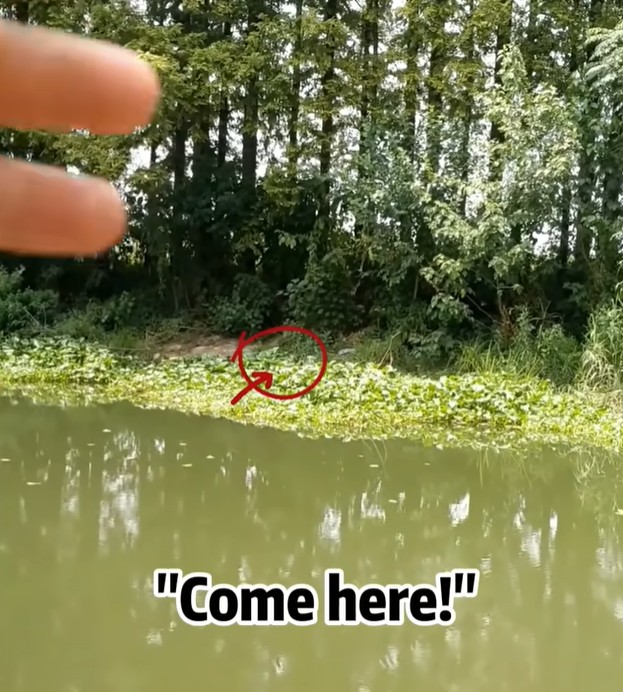
He was sitting beside the river, fishing through a quiet afternoon, when he noticed a skinny stray standing on the opposite bank.
The dog did not wander away.
He simply watched.
Dirty coat.
Thin body.
Eyes fixed on the fisherman across the water.
Perhaps amused by the attention, the man called out jokingly:
“If you swim over here, I’ll take you home!”
He expected nothing to happen.
Maybe the dog would lose interest.
Maybe he would disappear along the riverbank.
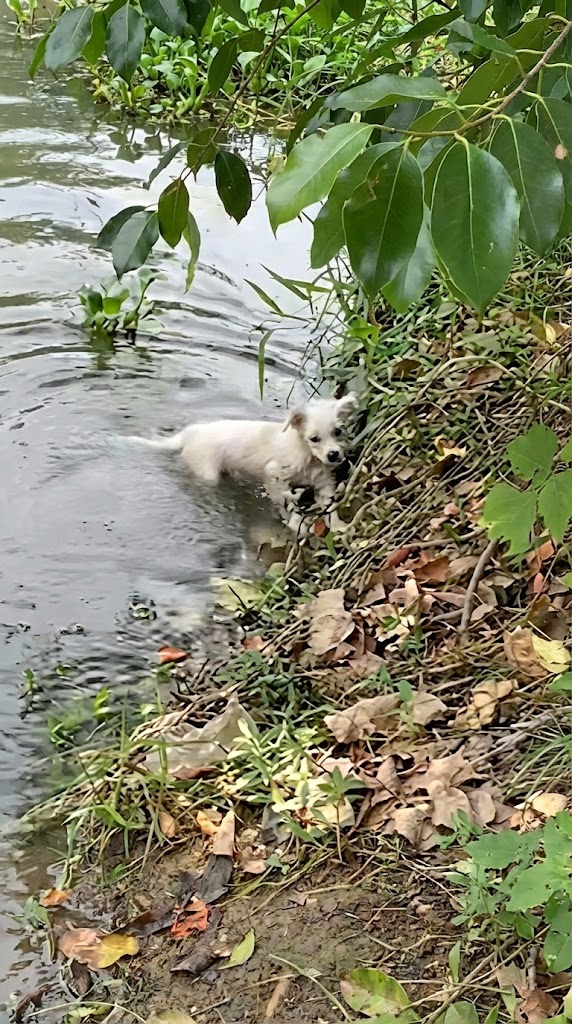
Instead, the stray stepped toward the water.
Then jumped in.
The man’s smile vanished.
The dog had accepted the challenge.
And suddenly, words meant as a joke had become something much more serious.
The Dog Actually Started Swimming Toward Him
For a moment, the fisherman could hardly believe what he was watching.
The dog was really crossing the river.
His paws churned through the water as he worked his way toward the opposite bank.
The current made the crossing difficult, and the stray was hardly in ideal condition for a demanding swim.
Still, he kept going.
Splash.
Paddle.
Push forward.
The man watched with growing concern as the joke stopped being funny altogether.
“Wait—he’s actually doing it!”
There was no easy way to take the words back now.
The dog had already committed himself to the crossing.
Eventually, after struggling through the water, he reached the fisherman’s side of the river.
Wet and trembling, the stray pulled himself onto land.
Then he did something surprisingly quiet.
He did not bark.
He did not immediately search through the fishing supplies.
He simply settled close to the man’s feet.
Only now could the fisherman see clearly what the river had hidden from a distance.
The dog was painfully thin.
Large areas of fur were missing.
His irritated skin showed signs that he had been scratching for some time.
The stray had crossed the river.
Now the man had a promise to keep.
Video: Lucky Swims Across the River After a Fisherman Jokingly Promises Him a Home
He Had Been Joking — Lucky Had Not
Looking down at the exhausted dog, the man could no longer treat what he had said as a throwaway comment.
He had told the stray that crossing the river would earn him a home.
The dog had crossed.
So the fisherman followed through.
He brought him along and gave him a name.
Lucky.
The name soon became part of the story in another amusing way.
According to the man’s account, the fishing improved dramatically that same day, with carp beginning to bite repeatedly after Lucky arrived.
The fisherman laughed at the coincidence.
Perhaps the new dog really was lucky.
He promised him a proper meal.
Fresh carp.
Warm food.
Something better than whatever the stray had been finding along the river.
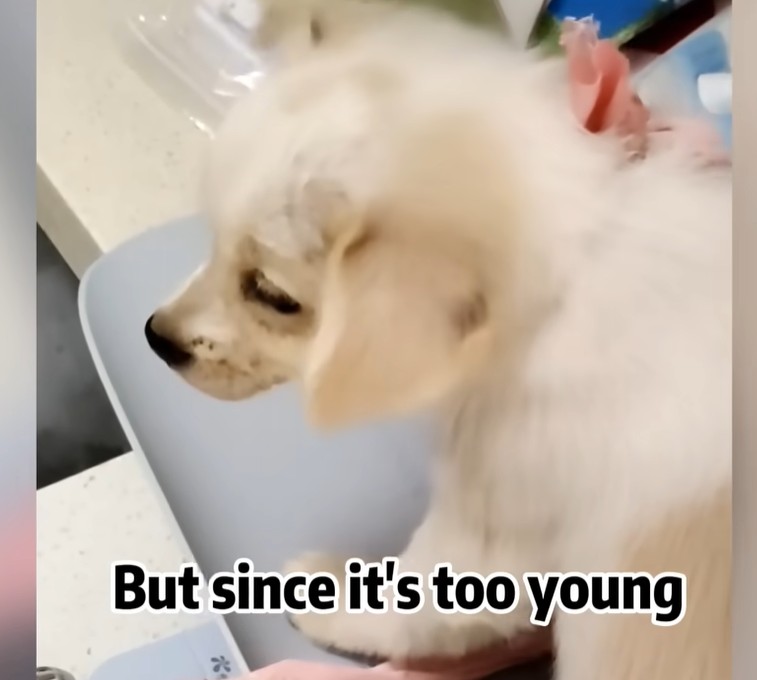
But when they reached home, Lucky revealed that getting a dog through the front door could be harder than getting him across a river.
He refused to leave the car.
The Car Felt Safer Than the Home Waiting Outside
Lucky stayed frozen inside the vehicle.
The door was open.
No one was stopping him from getting out.
Yet he remained where he was.
A new house meant unfamiliar smells.
New rooms.
New sounds.
And a person he had known for only a short time.
The fisherman did not drag him out.
He waited.
Spoke gently.
Allowed Lucky to examine the situation at his own pace.
Then there was another form of persuasion.
Food.
The smell of the meal being prepared gradually became difficult for the hungry dog to ignore.
Eventually, Lucky came inside.
It was a small transition compared with the river crossing.
Emotionally, however, it may have been just as important.
Crossing the river had required physical effort.
Entering the house required accepting that an unfamiliar place might actually be safe.
His Skin Needed Care as Much as His Thin Body Needed Food
Once Lucky was home, his condition became impossible to overlook.
The missing fur and irritated skin needed attention.
The fisherman had never raised a dog before, so his approach was simple and hands-on.
According to the original account, he washed Lucky using sulfur soap over a period of days while trying to improve the skin problem.
Food became another major part of the routine.
The man prepared carp in several ways.
Some was fried.
Some became broth.
Bones were removed carefully before the fish was mixed with rice and eggs.
For a dog who had arrived painfully underweight, regular meals produced visible results quickly.
But feeding Lucky was not only about increasing the number on a scale.
It established a pattern.
There would be another meal.
And another after that.
Food was no longer something Lucky had to search for on an exposed riverbank.
It appeared because someone expected him to remain.
In Ten Days, His Weight Changed From 6.4 to 10.5 Pounds
Lucky’s improvement soon became measurable.
When first taken in, he weighed about 6.4 pounds.
Ten days later, according to the account, he weighed approximately 10.5 pounds.
That was a remarkable visible change in a short period.
His body began filling out.
His appearance became healthier.
The constant scratching eased as his skin received care.
And new fur began appearing in areas that had previously looked thin and irritated.
The dog beside the river had looked worn down by outdoor life.
Now his transformation could be seen every time he stood beside the man who had brought him home.
The changes were not limited to his body.
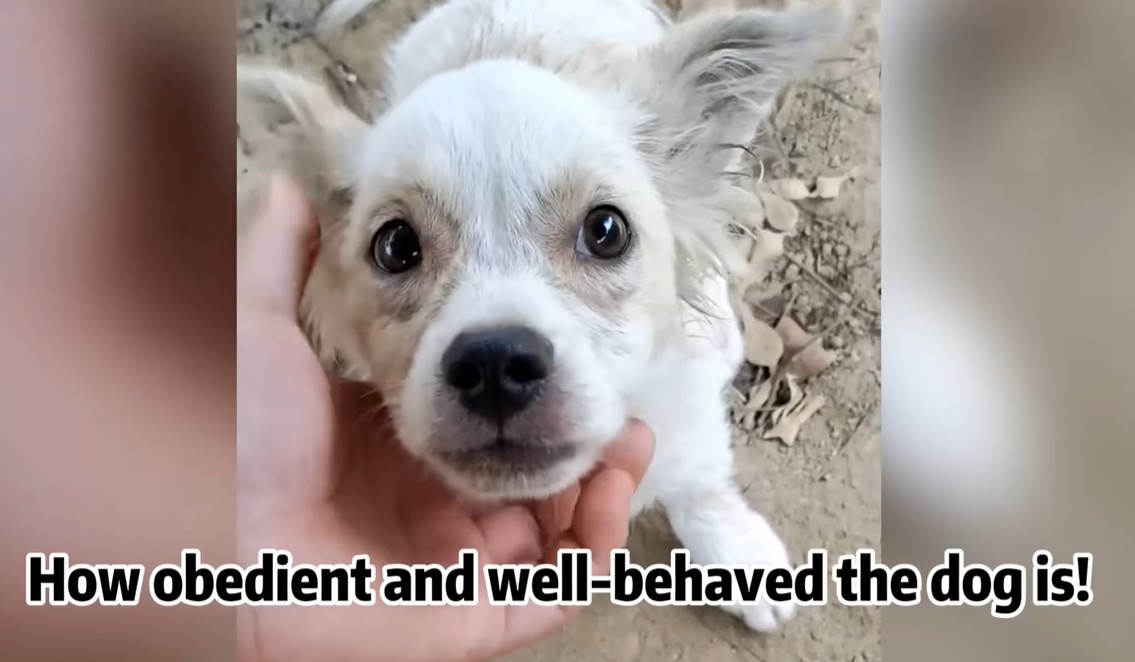
Lucky also began behaving less like a dog expecting to be alone again.
He stayed near his new caregiver.
He followed him.
He joined him on trips.
He became part of the everyday routine.
The Stray Across the River Became His Constant Companion
Lucky soon developed the habit of staying close.
Scooter trips to the veterinarian became part of their life together.
On warm days, he enjoyed pieces of watermelon.
Meals became familiar.
Home became familiar.
So did the man who had once shouted a joke across the water.
Lucky even developed a few quirks.
According to his caregiver, he sometimes tried to eat soil.
He could also be particular about eggs, showing a preference for the yolks.
These details were hardly dramatic.
That was exactly what made them meaningful.
Lucky was no longer simply “the stray dog from across the river.”
He had habits someone noticed.
Preferences someone remembered.
Behaviors that could make his person laugh.
He had become an individual inside a household rather than another nameless animal passing through the landscape.
The River Crossing Was Only the Beginning
The swim is naturally the part of Lucky’s story people remember first.
A fisherman calls across the river.
A dog listens.
Then, against expectation, the dog jumps into the water and actually swims toward him.
It feels almost scripted.
But what happened afterward is what turned the moment into a rescue.
The fisherman could have laughed when Lucky arrived and walked away.
Instead, he kept his word.
He brought him home.
He prepared meals.
He cared for his damaged skin.
He took him for veterinary visits.
He waited when Lucky was too nervous to leave the car.
And through repeated days of ordinary care, the stray became healthier.
The promise lasted longer than the swim.
That is why the story works.
Lucky Didn’t Need a Perfect Home — He Needed Someone Who Meant What He Said
The man admitted that he had never raised a dog before.
There was no elaborate rescue facility waiting.
No expensive collection of pet supplies.
He simply began caring for the animal standing in front of him.
Food was prepared from what he knew.
Skin care became part of the routine.
Transportation meant riding together on a scooter.
Affection developed through time spent side by side.
It was not perfect expertise.
It was commitment.
And for Lucky, that commitment was enough to change almost everything about daily life.
He had crossed the river looking thin, dirty, and alone.
Soon he had regular food.
A place to stay.
Medical attention when needed.
And one person who had begun treating his presence as normal.
A Joke Became a Promise Because One Dog Believed It
Perhaps Lucky had no idea what the man’s sentence meant.
Perhaps he simply wanted to reach the person on the opposite bank.
The original story cannot tell us exactly why he jumped.
What we can see is what happened afterward.
The fisherman spoke.
The dog entered the river.
The dog reached him.
And the man decided his words now carried responsibility.
That choice became Lucky’s turning point.
In ten days, his weight rose from 6.4 to 10.5 pounds.
His skin began improving.
His coat started returning.
And the dog who had once stood alone across the river began following his new person through everyday life.
Lucky did not merely reach the other bank that afternoon.
He reached someone willing to keep him.
The fisherman had shouted his promise as a joke.
Lucky crossed the water anyway.
And once those wet paws reached the shore, the man did something that mattered far more than anything he had said.
He kept his word.


