There are some places a dog might remember because they were happy.
A favorite doorway.
A familiar yard.
The sound of someone coming home.
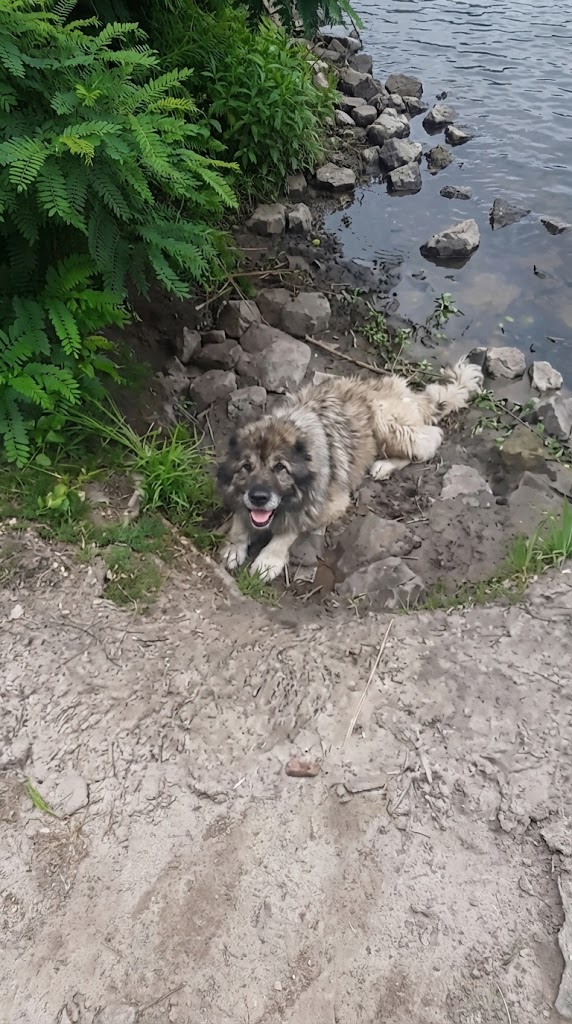
For Yara, a gentle Shepherd, the place that changed everything was a quiet riverbank.
She was found lying near the water, unable to rise.
Her back legs would not support her. Her body was painfully thin, and across her back was an enormous growth that had become impossible to ignore.
According to people in the area, Yara had already been there for three days.
Three days beside the river.
Three days watching the road.
Three days without knowing whether anyone would come back for her.
Then, finally, someone did.
But it was not the person she had been waiting for.
It was a group of strangers who had come to save her.
For Three Days, She Barely Moved From the Riverbank
When rescuers first approached Yara, she did not try to run.
She couldn’t.
The Shepherd remained almost completely still near the edge of the river, her exhausted body resting against the ground.
Locals told rescuers that she had been seen in the same area for roughly three days. She appeared to have been left there, unable to travel far because of the condition of her hind legs and the massive growth across her back.
She was weak enough that every movement seemed difficult.
Yet she remained alert.
She watched the people approaching.
She watched their hands.
She watched the food they placed near her.
At first, no one knew how she would respond.
Then Yara began eating.
And she ate quickly.
The rescuers slowed her down, offering food carefully so that her weakened body would not be overwhelmed. It was one of the clearest signs of just how hungry she had become.
For a few quiet minutes, nothing else mattered.
There was food in front of her.
There were people sitting beside her.
And for the first time since she had been found by the river, Yara was no longer facing everything alone.
VIDEO: Left by the River With a Giant Tumor, She Waited Three Days for Someone to Come
What Looked Serious From a Distance Was Even More Concerning Up Close
Once Yara was safely transported to a veterinary clinic, the team could finally examine her properly.
The growth on her back was enormous.
It had developed over such a large area that rescuers compared its size to a child’s soccer ball.
But its appearance was only part of the problem.
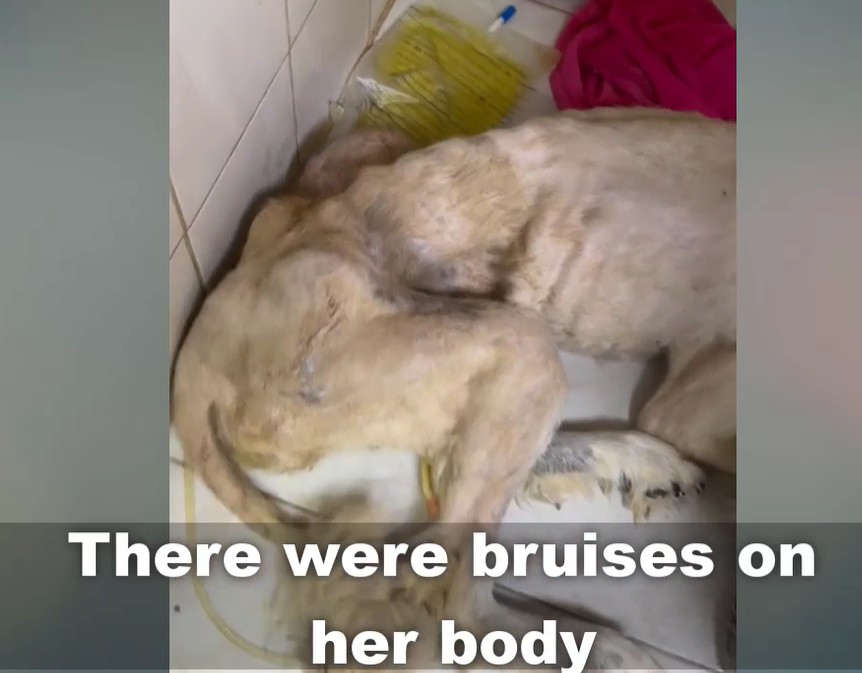
Veterinary examination showed that the mass was pressing near Yara’s spine, affecting the movement of her back legs.
That helped explain why the Shepherd at the riverbank had been unable to stand or walk away.
Her overall condition made treatment even more complicated.
Yara was severely underweight, reportedly weighing less than 60 percent of what would have been expected for a healthy dog of her size.
There were also bruised areas on her body, though the rescuers could not know exactly how every mark had occurred.
The damaged area around the tumor also required urgent cleaning and treatment because of an infestation affecting the exposed tissue.
It was clear that Yara had not reached this condition overnight.
Whatever her history had been, she now needed far more than food and rest.
She needed medical intervention.
And that intervention came with enormous risk.
The Veterinarian Gave Her Only a 30% Chance
After examining Yara and reviewing her condition, the veterinary team faced a difficult decision.
The tumor needed to be removed.
Without surgery, its size and location would continue affecting her mobility and overall health.
But operating on Yara was dangerous.
She was malnourished.
She was exhausted.
Her body had already been carrying an extraordinary physical burden.
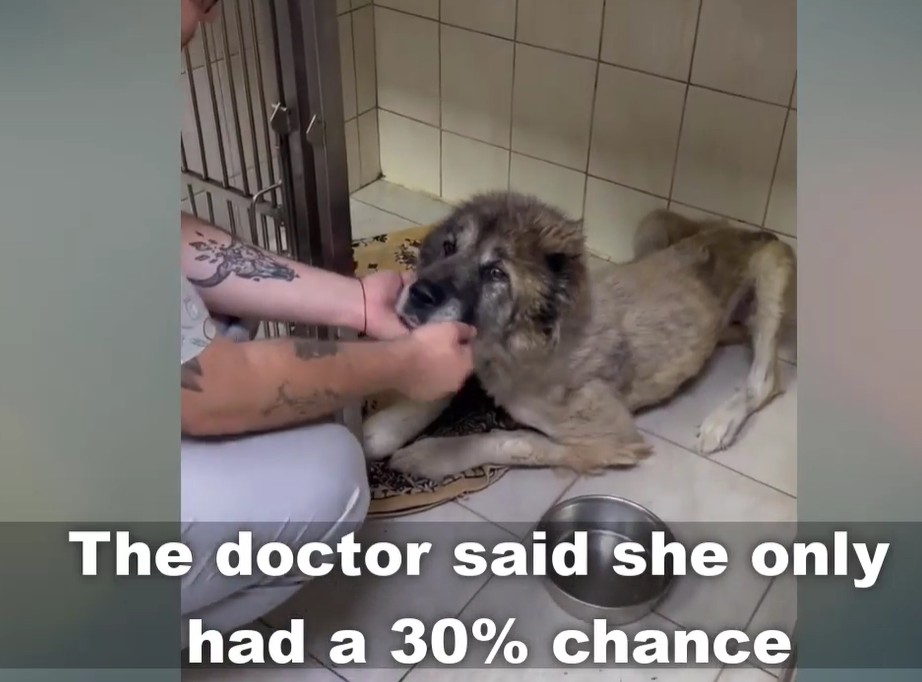
The veterinarian estimated that she had only about a 30% chance of surviving the operation.
For her rescuers, those numbers were difficult to hear.
They had only just found her.
They had only just watched her finish a real meal.
Now they were being told that the attempt to save her could also be the moment they lost her.
There was no perfect option.
Doing nothing carried its own serious consequences.
Surgery offered uncertainty—but it also offered Yara the possibility of living without the enormous weight that had controlled her body for so long.
Her rescuers chose that possibility.
They chose the 30%.
Two Hours in Surgery Changed Everything
The procedure lasted approximately two hours.
For those waiting outside the operating room, there was little to do except hope that Yara’s weakened body could endure it.
The veterinary team carefully removed the massive growth.
Then came the first piece of news everyone had desperately wanted to hear.
Yara had survived the operation.
But another important question remained.
What exactly was the tumor?
If testing showed that it was malignant, surgery might be only the beginning of another difficult medical battle.
The results brought unexpected relief.
The mass was benign.
After everything Yara had already survived, the tumor did not appear to be cancerous.
She still faced a demanding recovery.
She still needed nutrition.
She still needed wound care.
And no one knew how much movement might return to her hind legs after so much pressure around her spine.
But for the first time, the enormous obstacle attached to Yara’s body was gone.
Now her body had a chance to show what it could do without it.
Three Days Later, Yara Tried Something No One Expected
Recovery began quietly.
Yara rested.
She ate.
Her caregivers monitored her constantly.
At first, there was no reason to expect a dramatic change in her mobility. Her hind legs had been affected for a significant period, and recovery after such a major operation could not be rushed.
Then, only three days after surgery, Yara began trying to lift herself.
Her legs trembled beneath her.
She shifted her weight.
She struggled to find balance.
And then she stood.
Not gracefully.
Not confidently.
But she stood.
For the people surrounding her, those few seconds meant far more than an ordinary dog rising to her feet.
The Shepherd who had been found motionless beside a river was supporting her own body again.
She tried a step.
Then another.
Her movements remained uncertain, and the rescuers stayed close enough to catch her if she lost balance.
But Yara kept trying.
There was no way to know how far her recovery would eventually take her.
There was only what they could see in front of them:
A dog who had once been unable to rise was standing again.
Her Body Was Recovering Faster Than Her Confidence
By around the fifth day, Yara was strong enough to spend some time outside.
It was another small milestone.
Fresh air.
Open space.
Grass beneath her paws instead of a clinic floor.
Yet her caregivers soon noticed that physical improvement did not mean every difficulty had disappeared.
Yara remained cautious around people.
She sometimes avoided direct eye contact.
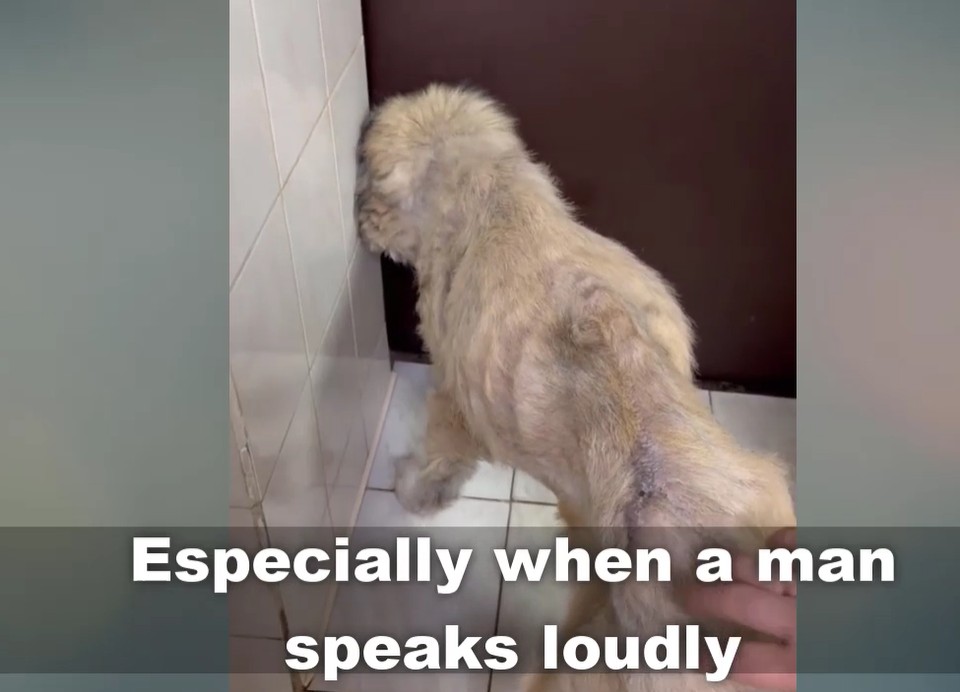
Sudden or loud sounds made her tense.
And she appeared particularly uncomfortable around some unfamiliar male voices.
The rescuers could not know exactly which experiences had created those reactions.
They did not need to invent an explanation.
Yara’s behavior already told them what they needed to understand:
She needed time.
So they gave it to her.
No one demanded affection.
No one forced her into interactions simply because she had begun walking again.
Instead, caregivers allowed Yara to observe them.
They approached slowly.
They spoke gently.
They touched her only when she appeared comfortable.
Day after day, the same people brought food, changed bedding, checked her recovery, and sat beside her.
Nothing dramatic happened.
That was precisely what Yara needed.
Predictability slowly replaced uncertainty.
The Shepherd Who Once Looked Away Began Watching People Differently
Trust returned in tiny pieces.
At first, Yara simply stopped pulling her attention away whenever someone approached.
Then she began watching the caregivers with curiosity rather than immediate caution.
A gentle hand no longer caused the same tension.
A familiar voice began to mean food, comfort, or a peaceful walk outside.
Her body was changing too.
With regular meals, she began rebuilding the weight she had lost.
Her coat looked healthier.
Her posture improved.
Each step became steadier than the one before it.
The huge mass that had once dominated her appearance was gone.
But perhaps the most noticeable change happened in her face.
The distant expression rescuers had seen beside the river gradually softened.
She became more interested in what was happening around her.
She began greeting familiar people.
And eventually, the dog who had once remained completely still beside the water began showing the relaxed, open expression of an animal who finally felt comfortable enough to enjoy ordinary moments.
Those ordinary moments mattered.
A full bowl.
A quiet afternoon.
Someone sitting beside her.
A walk without fear of being left behind.
For another dog, these things might have seemed unremarkable.
For Yara, they represented an entirely different kind of life.
One Day, The Smile in Her Face Made Her Almost Unrecognizable
Looking at Yara later in her recovery, it became difficult to connect her with the Shepherd rescuers had first encountered near the river.
The difference was not simply the missing tumor.
She had gained strength.
Her movements were more confident.
She stood without the enormous weight that had once pressed against her body.
And when familiar caregivers approached, her expression no longer carried the same uncertainty.
Sometimes, she even seemed to smile.
Perhaps dogs do not understand ideas such as second chances in the way people describe them.
Yara did not need to.
She understood something simpler.
Food arrived every day.
The same people returned.
Hands could touch without hurting.
Resting did not mean waking up alone.
And when she looked toward the people caring for her, they were still there.
That was enough.
Yara Didn’t Need a Miracle All at Once
Yara’s story is easy to describe as miraculous.
A dog left beside a river.
A massive tumor.
A 30% chance of surviving surgery.
A successful operation.
A benign result.
And only days later, the first attempt to stand again.
But perhaps the most meaningful part of her recovery happened after those dramatic moments.
It happened during the quiet days.
During meals.
During wound care.
During cautious walks.
During the many ordinary hours when someone simply stayed beside her long enough for uncertainty to become trust.
Rescue did not erase everything Yara had experienced.
It gave her something new to experience instead.
Safety.
Consistency.
Comfort.
And the chance to discover that the worst day of her life did not have to become the final chapter.
Once, Yara lay beside a river unable to follow anyone who walked away.
She could only remain where she was and wait.
Then strangers arrived.
They lifted her from the ground.
They carried her to safety.
They accepted a 30% chance when that chance was all she had.
And Yara did the rest.
She survived the surgery.
She stood again.
She learned to trust again.
The riverbank is behind her now.
And the dog who once could not take a single step away from that place finally has somewhere better to go.


