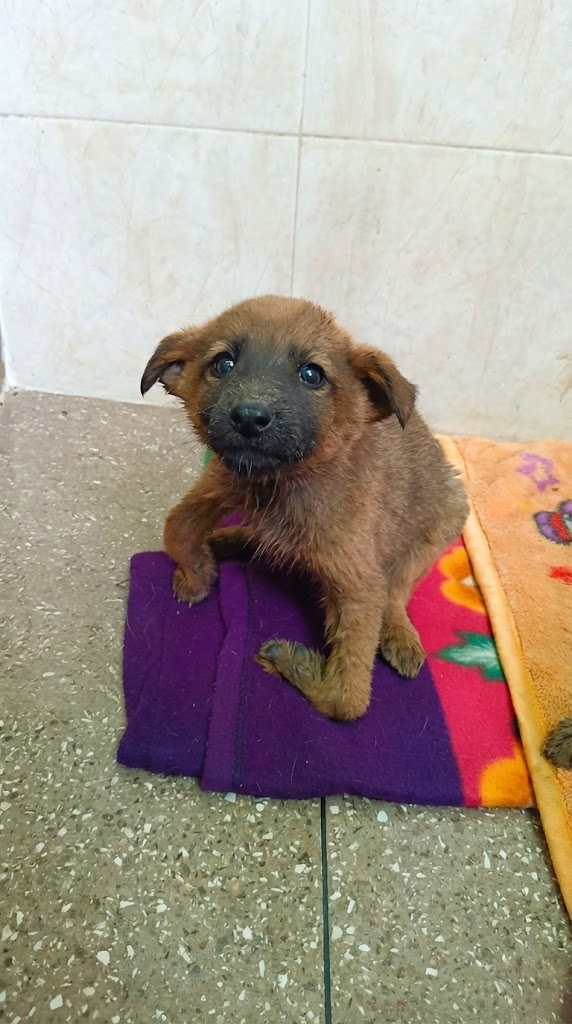
Some rescue stories begin with a dramatic cry for help.
This one began with three puppies whose bodies were simply too weak to carry them.
Beside them stood their mother, watching over three tiny lives that should have been running, wrestling, and discovering the world.
Instead, the puppies struggled just to remain upright.
Their legs trembled beneath them.
Their developing bones appeared weak and deformed.
Even crossing a small patch of ground demanded enormous effort.
The puppies were suffering from severe rickets, and without proper care, their condition could continue to interfere with their growth and mobility.
A local rescuer realized they could not remain where they were.
All three puppies were taken to Manali Strays, where warmth, nutrition, veterinary attention, and something they had desperately lacked could finally be provided:
A genuine chance.
No one knew then that the weeks ahead would bring far more than anyone expected.
Three Tiny Bodies That Could Barely Stand
When the puppies reached safety, their condition was impossible to overlook.
Their legs did not support them normally.
They trembled while trying to move, and the weakness in their developing bodies made ordinary puppy behavior difficult.
At an age when young dogs are usually filled with restless curiosity, these three were concentrating on something much simpler.
Staying upright.
Rickets affects developing bones and may be associated with nutritional deficiencies or imbalances. In these puppies, the rescue team was dealing with young bodies that already showed significant weakness and deformity.
That meant recovery could not be rushed.
They needed appropriate food.
They needed warmth.
They needed veterinary guidance.
And they needed time for bodies that had started life at a disadvantage to begin rebuilding.
The team prepared nutrient-rich meals and created a protected place where the puppies could rest without having to struggle against the cold or difficult terrain.
Everything became carefully measured.
Meals.
Rest.
Movement.
Observation.
For the first time, the puppies were not expected simply to endure whatever came next.
People were watching.
People were responding.
People were trying to help them grow stronger.
VIDEO: Three Puppies Were Too Weak to Stand — Their Fight for a Second Chance Had Just Begun
One Puppy Faced Another Challenge
As the team continued caring for the litter, they discovered that one puppy required even closer attention.
Along with the mobility problems associated with rickets, the puppy began showing seizure activity described by the rescuers as epilepsy.
Suddenly, an already complicated recovery became even more delicate.
Caregivers had to observe the puppy carefully and maintain as calm an environment as possible.
There was no way to explain to such a young animal why its body sometimes behaved unpredictably.
All the team could do was remain nearby and respond whenever the puppy needed them.
The smallest changes mattered.
How much had the puppy eaten?
Was it resting comfortably?
Were the seizures changing?
Was movement becoming easier or more difficult?
Were the other two puppies gaining strength?
There were no dramatic transformations during those early days.
Recovery appeared in fractions.
A little more interest in food.
A slightly steadier attempt to stand.
A longer period of peaceful rest.
For animals beginning life in such poor condition, these were meaningful improvements.
The caregivers knew they had a long road ahead.
Still, all three puppies were there.
All three were receiving care.
And that alone gave the team reason to hope.
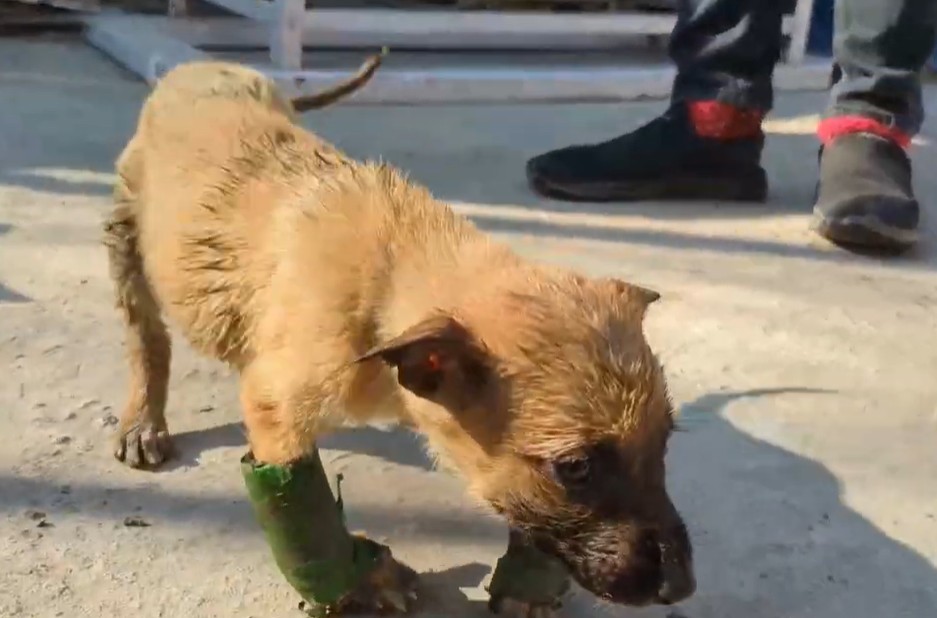
Then a New Illness Changed Everything
The fragile stability did not last.
While the puppies were still recovering, they became sick with parvovirus.
For young puppies—especially those already physically compromised—parvovirus can become a serious medical emergency.
The rescue team now had three vulnerable patients facing another dangerous challenge.
Their care intensified.
Fluids and supportive treatment became critical.
The puppies needed careful monitoring.
Their weakened bodies had already been trying to recover from one major problem.
Now they were being asked to endure another.
The rescuers did what they could.
They stayed close.
They kept the puppies warm.
They followed treatment plans.
They watched for every change.
But rescue work sometimes confronts caregivers with a painful reality:
Receiving love and medical attention does not guarantee that every body will be strong enough to recover.
Despite treatment, one puppy began declining.
Then another.
The team continued caring for them, hoping for improvement.
It did not come.
Two of the three puppies died.
The little group that had arrived together was suddenly reduced to one.
The Empty Spaces Beside the Last Puppy
There is a particular sadness when puppies are rescued together and some do not survive.
Their beds remain.
Their bowls remain.
The places where several tiny bodies once slept become unexpectedly quiet.
For the surviving puppy, the world also changed.
The two siblings who had shared warmth, meals, and recovery were no longer there.
We cannot know precisely how a young puppy understands such an absence.
But the caregivers certainly felt it.
They had watched all three struggle.
They had fed them.
Comforted them.
Checked on them through difficult hours.
They had imagined three puppies becoming stronger together.
Now there was only one.
And this survivor was hardly out of danger.
The puppy still had the effects of severe rickets to overcome.
Seizures remained another concern.
And now its body was also recovering after parvovirus.
The team could have looked at the odds and seen only everything that had gone wrong.
Instead, they looked at the puppy in front of them.
It was still breathing.
Still responding.
Still here.
That was enough reason to continue.
The Last Puppy Needed Time, Not Miracles
After everything that had happened, nobody expected recovery to be fast.
The team shifted its attention completely toward the surviving puppy.
The goal was no longer to celebrate dramatic milestones.
It was to make each day as stable as possible.
Nutrition continued to matter because the puppy’s developing body needed support.
Rest mattered because recovery demanded energy.
Monitoring the seizure activity remained important.
And perhaps most of all, the puppy needed an environment without unnecessary stress.
Caregivers learned to appreciate progress that many people might overlook.
A calm morning.
A finished meal.
A comfortable sleep.
A period without a seizure.
An attempt to move without giving up immediately.
A puppy does not understand medical charts or survival statistics.
It knows whether it is hungry.
Whether it is cold.
Whether someone comes when it is frightened.
So the caregivers answered those needs again and again.
Food arrived.
Blankets remained warm.
Gentle hands stayed nearby.
No one expected the puppy to become strong overnight.
The only expectation was that it would be given every reasonable opportunity to continue.
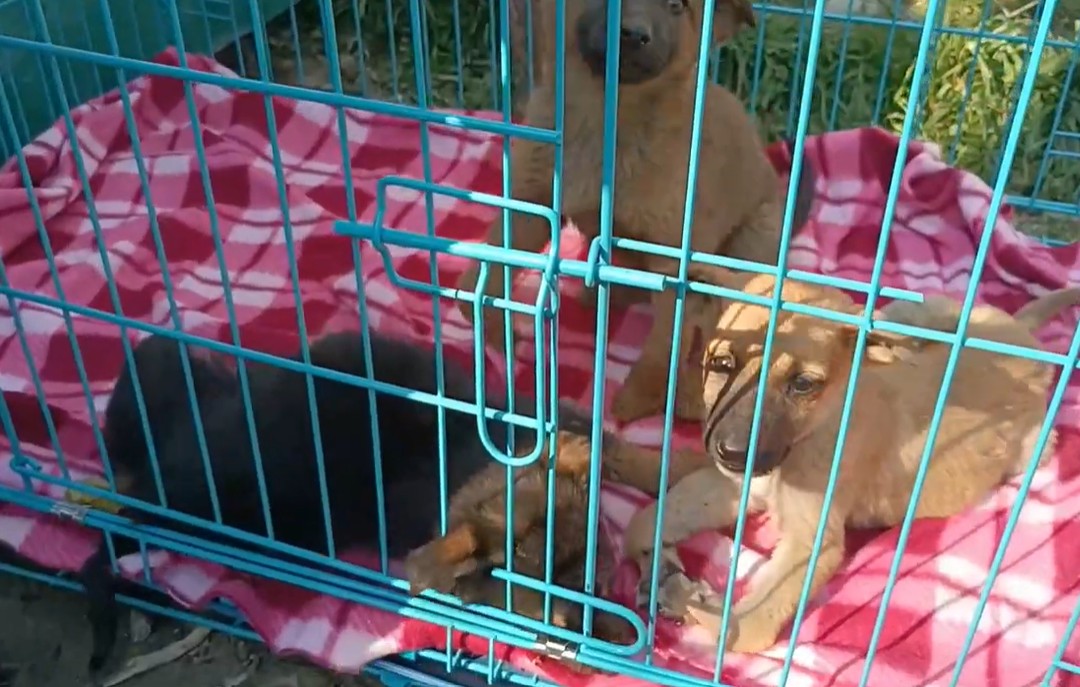
Learning to Use Fragile Legs Again
As the immediate crisis began to pass, attention returned to another important part of recovery.
Movement.
The puppy’s weakened and affected legs had not suddenly become normal simply because the virus was behind it.
Standing remained difficult.
Balance remained imperfect.
The body still had growing to do.
But now there was something that had been difficult to see during the worst days of illness:
Determination.
The puppy attempted to rise.
Sometimes the effort ended almost immediately.
A leg slipped.
The body lowered back toward the floor.
Then, later, another attempt came.
Caregivers did not demand more than the puppy could safely give.
Recovery was not a race.
What mattered was creating conditions where improvement remained possible.
Little by little, those efforts began lasting longer.
The puppy learned how to work with the body it had.
Its posture slowly became more controlled.
Its movements gained purpose.
There was still vulnerability.
There were still medical concerns.
But the helpless puppy who had arrived unable to move normally was beginning to participate in its own recovery.
And after losing two siblings, every small sign of strength carried enormous meaning for the people watching.
A Different Kind of Victory
Animal rescue often gets reduced to dramatic before-and-after photographs.
A thin dog becomes healthy.
A frightened dog begins wagging its tail.
A puppy that cannot stand eventually runs.
Those transformations are powerful.
But they can also make healing appear simpler than it really is.
This puppy’s journey was not simple.
There were good days followed by worrying ones.
There were improvements that arrived slowly.
There were conditions that required continued observation rather than a single treatment.
And there was grief that could not be erased simply because one puppy survived.
That is what made every ordinary moment afterward so meaningful.
Eating was meaningful.
Sleeping comfortably was meaningful.
Trying to stand was meaningful.
Looking alertly toward a caregiver was meaningful.
The puppy did not need to become a perfect symbol of recovery.
It simply needed the opportunity to experience more life.
The people at Manali Strays continued offering exactly that.
What Survival Looked Like Up Close
With time, the surviving puppy began looking less like a patient in immediate crisis and more like a young dog learning about the world.
Curiosity gradually returned.
Instead of concentrating entirely on discomfort and survival, the puppy could pay attention to the environment around it.
A person entering the room became interesting.
A meal became something to anticipate.
A new smell deserved investigation.
Rest no longer came only from exhaustion.
Sometimes the puppy could simply settle down and sleep.
Those changes may sound small.
For this animal, they represented something enormous.
There had been a point when the future seemed uncertain from one day to the next.
Now the puppy was beginning to have routines.
Morning.
Food.
Care.
Rest.
Gentle interaction.
Another meal.
Another night in safety.
Routine can feel ordinary to us.
For a rescued animal, routine can be one of the clearest signs that life is becoming stable.
The puppy no longer had to face each day without help.
Whatever challenges remained, they were now shared with people who were watching closely.
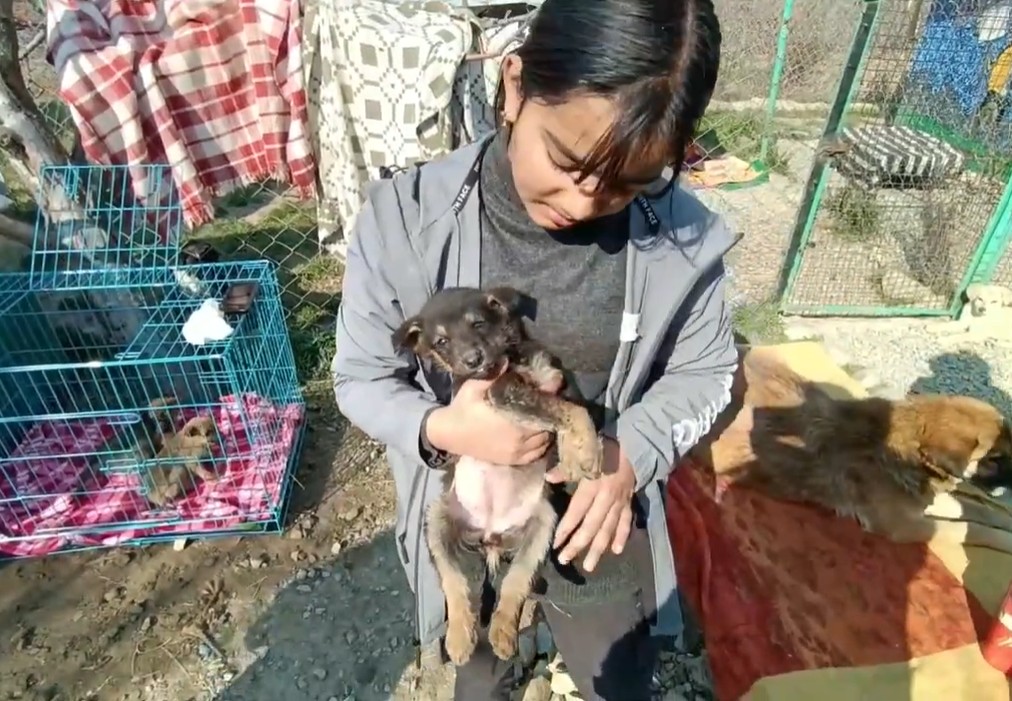
Two Puppies Were Gone, But Their Story Still Mattered
The survival of one puppy could never erase the loss of the other two.
Nor should it.
They had mattered too.
Their lives were brief, but they were seen.
They received food.
Warmth.
Treatment.
Human care.
They were not left to struggle unnoticed.
Sometimes that is an uncomfortable part of rescue stories.
Not every intervention produces the ending everyone hopes to share.
Veterinary medicine cannot guarantee an outcome.
Compassion cannot undo every illness.
Rescuers sometimes pour everything they have into a case and still experience loss.
That does not make the effort meaningless.
The opposite may be true.
Care matters most when it is offered without knowing whether there will be a reward at the end.
The three puppies were brought to safety because someone decided their lives were worth trying to protect.
Two did not survive.
One did.
All three mattered.
The Puppy Who Was Still There
Eventually, the story that began with three struggling puppies became the story of one survivor.
Not an invincible puppy.
Not a puppy untouched by everything that had happened.
Simply one small life that continued.
Its body had endured severe weakness associated with rickets.
It had experienced seizures requiring continued attention.
It had survived a serious viral illness.
And it had lost the two companions that had been beside it from the beginning.
Yet each morning brought another opportunity.
Another meal.
Another period of rest.
Another careful attempt at movement.
Another chance to become stronger.
For the caregivers, that became enough.
They stopped measuring the journey against what a perfectly healthy puppy should have been doing.
They measured it against where this puppy had started.
The difference was remarkable.
Once, standing had seemed almost impossible.
Now movement was part of daily life.
Once, the future could barely be imagined beyond the next difficult night.
Now there were more days ahead to plan for.
That is often how real recovery works.
Not through one extraordinary miracle.
Through dozens of ordinary acts repeated long enough to create change.
Sometimes Hope Is Simply the One Who Remains
The story of these puppies does not have the neat ending people often want.
There was loss.
There were medical setbacks.
There were moments when care could not change the outcome.
But there was also something worth remembering.
Someone noticed.
Someone acted.
Three puppies who were struggling to stand were carried into a place where their lives were taken seriously.
Two received comfort and care for the time they had.
One survived long enough to begin a new chapter.
That surviving puppy became a reminder to the rescuers that difficult outcomes do not make compassion pointless.
You cannot always know which animal will recover.
You cannot promise that every treatment will succeed.
You cannot protect every fragile life from every illness.
But you can choose not to look away.
You can provide warmth when an animal is cold.
Food when it is weak.
Treatment when it is sick.
A quiet hand when it is frightened.
And another chance when there is still a chance to give.
The final survivor did not overcome everything in one dramatic moment.
It simply kept going.
One meal.
One peaceful night.
One attempt to stand.
One small improvement after another.
There had once been three puppies struggling side by side.
Then there was one.
And every time that last puppy lifted itself from the ground, it carried a quiet reminder of the two little lives that had shared the beginning of the journey.
Resilience does not always look powerful.
Sometimes it is a tiny puppy on uncertain legs, trying once more after the world has already asked far too much of it.
And sometimes the greatest little wonder is simply this:
After everything, it is still here.


