The house was almost completely silent.
No footsteps.
No voices.
No one coming through the door.
Then rescuers found the dog inside.
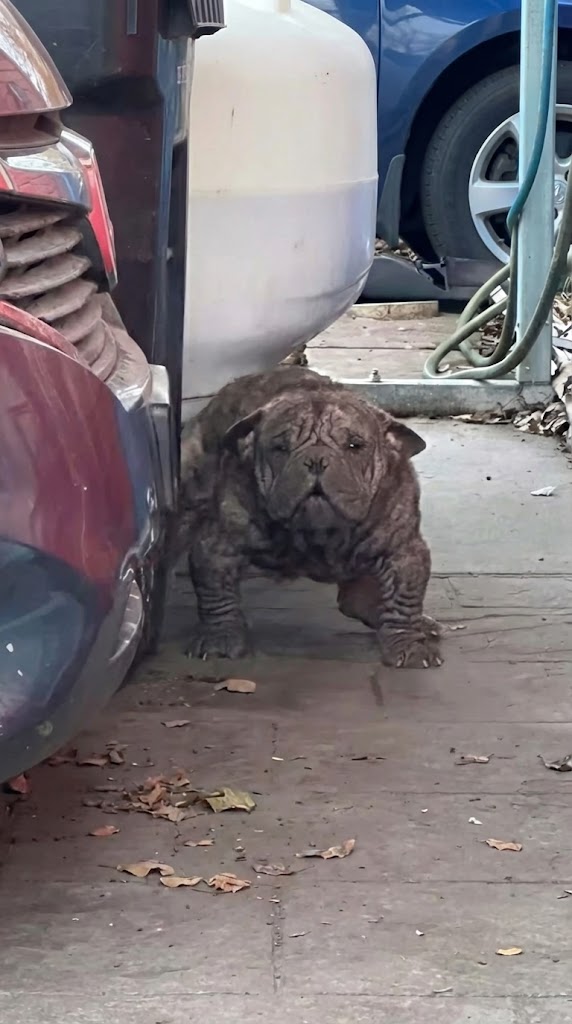
His name would eventually be Zuul, a four-year-old bulldog whose body showed clear signs that he had gone without proper care for far too long.
He was thin.
His coat was patchy.
Large areas of skin were irritated by severe mange.
Even moving around appeared uncomfortable.
But when the rescuers approached, Zuul did something they had not expected.
He did not hide.
He did not bark them away.
Instead, he moved toward them.
And when someone knelt beside him, Zuul leaned closer as though human contact was exactly what he had been looking for.
His Skin Was Hurting, but He Still Wanted to Be Close
Mange had affected much of Zuul’s body.
His skin looked dry and inflamed, while large patches of fur had disappeared.
Every step brought irritated skin into motion.
The physical discomfort was easy to see.
What surprised the rescue team was his behavior.
Zuul actively sought contact.
He leaned against people.
He allowed gentle handling.
He appeared comfortable resting his head against a rescuer during the trip away from the empty house.
There was no way to know exactly what his life had been like before they arrived.
But one thing was already clear.
Whatever had happened to his body had not made him unwilling to approach people.
That would become one of the most memorable parts of Zuul’s recovery.
VIDEO: Found Alone With Severe Mange, Zuul Still Ran Over Looking for Kisses and Friendship
Recovery Began With Skin Care and Regular Meals
Once Zuul was safe, treatment could begin.
His mange required consistent care.
Damaged skin needed time to recover.
His body also needed better nutrition.
So the first weeks were built around routine.
Medication and skin treatments.
Carefully managed meals.
Clean bedding.
Rest.
And regular attention from volunteers.
Nothing changed overnight.
The irritated areas did not suddenly disappear after one treatment.
His weight did not return after one meal.
Instead, progress arrived gradually.
The first encouraging moments were simple ones.
Finishing a full meal.
Standing more comfortably.
Resting without constantly shifting position.
Accepting treatment without becoming distressed.
Each one gave the caregivers another reason to continue exactly what they were doing.
Then His Coat Began Coming Back
As the weeks passed, Zuul’s skin began to improve.
The inflammation eased.
Healthy fur started appearing in areas that had been bare.
At first, the new growth was thin.
Then more of his natural coat emerged.
Patterns that had been hidden beneath damaged skin gradually became visible again.
The change was easy to photograph.
But the rescuers were noticing something else too.
Zuul was becoming increasingly active.
More curious.
More playful.
Once his body no longer demanded all of his energy for recovery, he had time to investigate the world around him.
And that was when everyone began meeting the dog underneath the medical condition.
Zuul Discovered Toys
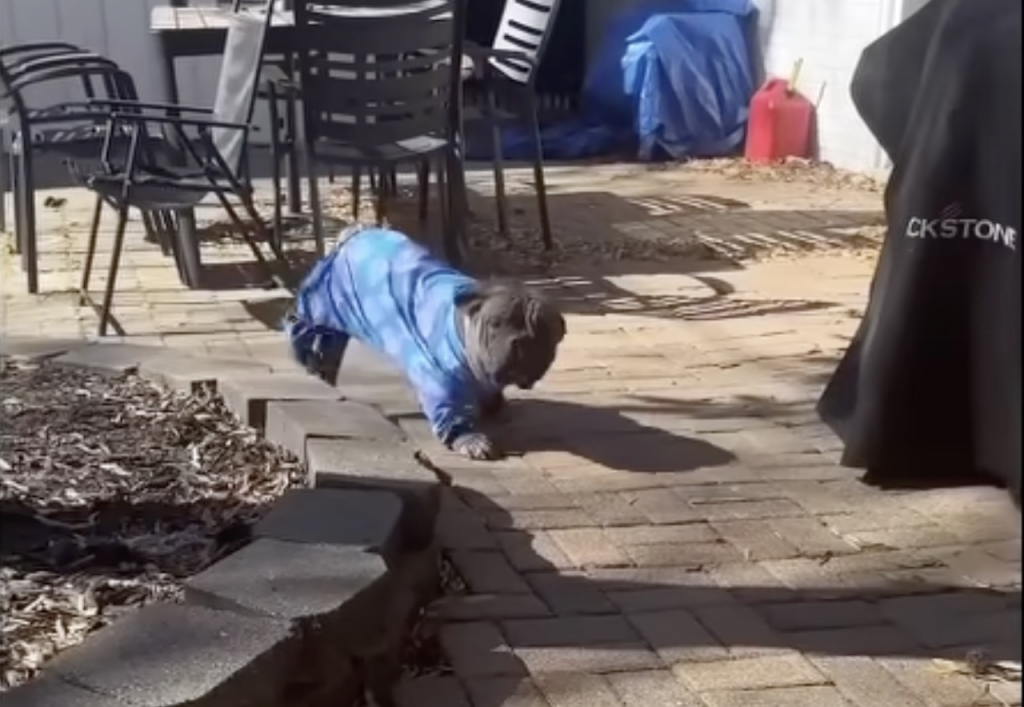
At some point during his recovery, Zuul learned that toys could be fun.
A plush toy became a favorite.
He carried it around proudly.
He chased toys when people encouraged him to play.
And he discovered another important rescue-dog tradition.
Belly rubs.
Zuul would roll onto his back and wait for someone to respond.
The dog who had first been defined by mange, weight loss, and an empty house was becoming known for completely different reasons.
He was goofy.
Affectionate.
And constantly looking for another opportunity to be close to someone.
Those moments mattered because they showed that recovery was creating space for ordinary dog behavior again.
Not simply eating.
Not simply being treated.
Playing.
His Favorite Place Was Near People
Zuul’s affection did not disappear once his health improved.
If anything, it became more obvious.
When volunteers sat on the floor, he often settled beside them.
Sometimes he rested his head against a leg.
Sometimes he simply remained close while everyone went about their work.
He also became comfortable around other rescue dogs.
He could sleep near them.
Share space.
Participate in the daily rhythm of the rescue.
There was nothing complicated about what he seemed to enjoy most.
Soft beds.
Familiar people.
Other dogs nearby.
A toy to carry.
A hand willing to scratch his belly.
After arriving from an empty house, companionship had become part of nearly every good thing in his new life.
Week by Week, the Bulldog Changed
Zuul’s transformation was easiest to understand when photographs from different stages were placed side by side.
Early on, his coat was thin and damaged.
His body lacked condition.
The effects of skin disease were impossible to miss.
Later, his fur became fuller.
His body grew stronger.
His movement looked more comfortable.
And his expression appeared more relaxed during everyday interactions.
But rescue is not only about changing how an animal looks.
A healthy coat is important.
So is having the energy to play.
Feeling comfortable enough to sleep deeply matters.
Being able to approach someone without fear matters too.
Zuul’s progress appeared in all of those ways.
The medical problems gradually stopped being the first thing people noticed.
His personality took their place.
He Became the Dog Who Ran Over for Affection
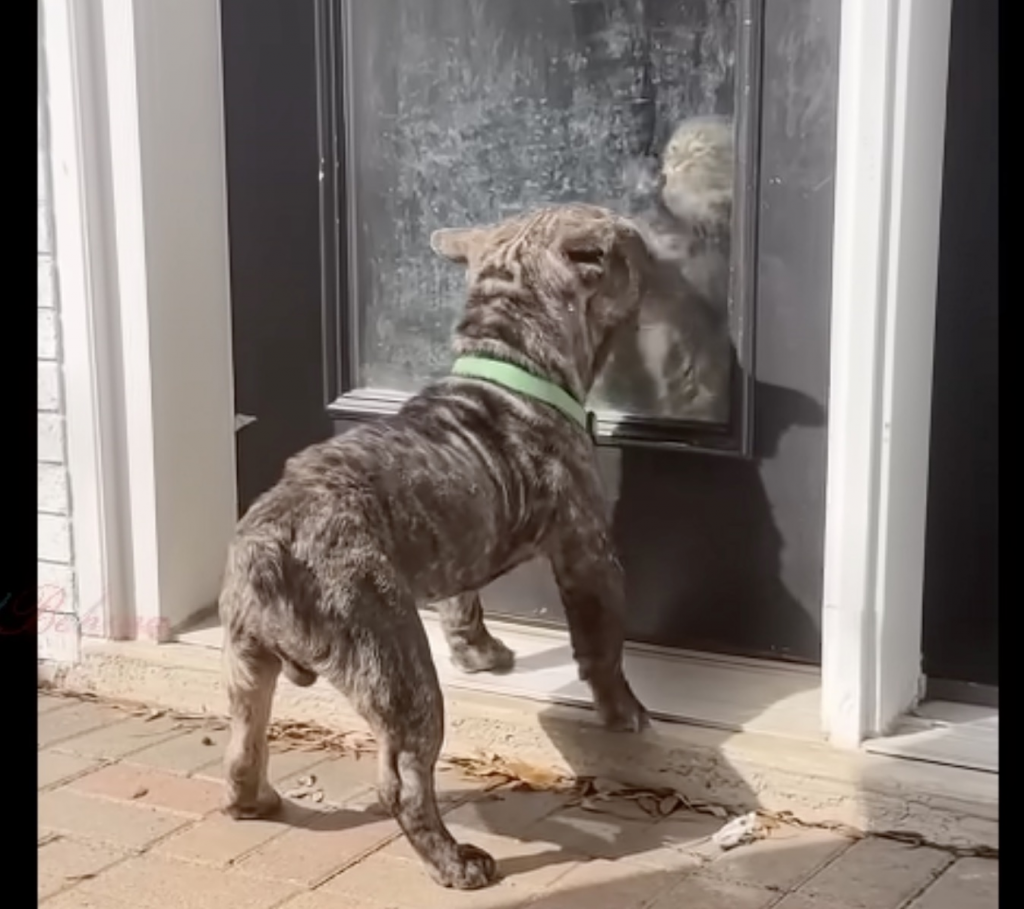
The title of Zuul’s rescue video captures one of his defining behaviors.
He liked people.
He approached them eagerly.
He looked for attention.
And he had an especially charming habit of getting close enough to offer kisses.
For visitors meeting him after much of his recovery, it could be difficult to reconcile that affectionate bulldog with the animal found in the empty house.
But both were Zuul.
The difference was care.
Treatment allowed damaged skin to heal.
Food helped restore his body.
Safety gave him somewhere to rest.
And repeated positive interaction gave him opportunities to behave like the social dog he already seemed inclined to be.
The rescuers had not manufactured a new personality.
They had simply created circumstances in which his personality could finally be seen.
The Next Step Was a Home of His Own
Once Zuul’s health had improved, the rescue faced a very different question.
What came next?
He no longer needed to be defined primarily as a medical case.
He was ready for a family.
A forever home would need to understand both sides of him.
The sweet bulldog who loves affection.
And the dog whose history means consistent care still matters.
Zuul had already demonstrated that he enjoyed companionship.
He liked spending time near people.
He interacted with other rescue dogs.
He played.
He rested comfortably in safe surroundings.
Now he needed those things to become permanent.
Somewhere beyond the rescue was the possibility of a home where the bed belonged to him.
Where the familiar voices were the same every morning.
Where his favorite toy could remain on the floor without being packed up for another transition.
The Empty House No Longer Defines Him
Zuul’s story began in a place with very little in it.
An empty house.
A neglected coat.
An underweight dog.
Then a door opened.
People came inside.
And instead of avoiding them, Zuul moved closer.
Everything that followed grew out of that moment.
Treatment.
Meals.
New fur.
Toys.
Belly rubs.
Other dogs.
Volunteers sitting beside him.
And eventually, the possibility of adoption.
It would be easy to focus only on how much Zuul physically changed.
But the detail people remembered most was often much simpler.
He kept seeking connection.
Even when his skin was uncomfortable.
Even when he looked nothing like the healthy bulldog he would later become.
That is what made Zuul difficult to forget.
Not because his recovery was perfect.
Not because every painful part of his past could be explained.
But because once someone finally entered that empty house, Zuul responded in the sweetest way he knew.
He came closer.
And now, somewhere ahead of him, there is room for one more step.
Not toward a clinic.
Not toward another temporary bed.
Toward a family who will open the door—
and never leave him behind it again.


