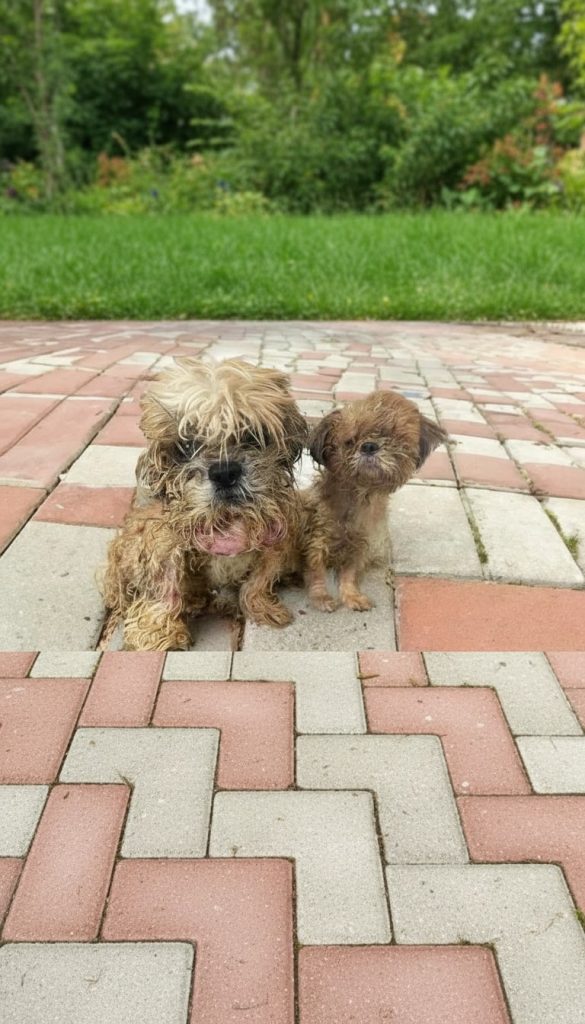
Zulu and Hannah were already old when rescuers found them.
Their bodies carried the evidence of a difficult life outdoors.
They were thin.
Tired.
And both were dealing with medical problems that had gone untreated for too long.
But there was one thing neither dog had lost.
Each other.
They moved through the streets together.
When one slowed down, the other remained nearby.
When unfamiliar surroundings made life harder, they stayed close.
For two senior dogs without a dependable home, that quiet companionship had become one of the few stable things in their lives.
Then someone finally noticed them.
And what began as a rescue of two fragile animals soon became something more complicated.
Because helping Zulu and Hannah meant treating their medical conditions without breaking the bond that had carried them this far.
Two Senior Dogs Had Been Surviving Side by Side
No one knew exactly how long Zulu and Hannah had been living this way.
Weeks.
Months.
Possibly longer.
Their physical condition suggested that the struggle had not begun recently.
Both dogs appeared underweight.
Their energy was limited.
Age had already made daily life more demanding, and untreated health problems added another burden.
Yet rescuers rarely saw them far apart.
Zulu and Hannah moved like two dogs accustomed to watching for one another.
If one paused, the other stayed close.
Neither had much comfort.
Neither had reliable medical care.
But they had developed a routine together.
That bond became immediately important to the people trying to help them.
They were not simply two unrelated dogs found in the same place.
Their lives had become connected.
And whatever happened next needed to take that connection seriously.
VIDEO: Zulu and Hannah Had Only Each Other — Then Rescuers Gave Them a Chance to Heal
Zulu’s Neck Growth Made Her Condition Especially Concerning
Zulu’s medical problems were impossible to ignore.
A large growth had developed around her neck.
Its size and position created discomfort and raised concern about the vision she still had.
For an older dog already weakened by life outdoors, even ordinary movement appeared difficult.
Rest did not always look comfortable either.
The rescuers knew this was not something that could simply be watched and hoped away.
Zulu needed veterinary attention.
She needed proper examination.
She needed food.
She needed a safe place where treatment could begin.
But she was only half of the problem.
Beside her was Hannah.
And Hannah was struggling in a different way.
Hannah Had Lost Her Sight and Was Fighting Other Health Problems
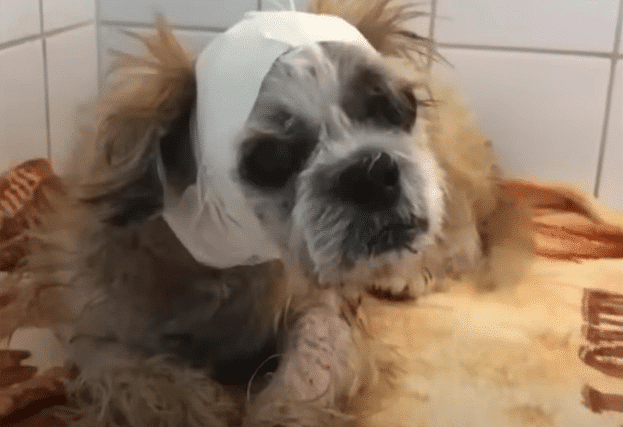
Hannah was already blind.
That alone made navigating unfamiliar streets difficult.
But her condition involved more than vision loss.
She was also suffering from a painful ear problem.
An infection had weakened her further.
Anemia added another challenge for a body already affected by age and neglect.
The world Hannah experienced depended heavily on sound, touch, smell, and familiarity.
Zulu had been part of that familiarity.
That made their rescue emotionally complicated.
Both dogs needed medical care.
Both needed close attention.
And because their conditions were different, they could not simply remain together throughout every stage of treatment.
For medical reasons, they would have to spend time apart.
The decision made sense clinically.
For two dogs accustomed to staying beside one another, it also represented another major change.
Treatment Meant They Could Not Stay Together All the Time
Once veterinary care began, Zulu and Hannah were placed on separate treatment paths.
Zulu needed attention for the growth on her neck and her overall weakened condition.
Hannah required treatment for her infection, anemia, ear problems, and general weakness.
The rescue team understood why separation was necessary.
But they also noticed how important familiarity had become to both dogs.
After spending so much time side by side, each had become part of the other’s daily routine.
Now unfamiliar rooms, new smells, medical procedures, and different caregivers surrounded them.
Hannah could not rely on sight to understand where she was.
Zulu was facing her own physical discomfort.
So the caregivers tried to make the transition as gentle as possible.
They spoke calmly.
They created predictable routines.
They offered food regularly.
And they paid attention not only to medical results, but also to how each dog responded to the new environment.
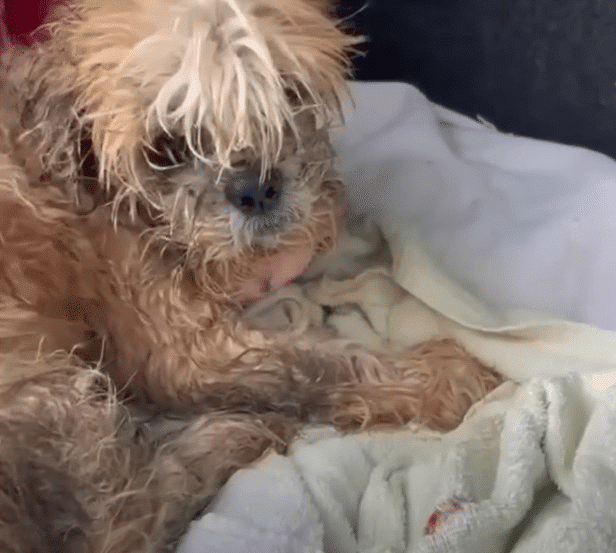
Zulu’s First Real Meal Became an Important Victory
The first days were not easy.
Zulu struggled with her appetite.
Her body had been under stress for so long that even eating normally did not return immediately.
That worried the people treating her.
Food was not simply a comfort.
It was part of rebuilding strength.
So when Zulu finally began eating, the moment mattered.
There was no dramatic celebration.
No instant recovery.
Just an older dog choosing to eat.
For the medical team, that small change was encouraging.
Her body was beginning to participate in the recovery process.
One meal could lead to another.
Nutrition could begin supporting treatment.
Strength could start returning gradually.
Zulu still had a long way to go.
But she had taken an important first step.
Hannah Learned Her New Surroundings Without Sight
Hannah’s recovery required a different kind of patience.
Because she could not see, every unfamiliar environment demanded adjustment.
She had to understand rooms through sound.
Locate people through voices and scent.
Feel her way through spaces she did not yet know.
Caregivers approached gently and spoke before touching her.
They gave her time to understand where they were.
Repeated routines became important.
A familiar voice.
A bowl placed in a consistent location.
Hands that touched carefully.
A resting area that remained predictable.
Gradually, Hannah became more comfortable with the people caring for her.
She responded to familiar sounds.
She accepted handling.
Her medical treatment continued while she learned that the environment around her was becoming more stable.
For an older blind dog, that stability mattered as much as kindness itself.
Healing Came Through Small Changes, Not One Big Moment
Neither Zulu nor Hannah transformed overnight.
Recovery appeared slowly.
A calmer response when someone approached.
A better appetite.
More comfortable rest.
A tail moving when a familiar caregiver arrived.
Greater interest in what was happening nearby.
Those signs could easily have seemed insignificant.
For two senior dogs dealing with multiple health problems, they represented real progress.
Medical treatment addressed the physical conditions.
But daily routine helped change something else.
Uncertainty.
Meals came regularly now.
There were warm places to sleep.
Water was available.
People returned each day.
The dogs did not have to search the streets for whatever they could find.
That consistency gave both of them room to recover at their own pace.
Three Months Changed What the Future Could Look Like
Treatment continued for approximately three months.
During that time, both dogs became stronger and more comfortable.
Zulu’s condition improved with continued care.
Hannah adapted to her surroundings despite her blindness.
Their caregivers had watched two exhausted senior dogs slowly become more stable.
Then another question emerged.
What would happen after recovery?
Older dogs with medical histories can sometimes wait longer for homes.
Finding someone willing to take one senior dog can be difficult.
Zulu and Hannah presented an additional consideration.
Their lives had been connected for so long that separating them permanently would mean asking both dogs to face another major change.
The people following their story understood that.
Then a couple stepped forward.
And they did not ask which dog they should take.
They wanted both.
The Couple Who Chose Them Understood They Came as a Pair
The prospective adopters had followed Zulu and Hannah’s journey.
They knew about the medical problems.
They knew both dogs were older.
They understood Hannah was blind and would need an environment she could learn through routine and familiarity.
They also understood something that had been clear from the beginning.
Zulu and Hannah belonged together.
Taking only one would have meant separating two dogs whose companionship had remained constant through their hardest period.
So the couple chose both.
That decision changed the next chapter completely.
Zulu and Hannah would not leave rescue only to lose one another.
They would enter the same home.
Sleep under the same roof.
Learn the same routines.
And continue moving through life side by side.
Home Gave Them Something the Streets Never Could
Their new life was quieter.
More predictable.
And far more comfortable.
There were soft places to rest.
Meals appeared at regular times.
The dangers of street life were gone.
Zulu could continue receiving the support she needed.
Hannah could learn the layout of a home that would remain familiar.
For a blind dog, consistency helped create independence.
She could learn where things were.
Recognize familiar sounds.
Follow routines that did not suddenly change.
And Zulu remained nearby.
The relationship that had helped both dogs endure difficult years did not have to end simply because rescue had succeeded.
Instead, it became part of their new life.
After Everything They Lost, They Did Not Have to Lose Each Other
Zulu and Hannah’s story is moving because their rescue was never only about two medical cases.
It was about two older dogs whose lives had become deeply intertwined.
Zulu faced a painful growth and declining health.
Hannah lived without sight while dealing with infection, anemia, and an ear condition.
Both needed professional treatment.
Both needed months of care.
And at times, that care required separation.
But when the most difficult stage was over, the people responsible for their future recognized what had been visible from the beginning.
These dogs were stronger together.
Three months after entering care, their lives looked very different.
The streets were behind them.
Uncertainty had been replaced by routine.
Cold places to rest had been replaced by comfort.
And two dogs once overlooked by the world had become members of the same family.
Zulu and Hannah survived a difficult chapter side by side.
When the chance for a new life finally came, no one asked them to face it alone.
They went home the same way they had made it through everything else—
together.


