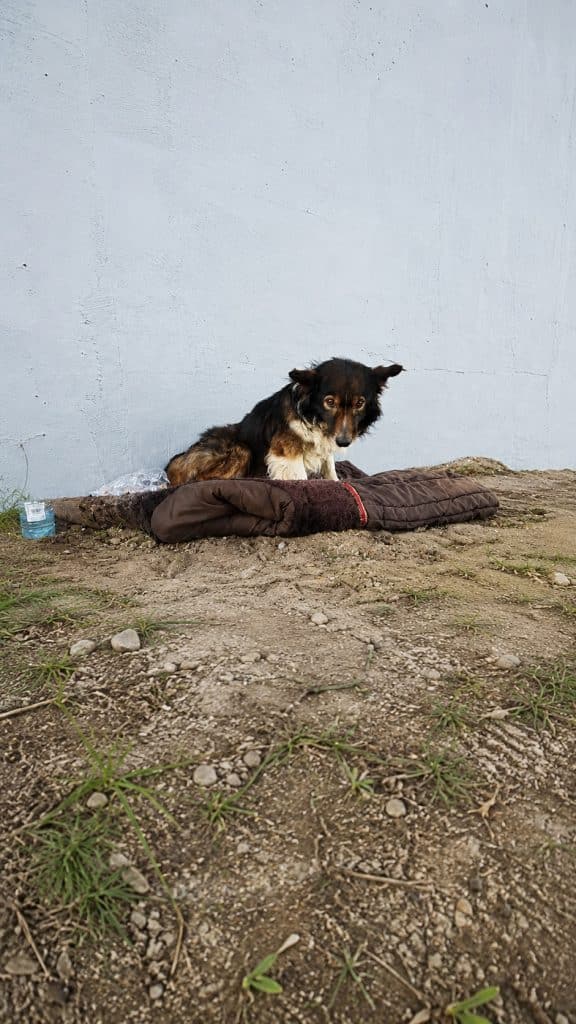
Beneath a railway bridge near a station in Belarus, a small dog lay on the cold ground, barely able to move.
His body was weak, his legs could not support him, and the collar around his neck suggested that he might once have belonged to someone.
But there was no owner beside him.
No familiar voice calling him home.
When animal rescuers finally discovered the frightened dog, later named Lucky, they realized he needed urgent help. What they couldn’t know was whether he would ever be able to stand again—and how much one small step would eventually mean.
A Lonely Figure Beneath the Railway Bridge
The area beneath the railway bridge was no place for an injured dog.
The ground was cold, and the nearby station brought the sounds and movements of a world that continued around him.
Yet Lucky could not simply get up and leave.
He lay curled against the ground, appearing exhausted and frightened. His body was weak, and he could not stand without assistance.
Around his neck was a collar.
It was a small detail, but one that raised painful questions.
Had Lucky once lived with a family?
Had he become lost?
Or had someone left him behind?
The rescuers had no way of knowing exactly how he had ended up beneath the bridge. The collar suggested a possible connection to a previous owner, but it offered no answers about what had happened.
What mattered now was his condition.
Lucky was unable to move freely, leaving him vulnerable in an exposed location where he could not easily reach food, water, or shelter.
He needed someone to recognize that he was in trouble.
Eventually, people concerned about his welfare noticed the small dog lying beneath the bridge.
They approached him carefully.
And when they realized he could not get up, they knew he needed more than a little food or a comforting touch.
He needed to be taken somewhere safe.
VIDEO: Lucky Was Found Unable to Stand Beneath a Railway Bridge—Watch His Emotional First Steps
The Moment Someone Finally Carried Him to Safety
When rescuers reached Lucky, they found a dog who appeared too weak to leave the area on his own.
He remained close to the ground.
His movements were limited, and his frightened appearance made the team especially careful as they approached.
They did not know what had caused his condition.
He might have suffered an accident, an injury, or another serious medical problem.
But attempting to make him walk without understanding what was wrong could have caused additional discomfort.
Instead, the rescuers carefully helped him away from the bridge.
It was the first important change in Lucky’s circumstances.
He no longer had to remain on the cold ground, unable to find shelter.
He was taken to a protected location where he could rest before receiving veterinary attention.
For the rescuers, getting him to safety was an urgent priority, but it was only the beginning.
Lucky still could not stand normally.
His body appeared painful and exhausted.
And without a medical examination, no one could know how serious his injuries might be.
The team arranged veterinary care to find out what he needed.
Lucky had been discovered in a place where he could not help himself.
Now, he had people prepared to help him through whatever came next.
And at the clinic, the examination revealed why his recovery might be difficult.
The Veterinary Examination Revealed a Body in Pain
At the veterinary clinic, Lucky’s condition became clearer.
The medical team found signs of significant physical injury.
There was bruising.
Swelling.
And visible indications that movement was causing him discomfort.
His weakness was concerning, particularly because he had been unable to stand when rescuers discovered him.
The exact cause of his injuries remained unknown.
The available rescue account does not identify a confirmed accident, a specific diagnosis, or a person responsible for his condition.
But the veterinarians could see that Lucky needed treatment and careful monitoring.
His body had already endured considerable strain.
Before he could begin walking comfortably, he needed time to recover from the physical problems affecting him.
The caregivers began providing medical attention and supporting his basic needs.
They offered food and hydration.
They cleaned his wounds and followed the treatment plan established for him.
They also gave him somewhere safe to rest.
For Lucky, even the simplest movements were difficult during those early days.
Standing was beyond his ability.
Changing position could be uncomfortable.
And unfamiliar surroundings added another challenge for a dog who was already frightened.
His caregivers understood that they could not rush him.
They needed to address his injuries while allowing his body time to respond.
At that stage, no one could promise exactly how quickly he would recover.
The rescuers could only continue caring for him, watching closely for signs of improvement.
And little by little, Lucky began to respond.
The Difficult Days When Even Moving Was a Challenge
Lucky’s early recovery was slow.
He was still weak, and the pain associated with his injuries made ordinary movements difficult.
He needed medical treatment, nourishment, and a quiet place where he could rest without unnecessary disturbance.
His caregivers remained attentive.
They provided the food and hydration he needed.
They continued his wound care.
And they monitored his condition as his body gradually recovered.
But Lucky’s behavior also required patience.
He appeared frightened and uncertain in his new surroundings.
The people caring for him were unfamiliar, and he had no way of understanding everything they were doing.
Instead of forcing interactions, the caregivers allowed him time to become comfortable.
They approached calmly.
They offered gentle attention.
And they continued providing the same consistent care each day.
There was no sudden transformation.
Some days, the changes were barely noticeable.
Lucky might appear a little calmer when someone entered.
He might respond more comfortably during care.
Or he might show slightly more interest in what was happening around him.
These were small developments, but they mattered.
His body needed strength before he could attempt more demanding movements.
And his caregivers needed to help him feel comfortable enough to participate in the recovery process.
The rescue team did not treat his inability to stand as the end of his story.
They continued supporting him.
Day after day.
Meal after meal.
Treatment after treatment.
Gradually, Lucky’s condition improved.
And as he became stronger, he began showing a little more of the gentle personality hidden beneath his fear.
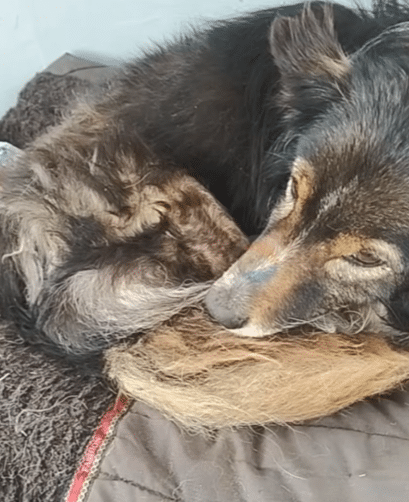
A Frightened Dog Slowly Learned to Accept Gentle Hands
One of the most encouraging changes in Lucky’s recovery was the way he began responding to his caregivers.
When he was first found beneath the bridge, he had appeared frightened and physically exhausted.
Even after reaching safety, he remained cautious.
But repeated experiences with the people caring for him gradually made a difference.
Lucky began relaxing in their presence.
He became more willing to accept help.
And the fear that had been so noticeable during his rescue appeared to lessen.
The caregivers did not know what experiences had shaped his behavior before he was found.
They could only observe how he responded to the environment they were providing.
And that response was becoming increasingly positive.
Familiar voices no longer seemed quite as unsettling.
Gentle handling became easier for him to tolerate.
He appeared more comfortable when the people caring for him approached.
It was not a dramatic change that happened in one afternoon.
It developed through consistency.
Every meal that arrived when he needed it.
Every wound-care session performed as gently as possible.
Every quiet period when he could rest without being disturbed.
These ordinary experiences helped create a more predictable environment.
As Lucky grew more comfortable, his caregivers also noticed changes in his physical strength.
He was recovering from the injuries that had left him unable to stand.
His movements were becoming more purposeful.
He appeared increasingly interested in the world around him.
Then came the moment the rescuers had been hoping to see.
Lucky tried to stand.
And for the first time since he had been found beneath the bridge, he began supporting himself on his own legs.
The First Time Lucky Tried to Stand Again
It was a small movement.
But for Lucky, it represented an enormous step forward.
After days of treatment and rest, he began attempting to get to his feet.
At first, his legs were unsteady.
His body shook as he tried to support his weight.
Standing required considerable effort, and his movements remained cautious.
But something was different.
Lucky was no longer completely unable to rise.
He managed to hold himself upright.
Only briefly at first.
Then for a little longer.
His caregivers watched closely, understanding how significant the moment was for a dog who had been found lying helpless beneath a railway bridge.
He had received medical attention.
His wounds had been cared for.
His strength had gradually improved.
And now his body was beginning to accomplish something that had seemed impossible during those first frightening hours.
But standing was only the beginning.
Lucky cautiously attempted to move forward.
One leg shifted.
Then another.
His steps were slow and uncertain.
He was not running.
He was not walking confidently.
He was simply taking a few careful steps on his own.
Yet the difference between those movements and the condition in which he had been discovered was remarkable.
When rescuers first found him, Lucky could not stand.
Now he was beginning to walk.
It was the turning point in his recovery.
Not because every injury had suddenly healed, but because his growing strength was allowing him to regain an important part of his independence.
The team continued supporting him.
They understood that a few successful steps did not mean he was ready for long walks or strenuous activity.
Lucky still needed time.
But those first movements offered an encouraging glimpse of what might be possible.
For the little dog who had once lain helpless beneath the bridge, the world was beginning to open again.
Every Small Step Gave Him a Little More Freedom
After Lucky began walking, his recovery continued gradually.
His strength improved.
His movements became steadier.
And he started exploring his surroundings with increasing confidence.
At first, he could manage only a little movement.
His caregivers continued allowing him to progress according to his condition.
As the weeks passed, however, he began walking farther.
The improvement was noticeable.
The dog who had once remained motionless on the cold ground was now able to move through his environment.
He could investigate unfamiliar places.
He could approach the people caring for him.
And he could begin experiencing the simple freedom of moving without constantly depending on someone to carry him.
His tail also began moving again.
It was another welcome sign for the caregivers who had seen him at his weakest.
Lucky appeared increasingly engaged with his surroundings.
He showed more interest in daily activities.
And his growing confidence made it easier for him to interact with the people around him.
The rescue account describes steady improvement, although it does not provide a detailed medical timeline or identify every treatment used during his rehabilitation.
What it does show is the progression from a dog unable to stand to one who gradually regained the ability to walk and explore.
That change was the result of continued care rather than a single extraordinary moment.
Lucky needed treatment.
He needed nourishment.
And he needed time for his body to recover.
His caregivers provided those things while monitoring his progress.
Each small improvement made the next stage possible.
A few seconds standing.
A handful of steps.
A slightly longer walk.
And eventually, the confidence to explore beyond the place where he had been resting.
But the most meaningful transformation was not limited to his ability to move.
As Lucky became physically stronger, his affectionate personality began to emerge.
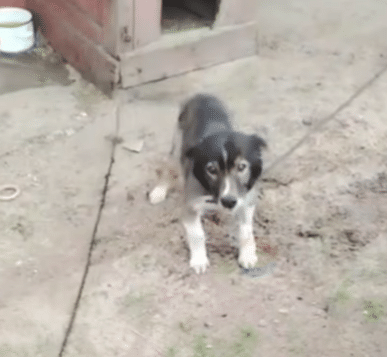
The Helpless Dog From the Bridge Became a Gentle Companion
Lucky’s caregivers gradually discovered a different side of him.
The dog who had initially appeared frightened and withdrawn became increasingly comfortable around people.
He began seeking gentle attention.
He responded more warmly to familiar caregivers.
And he showed growing interest in spending time near them.
His body was stronger now, allowing him to approach people rather than waiting for someone to come to him.
That change was important.
When he had first been found, Lucky’s inability to stand had left him completely dependent on the rescuers.
If he needed to move somewhere safer, someone had to help him.
If he wanted to leave the cold ground beneath the bridge, he couldn’t simply walk away.
Now he could participate more actively in his surroundings.
He could approach a caregiver.
He could explore.
He could enjoy walks and companionship.
The rescue account describes him becoming increasingly affectionate and confident as his physical recovery progressed.
His tail wagged more readily.
He seemed more relaxed with the people who had helped him.
And the frightened dog from the railway bridge was gradually revealing himself to be a gentle, loving companion.
There was no need to imagine that Lucky had forgotten everything that happened before his rescue.
His earlier experiences remained unknown.
But his present circumstances were different.
He was receiving care.
He had a protected place to rest.
And the people around him continued helping him become stronger.
For a dog who had once been unable to get up, even an ordinary walk beside a familiar caregiver represented an extraordinary change.
He was no longer confined to the place where he had collapsed.
His world had become bigger.
And he was beginning to enjoy it.
His Future Was No Longer Limited to the Cold Ground
Lucky’s recovery did not happen overnight.
It required people who were willing to continue caring for him beyond the initial rescue.
The team had found him beneath a railway bridge in Belarus, unable to stand and showing serious signs of injury.
They brought him to safety.
Veterinarians examined him and began addressing his medical needs.
Caregivers provided food, hydration, wound care, and a protected environment in which he could recover.
Through that consistent attention, Lucky gradually regained strength.
His first attempts to stand were shaky.
His earliest steps were slow.
But he continued improving.
Eventually, he was walking more confidently and exploring his surroundings.
He also became more affectionate, responding comfortably to the people who had supported him through his recovery.
The available account does not confirm whether Lucky was eventually adopted into a permanent home, nor does it document a complete veterinary prognosis.
But it does describe a dog whose circumstances and abilities improved enormously following his rescue.
He was no longer the helpless animal who had been discovered beneath the bridge.
He had become a stronger, more confident companion with opportunities to move, explore, and enjoy human attention.
His future was not defined solely by the injuries that had once left him unable to stand.
And the small steps he took during his recovery became the beginning of a very different life.
The First Steps That Made His Rescue Unforgettable
There is one moment in Lucky’s story that stays with you.
Not the cold ground beneath the railway bridge.
Not the collar around his neck.
Not even the frightening sight of a small dog who could not stand.
It is the moment he finally rose onto his own legs.
His body was unsteady.
His movements were cautious.
But he managed to support himself.
Then he took a step.
And another.
For a dog who had once been unable to leave the place where he collapsed, those movements meant something extraordinary.
They showed how far he had come since the day rescuers found him.
Lucky’s journey began because someone noticed an animal who urgently needed help.
But the progress that followed required far more than simply removing him from danger.
He needed veterinary treatment to address his injuries.
He needed food and hydration to support his weakened body.
He needed a quiet place to rest.
And he needed caregivers who were prepared to remain patient through the slow, uncertain process of recovery.
They gave him those things.
And gradually, the little dog began moving again.
His tail started wagging.
His confidence increased.
And the frightened animal who had once lain motionless beneath the bridge became a gentle companion who could walk beside the people caring for him.
Lucky’s story reminds us that recovery is not always marked by dramatic changes.
Sometimes, the most important progress is almost easy to miss.
A dog lifting his head.
A little more strength in his legs.
A few seconds standing without assistance.
One careful step.
Then another.
For Lucky, those small movements became the foundation of everything that followed.
The railway bridge was no longer the place where his story had to end.
It was simply the place where someone finally noticed him.
And because they stopped, brought him to safety, and continued caring for him, Lucky was given the chance to move forward.
Once, he could only lie beneath the bridge and watch the world pass. Now, he could stand on his own legs and take his place in it.


