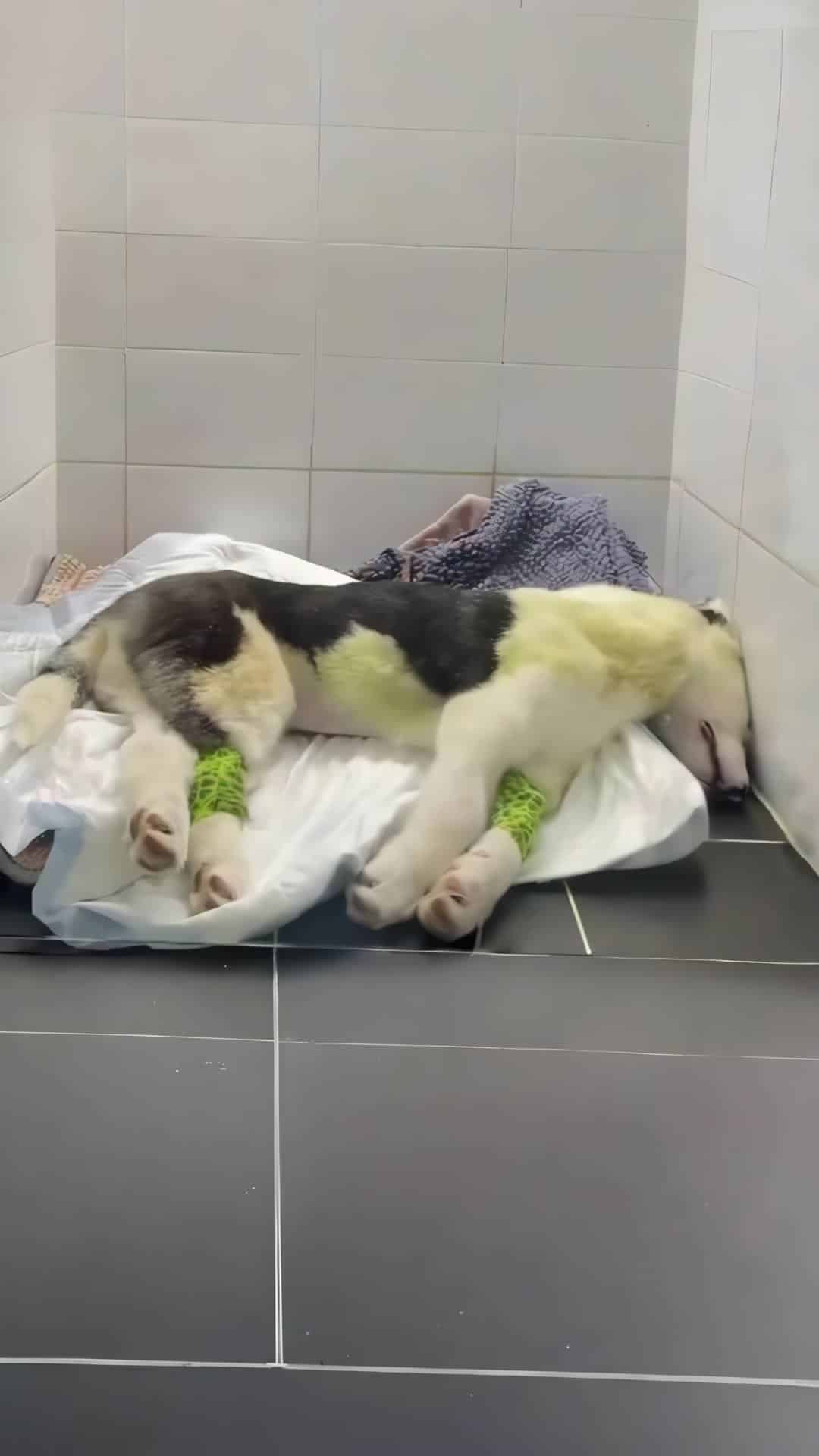
Rain had fallen throughout the night.
By morning, the ground was wet, cold, and covered in mud.
That was where rescuers found her.
A small dog lay curled against the damp earth, barely moving.
Her body trembled.
Her breathing was shallow.
And even lifting her head appeared to require more strength than she had left.
The rescuers would later call her Pakdasht.
But in those first moments, they knew almost nothing about her.
They did not know where she had come from.
They did not know how long she had been struggling.
They only knew that she needed help.
So they wrapped her carefully in warm blankets and carried her away from the mud.
At the clinic, however, they would discover that one part of Pakdasht’s life had already changed permanently.
She Barely Had the Strength to Lift Her Head
Up close, Pakdasht looked exhausted.
She remained largely still while rescuers approached.
There was no reason to rush her or ask her to move.
Instead, they carefully wrapped her weakened body and lifted her from the wet ground.
For the moment, warmth and safety came first.
Whatever had happened before her rescue was largely unknown.
Her condition, however, showed that she required veterinary attention quickly.
The journey away from that muddy place marked the beginning of her recovery.
But it would not be a simple story of treating an injury and returning everything to the way it had been before.
Pakdasht was about to face a very different kind of recovery.
Video: Weak Dog Is Found Trembling in the Mud Before Rescuers Discover She Cannot See
The Examination Revealed Something That Could Not Be Reversed
At the shelter clinic, veterinarians began evaluating Pakdasht’s condition.
She had suffered serious injuries.
Then came one of the most significant findings.
Pakdasht had permanently lost her vision.
There would be no surgery that could simply restore her sight.
No treatment could return the world she once saw.
Her caregivers now faced two responsibilities.
First, they needed to help her physically recover from the condition in which she had been found.
Then they needed to help her adapt safely to life without vision.
For Pakdasht, everything around her would have to be understood differently.
People could not explain that to her with words.
They could only make her environment predictable and allow her time to learn it.
So they began with the simplest things.
Food.
Rest.
Treatment.
And familiar voices returning each day.
Her First Progress Came in Very Small Moments
Pakdasht did not suddenly become confident because she was safe.
During the early stage of recovery, caregivers allowed her to progress slowly.
Volunteers spent time sitting near her.
They spoke softly so she could recognize where they were.
They allowed her to become familiar with their presence without demanding interaction.
Gradually, small changes appeared.
Her appetite improved.
Her posture became more relaxed.
She began responding when familiar voices entered the room.
Then came gentle movements of her tail.
These were ordinary behaviors, but considering how weak Pakdasht had been when she arrived, they mattered.
Her body was recovering.
At the same time, she was beginning to learn that the sounds around her did not always signal something frightening.
But physical recovery was only part of what she needed.
Soon, Pakdasht had to begin exploring a world she could no longer see.
At First, Moving Around Was Difficult
Without vision, unfamiliar surroundings presented obvious challenges.
Pakdasht moved cautiously.
She could misjudge distances.
She sometimes bumped into obstacles.
Even something as simple as finding food and water required learning where those things would consistently be located.
Her caregivers avoided changing everything around her unnecessarily.
Instead, they helped her become familiar with predictable pathways.
Food and water could remain in places she could learn.
Voices could help her determine where people were.
Repeated trips through the same areas allowed her to build familiarity.
Nobody expected her to understand the environment immediately.
One careful movement became another.
Then another.
Over time, places that had initially been unfamiliar became recognizable through information other than sight.
She Began Recognizing People Without Seeing Them
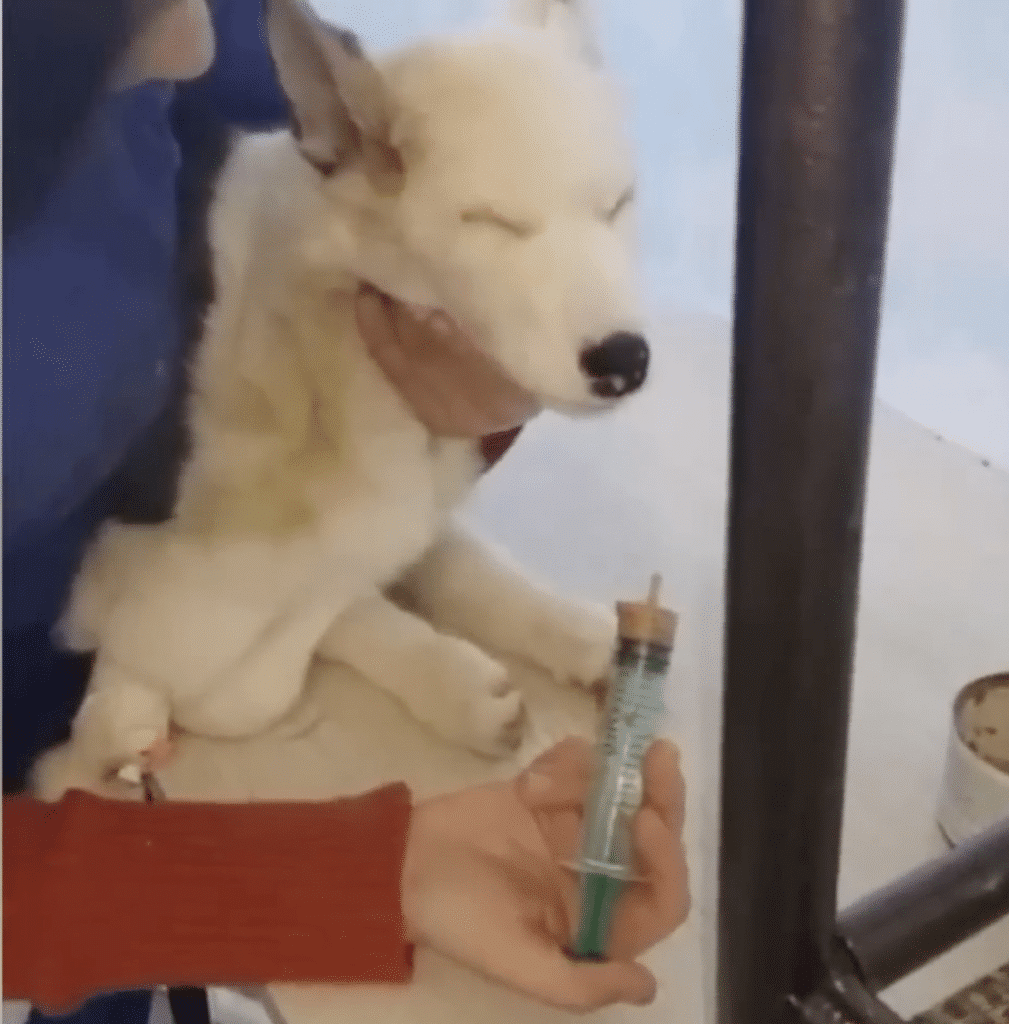
As Pakdasht became more comfortable, her caregivers noticed how she used her other senses.
She learned familiar voices.
She responded to footsteps.
Scent helped her identify people she knew.
Instead of needing to see someone approaching, Pakdasht could gather information in other ways.
A familiar person could announce themselves with their voice.
Footsteps could tell her that someone was nearby.
Her nose provided information her eyes no longer could.
Little by little, Pakdasht became better at navigating the environment around her.
She did not regain her sight.
She adapted to living without it.
That distinction mattered.
Her recovery was not about returning her to exactly the dog she had been before her injuries.
It was about creating an environment where she could safely use the abilities she still had.
Familiar Spaces Became Easier to Navigate
With repetition, Pakdasht’s movements became more confident.
The places she encountered every day stopped being completely unknown.
She learned where important things were located.
She knew the routes she traveled regularly.
She became increasingly comfortable moving through familiar spaces.
Her caregivers continued helping when necessary, but they also gave her opportunities to do what she could independently.
That independence grew gradually.
The dog who had once moved with extreme caution could now use memory, scent, sound, and touch to understand more of her surroundings.
Her world remained different from that of a sighted dog.
But different did not mean empty.
There were still familiar voices to follow.
Interesting scents to investigate.
People to greet.
Comfortable places to rest.
Meals to enjoy.
And safe spaces she could learn well enough to move through with confidence.
Her Gentle Nature Made Her a Favorite at the Shelter
As the months passed, Pakdasht became familiar not only with her surroundings but with the people who cared for her.
Volunteers came to know her calm personality.
Visitors were drawn to her gentle behavior.
She responded to familiar people with a wagging tail and seemed comfortable in the routines that had developed around her.
Other dogs were also part of her daily environment.
Pakdasht’s blindness remained a permanent part of her life.
But it no longer defined every moment of it.
The frightened, physically weakened dog carried from the mud had become a resident who understood her surroundings and knew the people around her.
Her progress was visible not because her eyesight returned.
It never did.
The change could be seen in how comfortably she lived without it.
Pakdasht Built a Life Around What She Still Had
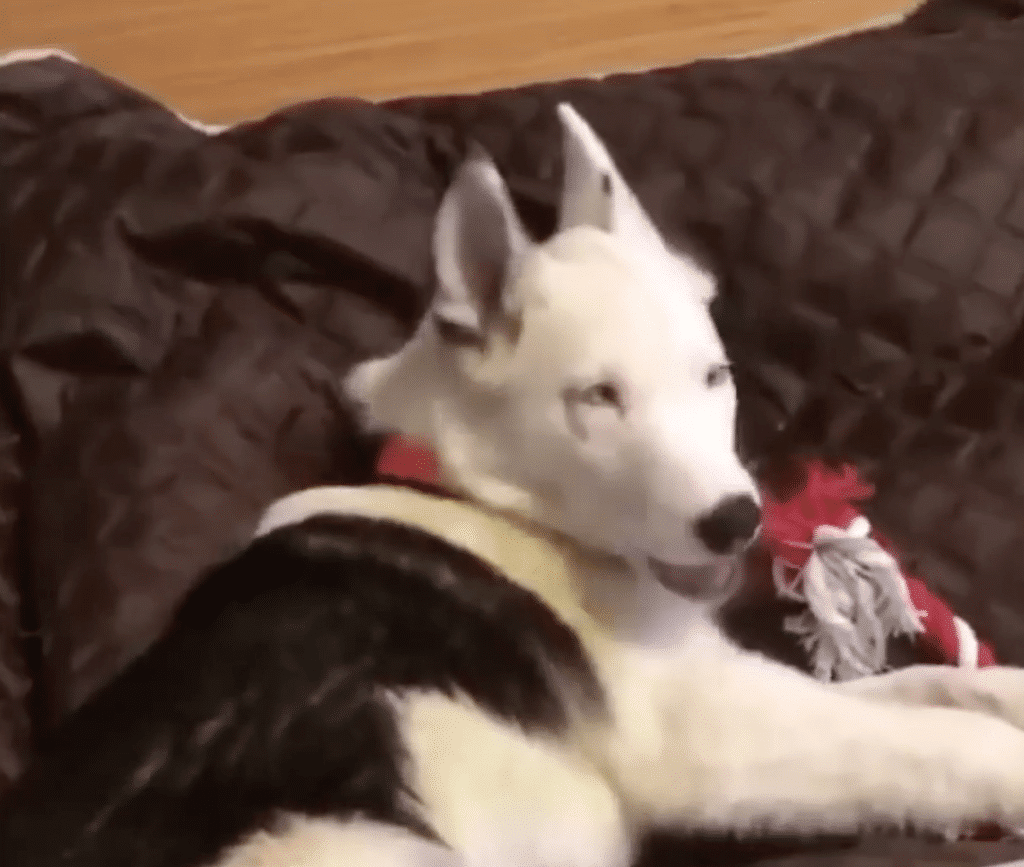
There was no moment when Pakdasht woke up and everything became the way it had been before.
That was never going to happen.
Instead, her caregivers helped her build a life around what remained.
Her hearing.
Her sense of smell.
Her memory.
Her ability to recognize voices and routines.
And her willingness to continue exploring familiar spaces.
The process required patience.
When she bumped into something, she could try again.
When a new space felt uncertain, someone could guide her.
When she heard a familiar voice, she could move toward it.
Over time, those experiences added up.
Pakdasht did not need to see a volunteer’s face to recognize someone she knew.
She did not need sight to know where her comfortable resting place was.
And she did not need her eyes to respond when someone she trusted entered the room.
She Never Regained Her Sight — But She Regained Her Independence
The first image of Pakdasht and the life she later built could hardly be more different.
She had been lying in cold mud after a night of rain.
She was exhausted.
Her body trembled.
She barely had enough strength to lift her head.
Then rescuers carried her away.
Veterinarians discovered injuries that could be treated and one loss that could not.
Pakdasht would remain blind.
But blindness did not mean her life had to stop there.
Her physical condition improved.
She learned the locations of food and water.
She memorized familiar pathways.
She recognized people by their voices, footsteps, and scent.
Eventually, she could navigate the world around her with far more confidence than anyone watching her first uncertain movements might have expected.
Pakdasht’s story was never about blindness somehow disappearing.
It was about what happened after everyone understood it would remain.
People adapted her care.
They gave her time.
And Pakdasht learned.
Today, she does not need to see the people around her to know when someone familiar has arrived.
A voice can be enough.
A scent can be enough.
The sound of footsteps can be enough.
Her world changed permanently.
But it did not disappear.
And after everything Pakdasht endured, she discovered that safety was something she could recognize without ever needing to see it.


