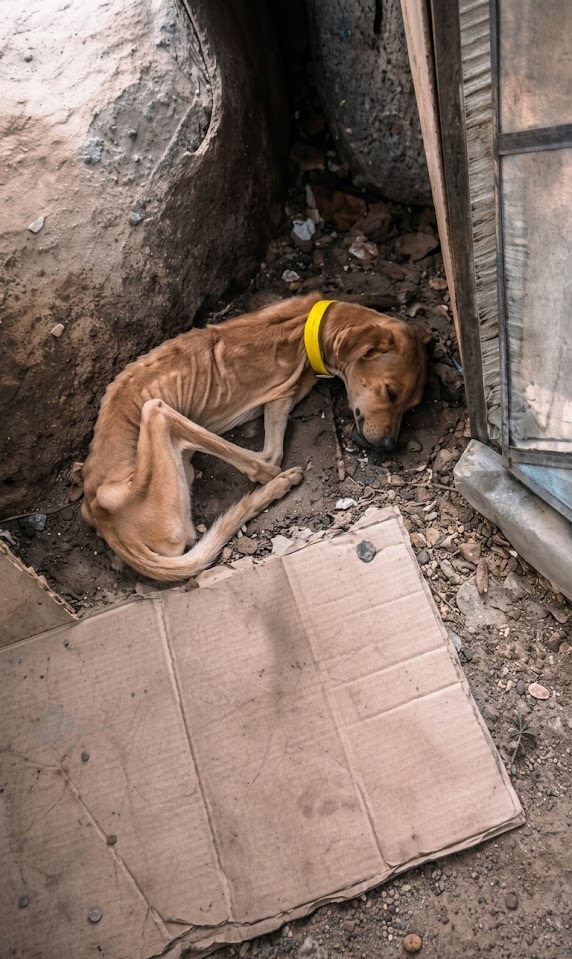
Alan’s body had almost nothing left.
The small dog stood weakly at the end of a chain, exposed to the weather and struggling to support his severely underweight frame. His owner had reportedly disappeared weeks earlier, leaving him without dependable food, shelter, or medical care.
Even after concerned volunteers tried to intervene, Alan remained trapped in the same situation.
By the time rescuers were finally able to take him away, his condition had become critical.
Yet beneath the exhaustion was a gentle dog still waiting for someone to show him that his life mattered.
A Small Dog Fading at the End of a Chain
The distress call described a frail dog living outside in alarming condition.
When rescuers arrived, they immediately understood why someone had asked for urgent help.
Alan was painfully thin.
His body trembled when he tried to stand, and the chain around him limited what little movement he could manage. There was no adequate shelter protecting him from the weather and no evidence that his basic needs were being met consistently.
His weakness had gone far beyond ordinary hunger.
Alan looked like a dog whose body had been surviving on its remaining reserves for far too long.
According to the person who reported the case, his owner had left weeks earlier. Yet when volunteers attempted to help, the man continued claiming ownership and initially refused to surrender him.
The situation became even more troubling when it was revealed that Alan had reportedly been purchased inexpensively during a period when interest in dogs like him had suddenly increased.
Once that interest faded, so did the responsibility that should have lasted for Alan’s entire life.
He had been treated like a passing possession.
But to the rescuers standing beside him, he was a living being who needed help immediately.
VIDEO: Alan Was Found Weak and Chained Outside — His Emergency Fight for a Second Chance
At Only 6.5 Kilograms, His Body Was in Crisis
Once Alan was removed from the property, rescuers rushed him to a veterinary clinic.
There was no time to begin with ordinary shelter care. His condition required immediate medical attention.
Alan weighed only 6.5 kilograms.
For a dog of his size, the number reflected severe malnutrition and significant muscle loss. His body had become so depleted that even maintaining normal blood sugar levels was difficult.
Veterinarians found his glucose dangerously unstable.
Every system in his body had been affected by the prolonged lack of proper nourishment and care. He was weak, dehydrated, and at risk of further complications if treatment did not begin quickly.
The medical team placed him under continuous supervision.
Fluids were administered to support hydration and circulation. Medication was introduced according to his condition, while his blood sugar was managed carefully under veterinary guidance.
Feeding also had to be controlled.
After prolonged starvation, offering too much food too quickly can place additional strain on a weakened body. Alan needed small, carefully measured meals that could rebuild him without overwhelming his system.
The clinic team focused first on one goal:
Keeping him stable through the next critical hours.
His First Safe Days Were Quiet and Uncertain
The veterinary clinic became the first secure place Alan had known in weeks—perhaps longer.
He was given a clean area to rest, away from the chain and the changing weather. Someone was always nearby to monitor him, offer food, and respond if his condition suddenly changed.
During the earliest stage of treatment, progress was difficult to predict.
Alan rested for long periods.
He did not have enough strength for play or curiosity. Even lifting his head and following movement around the room required effort.
But his caregivers remained patient.
They did not expect him to become energetic immediately.
They focused on the small things.
A stable reading.
A completed meal.
A calmer breath.
A little more awareness in his eyes.
Every improvement suggested that Alan’s body was beginning to respond.
The dog who had arrived close to collapse was still fragile, but he was no longer fading alone.
Food Became the Beginning of His Return
As treatment continued, Alan began showing more interest in food.
At first, he ate only the carefully controlled portions placed before him. His caregivers watched closely, making sure his body tolerated each meal.
Then his appetite became stronger.
The change brought relief to everyone involved.
Food was no longer something uncertain or unavailable. It arrived regularly, prepared specifically to help him recover.
Each meal began rebuilding what neglect had taken away.
His energy slowly increased.
The distant expression in his eyes started to soften.
He became more aware when caregivers entered the room and began following them with quiet attention.
Alan was still far from fully recovered, but the emptiness surrounding him was gradually disappearing.
His body was beginning to believe that another meal would come.
And his heart was beginning to believe that the people around him might stay.
Standing Again Became a Quiet Victory
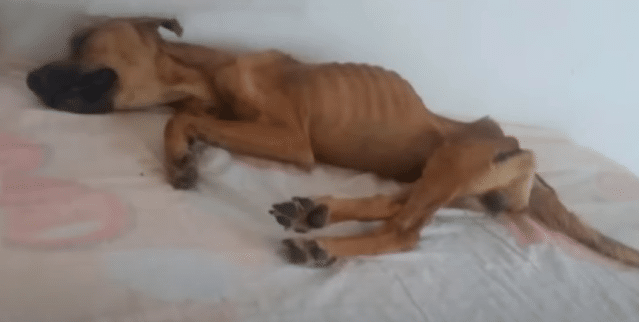
In the beginning, Alan could barely support his own weight.
His muscles had weakened so severely that standing required enormous effort. His legs trembled beneath him, and he often needed to rest after only a brief attempt.
No one forced him.
The veterinary staff remained nearby, encouraging him gently and allowing his body to determine the pace.
Then one day, Alan stood for slightly longer.
The next attempt was steadier.
Soon, he managed a few careful steps.
They were not fast or confident, but they belonged to him.
For the people who remembered the dog found fading at the end of a chain, those movements represented something extraordinary.
Alan was not only responding to treatment.
He was actively returning to life.
With continued nutrition and medical support, his steps became stronger. He began walking farther and showing greater interest in his surroundings.
Eventually, brief moments of play appeared.
The transformation remained gradual, but every new movement carried him farther from the place where he had nearly disappeared.
His Gentle Nature Survived Everything
One of the most remarkable parts of Alan’s recovery was the way he responded to people.
He had every reason to remain fearful.
Humans had failed to provide the care he depended on. He had been left outside, restrained, and allowed to become dangerously weak.
Yet Alan did not meet kindness with anger.
He leaned toward gentle touch.
He relaxed when caregivers stayed beside him.
He began seeking quiet affection from the people helping him recover.
The change was not immediate trust.
It grew through repetition.
The same faces returned each day.
Food arrived when expected.
Hands approached slowly.
No one demanded more from him than he was ready to give.
Alan learned that attention did not always lead to disappointment.
Some people kept their promises.
Some hands brought food, comfort, and healing.
His body was recovering through medical care.
His willingness to trust was returning because people continued to show him that he was safe.
He Slowly Rediscovered How to Be a Dog
As Alan’s strength improved, the clinic staff began seeing more of his true personality.
He became alert and responsive.
He explored his surroundings with growing confidence. His movements no longer carried the same constant exhaustion, and his attention shifted from basic survival toward the ordinary experiences of a dog discovering comfort.
He noticed toys.
He responded to voices.
He enjoyed affection.
At times, he even played in short, joyful bursts.
These moments meant more than physical improvement.
They showed that Alan’s world was expanding.
For weeks, his existence had been reduced to hunger, exposure, and the limits of a chain. Now his days included regular meals, human companionship, and the freedom to move without restraint.
He was learning that life could contain more than simply making it through another night.
A Preventable Tragedy Became a Second Chance
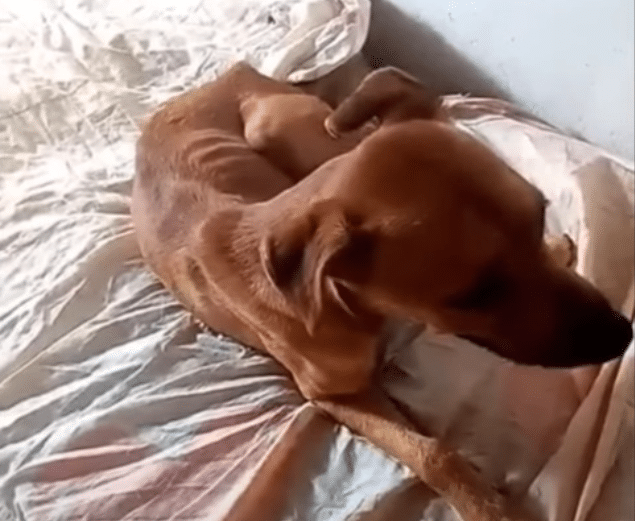
Alan’s condition did not develop because of an unavoidable accident.
His suffering was preventable.
A dog depends completely on the people responsible for him. Food, clean water, shelter, medical attention, and protection are not optional gestures. They are lifelong commitments.
When that commitment disappears, an animal’s health can decline with frightening speed.
Alan’s story shows how severe neglect can become in only a matter of weeks.
But it also reveals what timely intervention can accomplish.
One person reported the situation.
Rescuers continued pushing for the right to remove him.
Veterinarians acted quickly.
Caregivers remained beside him through the uncertain days that followed.
Each decision became part of the reason Alan survived.
Alan Is No Longer the Dog Found Fading Outside
Today, Alan is living in safety.
He is no longer tied outside without reliable care. His body has regained strength, and the fragile dog who once struggled to stand can now walk, interact, and enjoy the world around him.
His recovery does not erase what happened.
But it proves that the beginning of a story does not always decide its ending.
Alan was once treated as though his life had become inconvenient.
The people who rescued him saw something entirely different.
They saw a dog who was still gentle.
Still trusting.
Still capable of healing.
And still worthy of every effort required to save him.
His journey reminds us that rescue is more than removing an animal from danger.
It is the careful work that follows.
The emergency treatment.
The controlled meals.
The patient monitoring.
The quiet encouragement when weak legs try to stand again.
Alan’s life was nearly reduced to a chain and an empty place outdoors.
Compassion gave him something much greater.
The chance to become whole again—and finally experience the life he should have known from the beginning.


