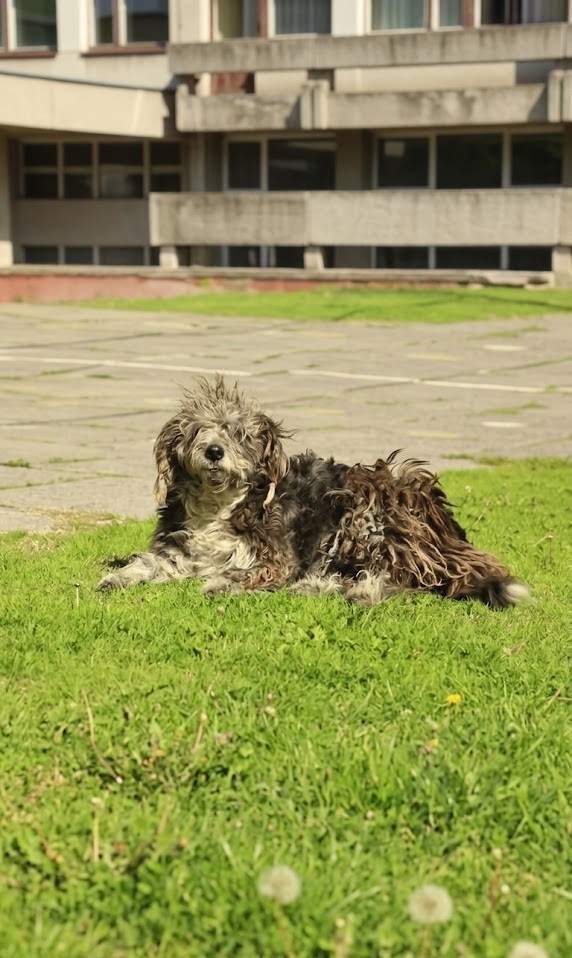
Maki once knew the ordinary comfort of belonging.
He had familiar people, a place to rest, and a daily life that made sense to him. Then, without warning, everything changed. The people he depended on were gone, and Maki was left behind without understanding why.
By the time rescuers found him, he had withdrawn so deeply that he barely responded to food, voices, or gentle hands.
But beneath the silence, a small part of him was still holding on.
The Dog Who Tried to Disappear
When rescuers first approached Maki, he did not bark or attempt to run.
He did not growl.
He did not look toward them for comfort.
Instead, he remained curled against the floor with his head pressed low, keeping his body as still as possible. Even when someone spoke softly nearby, he avoided eye contact.
His physical condition was concerning.
Maki appeared weak and exhausted. His posture remained tense, and movements around him often caused his body to tighten. He seemed to have little interest in the people entering the room or the food placed beside him.
The team at Dog Rescue Shelter Serbia understood that medical attention and proper nutrition would address only part of what he needed.
Maki had stopped engaging with the world around him.
No one could know exactly what he remembered about being abandoned. The rescuers could only observe what had been left behind—a frightened dog who no longer seemed to expect comfort from people.
So they did not demand his trust.
They gave him time.
Video: Maki Takes His First Bite After Days of Refusing Food and Comfort
Kindness Without Pressure
The caregivers never pulled Maki from the corner or forced him to interact.
Instead, they sat quietly nearby.
They spoke in calm, steady voices.
Fresh food was placed within his reach, but no one pushed the bowl toward him or surrounded him while he considered whether it was safe to eat.
When Maki moved away, they respected the distance he needed.
When he remained still, they stayed nearby without touching him.
Every visit followed the same gentle pattern.
Someone entered the room.
Someone spoke softly.
Food and clean water appeared.
Then, after giving him space, that person returned later.
For a dog who had suddenly lost the people he once depended on, consistency mattered more than dramatic gestures.
Maki needed to discover that these caregivers would continue coming back.
Some days brought no visible progress.
He kept his head low.
He ignored the food beside him.
Unexpected movements still made him flinch.
But the rescuers did not measure his worth by how quickly he responded.
Maki did not have to wag his tail to receive care.
He did not have to approach anyone.
He only had to remain safe while the people around him patiently proved that kindness could be dependable.
One Small Bite Became the Beginning
Then came the moment everyone had been waiting for.
Maki noticed the bowl of food.
At first, he leaned toward it only slightly. He sniffed the food and paused, appearing uncertain about whether he should continue.
The caregivers remained quiet.
No one moved closer.
No one tried to encourage him with sudden excitement.
After a long hesitation, Maki took one bite.
It was a tiny action, but inside the shelter, it felt enormous.
Eating meant his body was beginning to respond to the care surrounding him. It showed that he was willing to engage with something beyond the fear that had kept him motionless.
Most importantly, it meant the instinct to continue was still present.
One bite eventually became another.
Over the following days, Maki began eating more consistently. Proper nourishment slowly restored strength to his body, and his posture started to improve.
The rescuers did not treat that first meal as proof that everything was suddenly better.
Maki still hesitated around touch.
He still pulled away from unexpected movements.
Trust remained unfamiliar.
But the wall he had built around himself now contained one small opening.
The caregivers continued meeting him there.
They offered meals at regular times, kept his surroundings peaceful, and allowed every new interaction to happen at Maki’s pace.
His recovery was not measured in dramatic changes.
It was measured in small decisions.
Choosing to smell the food.
Choosing to take another bite.
Choosing to remain in the room when someone entered.
Each decision brought him one step closer to the world he had stopped trusting.
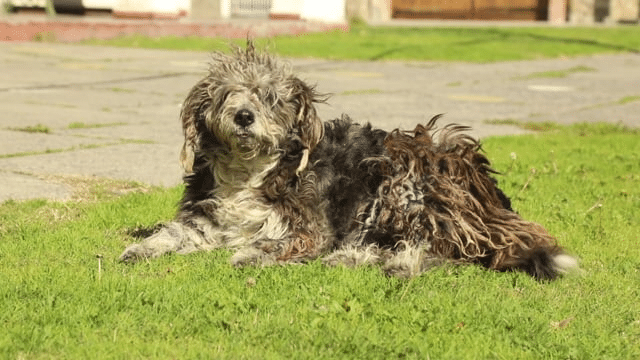
On the Eighth Day, He Finally Looked Up
By the eighth day, the caregivers noticed something different.
When they entered Maki’s room, he lifted his head.
Then he looked directly at them.
It was a simple gesture—one that might seem ordinary in another dog—but for Maki, it represented an important change.
For the first time, he appeared genuinely interested in the people who had been sitting beside him day after day.
There was no sudden leap into waiting arms.
No dramatic display of affection.
Only a frightened dog raising his head and allowing his eyes to meet theirs.
The rescuers remained calm.
They understood that excitement, even joyful excitement, could overwhelm him. Instead, they continued speaking gently and allowed the moment to unfold without pressure.
Maki was watching them now.
He was listening.
He was beginning to recognize that the people entering his room were connected to food, safety, and quiet companionship.
The following day brought another milestone.
As a familiar caregiver approached, Maki’s tail moved.
Only slightly.
Only for a moment.
But everyone noticed.
A tail wag is common for many dogs. For Maki, that brief movement suggested that something beneath the fear was beginning to change.
He had not forgotten how to connect.
He simply needed enough safety to try.
From then on, the progress became easier to see.
Maki lifted his head more often.
He began watching the caregivers as they moved around the room.
He showed more interest when meals arrived.
The dog who had once tried to disappear was slowly allowing himself to be noticed.
The Gentle Dog Beneath the Silence
As the weeks passed, Maki’s physical strength continued to return.
He began walking with greater confidence and showing curiosity about his surroundings. Instead of remaining pressed against the same corner, he started exploring the room.
Soft beds caught his attention.
Gentle scratches behind the ears no longer made him immediately pull away.
Familiar voices became reassuring rather than frightening.
Eventually, Maki began seeking companionship.
He approached caregivers instead of always waiting for them to close the distance. He rested near people and appeared increasingly comfortable with affectionate touch.
The transformation did not happen in a straight line.
Some days, an unfamiliar sound still startled him.
New people could make him cautious.
Unexpected movement occasionally caused him to retreat.
His caregivers understood that recovery did not require Maki to forget everything that had happened.
Instead, they gave him safer experiences to place beside the difficult ones.
Another dependable meal.
Another peaceful night.
Another gentle hand that stopped when he became uncomfortable.
Another person who returned the following morning.
Through those repeated moments, Maki learned that he could set boundaries and still be cared for.
He discovered the comfort of a warm bed.
He began enjoying quiet attention.
His eyes appeared brighter, and curiosity gradually replaced the distant expression rescuers had first seen.
Beneath the silence was not a dog who had stopped caring.
There was a gentle companion who had been waiting for a reason to feel safe again.
A Family Willing to Move at His Pace
Eventually, a family learned about Maki and expressed interest in adopting him.
They were not searching for a dog who would behave perfectly from the first day.
They were looking for a companion they could love patiently.
When they met Maki, they respected the distance he needed.
They did not surround him.
They did not demand affection.
They allowed him to watch, listen, and decide when he felt comfortable enough to move closer.
At first, Maki remained cautious.
His tail stayed low, and his movements were hesitant. The unfamiliar voices and scents reminded everyone that entering a new home would be another major adjustment.
But the family did not rush him.
They spoke gently.
They allowed quiet pauses.
They showed him that he could step away without being followed.
Little by little, the tension softened.
Maki approached.
Then he stayed.
Their connection was not an instant fairy tale.
It was something slower and more meaningful—a beginning built at the same careful pace as his recovery.
The family understood that bringing Maki home would not erase every fear. Trust would continue growing through routines, patience, and the repeated promise that no one would suddenly disappear from his life again.
Eventually, Maki walked into a home of his own.
This time, the people beside him intended to stay.
Today, his days are filled with comforts that once seemed far beyond his reach.
He has a warm bed.
Sunny places where he can rest.
Regular meals that arrive without uncertainty.
And people who notice when he needs affection, reassurance, or space.
The fear that shaped his first days at the shelter was not simply forgotten.
It was answered by something stronger.
Consistency.
Patience.
And love that never demanded he pretend the past had not happened.
Maki’s recovery was created through moments small enough to be overlooked.
One bite of food.
One lifted head.
One cautious look.
One brief movement of his tail.
Each became a step away from the dog who had curled against the floor and stopped expecting comfort.
His journey reminds us that healing is not always loud.
Sometimes, it begins when someone sits quietly beside a frightened animal and asks for nothing.
Sometimes, hope returns through a bowl of food left within reach.
And sometimes, the greatest transformation is not simply a dog learning to trust people again.
It is a dog discovering that this time, the people who love him will not leave.
Once, Maki tried to make himself invisible.
Today, he lives with a family who sees his worth every day.


