The quiet Ohio neighborhood gave little indication that an elderly dog was in serious danger.
Outside one of the homes, Mia lay inside a cramped plastic crate as the afternoon temperature continued to rise. She had reportedly been confined there for more than six hours without access to water.
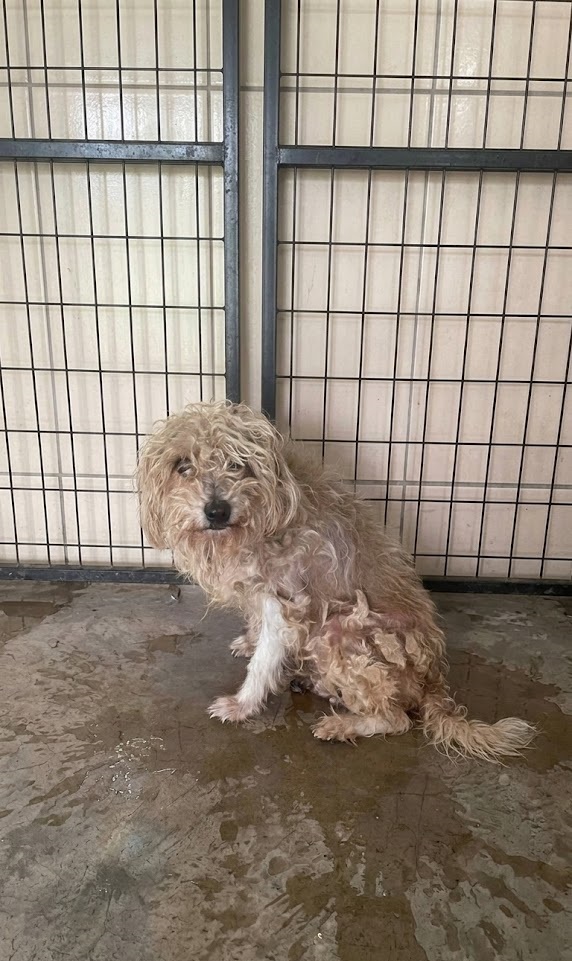
Her body was thin.
Her coat was heavily matted.
And when a concerned neighbor finally looked closely, Mia appeared barely able to respond.
That neighbor made a phone call.
By the time rescuers arrived, every minute mattered.
The Senior Dog Trapped in the Heat
Mia was found during a dangerously hot afternoon in Ohio.
The plastic crate offered little space for her to reposition herself or escape the heat surrounding her. There was no accessible bowl of water, and she appeared to have been outside for several hours.
When volunteers from Rescue Me Pawsome Style reached the property, Mia was lying almost motionless.
Her breathing was shallow.
Her body appeared severely dehydrated.
She did not have enough strength to stand normally when the crate was opened.
The rescuers moved carefully, uncertain how her fragile body would respond to being lifted. Mia trembled as they supported her, but she offered no resistance.
Her condition suggested that the heat was only one part of a much longer period without proper care.
She was underweight.
Dense mats covered much of her body, pulling against skin that appeared irritated beneath the tangled coat. Her teeth were also in poor condition and would require professional attention.
The rescue account raised concerns that Mia may have experienced neglect well before that afternoon. Some caregivers wondered whether she had previously been used for breeding, though her complete history could not be independently confirmed.
What mattered immediately was visible in front of them.
Mia was an elderly dog who needed urgent medical care, water, cooling, and a safe place away from the crate.
Video: Mia Was Found Motionless in a Sweltering Crate—Then a Neighbor’s Call Brought Help
One Neighbor Refused to Ignore What Was Happening
Mia’s rescue began because someone nearby paid attention.
A neighbor noticed that the senior dog had remained inside the crate for an extended period as temperatures climbed. Instead of assuming someone else would intervene, the person contacted the appropriate authorities.
That decision allowed rescuers to reach Mia before her condition worsened further.
The volunteers carefully moved her away from the heat and began addressing the most immediate risks. Because severely dehydrated animals can require controlled treatment, Mia needed professional evaluation rather than being encouraged to drink too much too quickly.
Her rescuers kept her as calm as possible during transport.
Everything around her was unfamiliar.
New voices.
New hands.
The movement of the vehicle.
Mia watched the people nearby but remained tense. Her weakness limited how much she could do, yet even gentle handling appeared to make her uncertain.
No one could know exactly what experiences had shaped that response.
The team avoided making assumptions.
They simply gave her space, spoke softly, and made sure every interaction was as predictable as possible.
Mia’s life had changed within a matter of hours.
She had gone from lying alone in a hot crate to being surrounded by people monitoring her breathing, hydration, and comfort.
The danger was not over.
But she was no longer facing it alone.

Her Recovery Required More Than Food and Medicine
Once Mia was medically stable, the slower work of recovery could begin.
Experienced foster caregiver Renee Habart welcomed the senior dog into her home through Rescue Me Pawsome Style.
The new environment was safe, but Mia did not understand that immediately.
During her first days in foster care, ordinary household sounds sometimes caused her to flinch. A sudden movement could make her retreat, and unfamiliar people were approached with caution.
Renee did not force interaction.
Mia was given a quiet resting area where she could observe the household without feeling surrounded. Her food, water, and bedding remained in dependable locations so she could begin learning a predictable routine.
Meals were provided with her health and age in mind.
Her coat received careful attention.
Veterinary professionals assessed her teeth and the other conditions revealed after rescue.
Just as importantly, Mia was allowed to rest.
Senior dogs recovering from dehydration, poor nutrition, and prolonged neglect often need time before their energy begins returning. Renee understood that progress might not be visible every day.
Some mornings, Mia remained withdrawn.
At other times, a noise or quick movement brought back the tension seen during her first days.
The response was always the same.
No pressure.
No punishment.
Only a calm voice and enough space for Mia to settle again.
Trust was not treated as something she owed her caregivers.
It was something they would earn.
Small Comforts Slowly Changed Her Days
Mia’s transformation appeared through ordinary moments.
She began finishing her meals more consistently.
Her weight gradually improved.
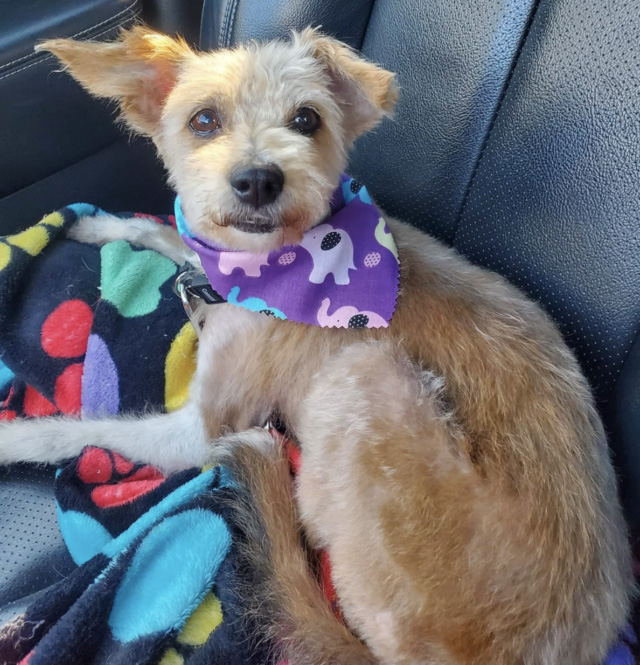
After the neglected coat was addressed, healthier fur started growing in its place. She could lie down without thick mats pulling against her skin.
Then her behavior began to soften.
Mia rested more deeply in her bed.
She remained in the room when people moved nearby instead of immediately retreating.
When Renee sat beside her, Mia sometimes stayed close enough to accept a gentle touch.
The first signs of affection were quiet.
A lifted head when Renee entered.
A small step in her direction.
A body that remained relaxed when a hand reached slowly toward her shoulder.
Eventually, Mia began seeking companionship on her own.
She discovered the comfort of soft blankets and peaceful naps. She learned that food arrived every day and that the person who left the room would return.
These repeated experiences gave Mia something she had not been able to depend on before.
Consistency.
Her recovery did not mean every cautious behavior disappeared. Certain sounds or situations could still make her uncertain.
But she no longer remained trapped in that fear for as long.
She looked toward Renee for reassurance.
She recovered more quickly.
She began participating in the life happening around her.
The senior dog who had once been too weak to stand in the heat was learning how to rest without remaining constantly alert.

Advocates Sought Accountability for Her Condition
While Mia recovered in foster care, people connected to the rescue pursued legal accountability for the circumstances in which she had been found.
According to the rescue account, the case resulted in court-imposed penalties for her former owners. These reportedly included fines, probation-related conditions, and restrictions preventing them from owning animals in the future.
Legal outcomes cannot undo what an animal has already experienced.
They can, however, establish consequences and reduce the chance that other animals will be placed in similar conditions.
For Mia’s advocates, the reported ruling offered some reassurance.
The senior dog’s suffering had not been dismissed as insignificant.
The conditions surrounding her rescue had been documented, reviewed, and acted upon.
Still, Mia knew nothing about court proceedings or penalties.
Her world was much simpler.
A bowl that was filled.
A bed that remained hers.
A caregiver who spoke gently.
A home where she was never again left in a crate under the afternoon sun.
While others worked on the case, Mia continued doing the quieter work of recovery.
She ate.
She slept.
She learned the routines of Renee’s household.
And with each passing week, the possibility of a permanent future became easier to imagine.
Her Foster Home Became the Home She Would Keep
Renee had originally opened her home to help Mia recover.
Over time, the relationship grew into something neither of them needed to leave behind.
Renee understood Mia’s medical history.
She recognized the small behaviors that signaled discomfort or uncertainty.
She knew when Mia wanted affection and when she needed space.
Most importantly, Mia had learned that Renee was dependable.
Eventually, Renee made the adoption permanent.
Mia would not need to adjust to another unfamiliar house or begin building trust with a completely new person.
The foster home where she had healed became her forever home.
Today, Mia spends her time in comfort.
She rests on soft bedding.
She receives regular meals and veterinary care.
She can move through her home without wondering whether water will be available or whether she will be left outside in dangerous weather.
Some responses from her past may still appear.
Renee has acknowledged that difficult experiences can continue influencing how rescued animals react, even after their circumstances improve.
But Mia is no longer defined only by those reactions.
She is also the dog who seeks companionship.
The dog who enjoys a peaceful nap.
The dog who learned that an approaching hand could bring comfort instead of fear.
The dog whose life continued because one neighbor decided that what was happening behind an ordinary home should not be ignored.
Mia’s rescue was not created by a single dramatic act.
It required a chain of people choosing to respond.
A neighbor noticed.
Authorities and rescuers acted.
Veterinary professionals treated her.
A foster caregiver stayed through the slow, uncertain stages of healing.
And eventually, that caregiver promised Mia she would never have to leave.
Once, Mia lay inside a sweltering crate while the world around her continued as usual.
Today, she rests safely in a home where someone always notices what she needs.


