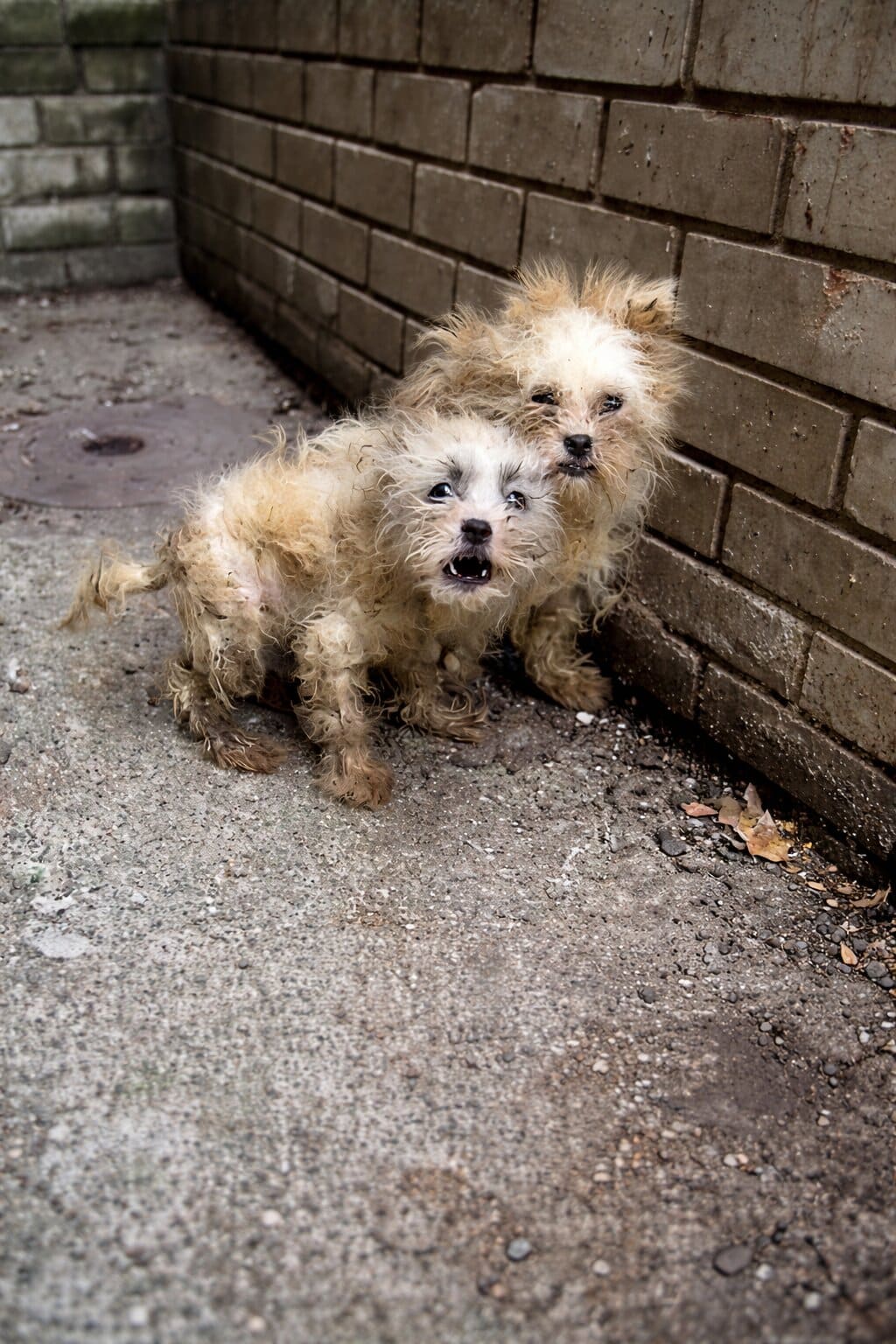
They were so small that both could fit inside a single discarded bag.
Beside an old wall, two white, fluffy dogs were found pressed tightly against each other. Their coats were tangled with dirt and mud, their bodies appeared weak, and every nearby movement made them flinch.
They were sisters.
Whatever had happened before that moment was not fully known. But one thing was immediately clear: they had learned to depend on each other when nothing else felt safe.
Then someone stopped and chose to help them both.
Two Frightened Faces Inside a Bag
The sisters were discovered in a quiet area beside an aging wall, hidden inside a bag that appeared to have been left behind.
Neither dog tried to climb out when help arrived.
They stayed close together, their small bodies touching as though separation would make the unfamiliar situation even more frightening.
Their white coats were almost unrecognizable beneath layers of dirt and heavy matting. Tangled fur pulled against their skin and made normal movement uncomfortable.
Yet their physical condition was only part of what concerned the rescuers.
Both dogs were deeply afraid of human contact.
A hand moving too quickly caused them to tense.
An unfamiliar sound made them shrink closer together.
They did not understand that the people approaching had come to help. From their perspective, the safest choice was to remain still and trust only one another.
The rescue team moved carefully.
There was no attempt to pull them apart.
The sisters were lifted from the bag and transported together to a veterinary clinic, where the slow work of helping them feel safe could finally begin.
Video: Two Abandoned Sisters Are Rescued—And One Medical Examination Changes Everything
Removing the Weight of Neglect
At the clinic, the team began with their damaged coats.
The matting was too severe to remove through ordinary brushing. Thick sections had tightened around their small bodies, collecting dirt and making it difficult to properly examine the skin underneath.
The fur had to be trimmed away gradually.
For the sisters, even this gentle process was frightening.
They trembled as unfamiliar hands moved around them. The sound of grooming tools and the sensation of being touched were difficult to understand.
So the caregivers slowed everything down.
They paused when either dog became overwhelmed.
They spoke in calm voices.
They allowed the sisters to remain close enough to see and smell one another throughout the process.
Little by little, the heavy mats fell away.
Warm water then removed the remaining dirt from their coats and skin. Beneath everything that had hidden them were two delicate dogs with soft features and cautious eyes.
The grooming did more than change their appearance.
It allowed the medical team to examine them properly and begin addressing the discomfort they had been carrying.
For the first time since being found, the sisters were clean, warm, and surrounded by people who expected nothing from them except the chance to help.
One Sister Needed Urgent Surgery
During the veterinary examinations, the team discovered that one of the dogs had a large bladder stone.
This was more than a minor health problem.
Bladder stones can cause significant discomfort and may interfere with normal urination. In her case, the veterinarians determined that surgery was necessary.
The operation was performed successfully.
Afterward, she needed medication, careful monitoring, and a quiet place where her body could recover without unnecessary stress.
Her sister remained nearby.
Even when they could not be physically pressed against each other, they were kept within sight whenever possible. The familiar presence appeared to offer reassurance during an otherwise confusing experience.
Recovery happened gradually.
At first, the operated dog rested for long periods.
Her movements were limited, and caregivers watched closely for changes in her appetite, energy, and comfort. Each meal she finished and every calm period of sleep became a small sign that her strength was returning.
Her sister was recovering too, although her needs were different.
Both dogs had to learn that food would continue arriving, gentle hands would not hurt them, and resting did not require remaining constantly alert.
The clinic treated one dog’s medical condition.
Together, the sisters began healing from something less visible—the fear of being left alone again.
Trust Returned Through Repetition
The sisters did not become playful or affectionate immediately.
When people entered the room, they still watched carefully.
Sudden movement could make them retreat.
Touch was accepted cautiously, and only when caregivers approached without pressure.
But each day followed a dependable pattern.
Meals arrived at regular times.
Their bedding remained clean and dry.
Medication was given gently.
No one forced them to interact before they were ready.
Slowly, their behavior began to change.
They started lifting their heads when familiar caregivers approached.
They showed interest in the room beyond their resting space.
One sister would explore first, while the other watched. Then, once the surroundings appeared safe, the second would follow.
Their bond remained strong, but it was no longer their only source of security.
Human kindness was becoming familiar too.
The sisters began accepting soft strokes without trembling. They rested more deeply and showed curiosity toward toys and unfamiliar objects.
Trust was not restored through one dramatic gesture.
It grew because the same people returned each day and continued treating them gently.
One Woman Chose Them Both
As their health improved, the question of their future became more important.
The sisters were closely bonded.
They slept together.
They looked for each other when placed in separate areas.
When one became uncertain, the presence of the other often helped her settle.
Separating them might have meant asking both dogs to endure another major loss just as they were beginning to feel secure.
Then a woman learned about their story.
She did not ask which sister was younger, calmer, or easier to care for.
She chose both.
Her decision meant the dogs would not have to lose the one relationship that had remained constant through abandonment, rescue, treatment, and recovery.
They would enter their new home together.
For the first time, their closeness no longer existed only because they were trying to survive.
It could become part of an ordinary family life.
Two beds placed near each other.
Two bowls prepared at mealtime.
Two small dogs learning the sounds and routines of a home that intended to keep them.

A Home Where Fear Slowly Faded
The transition into family life took patience.
The sisters needed time to understand their new surroundings. Every doorway, household sound, and unfamiliar room had to be investigated carefully.
At first, they continued moving as a pair.
If one stepped forward, the other followed.
If something frightened them, they returned to each other for reassurance.
Their adopter allowed them to progress without pressure.
There was no expectation that they should immediately behave like confident household pets. They were given quiet resting areas, regular routines, and the freedom to approach people when they felt ready.
Gradually, the tension began leaving their bodies.
They explored farther from their beds.
They responded to gentle voices instead of shrinking away.
Then they began to play.
The once-withdrawn sisters started chasing one another through the house in brief bursts of energy. Their steps became lighter. Their tails moved more often.
After playing, they still curled up together.
But now they did so on soft bedding in a safe home—not inside a discarded bag beside a wall.
Their eyes revealed the difference most clearly.
The constant watchfulness had softened.
They could rest without appearing prepared to escape.
They had learned that the door opening did not mean they were being taken away.
Sometimes, it simply meant their person had come home.
They Never Had to Say Goodbye to Each Other
The sisters’ story did not change because one person erased everything that had happened to them.
Their recovery required veterinary treatment, surgery, grooming, daily care, and time.
But the most important decisions were also the simplest.
Someone noticed the bag.
Rescuers handled two frightened dogs with patience.
Veterinarians treated the condition hidden beneath one sister’s neglected coat.
And when the time came to find them a home, one woman refused to make them face the future apart.
Once, the sisters stayed pressed together because each was the only safety the other knew.
Today, they remain together by choice.
They play.
They explore.
They rest side by side without cold, hunger, or uncertainty surrounding them.
They were found with almost everything taken away.
But they still had each other.
And because someone chose to care for both of them, that was one thing they never had to lose.


