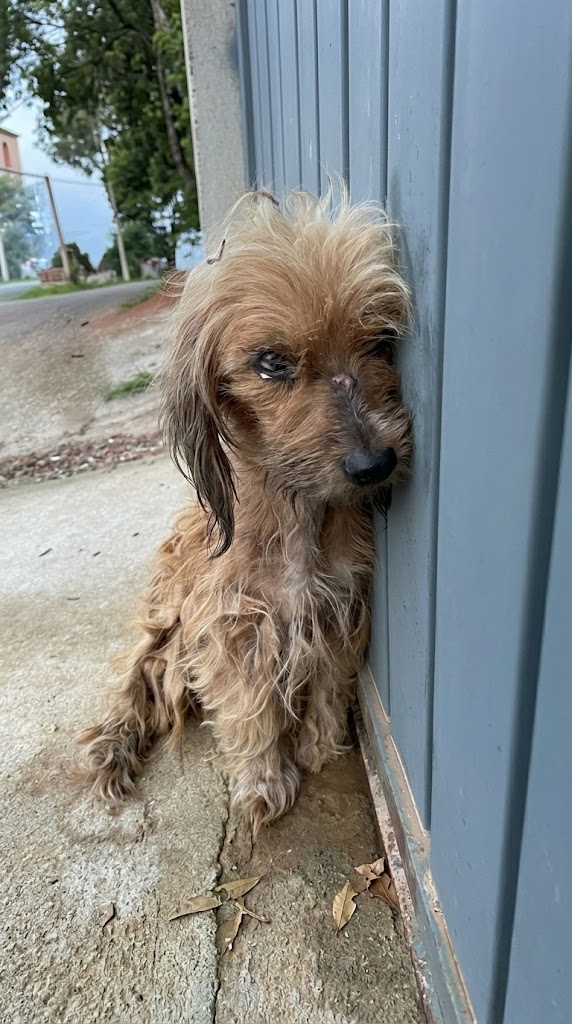
Mila was standing beside a concrete wall when rescuers first saw her.
Her body was painfully thin, her legs appeared unsteady, and her head rested against the cold surface as though she no longer had enough strength to hold it up.
She did not bark when people approached.
She did not attempt to run.
The little dog simply remained where she was, exhausted by hunger, illness, and weeks spent surviving in a place where she could rarely find peace.
But on that day, the people walking toward her were not there to frighten her.
They had come to bring her somewhere safe.
A Small Dog With Almost No Strength Left
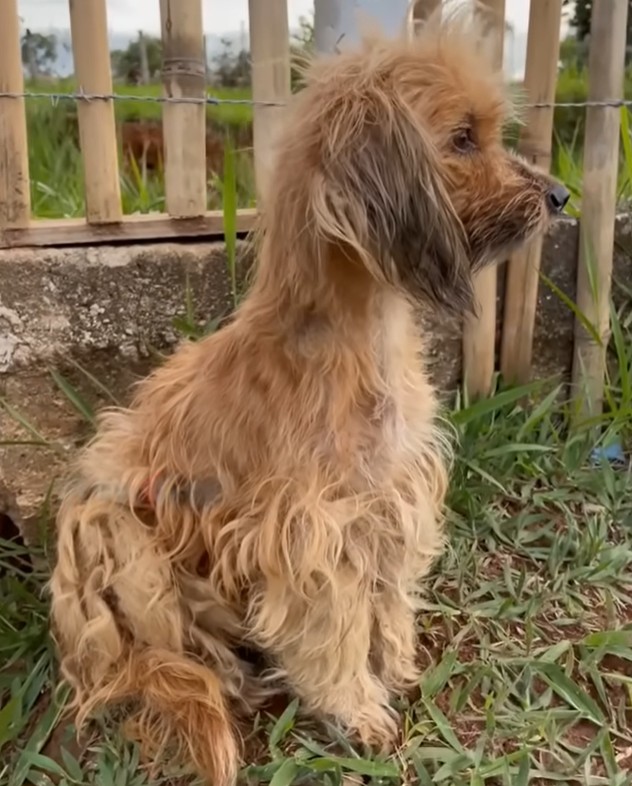
Mila had been wandering through a rural village in an extremely weakened condition.
Her ribs were clearly visible beneath her coat. Each step appeared slow and uncertain, and she often stopped near walls or fences to support herself.
When rescuers approached, they noticed that she showed very little of the alert behavior normally expected from a stray dog.
She did not retreat.
She did not growl.
She barely reacted at all.
Her stillness was not necessarily a sign that she trusted the people around her. It appeared to come from severe exhaustion.
Mila simply did not have much energy left.
Local residents reported that children in the area had frequently chased, surrounded, or attempted to play with her during the previous weeks. They may not have understood how fragile she was, but for a sick and underfed dog, repeated stress could have made her condition even more difficult.
Mila had nowhere private to rest.
No secure place to hide.
And no way to communicate that she needed to be left alone.
By the time help arrived, even remaining upright seemed difficult.
Video: Mila Could Barely Stand Beside the Wall—Then Gentle Hands Finally Reached Her
The Approach Had to Be Quiet
The rescuers understood that Mila could not tolerate additional stress.
They did not surround her or make sudden attempts to grab her.
Instead, they approached slowly and spoke in calm voices.
Mila watched them without moving away.
When a hand was extended toward her, she remained still. Her body appeared tense at first, but she did not resist the gentle contact.
The rescuers carefully supported her fragile frame and moved her away from the village.
It was the first step toward safety, but it did not mean the danger had passed.
Mila needed medical attention.
She was severely underweight, and examinations suggested that anemia had left her body dangerously weak. With too few healthy red blood cells carrying oxygen through her system, even ordinary movement could become exhausting.
Her condition required proper nutrition, treatment, and uninterrupted rest.
For the first time in weeks, Mila would be given all three.
Warm Water and a Place to Rest
At the rescue center, Mila received a careful bath.
The caregivers used warm water and slow movements, knowing that a frightened, exhausted dog could easily become overwhelmed.
Dirt gradually washed from her coat.
Throughout the process, Mila remained quiet. As the bath continued, her breathing appeared to become steadier and some of the tension in her posture began to ease.
Nothing was rushed.
The goal was not to create a dramatic transformation.
It was simply to make her clean, warm, and comfortable enough to rest.
Afterward, Mila was placed on a soft bed.
At first, she curled her body tightly, still carrying the guarded posture she had used outdoors.
Then she slept.
She remained there for hours, no longer needing to watch for people approaching or find another place to hide.
The bed did not solve every part of her condition.
But it gave her something her body urgently needed.
Peaceful, uninterrupted rest.
Healing Began With Ordinary Routines
Mila’s recovery was built through simple things repeated every day.
Small, nourishing meals helped her weakened digestive system adjust to regular food.
Medication and veterinary care addressed her anemia and other health concerns.
A quiet environment allowed her to recover without the constant stress she had experienced outside.
During the first days, she spent much of her time sleeping.
Her caregivers did not expect affection or playful behavior. They allowed her body to focus on healing.
Gradually, Mila began lifting her head more often.
Then she started standing without immediately leaning against something for support.
Her first walks were short and uncertain. Her legs remained weak, but each attempt became slightly steadier than the one before it.
The changes were easy to overlook from one day to the next.
But after two weeks, the difference was clear.
Mila was eating with greater interest.
Her eyes appeared more alert.
And she had begun watching the people who cared for her with curiosity rather than complete withdrawal.

She Began Approaching People on Her Own
As Mila’s strength returned, her behavior also started to change.
At first, she accepted touch without responding.
Later, she began leaning gently toward the hands petting her.
Then she started approaching familiar caregivers instead of waiting for them to close the distance.
These were important choices.
Mila was no longer remaining still because she lacked the strength to move. She was choosing to stay near people who had shown her patience.
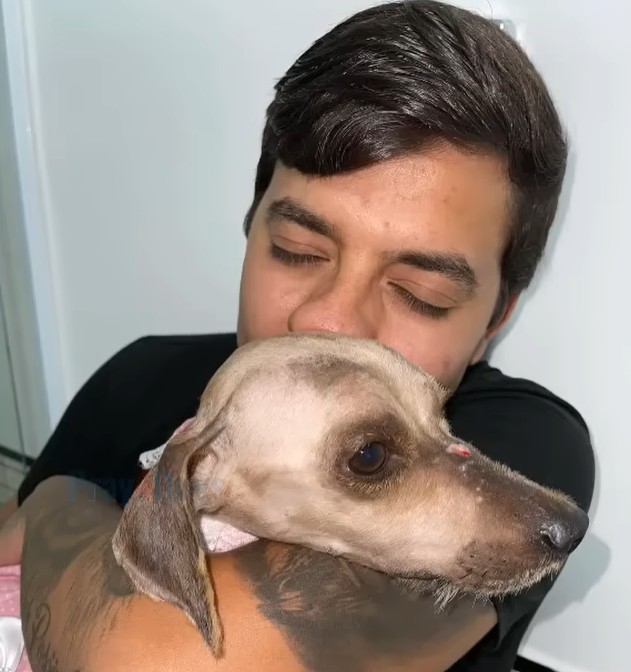
In one quiet moment, she lifted her front paws toward her rescuer and held herself close.
The gesture could not explain everything she had experienced, but it showed how much her comfort around people had grown.
She began seeking affection.
She rested beside those she trusted.
The dog who had once leaned against a wall because standing alone was difficult now leaned against a person because closeness felt safe.
Advocates involved in her care, including Esdras Andrade, helped ensure that Mila continued receiving the medical support and daily attention she needed.
Her progress was not the result of one extraordinary treatment.
It came from consistent care offered long enough for her body and behavior to respond.
The Dog Beside the Wall Slowly Disappeared
Over time, Mila gained weight and strength.
Her steps became more confident.
Her posture changed, and she began moving through the rescue space with greater interest in what surrounded her.
She was still gentle.
That part of her had never needed to be repaired.
What changed was her ability to participate in ordinary life.
She no longer spent her days searching for somewhere to collapse.
She could walk without immediately becoming exhausted.
She could sleep without being disturbed.
She could approach a person and expect a soft voice rather than another frightening encounter.
The transformation was visible in her body, but it was equally clear in her choices.
Mila looked up when people entered.
She moved toward familiar faces.
She allowed herself to enjoy comfort instead of merely enduring contact.
The village dog who had seemed almost disconnected from the world was slowly revealing a curious and affectionate personality.
Mila Is Still Waiting for Her Final Beginning
Mila’s rescue gave her the chance to recover, but her journey is not yet complete.
She still needs a permanent family.
A home where her meals will remain dependable.
Where she can rest without being chased or disturbed.
Where the gentle nature that survived her difficult weeks will be treated with the same gentleness in return.
Her future family may need to continue giving her patience as she adjusts to another unfamiliar environment.
But Mila has already shown how much can change when care is calm and consistent.
Once, she stood beside a wall with her head resting against the concrete, too weak to continue moving.
Then someone noticed that her stillness was not peace.
She needed help.
Rescuers approached without frightening her, carried her somewhere safe, and stayed beside her while she regained her strength.
Today, Mila is no longer the exhausted shadow found in that village corner.
She is alert.
Affectionate.
And ready for a life in which she will never again need a wall to hold her up.


