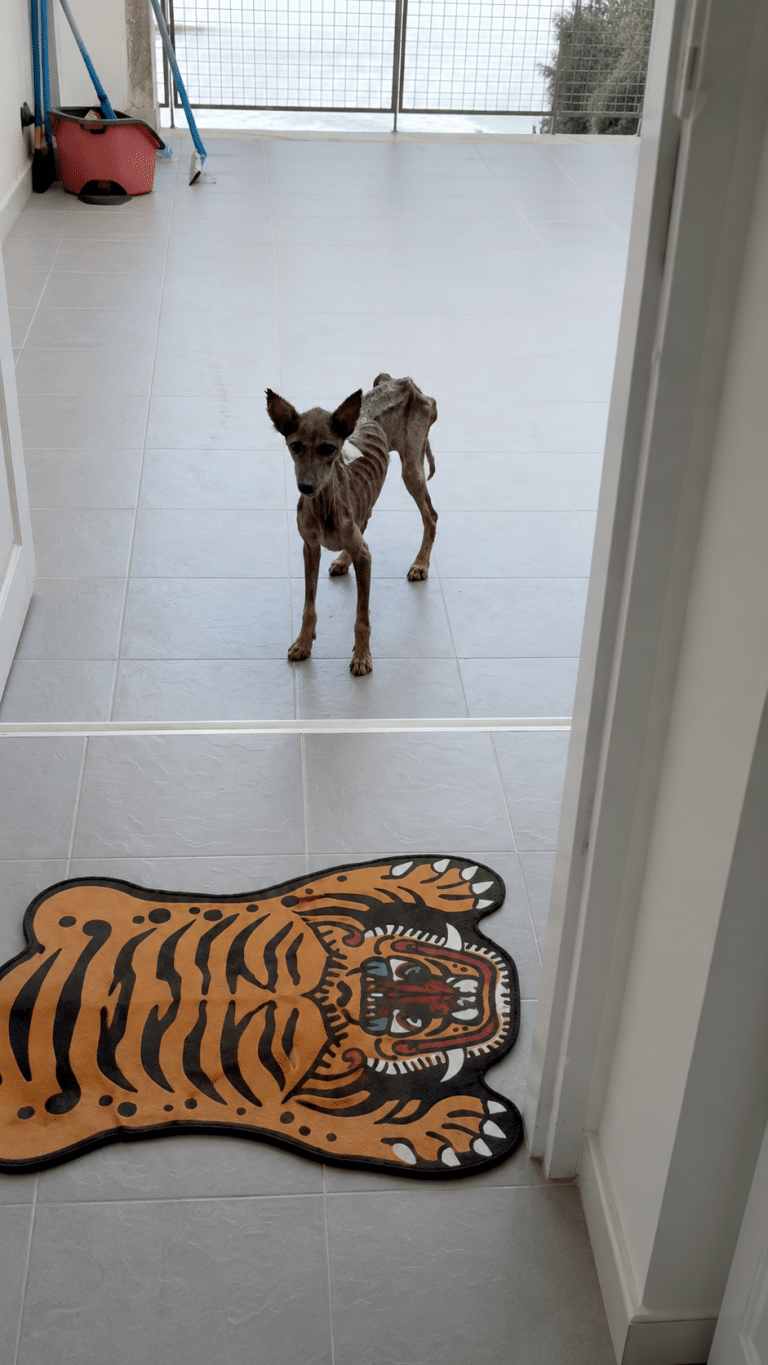
Two days before New Year’s Eve, Jack noticed a small dog lying in a quiet rural area of Thailand.
At first, it was difficult to understand what he was seeing.
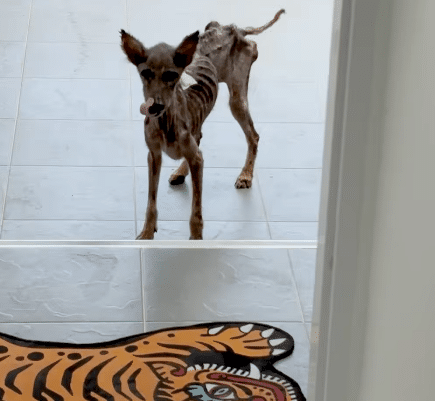
The dog’s body was extremely thin. Nearly every rib could be counted beneath his skin, much of his coat was missing, and his legs appeared too weak to support him for more than a few moments.
Jack approached slowly.
The little dog was still breathing.
And although no one knew how long he had been there, it was clear that he needed help immediately.
The Dog Who Seemed to Have Almost No Strength Left
The dog would later be named Sena.
When Jack first found him, Sena remained close to the ground. His body looked fragile, and even small movements appeared to require considerable effort.
His condition had not developed overnight.
The severe weight loss, damaged skin, and missing fur suggested that he had been struggling for a long time without enough food or consistent care.
Jack contacted Beth and her partner, who helped bring Sena to a veterinarian.
The examination confirmed that he was critically malnourished and extremely weak. His body needed nourishment, rest, and careful monitoring, but too much food too quickly could also place additional strain on him.
There was no promise that recovery would be simple.
Beth and her partner understood that the first days could be uncertain. Sena might need assistance eating, standing, and remaining calm in an unfamiliar place.
Still, they agreed to take him home.
He had survived long enough for someone to find him.
Now they would give him the opportunity to continue.
Video: Sena’s Tail Moves for the First Time After He Was Found Barely Able to Stand
The First Nights Brought More Worry Than Relief
Bringing Sena indoors did not immediately make him feel safe.
During the first nights, he cried repeatedly.
His voice was quiet, but the sound carried through the room as Beth and her partner remained nearby. They could not know exactly what was causing his distress. He may have been uncomfortable, confused by the new surroundings, or frightened by every unfamiliar sound and movement.
His body had almost no reserves left.
Standing was difficult.
Walking more than a few steps was not yet realistic.
Even rest appeared unsettled.
Beth later described those early days as emotionally exhausting. She and her partner watched Sena closely, uncertain whether his weakened body could respond to care.
They prepared small meals and followed veterinary guidance.
They kept his space warm.
They cleaned and monitored his skin.
When he cried, they stayed close enough for him to hear their voices without overwhelming him with constant touch.
Nothing about the process felt dramatic or certain.
Most of the work involved repeating the same quiet actions.
Food.
Water.
Rest.
Medication and skin care when needed.
Then doing it all again the following day.
One Small Tail Wag Changed the Room
The first meaningful sign of change was easy to miss.
Sena moved his tail.
It was not a wide, energetic wag. His body was still far too weak for that.
The movement lasted only a moment.
But Beth and her partner noticed.
Until then, most of Sena’s actions had been connected to basic survival. He shifted when uncomfortable, ate small amounts when he could, and attempted to stand only when necessary.
The tail movement appeared during an interaction with the people caring for him.
For Beth, it showed that Sena was beginning to respond to more than food and physical treatment. He was becoming aware of the people around him and engaging with their presence.
His recovery did not suddenly accelerate after that moment.
He was still weak.
He still needed close attention.
But the tiny movement gave his caregivers something they had not felt during the first anxious nights.
A visible response.
Over the following days, other small changes appeared.
Sena began eating more consistently.
He held himself upright for slightly longer periods.
Instead of remaining in one place, he started taking cautious steps around the room.
At first, he explored only a short distance before resting again.
That was enough.
Every few steps showed that his muscles were beginning to work again.
His Body Recovered One Week at a Time
Sena’s physical improvement became easier to see as the weeks passed.
Regular meals gradually added weight to his frame. The sharp outlines of his ribs became less pronounced, and his legs began carrying him with greater stability.
His skin also started changing.
By around the fourth week, fine fur was growing across areas that had previously been almost bare. The new coat was still thin, but it marked another stage in a recovery that had once seemed deeply uncertain.
Beth and her partner continued moving carefully.
A dog in Sena’s condition could not be expected to regain full strength immediately. His body needed time to rebuild after prolonged malnutrition.
Activity was increased gradually.
First, he stood.
Then he crossed the room.
Later, he walked farther without needing to lie down.
The changes were not identical every day. Some mornings he appeared more energetic. On others, he rested for longer periods.
His caregivers did not measure progress by expecting perfection.
They measured it through small, practical moments.
An empty food bowl.
A steadier stance.
A few more steps.
A quiet night with less crying.
Each one showed that Sena was becoming more comfortable in the life taking shape around him.
The Dog Who Once Stayed Down Began Following Them
As Sena’s body grew stronger, his behavior toward people also began to change.
During his earliest days in the home, touch could make him tense. He did not yet understand what the hands approaching him intended to do.
Over time, he stopped withdrawing as quickly.
He allowed Beth to sit closer.
He remained still when she gently touched him.
Eventually, he began leaning toward affection instead of moving away from it.
Another change appeared when Sena started following his caregivers from room to room.
At first, the distance was short. He might walk only a few feet behind them before stopping to rest.
But the reason for moving seemed different from before.
He was no longer walking only to reach food or find another place to lie down.
He was choosing to remain close to the people caring for him.
That choice mattered.
Trust did not arrive through one dramatic breakthrough. It developed through repeated experiences that ended safely.
A person entered the room and brought food.
A hand touched him gently and then moved away.
A voice spoke to him without anger.
Night came, and the same people were still there in the morning.
Those predictable routines slowly gave Sena a reason to stop expecting danger from every interaction.
His World Expanded Beyond the Recovery Room
Once Sena could walk more comfortably, his surroundings began to expand.
The floor that had once been difficult to cross became a place where he could move with increasing confidence.
Then came time outdoors.
New sounds initially required caution. Open spaces were unfamiliar, and Sena sometimes paused before continuing.
Beth and her partner stayed beside him, allowing him to investigate at his own pace.
Walks became part of his routine.
As his strength continued improving, the outings grew longer. Sena became more alert to the environment around him, stopping to explore smells and looking back toward his caregivers before moving forward again.
Eventually, visits to the beach became possible.
The difference between these later scenes and the day Jack found him was striking.
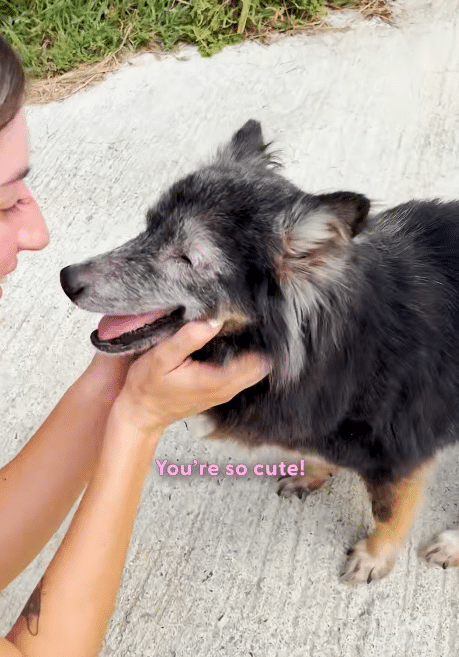
Sena now walked across the sand under his own strength. His coat had returned, his body looked healthier, and his attention moved actively between the water, the ground, and the people beside him.
He was not the motionless dog Jack had first approached in the rural landscape.
He had become curious.
Responsive.
Interested in where the next path might lead.
Recovery Was Built From Choices That Looked Small
Sena’s story can be described through a dramatic contrast.
A severely malnourished dog was found shortly before New Year’s Eve, and later he was able to run and explore beside the water.
But the distance between those moments was not crossed through one extraordinary event.
It was crossed through ordinary care repeated consistently.
Jack stopped when he saw a dog on the ground.
Beth and her partner agreed to bring him home.
Meals were prepared in portions his body could manage.
His skin was treated.
Someone remained nearby during the nights when he cried.
No one forced him to become affectionate before he was ready.
Those decisions may have looked small individually.
Together, they gave Sena stability long enough for his body to respond.
His first tail movement did not mean that every danger had passed.
His first steps did not mean that he was fully recovered.
Even the return of his fur was only one part of a longer healing process.
But each change showed that the care surrounding him was beginning to make a difference.
The New Year Sena Nearly Never Reached
Sena was found only 48 hours before people around the world prepared to welcome a new year.
For him, the date carried no celebration.
There were no lights, music, or promises about a fresh beginning.
There was only a weak body lying in a quiet place and one person deciding to stop.
That decision gave Sena something more meaningful than a symbolic new start.
It gave him time.
Time for food to restore his strength.
Time for damaged skin to heal.
Time to discover that a hand could approach without causing harm.
Time to become the dog who would one day follow his caregivers through the house and walk beside them on the beach.
When Jack first saw him, Sena could barely move.
Weeks later, soft fur began covering his body again.
Months later, he was exploring a world that had once passed beyond his reach.
His recovery did not erase what happened before he was found.
It showed what became possible after someone refused to leave him there.
Two days before New Year’s Eve, Sena was still holding on.
This time, he did not have to do it alone.


