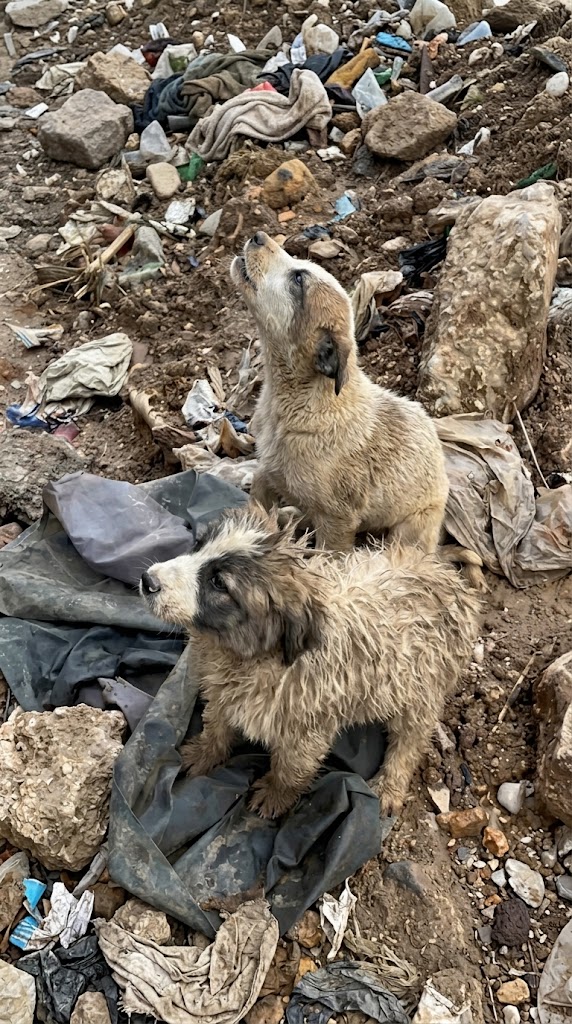
Two small puppies appeared between the piles of waste.
They moved carefully across the uneven ground, searching through discarded food and drinking from pools of stagnant water because nothing cleaner seemed available.
Both were thin and dirty.
But one of them was in far greater danger.
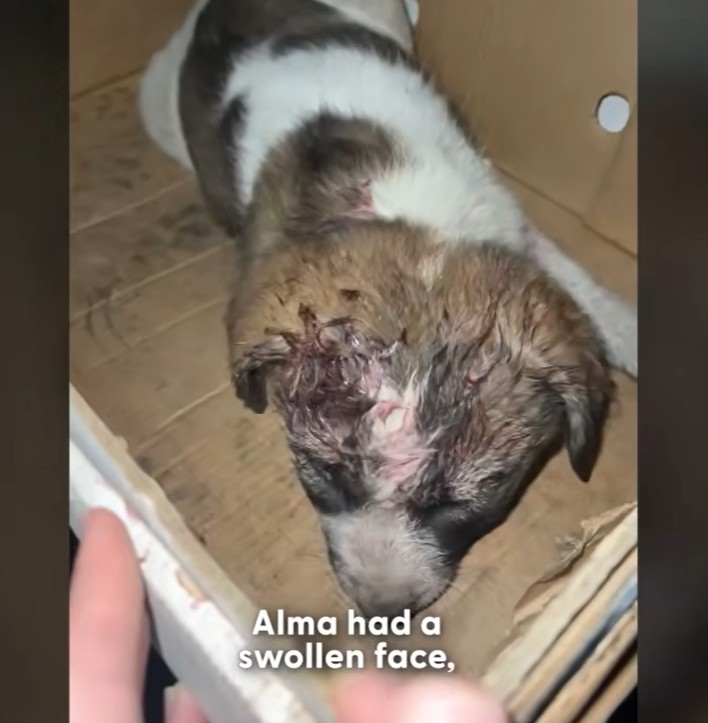
The smaller female puppy was breathing rapidly, her face visibly swollen as she struggled to draw in enough air.
Rescuers knew they could not leave either puppy in the landfill for another night.
Two Puppies Surviving Among the Waste
The landfill stretched across a wide area filled with plastic, spoiled food, broken materials, and contaminated water.
It was not a place where any young animal could remain healthy.
Yet two puppies had been surviving there together.
They searched through the waste for anything edible and drank from dirty pools without hesitation. Their behavior suggested that they had few alternatives.
The puppies were later named Alma and Alfie.
Both appeared undernourished, and their coats carried the dirt of the environment around them. They moved cautiously when the rescue team approached, uncertain about the unfamiliar people entering their territory.
Alfie remained alert enough to walk around the area.
Alma was struggling.
Her breathing was noticeably labored, and swelling around her face made the situation even more concerning.
The rescuers could not determine the exact cause while standing in the landfill. An injury, infection, allergic reaction, or another medical problem could have been involved.
What they could see was that Alma needed professional care immediately.
Video: Rescuers Find Two Puppies Drinking Polluted Water as One Struggles to Breathe
Alma Could Not Wait for Help
The team approached slowly so that the puppies would not retreat deeper into the waste.
Alma’s condition left little room for delay, but frightening her could make the rescue more difficult. The ground was unstable, and sharp objects were scattered throughout the area.
Once the rescuers were close enough, both puppies were lifted carefully.
Alma continued breathing with visible effort.
Her small body appeared weak, and the swelling around her face required urgent examination. Alfie was in better condition than his sister, but he also needed food, hydration, and treatment after living in such an unsafe environment.
The puppies were transported together.
Keeping them near one another helped reduce some of the stress of leaving the only place they knew.
For Alma, the journey to the clinic was not the end of the emergency.
It was only the first opportunity for the medical team to understand what was happening inside her body.
Treatment Had to Begin Carefully
At the veterinary clinic, Alma received immediate attention for her breathing and facial swelling.
The team worked to stabilize her while examining the possible causes of her condition. Her breathing, hydration, temperature, and general responsiveness required close monitoring.
Alfie was evaluated as well.
Both puppies showed signs of having lived without consistent nutrition or preventive care. They were treated for dehydration and internal parasites, conditions that can become particularly dangerous in young animals.
Food also had to be introduced gradually.
After prolonged hunger, giving an undernourished puppy a large meal can place additional strain on the body. The veterinary team began with controlled portions and adjusted the feeding plan as Alma and Alfie responded.
During the earliest stage, progress was measured through practical signs.
Alma breathing with less effort.
Both puppies accepting food.
Hydration levels improving.
More alert responses when people entered the room.
There was no sudden transformation.
Their recovery began with stabilization, rest, and small amounts of nourishment provided consistently.
Their Personalities Appeared as Their Strength Returned
As the immediate medical concerns became more manageable, Alma and Alfie began behaving less like frightened animals focused only on survival.
They became curious about the people caring for them.
At first, they watched from a distance.
Then they approached to smell an extended hand.
They began accepting gentle touch without retreating immediately. Their bodies appeared less tense, and they started resting more deeply in the safety of the recovery area.
The siblings also began interacting with one another.
Small moments of play appeared between periods of sleep and treatment. One puppy would move toward the other, initiate contact, and then retreat before returning again.
These behaviors were important because they showed that the puppies had enough energy to engage with their surroundings.
In the landfill, nearly every action had been directed toward finding food and avoiding danger.
Now there was room for something else.
Exploration.
Play.
Affection.
The puppies were not forgetting where they had come from.
They were gaining safer experiences to place beside it.
Volunteers Returned to Remove Immediate Hazards
The rescue team remained concerned about the place where Alma and Alfie had been found.
The landfill continued posing risks to other animals that might enter the area.
Spoiled food could attract hungry dogs.
Sharp materials could cause injuries.
Polluted water could expose animals to illness.
Volunteers later returned to remove some of the most dangerous waste from the section where the puppies had been living.
They could not transform an entire landfill through one cleanup effort.
But they could reduce immediate hazards and search for signs that other animals might still be hiding nearby.
The work also demonstrated an important part of animal rescue.
Removing one animal from danger addresses the emergency in front of the team.
Looking at the environment can help prevent the same emergency from repeating.
The greatest protection would come from responsible waste management, community reporting, sterilization programs, and continued monitoring of areas where abandoned animals are frequently found.
Alma and Alfie had survived long enough to be noticed.
Other animals might not be as fortunate.
Two Families in France Offered Them a Future
With continued treatment and regular food, both puppies grew stronger.
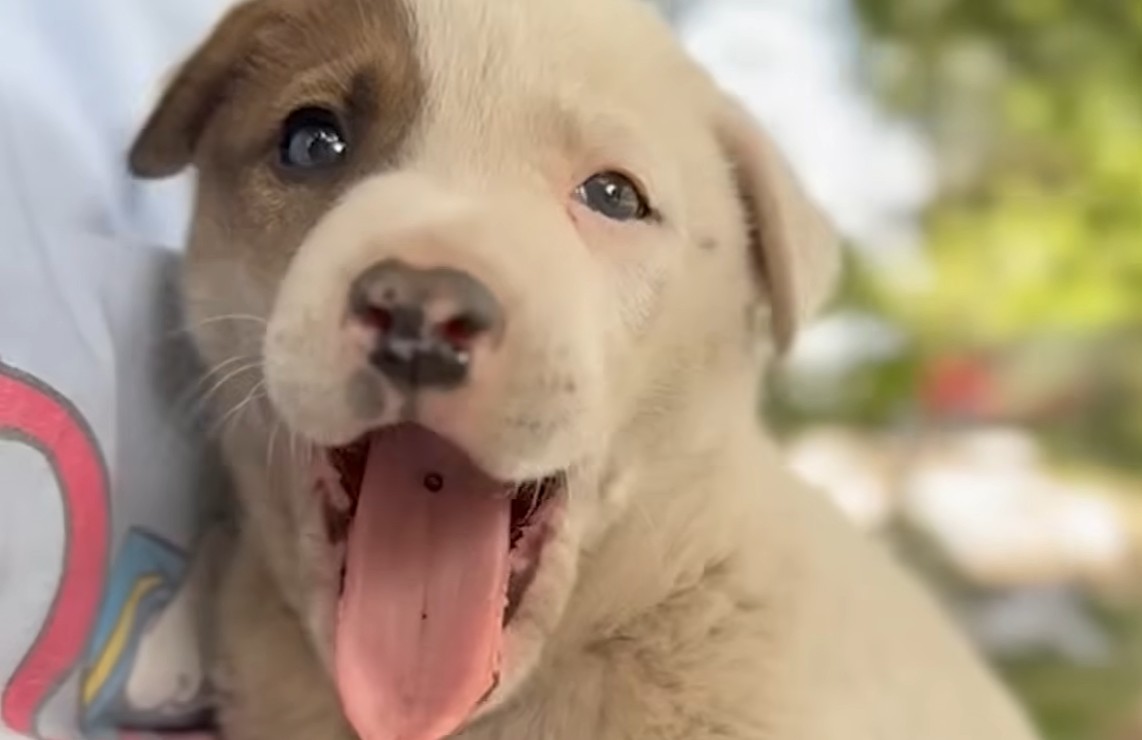
Alma’s breathing improved, and the swelling affecting her face subsided under veterinary care. Alfie also recovered from the conditions associated with living in the landfill.
Their bodies began filling out.
Their coats became cleaner and healthier.
They responded more confidently to people and became increasingly comfortable in a home-like environment.
Eventually, the rescue considered them medically stable enough for adoption.
Their search for permanent families extended far beyond the place where they had been found.
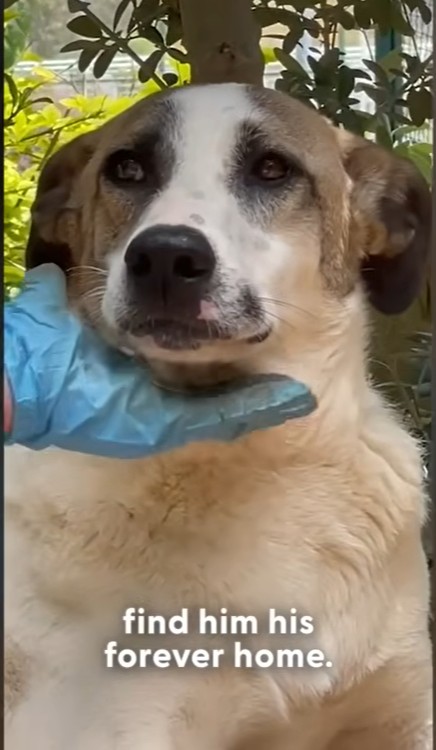
Both puppies were adopted by families in France.
The journey required planning, health checks, documentation, and safe transportation. It also marked a remarkable change in their circumstances.
Alma and Alfie had begun life drinking from polluted water between mountains of waste.
They would now sleep indoors, receive regular meals, and live with families responsible for their long-term care.
The siblings did not remain together, but each entered a home prepared to welcome a rescued dog.
Updates from their families showed them resting comfortably, exploring new surroundings, and forming close relationships with the people around them.
The Distance Between Survival and Safety
The contrast in Alma and Alfie’s story is difficult to ignore.
In the landfill, they searched through waste because it was the only source of food they could find.
They drank unsafe water because thirst offered no better choice.
Alma struggled to breathe while surrounded by an environment that could not provide the care she needed.
Then people intervened.
The puppies were lifted away from the contaminated ground.
Veterinarians treated the conditions threatening their health.
Food was offered in portions their bodies could manage.
Gentle contact replaced the need to retreat from every approaching hand.
Eventually, two families agreed to continue that care for the rest of their lives.
Their recovery did not change the reality that many animals remain in similar environments.
But it showed what becomes possible when someone notices early enough to act.
Alma did not need to perform a miracle.
She needed medical care.
Alfie did not need to become a symbol.
He needed food, safety, and a responsible home.
Together, they received those things because rescuers looked beyond the mountains of waste and saw two young lives still worth protecting.
Once, their entire world was a landfill.
Today, that place is thousands of miles behind them.


