When Lionheart arrived at the Richmond SPCA, staff could barely identify the animal inside the kennel.
What appeared before them was a dense, tangled mass of fur, dirt, and debris. His coat had hardened around his body so completely that it was difficult to tell where his head ended and his back began.
Somewhere beneath those mats was a small Poodle.
He had reportedly lived in near isolation for seven years.
During the final two years, he spent most of his time beneath a bed while food was pushed into the narrow space where he remained hidden.
Now, for the first time in a long while, people were preparing to bring him fully into the light.
The Dog Almost Completely Hidden by His Coat
Lionheart’s condition was far beyond an ordinary grooming problem.
His fur had not simply grown too long.
Without regular brushing, trimming, bathing, or medical attention, the coat had twisted into thick mats that surrounded nearly every part of his body.
His legs were difficult to distinguish.
His face was partly obscured.
The heavy coat pulled against his skin whenever he attempted to move.
Richmond SPCA staff could not perform a complete physical examination while he remained trapped beneath it. They needed to know whether wounds, infections, or other medical concerns were hidden underneath.
But removing the coat while Lionheart was awake could have caused additional fear and discomfort.
The mats sat close to his skin, and some sections had become tightly attached to areas that were likely already sore.
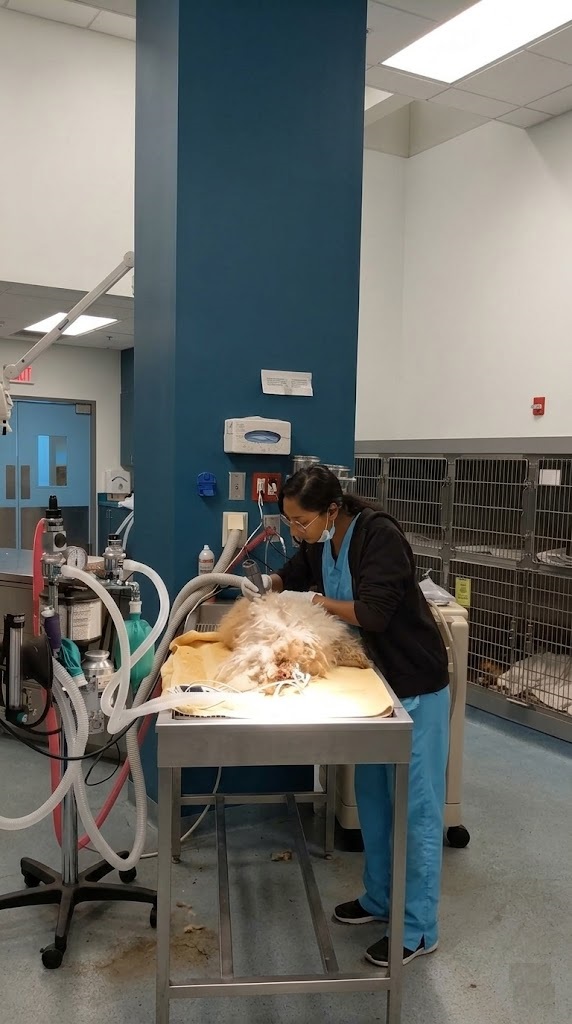
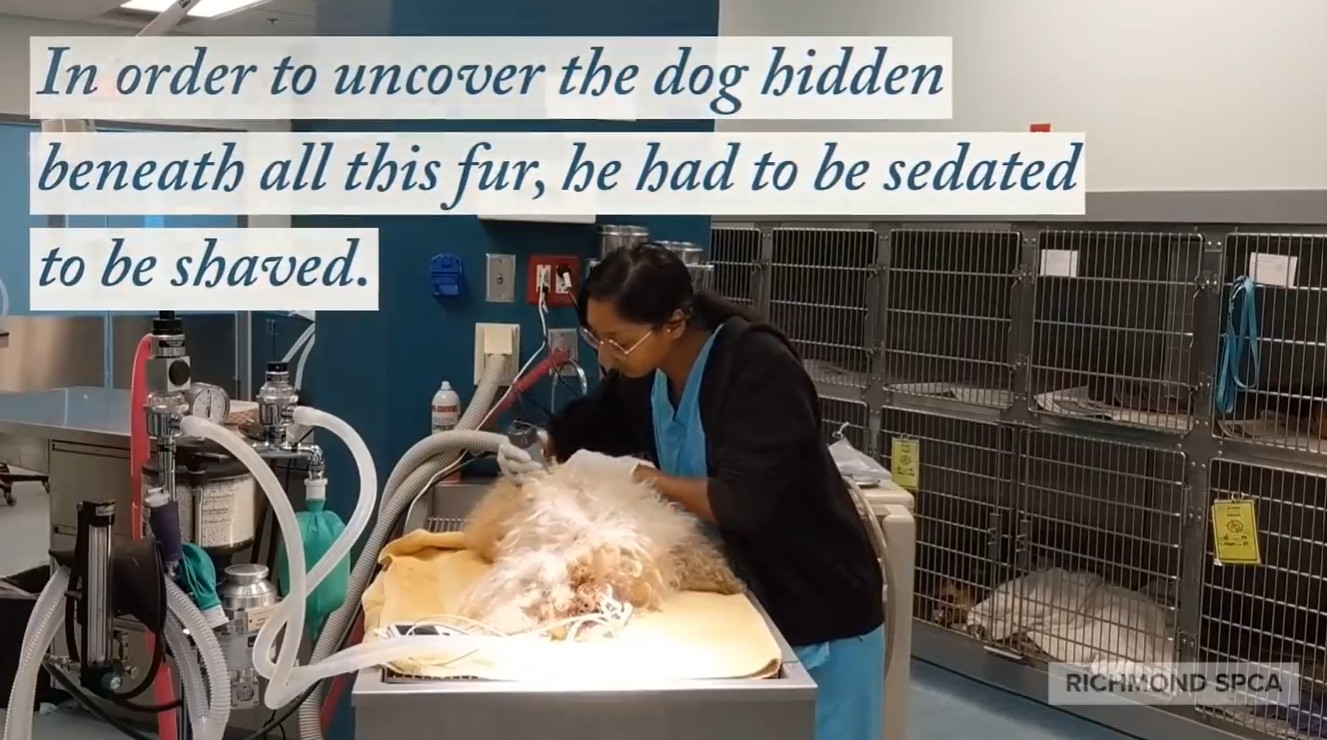
The veterinary team decided that sedation would provide the safest and least stressful way to begin.
Video: Rescuers Remove Years of Matted Fur From Lionheart After He Is Found Hidden Beneath a Bed
Clippers Slowly Revealed the Dog Underneath
Once Lionheart was safely sedated, the veterinary and grooming teams began working.
The process could not be rushed.
Clippers had to move carefully beneath the compacted coat without cutting the delicate skin below. In several places, the mats were thick enough to come away in solid sections rather than loose strands of hair.
Piece by piece, Lionheart’s actual shape began to appear.
His legs were thinner than the coat had suggested.
His body was underweight.
His nails had grown excessively long, making normal standing and walking more difficult.
As the final layers were removed, staff were able to see the effects of prolonged neglect more clearly.
There were irritated and painful areas across his skin.
His body lacked the muscle expected of a healthy adult dog.
He had spent so long with restricted movement that even simple activity would require time and rehabilitation.
The physical difference after grooming was dramatic.
But the freshly shaved dog on the treatment table was not suddenly healthy.
Removing the coat had only made treatment possible.
Years Indoors Had Left More Than Matted Fur
Lionheart’s medical examination revealed additional problems.
He was suffering from intestinal parasites, which could interfere with nutrition and contribute to weight loss.
His teeth also required significant attention after years without regular dental care.
The sores beneath his former coat needed cleaning, treatment, and careful monitoring as his skin began to heal.
His nails had to be trimmed gradually and safely.
Veterinary staff created a treatment plan that addressed each issue without overwhelming him.
Medication treated the parasites.
Dental procedures addressed painful problems inside his mouth.
Nutritious meals helped restore weight and strength.
Soft bedding protected his healing skin.
Lionheart also needed time to adjust to the ordinary sounds and movements of a shelter.
Doors opening.
People walking past.
Bowls being placed nearby.
Hands reaching toward him.
These experiences may have been unfamiliar after years spent largely beneath furniture and away from normal interaction.
Staff approached him slowly and allowed him to observe before asking him to engage.
His medical recovery could be measured through tests, weight, and skin condition.
Learning to move comfortably around people would develop through quieter signs.
He Did Not Have to Leave His Hiding Place All at Once
A dog accustomed to remaining beneath a bed cannot be expected to walk confidently into every new space.
Lionheart needed a place where he could retreat without disappearing completely from care.
Staff gave him bedding and quiet areas where he could rest while still seeing and hearing the people nearby.
They did not pull him forward whenever he hesitated.
Food was placed within comfortable reach.
Gentle touch stopped when his posture suggested that he needed space.
People entered and left without forcing an interaction every time.
These repeated experiences allowed Lionheart to learn the rhythm of his new environment.
Meals arrived consistently.
No one pushed him beneath furniture and forgot about him.
Medical care ended with relief rather than punishment.
The same caregivers returned.
At first, he remained cautious.
He watched people more than he approached them.
Then small changes began appearing.
Lionheart lifted his head when familiar voices entered.
He accepted gentle contact without immediately withdrawing.
He began moving beyond his bed to investigate the room.
Progress was not measured by expecting him to become playful overnight.
It was measured by each decision to remain present instead of hiding.
His Body Began to Grow Stronger
As treatment continued, Lionheart’s physical appearance changed again.
Healthy skin began replacing the irritated areas that had remained trapped beneath the coat.
His body gradually gained weight.
New fur grew across the shaved areas in soft, even patches.
With his nails properly trimmed and the heavy mats removed, movement became easier.
At first, his walks were short.
His muscles had not been used normally for a long time, and too much activity could have caused pain or exhaustion.
Staff allowed him to build strength gradually.
A few steps through the room became a walk down a hallway.
A brief trip outside became time spent exploring the ground.
Lionheart began sniffing new surfaces and pausing to look toward the caregivers beside him.
The dog who had once remained beneath a bed was discovering that he could choose where to go.
That independence was an important part of his recovery.
He no longer needed someone to push food into a hidden space.
He could walk toward his bowl.
He could leave his bed.
He could approach a person and move away again when he wanted to rest.
A Family Met the Dog He Had Become
Once Lionheart’s health had stabilized, the Richmond SPCA began looking for a permanent home.
He needed people who understood that adoption would not erase seven years of isolation.
New rooms, unfamiliar voices, and changes in routine could still make him cautious.
His family would need to give him time rather than expecting immediate affection or perfect behavior.
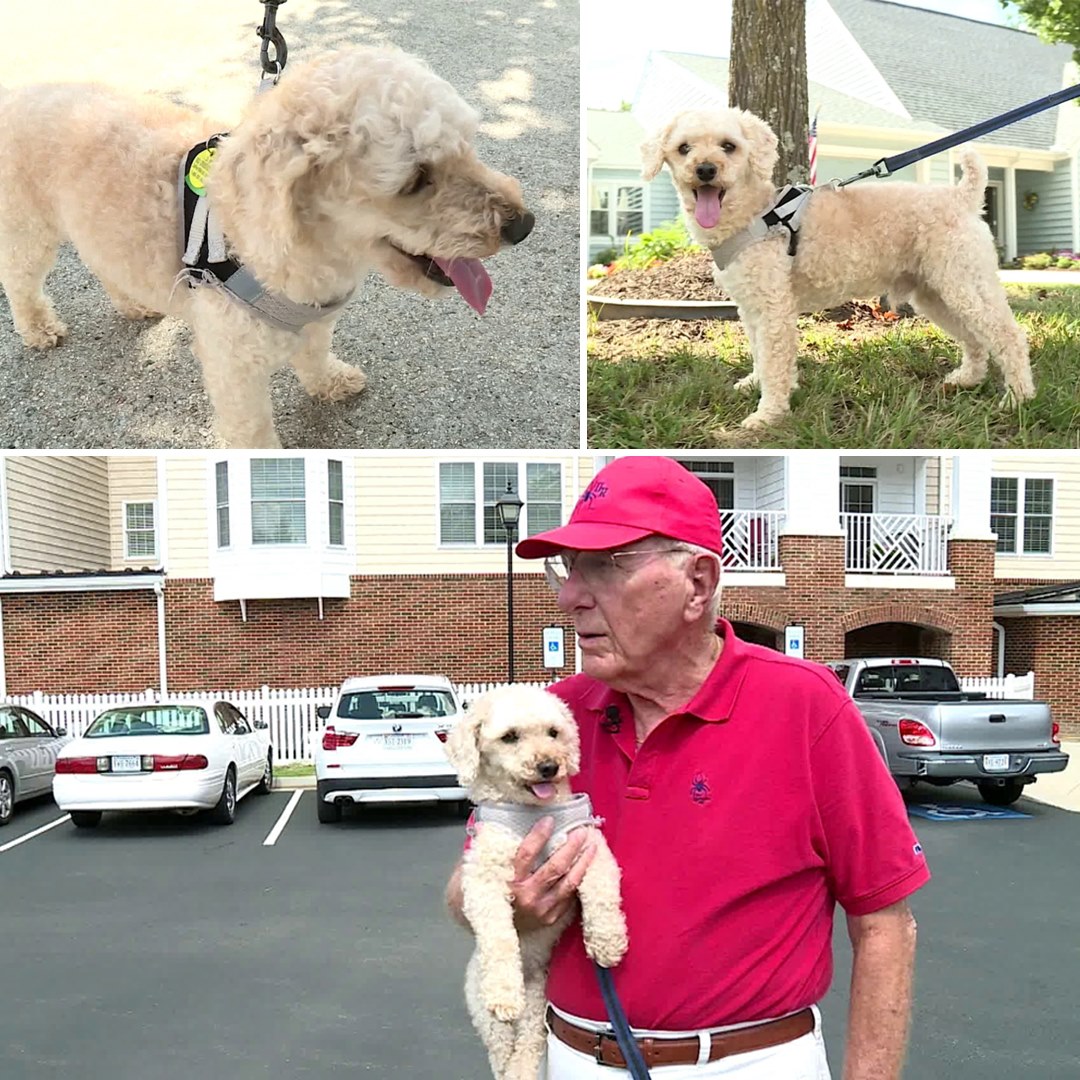
Bill Brown and his wife learned about Lionheart and decided to meet him.
By then, the small Poodle looked very different from the tangled figure first brought into the shelter.
His coat was still growing back.
His body remained lean.
But his face was visible, and his health had improved enough for the next stage of recovery to take place in a home.
The couple chose to adopt him.
They later renamed him Cody.
The new name marked a new chapter, but the family did not expect him to forget his past simply because he had crossed their doorway.
They allowed him to explore at his own pace.
They gave him safe places to sleep.
They established predictable routines around meals, walks, and quiet time.
Cody did not have to prove that he was grateful.
He only had to learn that the home would remain safe.
Ordinary Comforts Became Part of His Life
Cody’s new life was built from experiences that most dogs receive without anyone considering them remarkable.
A clean bed.
Fresh water.
Regular grooming.
Walks outside.
People noticing when he needed medical care.
Affection offered without force.
For Cody, these ordinary routines represented a complete change from the years spent hidden beneath a bed.
His coat continued growing, now maintained before tangles could tighten against his skin.
He became more comfortable moving through the house.
Instead of remaining in one dark space, he could choose where to rest and follow his family when curiosity brought him closer.
Trust appeared through small, observable actions.
Staying in the room when someone entered.
Approaching a familiar hand.
Resting deeply without searching for the narrowest hiding place.
Walking outside beside the people caring for him.
Cody’s past did not disappear.
But it no longer determined every part of his day.
The Dog the Mats Had Concealed
When Lionheart first entered the Richmond SPCA, staff could not easily identify the front of his body.
The coat had hidden his face.
The mats had restricted his movement.
Years of isolation had reduced his world to a space beneath a bed and whatever food was pushed toward him.
The rescue changed his circumstances through a series of careful steps.
Sedation made it possible to remove the coat without unnecessary distress.
Veterinary care addressed the parasites, skin problems, dental disease, and physical weakness.
Consistent interaction allowed him to experience people without being forced into contact.
A patient family then continued the work inside a permanent home.
Cody’s recovery was not remarkable because he immediately trusted everyone he met.
It was remarkable because he was given enough safety to make trust possible.
The dog beneath the mats had not vanished.
He had simply been inaccessible—physically covered by his coat and behaviorally hidden by years spent away from ordinary life.
Once the burden was removed, he did not need to become a symbol of perfect forgiveness.
He needed food, medical care, patience, and people who would continue showing up.
For two years, Cody’s world existed beneath a bed.
Today, he can step into the light whenever he chooses—and return to a warm bed that is no longer a place to disappear.


