The emergencies were completely different.
One animal was surrounded by floodwater. Another was trapped behind a wall. A bird hung helplessly from a wire, while a deer struggled against the slippery surface of a swimming pool.
None of them could explain what had happened.
They could only struggle, wait, and hope someone would notice before their strength disappeared.
Again and again, strangers did.
When the Water Rose, They Carried the Animals Out
Natural disasters can transform familiar places within minutes.
Roads disappear beneath muddy water. Homes become isolated. Gates, rooftops, and drainage channels turn into traps for animals that have no way to understand where safety has gone.
One of the first scenes shows a rescue worker dressed in bright orange equipment moving carefully through floodwater with a small dog held against his chest.
The animal remains close to the rescuer, its wet body supported above the water while nearby residents watch from a safer position.
The rescuer must place each step carefully.
The ground beneath the water cannot be seen clearly. Debris may be moving with the current, and one loss of balance could place both of them in danger.
Still, he keeps the dog lifted and continues forward until they reach shallower ground.
Elsewhere, another animal is stranded above the flood rather than within it.
A raccoon waits on a damaged rooftop, surrounded by water and broken materials. The roof may offer temporary protection, but there is no clear route down.
A rescuer approaches slowly and guides the frightened animal away from the unstable structure.
In both moments, the animals have reached places where instinct alone can take them no farther.
Human hands must complete the journey.
Video: Ordinary People Risk Everything to Save Animals Trapped by Floods and Accidents
Some Were Trapped Where No Animal Could Escape Alone
Not every rescue in the compilation involves floodwater.
Some animals become trapped inside structures created by people—places with walls too high to climb, openings too narrow to turn around, or surfaces offering no grip.
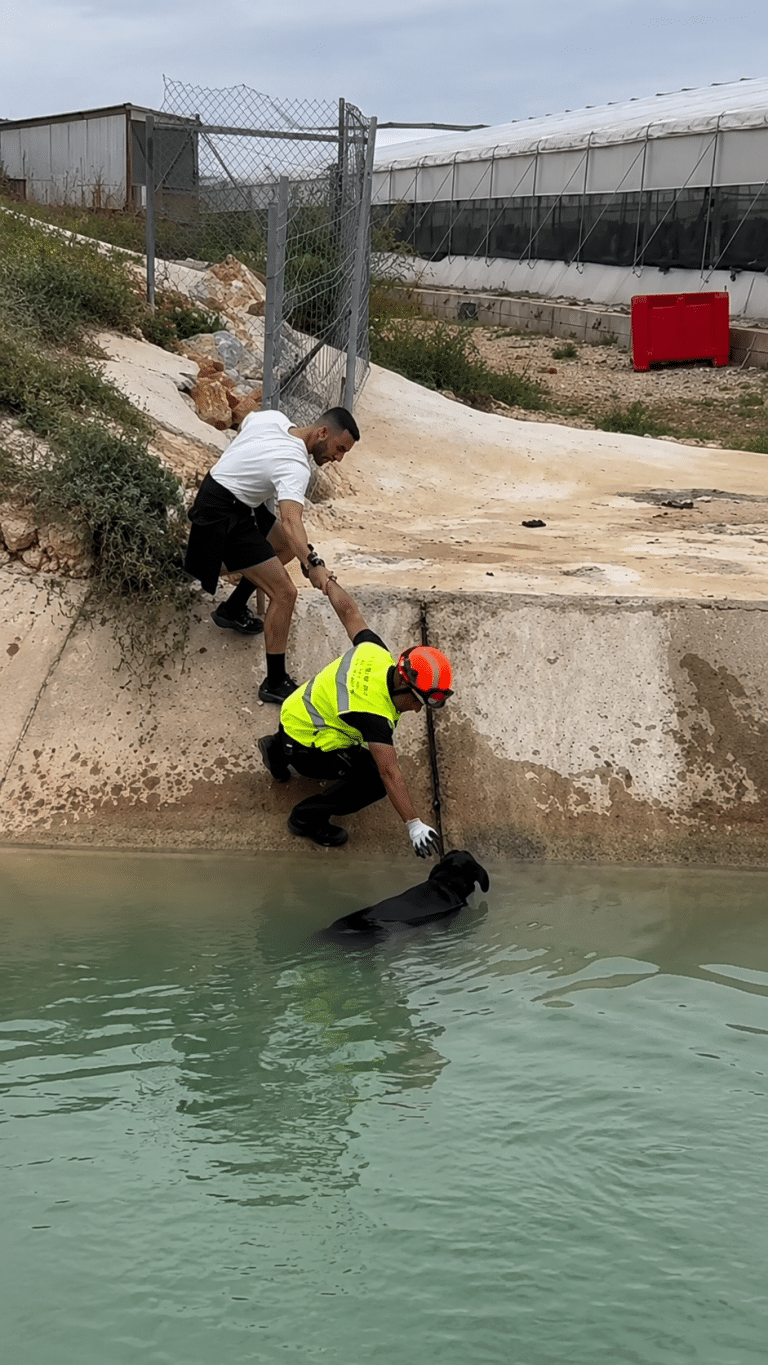
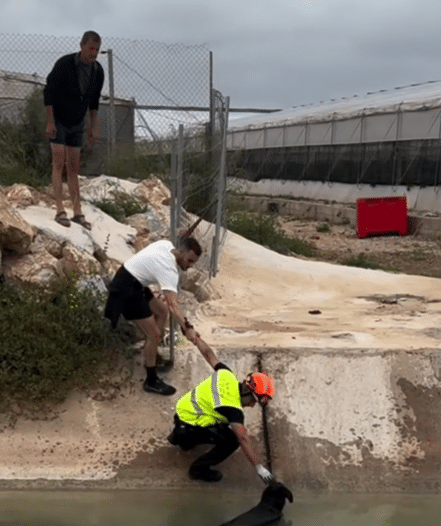
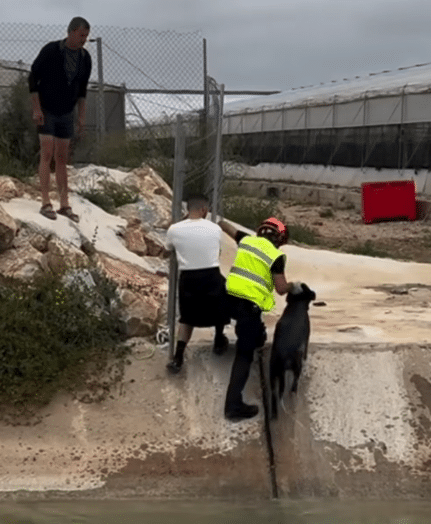
In one scene, two men look down into a deep concrete drainage channel where a large dog has become stranded.
The walls rise steeply around the animal.
There are no steps.
No slope leading upward.
The dog can move along the bottom, but there is no obvious way to reach the people standing above.
The men work together, lowering themselves close enough to secure the dog before carefully pulling its heavy body over the concrete edge.
Neither person could complete the rescue safely alone.
One maintains the grip.
The other provides support.
Together, they bring the dog onto solid ground.
Another rescuer faces the opposite problem.
Instead of reaching down into an open channel, he must squeeze between large rocks to reach a seagull trapped inside a narrow gap.
The space offers almost no room to move.
The bird cannot spread its wings, and the rescuer must avoid causing further injury while working in an awkward position.
He reaches in slowly.
The bird is guided toward the opening.
Then, after patient effort, it emerges from the rocks and is free again.
Different animals.
Different traps.
The same need for someone willing to get close enough to help.
Patient Hands Freed the Smallest Victims
Some of the animals in the video are so small that they could easily have gone unnoticed.
A tiny bird hangs from a section of fencing wire, its legs tangled tightly enough to prevent it from flying away.
Pulling carelessly could worsen the entanglement.
So the rescuer supports the bird’s body while working the wire loose one section at a time.
The movements are slow.
The bird struggles briefly, but the person does not tighten their grip or rush the process.
Once the final strand is removed, the bird is released.
Another rescue begins with sound rather than sight.
Faint cries can be heard from behind a solid wall.
A kitten is trapped somewhere inside, but its exact position is difficult to determine. Firefighters begin carefully breaking through the structure, removing pieces while listening for any change in the cries.
Every strike must be controlled.
They need an opening large enough to reach the kitten without allowing falling material to injure it.
Eventually, hands extend through the broken wall and lift the tiny animal out.
Moments earlier, the kitten had been completely hidden.
Without someone stopping to investigate the sound, no passerby would have known that a life was waiting inside.
Kindness Did Not Always Require a Dramatic Rescue
Several of the most memorable scenes are quiet.
There is no powerful current.
No collapsing structure.
No crowd watching anxiously.
In one moment, a man kneels beside a newborn foal attempting to stand near its exhausted mother.
The foal’s legs are unsteady.
Each attempt ends with its body lowering toward the ground again.
The man does not force it upright.
He supports the young animal gently, helping it find balance while allowing its own legs to do the work.
Nearby, the mother remains close.
The intervention is simple, but it gives the newborn the support needed during its first difficult attempts to stand.
Another rescuer moves through floodwater while carrying a basket containing two tiny dogs.
The basket is held high above the surface, protecting the animals from the current while the person navigates the submerged path.
The dogs cannot contribute to their own escape.
They remain inside, dependent on the rescuer’s balance and steady grip.
In another scene, a raccoon has become trapped with a plastic container covering its head.
The animal cannot see clearly and may have difficulty breathing or eating. Already frightened, it could panic if approached too aggressively.
A woman keeps her movements controlled as she works the container free.
She does not pull suddenly.
She waits for the right angle, protects the animal’s body, and removes the obstruction without turning the rescue into another frightening struggle.
These moments do not depend on physical strength alone.
They depend on patience.
Some Rescuers Had to Enter the Danger Themselves
One of the most intense scenes shows a dog struggling in fast-moving floodwater.
The current pushes against the animal, making it difficult to remain in one position. There is no clear route back to dry ground.
A man steps into the water.
Each step brings him farther from safety and closer to the dog.
The water surges around his legs, but he continues until he reaches the animal and secures it in his arms.
Then he begins the return journey.
Now he must maintain his own balance while keeping the dog’s head and body above the strongest part of the current.
He moves slowly toward shore.
When he finally reaches safer ground, the dog is still held securely against him.
Another rescue requires two men to enter a swimming pool where a deer has become trapped.
The pool is partly covered with slippery tarp material. Each time the deer attempts to move, its hooves struggle to gain traction.
The frightened animal is large enough to injure itself—or the rescuers—if it panics.
The men approach from different sides.
They guide the deer carefully, working together to keep it from becoming more entangled in the cover. Once it reaches an accessible edge, they help lift and direct it out of the pool.
The rescue succeeds not because the deer suddenly understands what to do.
It succeeds because the men remain coordinated and calm while the animal is frightened.
Even an Animal Beneath the Sea Received Another Chance
The compilation also includes a rescue far from flooded streets and concrete walls.
A large fish has become caught by a fishing hook.
The hook remains lodged in its mouth, and releasing the animal without removing it could leave the fish unable to feed normally or cause continued injury.
A woman supports the animal while carefully working the hook loose.
The size of the fish makes the task more challenging. Its body must remain controlled without being handled more than necessary.
Once the hook is removed, the fish is lowered back into the water.
For a moment, it remains close to the surface.
Then it swims away.
The rescue may last only seconds on screen, but it follows the same pattern seen throughout the video.
An animal enters a situation it cannot resolve alone.
A person recognizes the danger.
Instead of treating the animal as disposable, they intervene carefully and return it to safety.
None of Them Knew the Animals They Saved
The people shown in these scenes were not helping their own pets.
In many cases, they had no connection to the animals at all.
The dog in the flood could not thank the person carrying it.
The bird released from the wire could offer nothing in return.
The raccoon, deer, kitten, and fish would likely never see their rescuers again.
That did not make their lives less valuable.
Each person saw a problem that could have belonged to someone else and decided to make it their responsibility for a few important minutes.
Some entered water.
Some climbed into narrow spaces.
Some used tools.
Others relied only on their hands and patience.
None of the actions appeared motivated by recognition or reward.
They happened because walking away would have left an animal trapped.
The Difference Began With Someone Noticing
Not every rescue requires extraordinary bravery.
But every rescue begins with attention.
Someone hears a cry behind a wall.
Someone notices movement on a rooftop.
Someone sees an animal struggling where others might see only debris, water, or an inconvenient obstacle.
Then comes a choice.
Continue walking.
Assume another person will handle it.
Or stop.
The compilation is powerful because that choice appears again and again.
A stranger stops for a dog.
A firefighter listens for a kitten.
A woman approaches a frightened raccoon.
Two men work together to free a deer.
Each rescue is brief, but for the animal involved, those few moments divide life into two very different chapters.
Before someone came.
And after.
The people in the video could not prevent every flood, accident, or dangerous encounter between animals and the human world.
They could not save every vulnerable creature.
But when one appeared directly in front of them, they did what they could.
A hand reached down.
A basket was lifted higher.
A wall was opened.
A hook was removed.
One by one, the animals were carried, guided, untangled, or lifted away from danger.
Their rescuers may have considered these actions simple.
For the lives waiting on the other side of those decisions, they meant everything.
Some of humanity’s most meaningful moments never occur before a large audience.
They happen in muddy streets.
Behind damaged walls.
Between rocks.
Beside swimming pools.
And wherever one frightened animal discovers that a stranger has chosen not to walk away.


