The mail carrier had traveled the rural route many times before.
Most days passed quietly, marked by familiar mailboxes, gravel roads, and long stretches of countryside near Tamms, Illinois.
But on this late-autumn day, something beside the road caught her attention.
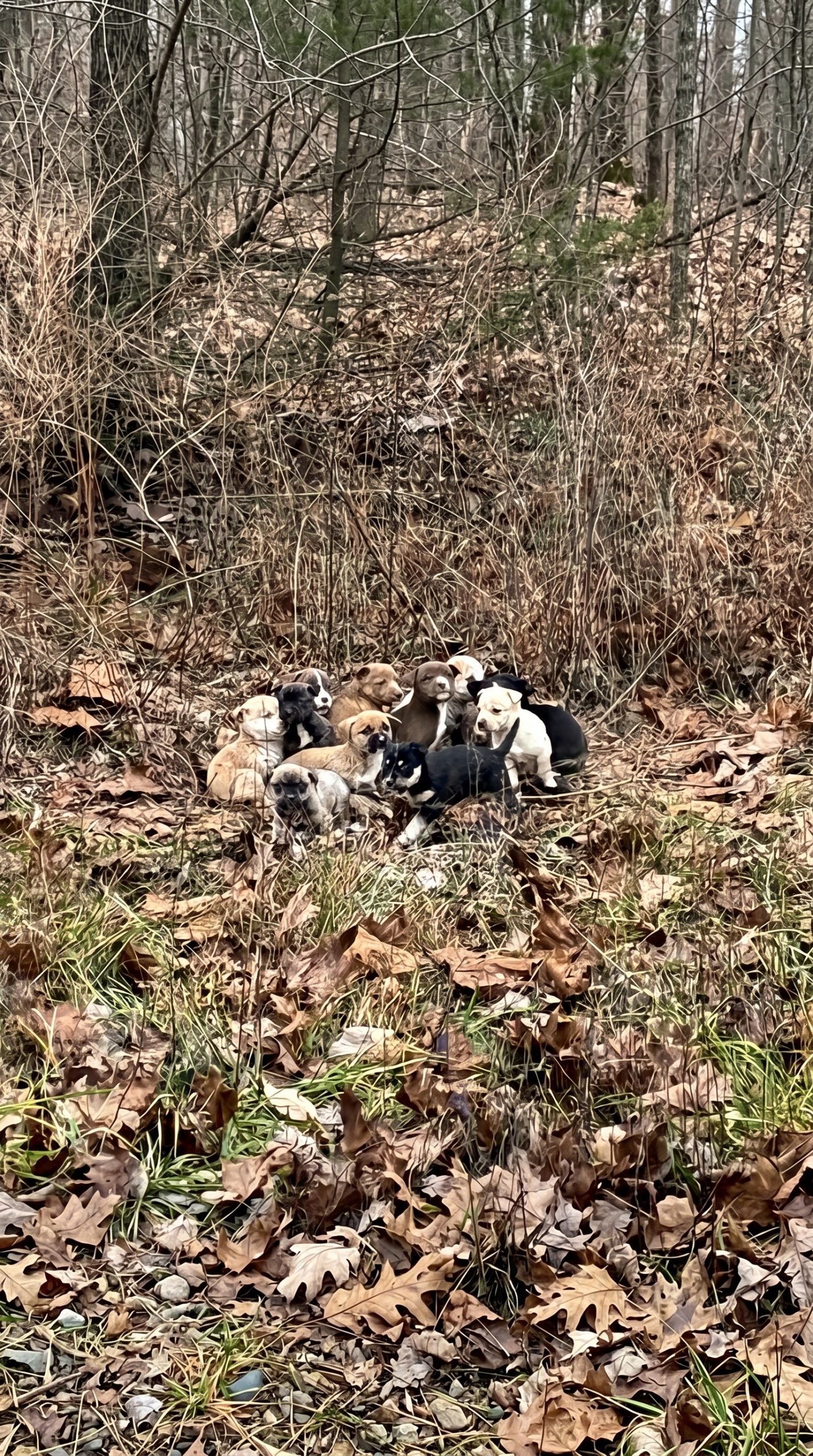
Hidden beneath thick brambles were several tiny shapes pressed closely together.
When she stopped and looked more carefully, she realized there were not just two or three puppies waiting in the brush.
There were sixteen.
They were thin, cold, and almost completely hidden from anyone passing by.
With winter approaching, the little dogs had very little time left to be found.
Sixteen Puppies Were Huddled Beneath the Brambles
The puppies had been left beside a quiet dirt road where few people would have noticed them.
Tangled brush surrounded their hiding place.
Thorns and branches made the area difficult to reach, while the cold ground offered almost no protection from the falling temperatures.
The puppies had gathered tightly together.
Their small bodies pressed against one another as though they were trying to share whatever warmth remained.
Many appeared too weak to move far.
Their ribs could be seen beneath their coats, and their lack of energy suggested they had gone without proper food for some time.
At such a young age, puppies are especially vulnerable to cold, dehydration, parasites, and hunger. Without their mother or a safe shelter, surviving outdoors becomes increasingly difficult with every passing night.
The mail carrier could easily have continued along her route.
Instead, she stopped.
Once she understood what she had found, she immediately began contacting people who might be able to help.
That single decision set an entire rescue effort in motion.
Video: Mail Carrier Finds Sixteen Abandoned Puppies Hidden Beside a Rural Road
Help Began With One Urgent Phone Call
News of the puppies eventually reached Ali Rippin, co-founder of Save Them All Animal Rescue, also known as STAAR.
The rescue organization quickly began coordinating an emergency response.
Because the puppies were in a rural location and needed assistance immediately, a nearby volunteer was sent ahead while the rest of the rescue was organized.
Reaching the litter was not simple.
The puppies were surrounded by thick, thorny vegetation. Each one had to be lifted carefully from the brush without causing additional stress or injury.
One by one, the volunteer carried them toward safety.
The group seemed almost impossibly large.
Another puppy appeared each time the branches were moved aside.
Then another.
Until all sixteen had been counted.
The first safe location available was a nearby barn.
It was not intended to become their permanent home, but it offered something they desperately needed in that moment.
Shelter from the wind.
A dry place to rest.
And warmth away from the cold roadside.
When Rippin arrived and saw the puppies herself, their condition was difficult to process.
Their bodies were painfully thin.
Some appeared barely able to hold themselves upright.
But there was no time to remain overwhelmed by what had happened to them.
The entire litter needed veterinary care.
Their Condition Required Immediate Treatment
The puppies were loaded into a rescue vehicle and transported to a veterinary clinic.
There, the medical team began examining them and addressing the most urgent concerns.
The puppies were severely underweight.
Many were dehydrated.
They were also carrying heavy parasite burdens, placing further strain on bodies that had already received too little nourishment.
Fluids were administered carefully.
Treatment for parasites began.
Food had to be introduced in controlled amounts because suddenly feeding a severely malnourished animal too much can create additional medical complications.
The puppies needed warmth, but they also needed close observation.
With sixteen fragile patients arriving at once, the veterinary team had to monitor each puppy individually while treating the litter as a whole.
Some responded quickly to the fluids and warmth.
Others remained extremely weak.
Rescuers stayed focused on giving every puppy the best possible chance.
For most of them, the discovery had come just in time.
For two, however, the damage caused by their condition was already too severe.
Despite the care provided, they did not survive.
Their loss was deeply felt by everyone involved.
The rescuers could not change the beginning of their lives. But during their final hours, the two puppies were no longer alone beside a cold road.
They were warm.
They were handled gently.
And they were surrounded by people who recognized that their lives mattered.
Fourteen Puppies Began the Slow Work of Recovery
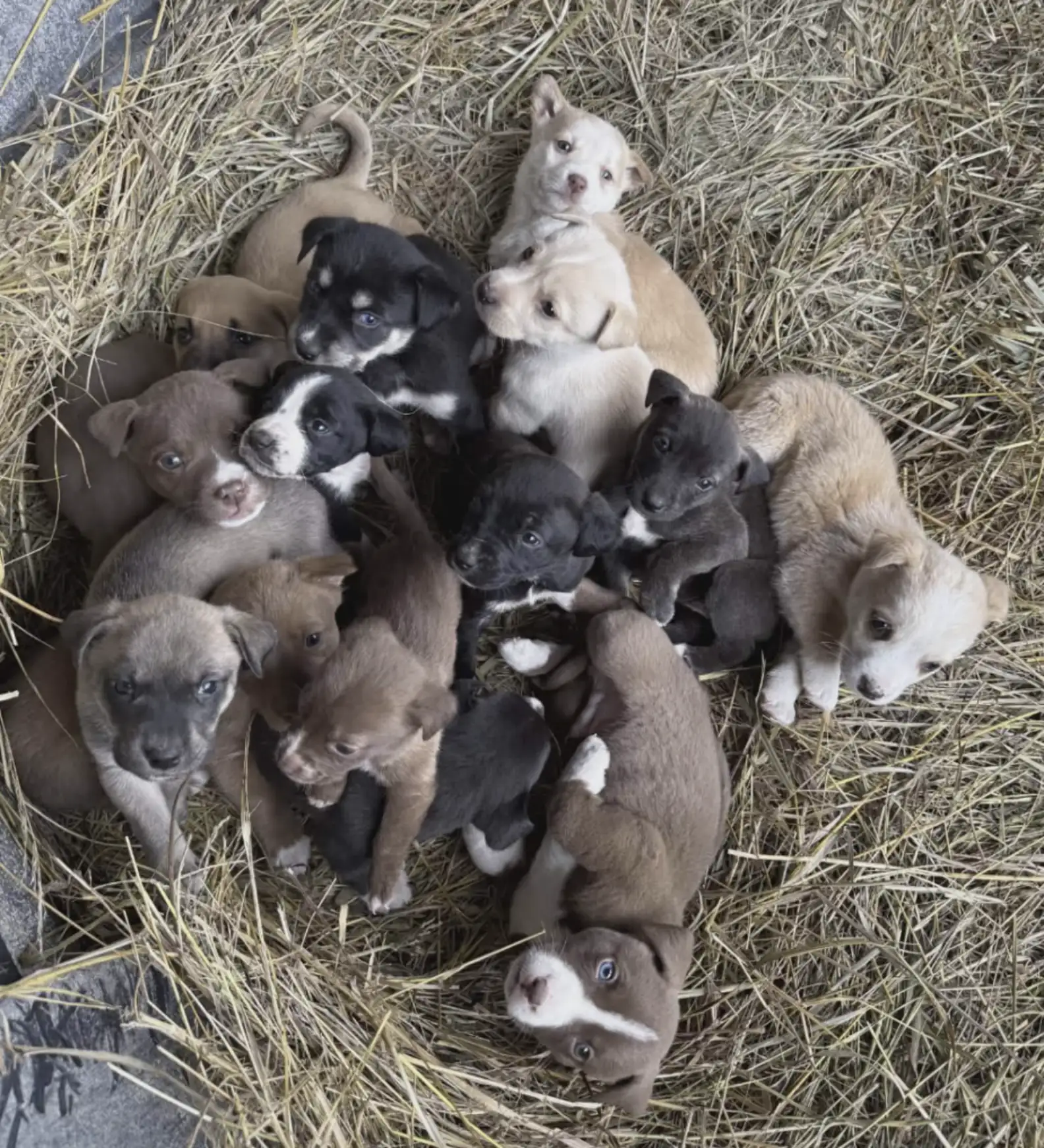
The remaining fourteen puppies still faced an uncertain journey.
Rescue had removed them from immediate danger, but their bodies needed time to recover from malnutrition, dehydration, and parasites.
During the first days, progress was measured carefully.
A puppy finishing a small meal.
Another beginning to drink independently.
A tired body finally sleeping without shivering.
There were no sudden transformations.
Healing arrived through repeated, ordinary acts of care.
Nutritious food was provided in appropriate portions.
Medication was given on schedule.
Bedding was kept warm and clean.
The puppies were checked constantly for any sign that one of them was struggling.
Gradually, their energy began to return.
They lifted their heads when caregivers entered.
They became more interested in the sounds and movement around them.
Some began exploring their bedding instead of remaining curled tightly against their siblings.
The expressions that had once appeared distant and exhausted slowly became more alert.
The puppies were beginning to discover that the world could offer more than cold ground and hunger.
Gentle Touch No Longer Felt Unfamiliar
As their bodies grew stronger, the puppies also began responding to human attention.
At first, many were understandably cautious.
They had spent their earliest weeks without the predictable care that young dogs need. Sudden movements and unfamiliar hands could easily make them uncertain.
Caregivers allowed trust to develop naturally.
They sat nearby.
They handled the puppies gently during treatment.
They offered affection without overwhelming them.
Over time, the litter began leaning into those quiet moments.
The puppies accepted soft touches.
They rested against their caregivers.
They discovered blankets, toys, and laps.
Rippin later described how they began soaking up pets and cuddles once they felt settled.
Their individual personalities also started to appear.
Some puppies were adventurous and eager to explore.
Others preferred staying close to their siblings.
A few sought human attention whenever someone entered the room, while the more cautious puppies watched from a comfortable distance before joining in.
These ordinary behaviors carried enormous meaning.
The animals found motionless beneath the brambles were no longer using all their strength simply to survive.
They finally had enough energy to play.
Caring for Fourteen Growing Puppies Required a Community
STAAR operates through foster homes rather than a large central shelter.
That approach allows animals to recover in home environments, but suddenly finding appropriate care for fourteen puppies created an enormous challenge.
Each puppy needed food, medication, bedding, supervision, transportation, and eventually preparation for adoption.
The rescue could not manage everything alone.
Fortunately, three neighboring rescue organizations learned about the litter and offered assistance.
The puppies were divided among experienced foster homes, allowing each one to receive more individual attention.
This cooperation ensured that limited space or resources would not interrupt their recovery.
For the puppies, foster care meant more than having a roof overhead.
It introduced them to the routines of living with people.
Regular mealtimes.
Quiet nights.
Household sounds.
Safe interactions with caregivers.
The puppies could continue healing while learning the skills that would eventually help them adjust to permanent families.
For the organizations involved, the rescue became an example of why cooperation matters.
One person noticed the puppies.
One volunteer removed them from the brush.
Veterinary workers treated them.
Several rescues then shared the long-term responsibility.
No single person completed the entire journey.
But together, they changed its direction.
They No Longer Resembled the Puppies Found Beside the Road
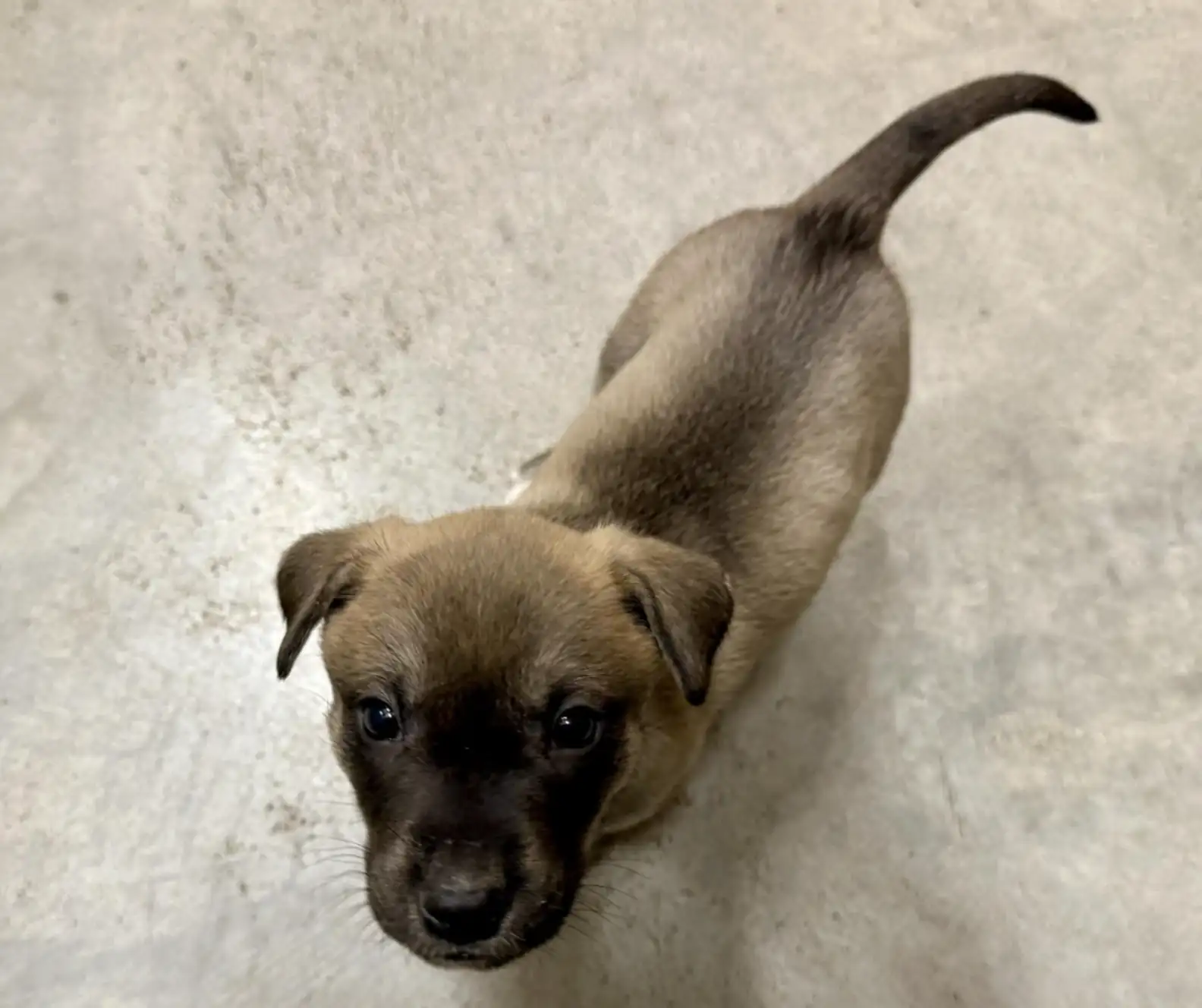
As the weeks passed, the surviving puppies began looking very different from the frail litter first discovered near Tamms.
Their bodies filled out.
Their coats improved.
Their movements became lively and confident.
Instead of pressing together only for warmth, they gathered to play.
Instead of remaining silent from exhaustion, they began expressing themselves like young dogs finally comfortable enough to be curious.
Their days now included nourishing meals, warm beds, attention from foster families, and the possibility of permanent homes.
The difficult beginning of their lives could not be erased.
Neither could the loss of the two puppies who had been too weak to recover.
But the future of the remaining fourteen no longer depended on surviving another cold night outdoors.
They had people watching over them.
People who knew their names and noticed changes in their health.
People who would make sure they were never quietly abandoned beside a road again.
One Mail Carrier Changed What Happened Next
The rescue began during an ordinary delivery route.
The mail carrier was not searching for abandoned animals.
She did not leave home expecting to become part of an emergency response.
She simply noticed something unusual and cared enough to stop.
Had she passed the brambles without looking, the puppies might have remained hidden as temperatures continued to fall.
Their condition was already critical.
Another day or another freezing night could have changed everything.
Instead, her call reached people prepared to act.
That decision gave sixteen puppies warmth and care when they needed it most.
It gave fourteen of them the opportunity to recover and eventually search for families of their own.
Their story also highlights the pressure placed on small rescue organizations.
Emergency cases rarely arrive at convenient times.
They bring medical expenses, crowded foster networks, and animals requiring weeks or months of support.
Local rescues depend heavily on volunteers, foster families, donations, and cooperation from the surrounding community.
The litter survived because many people accepted a small part of the responsibility.
A mail carrier noticed.
A volunteer responded.
Veterinarians treated.
Rescue groups opened their doors.
Foster families made room.
The Roadside Was No Longer Their Ending
Once, the puppies had only one another.
They lay beneath tangled branches, their bodies pressed together against the late-autumn cold.
There was no warm bed waiting nearby.
No bowl of food.
No person checking whether they were still breathing.
Then a vehicle stopped beside the road.
Someone stepped closer.
And the lives hidden inside the brambles were finally seen.
The rescue could not give all sixteen puppies the future everyone hoped for. Two had already endured more than their fragile bodies could overcome.
But they were remembered.
And the fourteen who survived carried the story forward.
They grew stronger.
They learned to trust.
They discovered that hands could bring food, comfort, and affection instead of fear.
What happened near Tamms was not the work of one dramatic hero.
It was the result of an entire chain of people choosing not to look away.
The mail carrier could not care for sixteen puppies alone.
But she could make the first call.
The volunteer could not complete months of recovery alone.
But she could lift the puppies from the thorns.
Each person did the next necessary thing.
And because they did, a litter that might have disappeared quietly beside a country road was given warmth, safety, and the chance to be known.
Sometimes rescue begins with experience and equipment.
Sometimes it begins with nothing more than an ordinary person noticing that something beside the road does not belong there—and stopping long enough to look.


