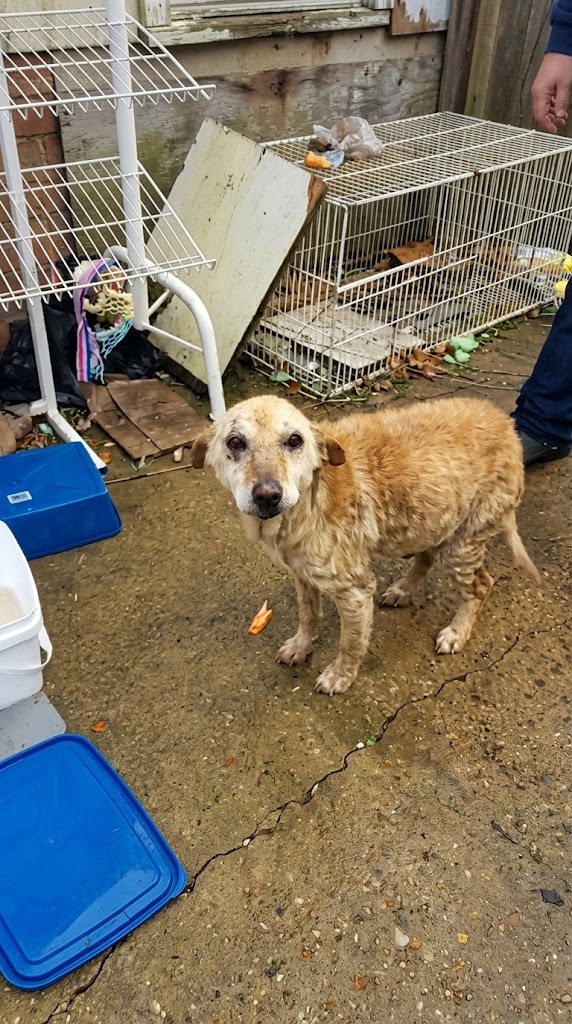
Emu lay quietly inside the veterinary clinic.
His body was painfully thin.
Large areas of his skin were irritated and nearly bare, while the little fur that remained appeared rough and uneven.
He did not lift his head when people moved around him.
To those who first saw the elderly stray, his condition seemed to tell a story that had already reached its final page.
But one person looked beyond the damage visible on the outside.
Emu was weak.
He was exhausted.
Yet he was still alive.
And before any irreversible decision was made, someone believed he deserved to be fully examined—and given the possibility of care.
Years on the Street Had Left Their Mark
Very little was known about Emu’s life before he entered the clinic.
He was an older dog who appeared to have spent a long time without reliable food, shelter, grooming, or medical attention.
His ribs and spine were visible beneath his skin.
Patches of fur were missing across much of his body.
The exposed areas looked inflamed and uncomfortable, suggesting a skin condition that had gone untreated for far too long.
Even standing appeared difficult.
Emu remained still, conserving what little energy he had.
The person who brought him to the clinic reportedly believed that euthanasia might be the only humane option left. From a distance, that conclusion may have seemed understandable.
Emu looked critically neglected.
He was elderly.
And restoring his health would require time, money, and careful medical support.
But age and appearance alone could not reveal everything about his condition.
Before deciding that his life could not improve, the veterinary team needed to understand what was treatable—and whether Emu could still experience comfort.
One person at the clinic saw enough possibility to pause the process.
That pause changed what happened next.
Video: A Senior Stray Reached the Clinic in Critical Condition—Then Someone Chose to Keep Trying
The Decision Was Not About Ignoring His Suffering
Choosing to give Emu another chance did not mean pretending he was healthy.
His condition was serious.
He needed a full veterinary evaluation, treatment for his damaged skin, proper nutrition, and a safe place to recover.
There was also no guarantee that every problem could be reversed.
Senior dogs may carry chronic illnesses, arthritis, organ disease, dental pain, and other conditions that are not immediately visible. A responsible rescue plan must consider comfort and quality of life—not survival at any cost.
In Emu’s case, however, the people examining him believed there were reasons to continue.
He was still responsive.
His heart was beating steadily.
And the visible neglect affecting his body appeared to include conditions that might improve with medical treatment and consistent care.
Instead of proceeding immediately with euthanasia, arrangements were made to place Emu with Sidewalk Specials.
The rescue organization would try to find temporary care and raise support for the treatment he needed.
For Emu, the decision did not instantly make him safe.
It simply opened another door.
Now someone had to walk through it with him.
He Sat Quietly Among Younger Dogs
Emu was taken to a Sidewalk Specials adoption event.
Around him were younger dogs with brighter coats and more energy.
Some moved excitedly inside their enclosures.
Others approached visitors with wagging tails, eager to attract attention.
Emu did not compete with them.
He rested quietly inside his crate, his head lowered and his frail body curled against the floor.
A busy public event could be overwhelming for any dog. For an elderly animal who was weak and unfamiliar with his surroundings, it may have been especially difficult.
Families often arrive at adoption events imagining an energetic puppy or a healthy young companion.
A senior dog with obvious medical needs can be easier to pass by.
Emu could not perform for the crowd.
He could not hide the condition of his skin.
He could not promise that caring for him would be simple.
He could only remain where he was and wait to see whether anyone would stop.
Then a family did.
They looked closely at the elderly dog resting inside the crate.
And instead of seeing only age and illness, they recognized an animal who needed somewhere quiet to begin recovering.
They agreed to foster him.
Emu left the event with a safe place to sleep and people willing to help him through the uncertain days ahead.
Medical Care Began One Problem at a Time
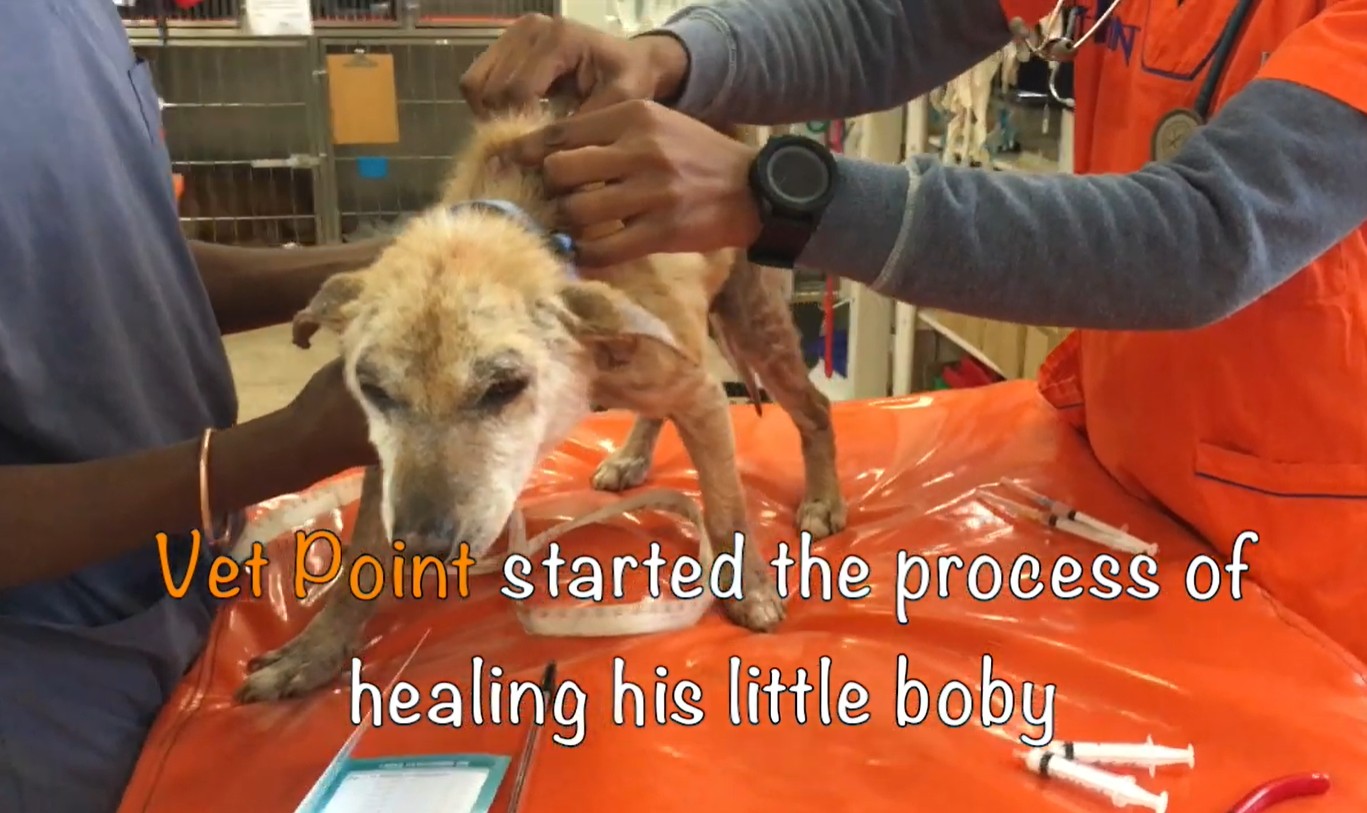
Veterinary professionals at Vet Point began addressing Emu’s condition.
The damaged skin required treatment.
His low body weight needed to be managed with an appropriate nutrition plan.
Any parasites, infections, pain, or other underlying concerns had to be identified and treated according to veterinary guidance.
For a dog as depleted as Emu, recovery could not be rushed.
His body needed time to respond.
Food had to rebuild strength gradually.
Medication needed to be administered consistently.
His skin needed protection while it healed.
And his caregivers had to watch closely for any sign that he was uncomfortable or declining.
Sidewalk Specials shared Emu’s story online, asking supporters to help cover his medical expenses.
People responded.
Donations allowed the rescue and veterinary team to continue providing the treatment, supplies, and follow-up care required during his recovery.
The support did not create an overnight transformation.
Instead, it funded the quiet work that happens between the dramatic beginning and the hopeful ending.
Appointments.
Medication.
Special meals.
Clean bedding.
Repeated examinations.
Days when progress was difficult to see.
And then, slowly, days when it became impossible to miss.
His Skin Began to Heal
The first visible improvements appeared gradually.
The inflammation across Emu’s skin started to settle.
Areas that had looked raw became calmer.
Soft patches of new fur began growing across parts of his body.
His frame slowly filled out as regular meals restored some of the weight he had lost.
The physical transformation was encouraging, but caregivers continued monitoring him carefully.
A better coat did not automatically mean every health problem had disappeared.
Senior dogs often need ongoing care even after the most obvious signs of neglect improve.
But Emu was becoming more comfortable.
He appeared stronger when standing.
He became more aware of the activity around him.
The dog who had once remained almost motionless began responding to familiar people and routines.
Healing was reaching him through repetition.
Another meal.
Another dose of medication.
Another peaceful night.
Another morning in which the same caregivers returned.
For an animal who may have spent years surviving without consistency, those predictable moments can matter as much as any single treatment.
Emu was learning what happened when people did not disappear.
Trust Returned in Small, Observable Ways
It is impossible to know exactly what Emu remembered about his earlier life.
Rescuers could not see inside his mind or determine why he sometimes appeared cautious around human contact.
They could only respond to the behavior in front of them.
At first, Emu seemed withdrawn.
He did not seek attention easily.
His body remained guarded when unfamiliar people approached.
The foster family allowed him space.
They did not demand affection or expect him to behave like a dog who had always lived safely inside a home.
They offered gentle contact and allowed Emu to decide how close he wanted to be.
Over time, his responses began changing.
He remained near his caregivers rather than withdrawing.
He accepted touch more comfortably.
He rested without appearing constantly alert to his surroundings.
These were not dramatic scenes.
There was no single moment when every trace of uncertainty vanished.
Trust developed through accumulated evidence.
Hands brought food.
Voices remained calm.
Beds stayed warm.
Doors opened and the same people returned.
The dog who had arrived at the clinic looking disconnected from everything around him began participating in the life being offered.
A Permanent Family Saw More Than His Age
As Emu’s condition improved, another family learned about his story.
They knew he was a senior.
They knew his medical history had been difficult.
They understood that adopting an older dog might involve continued veterinary care and fewer years together than they might have with a puppy.
Still, they wanted him.
They did not view his age as a flaw to overlook.
They saw it as part of the dog he already was.
Emu joined his permanent home and gained a canine companion.
The presence of another dog offered him company as he adjusted to the new environment.
His days became quieter and more predictable.
Soft beds replaced the hard surfaces he may have known on the street.
Warm blankets were available when he wanted to rest.
Meals arrived without searching.
Affection no longer depended on whether he looked healthy or young.
The senior dog who had once entered a clinic with an uncertain future was now living as a member of a family.
His medical history did not disappear.
Neither did his age.
But neither prevented him from experiencing comfort, companionship, and security.
Senior Dogs Are More Than the Time They Have Left
Older animals are often overlooked in shelters and rescue programs.
Some arrive with medical needs.
Others move more slowly or need help adjusting to unfamiliar environments.
Potential adopters may worry about treatment costs or the pain of having fewer years together.
Those concerns are real.
Adopting a senior dog should be a thoughtful decision supported by an honest understanding of the animal’s health.
But age alone does not determine whether a dog can enjoy life.
Senior dogs may still seek affection.
They may enjoy slow walks, warm places to sleep, gentle play, and quiet companionship.
Their needs may be different from those of a puppy, but different does not mean less meaningful.
Emu’s case also shows why medical evaluation matters before conclusions are made from appearance alone.
There are situations in which euthanasia is the most compassionate option for an animal experiencing severe, untreatable suffering.
That decision should be guided by veterinary assessment and the animal’s quality of life.
But neglect can make treatable animals appear beyond help.
Malnutrition can be addressed.
Some skin conditions can improve.
Pain can sometimes be managed.
And frightened behavior can soften when an animal reaches a stable environment.
Emu needed someone willing to distinguish between a life that was ending and a life that had simply never received adequate care.
One Pause Gave Everyone Time to Learn Who He Was
When Emu first arrived, people could see his damaged skin, thin body, and advanced age.
They could not yet see how he might look after months of treatment.
They did not know whether he would become comfortable around a foster family.
They could not know that strangers would donate toward his care or that a permanent home would eventually welcome him.
Those possibilities existed only because someone paused.
That person did not promise a miracle.
They did not know how the story would end.
They simply believed that Emu’s condition deserved a closer look before his future was decided.
That decision allowed veterinarians to treat him.
It allowed a rescue organization to share his story.
It allowed a foster family to give him time.
And it allowed an adoptive family to meet the dog hidden beneath the visible signs of neglect.
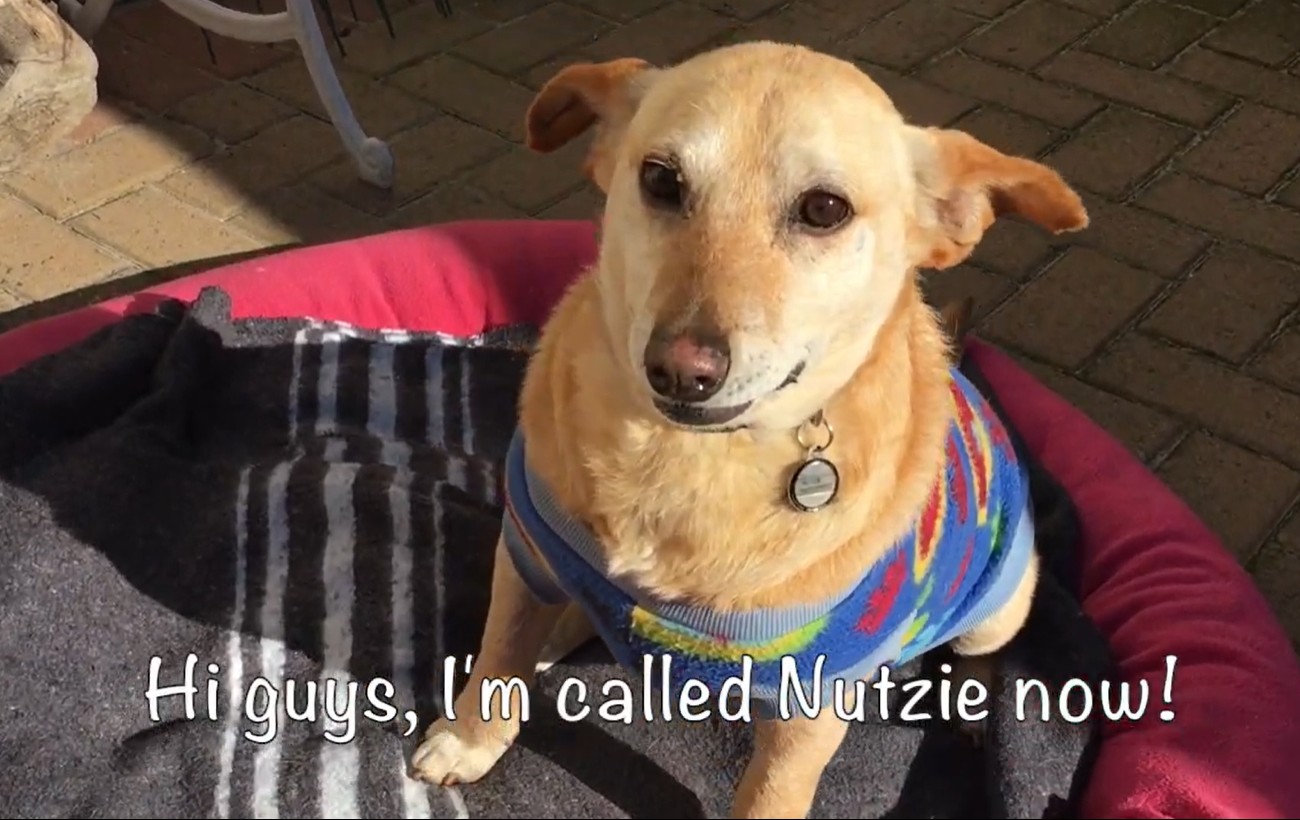
Today, Emu is difficult to compare with the frail stray who once lay quietly in the clinic.
His coat returned.
His body became stronger.
His surroundings became safe.
But the most meaningful transformation cannot be measured only through photographs.
He was no longer treated as an animal whose life had lost value because he was old and unwell.
He was treated as an individual whose comfort still mattered.
His Final Chapter Did Not Begin at the Clinic
For a brief moment, it appeared that Emu’s story might end before anyone knew him.
He had reached the clinic carrying the visible effects of years without sufficient care.
The people around him faced a difficult decision.
Then one person chose to ask another question.
Was there still a path toward comfort?
For Emu, the answer turned out to be yes.
It required veterinary treatment.
It required donations.
It required foster care, patience, and a family willing to adopt a senior dog with a complicated history.
No single act completed the rescue.
But the first act made all the others possible.
Someone looked at Emu and did not see only what had already happened to him.
They saw what might still happen next.
A healing coat.
A warm bed.
A canine companion.
A family who wanted him.
Emu did not need to become young again.
He did not need to erase every sign of his past.
He only needed the opportunity to spend the time ahead surrounded by care rather than neglect.
Once, he lay in a clinic with almost no one expecting his life to change.
Then one person asked for more time.
And that time became the beginning of the home Emu had been waiting for.


