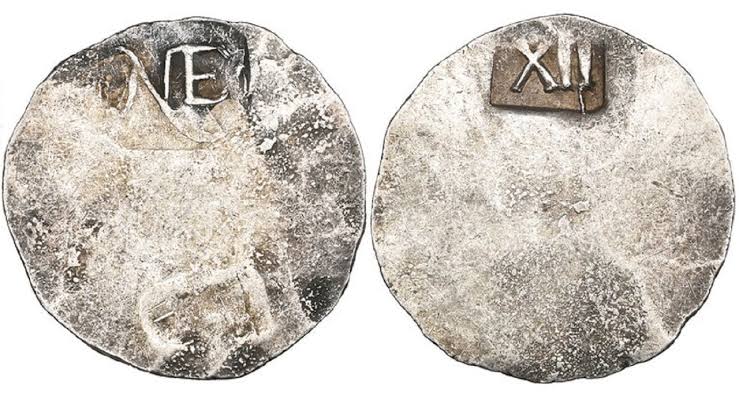
It did not look like much. A small, flat circle of silver, worn smooth at the edges, sitting among a handful of old coins inside an ordinary candy tin. For years — possibly decades — the tin sat undisturbed in a British family’s collection, the kind of miscellaneous inherited hoard that accumulates quietly over generations and rarely gets a second look.
When the family eventually decided to have the contents examined, most of the coins turned out to be exactly what they appeared to be: common pieces of modest value. But one small disk stood apart. A specialist recognized it almost immediately, and what followed was a chain of authentication, certification and ultimately a sale that few in the numismatic world had expected from something found in a candy tin.
The piece was a 1652 New England shilling — one of the earliest coins ever struck in colonial Massachusetts, and among the rarest surviving examples of American monetary history. It sold at auction for £264,000, approximately $351,900, a result that placed it among the most significant early American coin finds in recent memory.
How the Coin Survived in a Family Candy Tin
The precise history of how the shilling entered the family’s possession is not fully documented, which is itself a common feature of coins this old. New England shillings were struck in the 1650s, and any piece that has survived nearly four centuries has almost certainly passed through many hands — merchants, collectors, estates and, in this case, a modest tin container stored among unremarkable change.
What is known is that the coin surfaced in Britain as part of an inherited collection. The family appears to have had no particular awareness of what they held. The shilling had been stored alongside other coins without any special protection or documentation, which makes its survival in collectible condition all the more striking.
This kind of discovery — a significant historical artifact sitting unrecognized in a domestic setting — is not unheard of in the numismatic world, but it remains genuinely rare. Most early colonial coins that still exist today are held by museums, institutional collections or long-established private holdings. Finding one in general circulation within a candy tin places this example in an exceptional category.
Why Its Design Looked So Simple
Part of what made the coin easy to overlook is also what makes it historically important: its design is strikingly plain by any standard.
The 1652 New England shilling carries no portrait, no elaborate imagery and no decorative border. One side bears the letters “NE” — for New England — stamped in a simple block style. The other side shows the denomination, “XII” for twelve pence, equivalent to one shilling. That is essentially the entire design.
This simplicity was not accidental. When the Massachusetts Bay Colony established its mint in Boston in 1652, the goal was practical: produce a local silver currency to address the chronic shortage of reliable coinage in the colonies. England had not supplied adequate coin to its American settlements, and trade was suffering. The colonial authorities moved quickly, and the earliest production run reflected that urgency. There was no time — or perhaps no priority — for elaborate engraving.
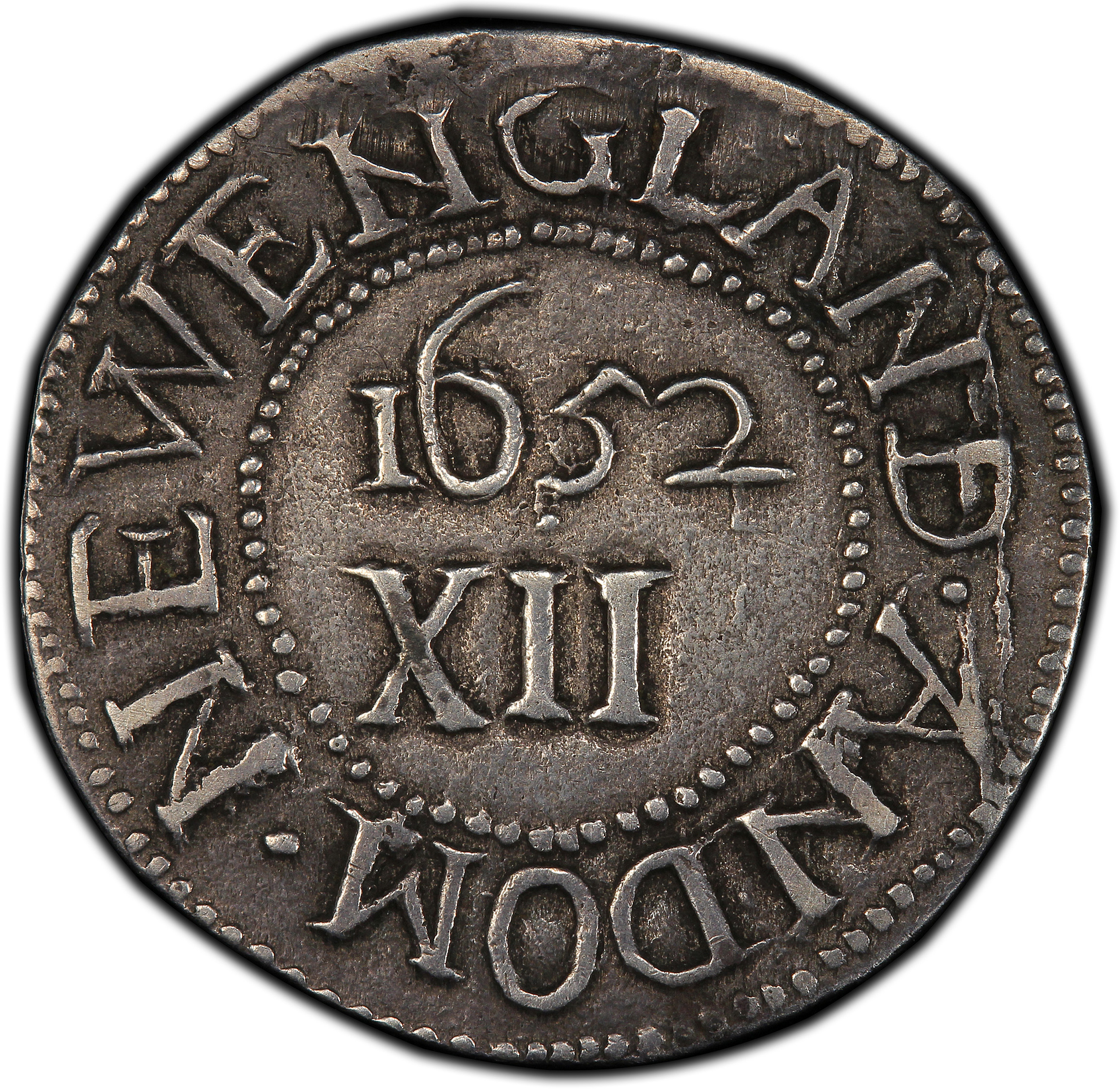
The NE shilling represents what numismatists call the “NE type,” the very first coins produced at the Boston mint before more decorative designs like the Willow Tree, Oak Tree and Pine Tree shillings followed. Because the NE type was issued only briefly and its plain design made it easy to clip — that is, to shave silver from the edges — it was quickly replaced. Very few examples survived, and of those that did, many are heavily worn or clipped themselves.
The 1652 date on all Massachusetts silver coins of this era reflects the year the mint was authorized, not necessarily the year each individual coin was struck. The mint used that date continuously for decades as a way of maintaining legal standing under English law. This context matters: a coin stamped 1652 may have been produced somewhat later, but its type and design place it within a specific, historically significant window of early American coinage.
How Experts Authenticated the Shilling
Before any auction estimate could be placed on the coin, it needed to pass rigorous professional scrutiny. The shilling was submitted to NGC — the Numismatic Guaranty Company, one of the most respected third-party coin grading and authentication services in the world.
Authentication for a coin of this age and rarity involves multiple layers of examination. Graders assess the metal composition, the strike characteristics, the style of the lettering and the overall weight and dimensions against known genuine examples. For a coin as rare as an NE shilling, specialists also draw on reference literature and, where available, provenance records.
NGC certified the coin as genuine and assigned it a grade reflecting its state of preservation. A coin that has spent an unknown period of time inside a candy tin alongside other pieces could easily have suffered contact marks or environmental damage, so the condition at certification was considered notable by auction specialists.
Once certified, the shilling was consigned for sale through a reputable auction house equipped to handle coins of significant historical and monetary value. The certification provided both buyers and the auction house with the assurance needed to present the piece to serious collectors worldwide.
YOUTUBE EMBED — PRIMARY SEARCH QUERY: “1652 New England shilling candy tin auction video”
Why Collectors Considered It Exceptional
Rarity in numismatics is not simply about age. Many old coins exist in large numbers and command modest prices. What drives exceptional value is the combination of historical significance, survival rate and condition — and the NE shilling scores near the top on all three counts.
Fewer than a dozen examples of the 1652 NE shilling are believed to exist in any condition. Most are held in institutional collections or have been off the market for many years. When one appears at public auction, it is a genuine event in the collecting world, not a routine sale.
The historical significance compounds the rarity. This was currency produced by colonists who were, in a meaningful sense, asserting economic independence — creating their own money supply at a time when England had failed to provide one. The coins predate the American Revolution by more than a century, yet they represent an early, tangible expression of colonial self-governance. For American history collectors, that context carries real weight.
The fact that this particular example came from outside established collector networks — surfacing from a candy tin in Britain rather than from a known private holding or an institutional deaccession — added an element of provenance interest that auction houses know can drive competitive bidding.
YOUTUBE EMBED — SECONDARY SEARCH QUERY: “1652 New England shilling coin history expert”
The Auction Result and Its Historical Meaning
When the shilling crossed the auction block, it realized £264,000, approximately $351,900 at the time of sale. The result confirmed what specialists had suggested: that a genuine NE shilling in certifiable condition would attract serious international interest regardless of where it had spent the previous several centuries.
The sale price also carried a broader meaning beyond the transaction itself. It placed a documented market value on a category of American numismatic history that most people — including many collectors — have never encountered in person. The NE shilling is not the kind of coin that shows up in general circulation guides or introductory price lists. It exists at the intersection of early American history and extreme rarity, a combination that commands a specific and dedicated segment of the market.
For historians and museum professionals, results like this serve as a reminder that significant artifacts can surface from ordinary domestic settings. The candy tin that housed this shilling was not a vault or an archive — it was a simple container that happened to preserve one of the earliest monetary objects produced on American soil.
The coin’s new owner acquires not just a piece of silver but a documented artifact from the first years of organized coinage in colonial New England — struck at a mint that operated in defiance of English monetary authority and that laid groundwork, however indirectly, for the financial independence the colonies would eventually claim outright.
After generations of quiet obscurity inside an unremarkable tin, the 1652 New England shilling now has the visibility that its history always warranted. It took a family clearing out inherited odds and ends to return it to the world’s attention — and the numismatic market left no doubt about what that attention was worth.

