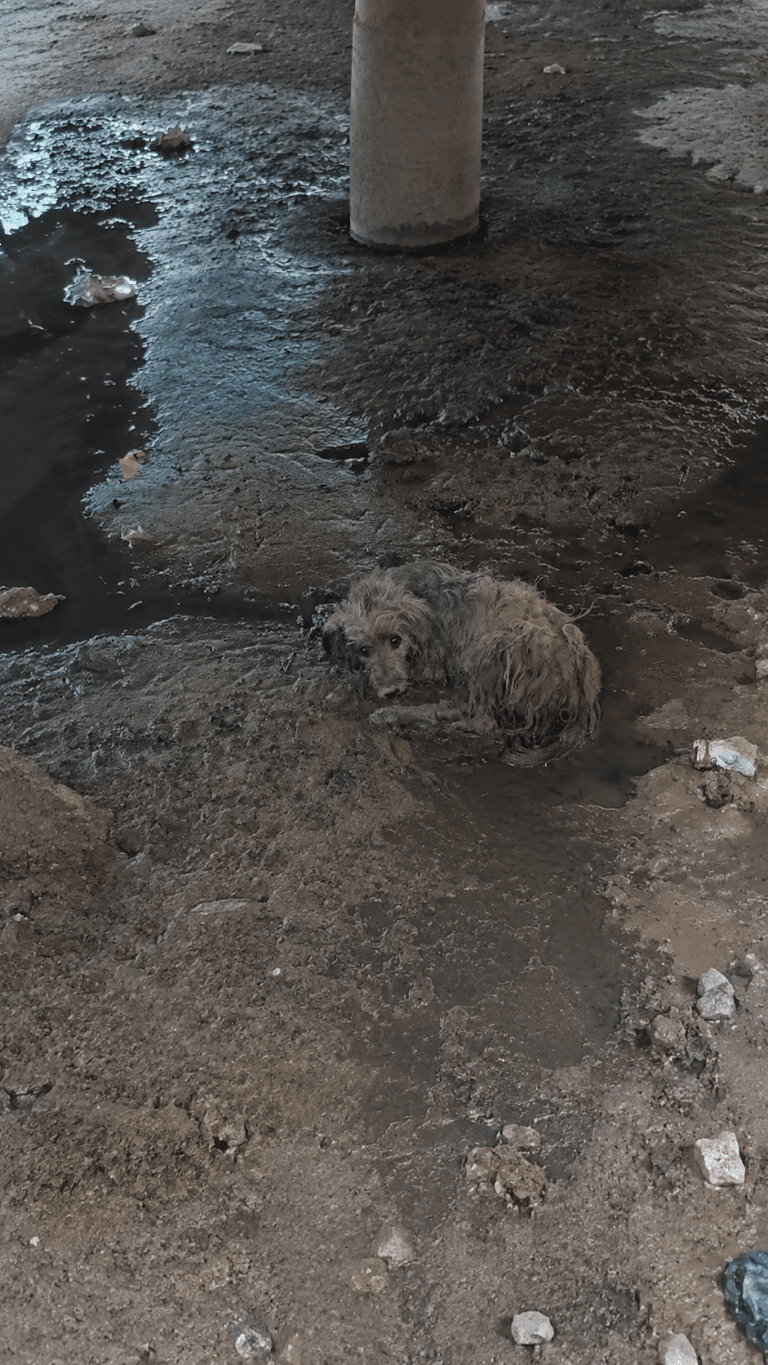
Beneath a small home with a rusted metal roof, rescuers discovered a dog lying inside a narrow drainage tunnel.
Mud covered his body.
Dirty water surrounded him.
And whenever someone tried to move closer, fear took over.
The dog had reportedly remained inside the drain for nearly two days. He had no proper food, no dry place to rest, and no clear way to escape.
Yet the physical hardship was only part of what rescuers were about to face.
The frightened dog did not understand that help had finally arrived.
To him, every approaching hand still looked like a threat.
The Dog Who No Longer Trusted Anyone
Neighbors reportedly told rescuers that the dog had run into the drainage system after being frightened and mistreated by a group of teenagers.
Exactly what happened before he disappeared into the tunnel could not be fully confirmed.
But his behavior revealed how deeply afraid he had become.
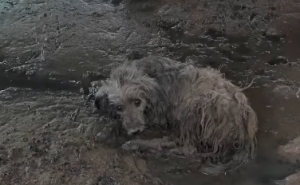
He remained pressed against the filthy ground, keeping his body as far from the rescuers as the cramped space allowed.
When someone reached toward him, he barked.
When they moved closer, he snapped nervously.
Each unfamiliar sound made his body tense.
It would have been easy to look at those reactions and call him aggressive.
The rescue team saw something different.
They saw a terrified dog trying to protect himself with the only defenses he had left.
He was not attempting to dominate anyone.
He was trying to survive.
The rescuers would later name him Beach.
But during those first moments beneath the house, he was simply an exhausted animal who had stopped believing that people could be safe.
The team knew they could not force trust from him.
They would have to earn it.
Video: Terrified Dog Trapped in a Sewer Drain for Two Days Is Finally Reached by Rescuers
A Rescue That Required Patience, Not Force
The drainage tunnel was so narrow that rescuers had almost no room to work.
They could not stand upright.
They could not move freely.
Even turning around was difficult.
Beach remained near the far side of the drain, watching every motion with wide, uncertain eyes.
Instead of grabbing him immediately, the rescuers slowed everything down.
They spoke in calm voices.
They avoided sudden movements.
They allowed him time to observe them.
For a long while, nothing appeared to change.
Beach continued barking whenever a hand came too close. His body stayed rigid, prepared to retreat even though there was nowhere left to go.
Still, the team remained beside him.
Their voices stayed gentle.
Their movements stayed predictable.
Eventually, one rescuer managed to place a towel around Beach’s small body. The towel created a soft barrier that helped protect both the frightened dog and the people trying to lift him.
Beach struggled briefly.
Then his strength seemed to fade.
Slowly and carefully, the rescuer guided him out of the tunnel and into the open air.
For the first time in two days, Beach was no longer surrounded by sewage, darkness, and concrete walls.
But once rescuers could see him clearly, their concern deepened.
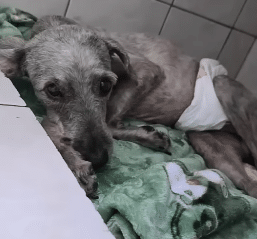
His body was extremely thin.
His coat was soaked and tangled with mud.
He appeared cold, weak, and completely exhausted.
They wrapped him securely and carried him toward the vehicle.
Beach did not relax in their arms.
Not yet.
But he was finally out.
And for the first time since entering the drain, he was moving toward safety.
The Examination Revealed a Much Larger Struggle
Beach was taken directly to a veterinary clinic.
Before the medical team could properly examine him, they first had to remove the layers of dirt clinging to his body.
His coat was matted with mud, waste, and debris from the drainage tunnel. Some areas had to be carefully shaved so the veterinary staff could inspect the skin underneath.
A warm bath slowly revealed the fragile dog beneath the grime.
Beach weighed only about 15 pounds.
He was severely underweight and showed signs of prolonged malnutrition. Blood tests reportedly revealed anemia and an elevated white blood cell count, findings that can accompany infection, inflammation, or extended physical stress.
The team began addressing his immediate needs.
Warmth.
Fluids.
Nutrition.
Medication.
A clean place to rest.
But an additional examination revealed why Beach had not been using his back legs normally.
X-rays showed serious trauma to his spine.
Both hind legs were paralyzed.
The diagnosis changed the entire direction of his recovery.
Beach would not simply need several good meals and a few quiet nights.
He would require ongoing medical support.
He could not empty his bladder without assistance.
He would need diapers changed frequently to help protect his skin and reduce the risk of infection.
Mobility would remain uncertain, and rehabilitation could take a long time.
No one could promise that he would walk normally again.
The rescuers did not make promises they could not keep.
They made one promise they could control.
Whatever happened next, Beach would not face it alone.
Healing Began With the Smallest Safe Moments
During his first days in care, Beach remained cautious around nearly everyone.
If a person approached too quickly, his lips pulled back and his body tightened.
If a hand moved unexpectedly, he appeared ready to defend himself.
The caregivers respected those warnings.
They did not punish him for being afraid.
They did not insist that he accept affection before he was ready.
Instead, they built a routine around predictability.
Meals arrived at regular times.
His bedding was kept warm and clean.
His diapers were changed gently.
His bladder was manually emptied several times each day.
Every procedure was performed as calmly as possible.
Whenever Beach became overwhelmed, the caregivers paused.
They allowed him to breathe.
Then they continued only when he was ready.
Progress was measured in moments that might have seemed ordinary to anyone else.
Beach allowed a caregiver to sit nearby without barking.
He accepted food while someone remained in the room.
He stopped watching every hand with the same intensity.
One day, he rested his head without keeping his entire body prepared to react.
Another day, he allowed a gentle touch to remain on his back.
These changes were small.
But they mattered.
Beach was gathering new evidence about people.
A hand could change his diaper without causing pain.
A voice could speak softly and expect nothing in return.
A person could leave the room and still come back with food.
The frightening memories had not disappeared.
But now they were being met by safer experiences, repeated day after day.
Video: Beach Accepts a Gentle Touch After Days of Fear and Defensive Reactions
The Dog Beneath the Fear Slowly Appeared
As Beach became stronger, the tension in his body gradually began to ease.
He no longer reacted defensively every time a familiar caregiver entered.
He began observing people with curiosity instead of immediate panic.
Eventually, he allowed himself to rest beside them.
For the rescue team, that moment carried enormous meaning.
Beach had not suddenly forgotten what frightened him.
He had not transformed overnight into a carefree dog.
Trust rarely returns that way.
His progress came through repetition.
One peaceful meal.
One clean blanket.
One careful medical treatment.
One person who listened when his body said he needed space.
Little by little, the dog who had barked from the darkness began to understand that these humans were not trying to corner him.
They were trying to care for him.
His paralysis still created daily challenges.
He continued needing help with basic bodily functions, and his caregivers remained alert for skin irritation, urinary problems, and other complications common in dogs with limited mobility.
Veterinary professionals also considered what rehabilitation might safely offer him.
Physical therapy could help maintain flexibility and muscle health.
Supportive equipment might eventually give him greater freedom to explore.
But the rescuers understood that Beach’s quality of life would not be measured only by whether he walked again.
Comfort mattered.
Connection mattered.
Feeling safe mattered.
And in those areas, Beach was already making remarkable progress.
The most meaningful transformation was visible in his eyes.
The constant alarm slowly softened.
He began looking toward people rather than searching for a way to escape them.
Sometimes, he even settled peacefully while a caregiver remained close.
For a dog who had once treated every approaching hand as a danger, resting beside a human was an extraordinary act of courage.
A Future Built Around What Beach Needs
Beach’s recovery is still ongoing.
His spinal injury may affect him for the rest of his life, and his care will likely continue requiring patience, medical attention, and practical support.
There may be difficult days.
There may be setbacks.
There may be limits that cannot be changed.
But Beach is no longer facing those uncertainties from inside a cold drainage tunnel.
He now sleeps on clean bedding.
He receives regular meals.
His medical needs are noticed and addressed.
Most importantly, he is surrounded by people who understand that frightened behavior is often communication.
When Beach becomes nervous, they listen.
When he needs space, they give it.
When he is ready for contact, they offer a gentle hand.
The dog who once tried to bite anyone reaching toward him now knows that some hands bring food.
Some hands bring warmth.
Some hands carefully lift him when his legs cannot.
His story is not only about being pulled from a sewer.
It is about what happened afterward.
Rescue removed Beach from immediate danger.
Consistency began teaching him that the danger was over.
The Moment He Realized Kindness Was Real
Beach may never understand why he was frightened into that drain.
He cannot explain what he remembers or how long he had been struggling before rescuers arrived.
But he can respond to the life surrounding him now.
He can feel a warm blanket beneath his body.
He can recognize familiar voices.
He can rest without dirty water collecting around him.
He can discover that care continues even on the days when he is frightened, uncomfortable, or unable to respond affectionately.
That may be the greatest gift his rescuers have offered him.
They did not require Beach to become trusting before he deserved compassion.
They cared for him while he was still barking.
While he was still snapping.
While he was still uncertain about every person in the room.
Then they gave him enough time to decide for himself that he might be safe.
Once, Beach lay motionless inside a dark drainage tunnel, too frightened to accept the hands reaching toward him.
Today, those same kinds of hands feed him, clean him, comfort him, and help him move through the world.
His body still carries the effects of what happened.
His future still contains challenges.
But something important has already changed.
Beach no longer has to survive by himself.
And with every patient touch, every dependable meal, and every peaceful night, he is learning that kindness is not another trap.
This time, it is real.


