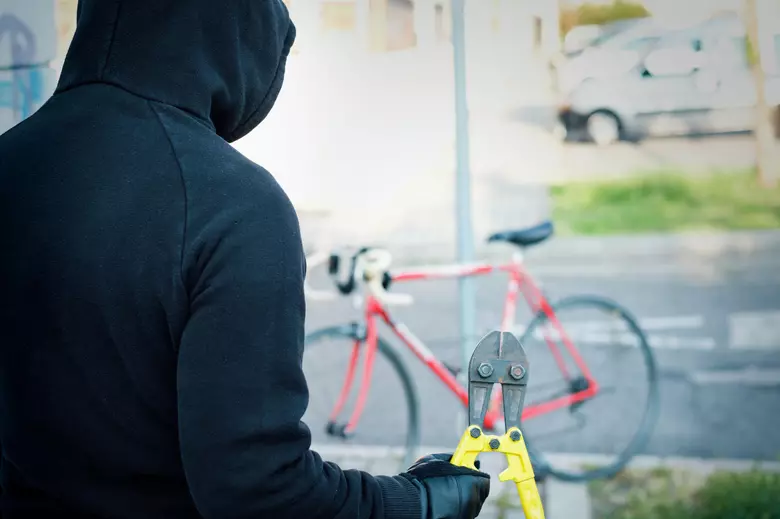
A high-end bicycle sat locked to a public rack in one of Grand Junction, Colorado’s most active theft corridors. To anyone passing by, it looked like an opportunity. To the Grand Junction Police Department, it was a carefully placed trap.
The bike was worth roughly $4,000—expensive enough to attract serious attention—and it had been quietly fitted with a GPS tracking device before officers walked away and waited. The plan was straightforward: let a thief take it, then follow the signal.
What police did not expect was where the trail would end.
When the tracker moved and the alert went out, officers followed the GPS signal to a residential property. Inside an open garage, they found not one stolen bike, but 80 bicycles recovered in a single operation—along with seven arrests tied to the investigation.
Why Police Planted the Bait Bike
Bicycle theft had become a persistent problem in Grand Junction. Unlike vehicle theft, bike theft often goes unreported, and even when it is reported, connecting a recovered bike to a specific crime requires either a serial number match or a direct witness. Both are harder to produce than most people assume.
Bait bike programs address that gap. Instead of waiting for a theft to occur and then trying to reconstruct it after the fact, officers take a proactive approach: place a desirable, trackable bike in a location where theft is likely and monitor it in real time. The GPS device transmits location data continuously, meaning officers can watch a suspect move from the moment the bike is taken.
The $4,000 value of Grand Junction’s decoy was deliberate. A cheap bike might not attract the kind of repeat offender the department was looking for. A high-value target, left in a spot known for theft activity, was far more likely to draw someone with experience and intent. Police equipped it with a tracker, staged the placement, and gave it time.
How the GPS Alert Began the Search
When the bait bike was taken, the tracker activated and began transmitting. Officers received the alert and started following the signal, which moved through the city before coming to rest at a residential address.
At that point, the operation shifted from surveillance to response. The GPS had done its job: it had converted an anonymous theft into a documented trail with a fixed endpoint. Officers now had a location and a reason to approach it.
What they found when they arrived, however, was not simply evidence of one theft. The situation outside the property gave them something more to work with before they even stepped inside.
The Visible Clue Outside the Residence
According to reporting based on the Grand Junction Police Department’s own account of the operation, officers approaching the property observed the garage door was open. That detail mattered. An open garage containing bicycles in plain view gave officers a direct look at the scale of what was inside—without requiring entry.
What they could see from outside was enough to confirm that the bait bike had led them somewhere significant. The property was not holding one or two extra bicycles. The volume of bikes visible suggested a pattern of acquisition far beyond casual ownership, and it gave officers the basis to proceed with the investigation.
The bait bike’s GPS signal had started as a tool to catch one thief. It had instead pointed to something considerably larger.
YOUTUBE EMBED — PRIMARY SEARCH QUERY: “Grand Junction police GPS bait bike 80 bicycles footage”
What Officers Found in the Garage
When officers conducted their search of the property, they recovered 80 bicycles. The sheer number distinguished this operation from a routine bait-bike sting. A single decoy had led to the discovery of dozens of bikes in one location.
It is important to be precise about what the recovery of 80 bikes does and does not confirm. Not every bicycle found at the property was necessarily confirmed stolen at the time of the initial operation. Matching recovered bikes to specific theft reports requires cross-referencing serial numbers against police databases, contacting owners, and in some cases waiting for owners to come forward after a public announcement. Investigators work through that process after the physical recovery is complete.
What the operation did establish was that a significant number of bicycles had been accumulated at this address, that the bait bike led directly there, and that the circumstances were consistent with a large-scale theft operation. The investigation into the individual bikes’ origins continued as part of the broader case.
The Recovery and Arrest Totals
Seven people were arrested in connection with the investigation. The arrests reflected the scope of what officers encountered—this was not a single-suspect case stemming from a single theft. The bait bike had served as the entry point into a broader operation, and the arrests that followed were a direct consequence of where the GPS signal led.
Police departments running bait bike programs consistently point to outcomes like this as the reason the tactic works. A well-placed decoy doesn’t just recover one bike or catch one thief. When it leads to a property where bikes are being stored, it can unravel a network that might otherwise have continued operating undetected for months.
Grand Junction police made the details of the operation public, including the value of the bait bike, the number of bicycles recovered, and the arrest count. The transparency was partly practical: publicizing a recovery of 80 bikes prompts other theft victims to come forward and check whether their bicycle is among those found. Serial number checks and owner identifications often continue well after the initial announcement.
YOUTUBE EMBED — SECONDARY SEARCH QUERY: “Grand Junction Police bait bike program interview”
One Bike, One Signal, Eighty Recovered
The Grand Junction bait bike operation documented something that law enforcement agencies have cited as a key argument for the program: bicycle theft at scale tends to concentrate. Stolen bikes don’t disappear randomly. They move through a smaller number of hands and often end up stored together, which means a single point of contact—one tracked decoy—can expose the full picture.
The documented totals from this operation were 80 bicycles recovered and seven arrests. Investigators did not publicly confirm that every bike was stolen, and the full accounting of each bike’s origin remained part of an ongoing process at the time of the operation’s announcement. What the record does confirm is that a $4,000 decoy, a GPS tracker, and one theft alert produced one of the larger single-location bike recoveries in the region’s recent history.
For anyone who had reported a bicycle stolen in Grand Junction around that time, the department’s advice was direct: check the list. Your bike might have been in that garage.

