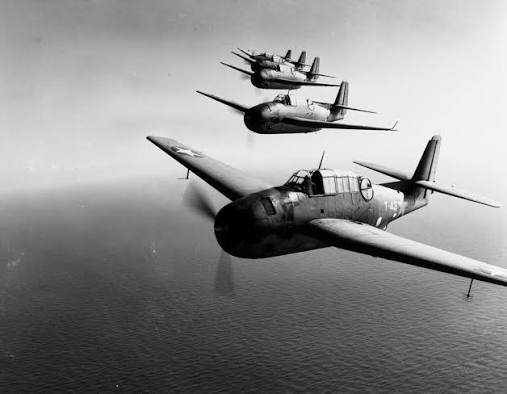
On the afternoon of December 5, 1945, five TBM Avenger torpedo bombers lifted off from Naval Air Station Fort Lauderdale, Florida, for what the Navy had scheduled as a routine over-water navigation exercise. The mission was called Flight 19. Fourteen airmen were aboard. The exercise was expected to last a few hours and return the flight to the same runway by late afternoon.
It did not return. Within hours, radio contact deteriorated into a fragmented exchange of confused position reports. By nightfall, all five aircraft and their crews were missing. A Martin PBM Mariner flying boat sent out to search for them also disappeared before the night was over. In total, the Navy lost thirteen aircraft and twenty-seven men in a single evening.
The case has been studied, debated and sensationalized for eight decades. The core finding, however, is this: the Navy documented the loss of all five Avengers, concluded that navigation error and fuel exhaustion were the most likely causes, but never positively identified the main crash site. The exact location where Flight 19 went down has not been confirmed. The case remains officially open as an unresolved accident.
What Is Confirmed About the Training Flight
Flight 19 was a Navigation Training Flight, designated as Navigation Problem Number One, a standard exercise used to build over-water navigation skills. The planned route took the aircraft east from Fort Lauderdale to the Bahamas area, then north, then back southwest to the base — a triangular course covering roughly 320 miles.
The five aircraft were TBM Avengers, a type widely used during World War II. The flight leader was Lieutenant Charles C. Taylor, an experienced pilot with over 2,500 logged flight hours. The other crew members were largely student naval aviators completing training requirements. All fourteen men aboard were confirmed aboard at departure.
Takeoff was recorded at approximately 2:10 p.m. local time. Weather at departure was adequate for the mission. The aircraft were fueled for a range that gave them a roughly five-to-six hour window before exhaustion, depending on power settings and conditions encountered.
The first two legs of the exercise appear to have been completed without a recorded emergency. Problems emerged during or after the northward leg, when the flight’s position reports began to conflict with the expected navigation track.
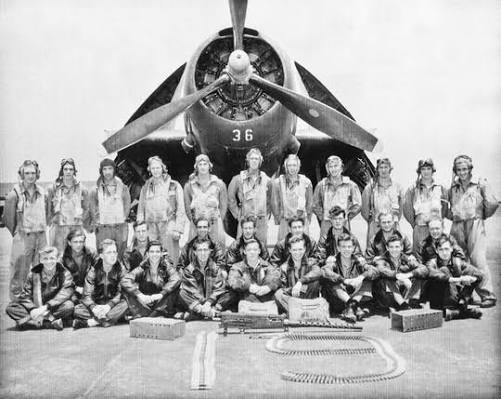
The Radio Calls That Revealed Confusion
The radio record from Flight 19 is the most detailed documented evidence available, and it is also where the confirmed facts become harder to interpret precisely. Transmissions were fragmented, partially overlapping, and affected by atmospheric conditions that grew worse as the afternoon wore on.
What the radio logs confirm is that Lieutenant Taylor reported that both his compasses were malfunctioning and that the flight did not know its position. He described seeing land that he initially believed to be the Florida Keys, which would have placed the flight west of its intended position. Based on that belief, he turned the flight northeast — a heading that, if the initial position assessment was wrong, would have taken the aircraft further out over the Atlantic rather than back toward the coast.
Fort Lauderdale tower operators and senior naval officers monitoring the situation attempted to assist. At least one controller advised Taylor to fly west, which would have brought any aircraft over water back to the Florida mainland regardless of exact position. Taylor declined or did not act on that guidance, apparently unconvinced of his actual location.
By approximately 5:15 p.m., transmissions indicated the flight was low on fuel and descending altitude. The final transmissions were incomplete and not fully intelligible. Naval investigators later estimated that the aircraft exhausted their fuel somewhere over the Atlantic, most likely north of the Bahamas and east of the Florida coast, but the radio evidence alone cannot establish a precise crash point.
One detail from the record that investigators noted: another flight member, Captain Edward Powers, transmitted that he believed they should fly west to reach land. The exchange suggested internal disagreement about heading during a period when darkness and weather were both closing in.
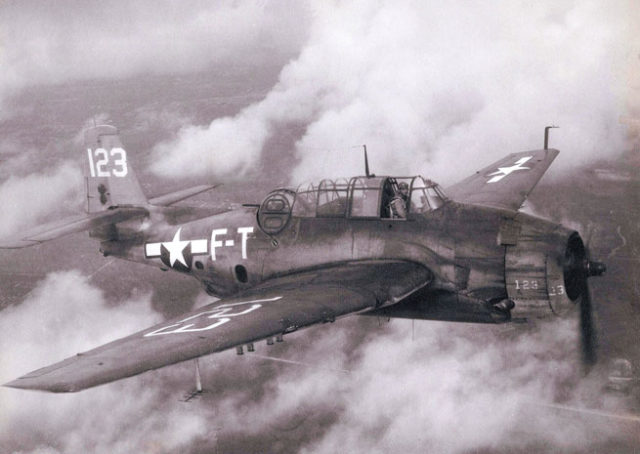
How Weather, Direction and Fuel Shaped the Likely Outcome
The Navy’s formal investigation, completed in 1946, concluded that the disappearance was caused by Taylor becoming disoriented during the return leg and leading the flight on a heading that took them away from land rather than toward it. The investigation cited the compass malfunction report, the heading decisions visible in the radio log, and the estimated fuel remaining at last contact.
Weather deteriorated significantly after takeoff. By the time the flight was clearly lost, winds had picked up over the Atlantic, seas were rough, and overcast conditions reduced visibility. Those conditions are relevant both to navigation difficulty and to any ditching scenario. An Avenger ditching at night in heavy seas in 1945 had a low survival probability, and any wreckage would have been quickly scattered or submerged.
The triangular logic of the fuel constraint is straightforward: the aircraft had a defined range, the radio contact timeline is documented, and the direction of flight after the confusion point narrows the area where the aircraft could have reached before fuel exhaustion. That area is estimated to be a substantial zone of open Atlantic, which explains both why a search began quickly and why it did not locate debris in the immediate aftermath.
Navigation error does not require any unusual explanation to account for what happened. Disorientation over featureless open water in degrading weather, with malfunctioning instruments, is a documented hazard in aviation history both before and after 1945.
YOUTUBE EMBED — PRIMARY SEARCH QUERY: “Flight 19 Naval History official documentary radio evidence”
The Search and the Lost Rescue Aircraft
The Navy launched an extensive search that began the same evening and continued for days. One of the early search aircraft, a Martin PBM Mariner flying boat with thirteen men aboard, took off from Naval Air Station Banana River at approximately 7:27 p.m. and was never heard from again.
A surface vessel in the area reported seeing an explosion and flames on the water shortly after the Mariner’s departure. The Navy concluded that the PBM Mariner most likely exploded in flight — the aircraft had a documented history of fuel-vapor issues — though no confirmed debris from that aircraft was recovered either.
The combined search effort covered more than 380,000 square miles of ocean over the following days and involved aircraft, surface ships and submarines. No confirmed remains, life rafts or major structural wreckage from Flight 19 were located. Small fragments consistent with aircraft were recovered in some accounts, but no positively identified structural components from any of the five Avengers were officially confirmed at the time.
The scale of the search, and its failure to produce confirmed wreckage, is itself significant. It reflects both the difficulty of locating debris in open ocean conditions and the probability that the impact and sinking events occurred in water deep enough or far enough from the search corridor to prevent surface recovery.
Why Reported Wreck Discoveries Have Not Closed the Case
In the decades since 1945, multiple reports have claimed discovery of Avenger aircraft on the seafloor in the region. None has been officially confirmed as belonging to Flight 19.
In 1991, a salvage team reported locating five Avenger airframes in a cluster on the ocean floor. Naval investigators examined the evidence and determined that the aircraft were not Flight 19. The Bureau numbers on the aircraft did not match the five planes from the December 5 mission, and the site was inconsistent with the estimated flight path. The discovery was genuine — five Avengers on the bottom — but they were aircraft lost in separate incidents over years of wartime training in the same waters.
The Florida coastline and the waters of the Bermuda Triangle region were heavily used for naval aviation training during and after World War II. The number of aircraft lost in those waters over multiple years means that finding Avengers on the seafloor is not in itself evidence of Flight 19. Positive identification requires matching Bureau numbers, structural features or other documented markers specific to the five aircraft that departed Fort Lauderdale on December 5, 1945.
No such match has been publicly confirmed by naval authorities or the National Archives. The case file remains open.
YOUTUBE EMBED — SECONDARY SEARCH QUERY: “Flight 19 route reconstruction Fort Lauderdale museum”
What Remains Unknown
The confirmed facts establish a clear framework: five aircraft departed, became navigationally disoriented, flew in a direction that took them further from land, and ran out of fuel somewhere over the Atlantic in deteriorating conditions. The radio record, the fuel math and the weather data all support that reconstruction without requiring any additional explanation.
What remains genuinely unknown is the specific crash location. Without confirmed wreckage, investigators cannot say with precision where the five Avengers impacted the water, how far they flew before fuel exhaustion, or whether any crew members survived long enough to attempt a water landing rather than a loss-of-control impact.
The fate of the rescue Mariner is similarly unresolved at the wreckage level, though the explosion report from the surface vessel is the strongest indicator of what happened to that aircraft.
The “Bermuda Triangle” framing that attached to Flight 19 in later popular accounts is not supported by the Navy’s investigation and is not part of the official record. The Navy did not conclude that any supernatural or anomalous force was involved. The investigation attributed the loss to human factors and instrument failure in deteriorating conditions — a verdict that remains the most evidence-supported explanation available.
Researchers and historians have continued to propose revised position estimates based on the radio log timing and known wind conditions, with some analyses placing the likely crash zone further north than earlier estimates. Those reconstructions are informed and useful, but they remain calculations, not confirmed discoveries.
The Evidence Map, Not the Legend
Flight 19 is a documented accident with a documented cause that the evidence strongly supports: navigation disorientation, instrument failure and fuel exhaustion took five aircraft and fourteen men into the Atlantic on the evening of December 5, 1945. The Navy reached that conclusion through a formal investigation within months of the event, and no subsequent discovery has overturned it.
The part of the story that remains genuinely unresolved is narrower than the legend suggests: the confirmed crash site has not been found. That is a real and meaningful gap. It means that the physical evidence capable of closing every remaining question — precise location, final moments, survival window — has not been recovered.
What the radio record, the fuel data and the weather conditions do not support is a mystery requiring an exotic explanation. The gap is geographic and oceanic, not logical. The Atlantic is deep, the search area is large, and the conditions of December 5, 1945 were exactly the kind that produce aviation accidents without recoverable wreckage. Flight 19 disappeared because of human and mechanical failure in a dangerous environment. Where exactly it went down is still, after eighty years, an open question.

