Rosa was only a puppy.
Yet when rescuers found her near California’s Salton Sea, she was chained outside with no visible shade, no proper food, and no clean water nearby.
The heat surrounded her.
Her body was weak.
And every unfamiliar movement made her retreat as far as the chain would allow.
Some people had reportedly mistaken her fearful reactions for aggression. But when rescuers looked more closely, they did not see a dangerous dog.
They saw a frightened five-month-old puppy who was running out of time.
A Tiny Puppy Left Alone in the Heat
Rosa’s condition was immediately alarming.
Her small body appeared severely underweight, and she struggled to remain alert. Her coat was dusty, her movements were slow, and her eyes followed the rescuers cautiously as they approached.
She did not understand why they were there.
After being left alone for so long, human contact seemed to make her nervous. The chain prevented her from finding a cooler or safer place, leaving her exposed to the harsh conditions around her.
Rescuers moved carefully.
They spoke softly, avoided sudden gestures, and gave Rosa time to observe them. Beneath her fearful posture, they noticed something important.
She was not trying to attack.
She was trying to protect herself.
Once they were close enough to examine her, the urgency became even clearer. Rosa was extremely weak and showing symptoms consistent with a serious illness.
She needed veterinary care immediately.
Video: Rescuers Feared Rosa Would Not Survive the Night—But the Tiny Puppy Kept Fighting
The Emergency Drive That Could Not Wait
The nearest emergency veterinary clinic was nearly half an hour away.
Under normal circumstances, that might have been a short drive. For Rosa, every minute mattered.
Rescuers removed her from the chain, wrapped her carefully, and placed her inside the vehicle. She had little strength to resist and remained unusually still during the journey.
The team monitored her closely while driving.
Her condition appeared unstable, and they did not know whether her fragile body could tolerate the trip. But leaving her where she had been found was not an option.
When they finally arrived, veterinary staff took Rosa in immediately.
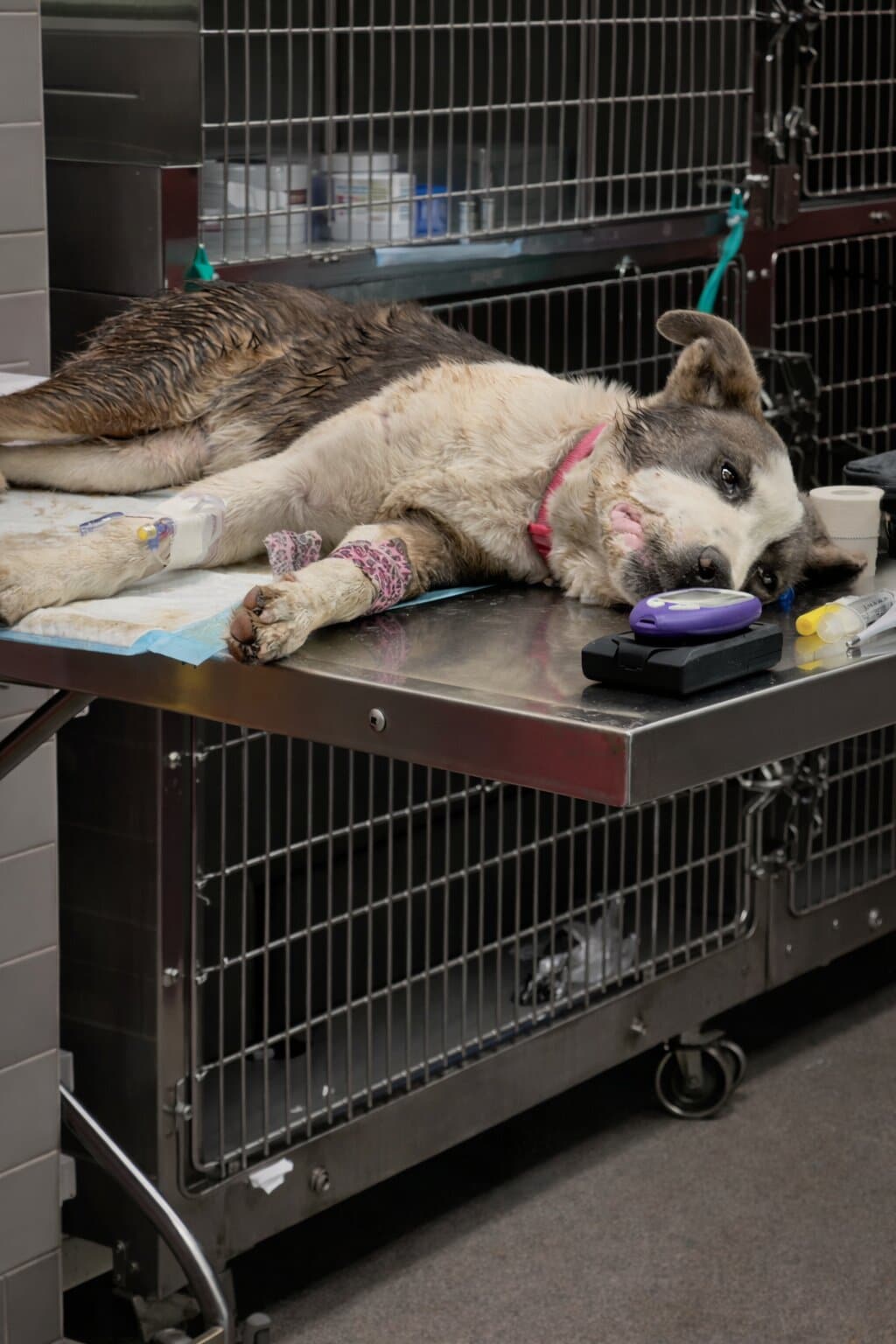
Initial examinations suggested she was approximately five months old. She was dehydrated, malnourished, and displaying symptoms associated with canine parvovirus, a highly contagious illness that can become especially dangerous for young, unvaccinated puppies.
Treatment began without delay.
Twelve Hours of Intensive Veterinary Care
The first night became a race to stabilize Rosa.
Veterinary staff administered intravenous fluids to address dehydration and help support her weakened body. Medication and other supportive treatments were provided while the team watched her condition closely.
For approximately 12 hours, Rosa required continuous monitoring.
Her temperature, hydration, breathing, and responsiveness had to be checked repeatedly. At several points, her condition remained uncertain.
She was very young.
She had little physical reserve.
And she had already endured prolonged hunger, exposure, and stress before receiving help.
No one could promise that she would recover.
The veterinary team could only continue treatment and give her the best possible chance.
Through the night, Rosa remained fragile—but alive.
Each hour she held on became another reason to hope.
The First Signs That Rosa Was Still Fighting
After Rosa survived the most dangerous stage, she was transferred to Mexicali for continued care.
Her recovery was not immediate.
For the next two weeks, she remained under close supervision while caregivers followed a careful feeding and medication schedule. Her body needed time to regain strength, and progress was measured through very small changes.
At first, Rosa spent much of the day resting.
Then she began lifting her head when someone entered.
Her interest in food slowly returned.
Soon, she was able to stand without immediately collapsing back onto her bedding.
None of these moments looked dramatic from the outside. But to the people caring for her, each one represented an important milestone.
Rosa’s body was beginning to respond.
The puppy who had arrived barely able to remain alert was choosing to engage with the world around her again.
Her Tail Moved Before Her Fear Completely Faded
As Rosa grew physically stronger, her behavior also began to change.
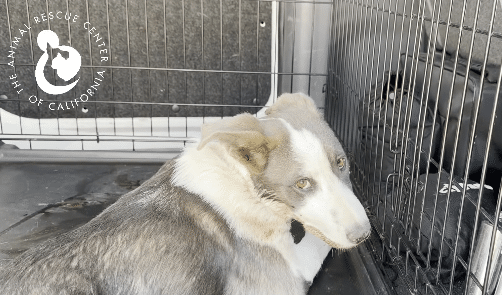
During her first days in care, she watched people cautiously and remained tense when hands came too close. Caregivers did not force affection or surround her with attention.
They allowed Rosa to set the pace.
Meals arrived consistently.
Medication was given gently.
Her resting area remained quiet and comfortable.
Gradually, she began connecting the presence of people with safety rather than danger.
One day, a caregiver approached and Rosa’s tail moved slightly.
It was not an immediate transformation. She still startled at unexpected sounds and sometimes hesitated before accepting touch.
But the brief tail wag showed that her fear no longer controlled every interaction.
Over the following days, Rosa began greeting familiar caregivers more enthusiastically. She stepped toward them instead of retreating and accepted gentle affection without tensing.
For the first time, her playful personality had room to emerge.
Two Weeks Later, She Looked Like a Different Puppy
The physical transformation became increasingly visible.
Rosa’s posture improved as nutrition restored strength to her body. Her eyes appeared brighter, and she could walk short distances without the exhaustion that had defined her first days.
She began exploring.
She showed interest in toys and enjoyed brief walks with her caregivers. When people entered her room, she lifted her head and moved toward them with growing confidence.
The puppy once confined beneath the desert heat now had energy to play.
Her past had not disappeared.
New environments could still make her uncertain, and trust continued to develop gradually. But Rosa was no longer simply trying to survive each hour.
She was beginning to experience the ordinary things every young dog should know:
Regular meals.
Cool, clean water.
A comfortable place to sleep.
Gentle hands that stopped when she became uncomfortable.
And people who returned every day.
The Final Piece of Rosa’s Journey Is Still Missing
Today, Rosa is described as healthy, affectionate, and energetic.
She has survived the illness that once placed her life in danger. She has learned to approach familiar people and appears eager to receive attention from those she trusts.
But her story is not complete.
Rosa is still waiting for a permanent family.
She needs a home where her safety will never depend on the length of a chain. A family prepared to provide continued veterinary care, patient guidance, and the stability every recovering dog deserves.
Her difficult beginning may mean she needs time to adjust to unfamiliar people or surroundings. What she has already shown, however, is that she can make remarkable progress when care is consistent.
The terrified puppy found near the Salton Sea did not need punishment.
She needed protection.
She needed medicine.
She needed someone willing to look beyond her fear.
Rosa Was Given the Chance to Become a Puppy Again
Rosa’s story did not change because she suddenly became stronger on her own.
It changed because rescuers arrived before it was too late.
Veterinary professionals worked through the night.
Caregivers continued showing up during the slow days that followed.
Together, they replaced uncertainty with routine and fear with safer experiences.
Rosa went from lying weak beneath the heat to walking beside the people who helped her. She went from cautiously watching every hand to greeting caregivers with a moving tail.
Her journey is a reminder that a frightened animal should not be judged only by how they react during the worst moment of their life.
Sometimes fear looks like aggression.
Sometimes exhaustion looks like surrender.
And sometimes a puppy who appears to have almost nothing left is still waiting for one reason to keep going.
Rosa found that reason in the people who removed her chain, carried her to safety, and stayed beside her through the night.
Now she needs one final act of kindness:
A family willing to make sure she never feels abandoned again.


