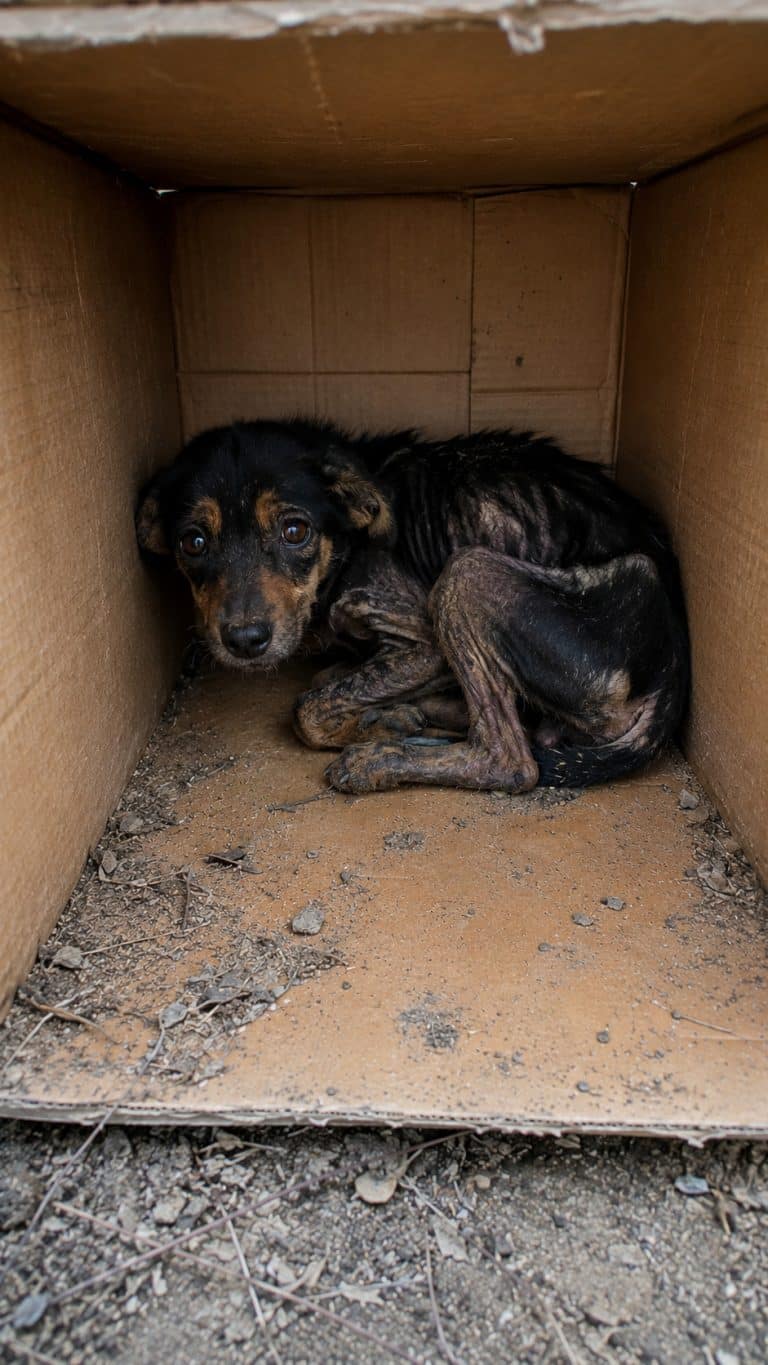
At first, the sounds were almost lost beneath the noise around the old industrial area.
Soft whimpers.
A brief cry.
Then silence again.
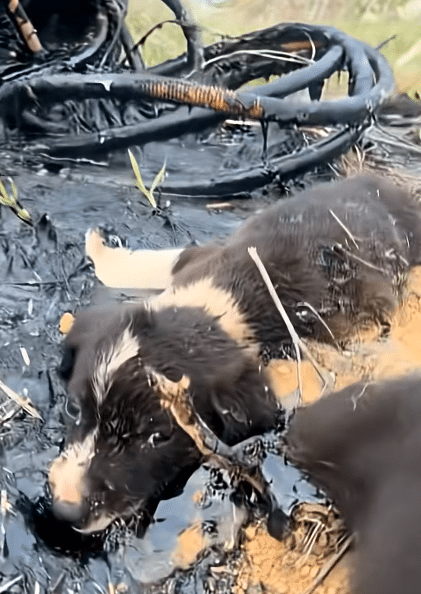
Near a weathered metal container, several tiny puppies lay pressed together beneath layers of thick black tar. The sticky material had covered their fur and hardened around their bodies, leaving them unable to walk away or separate from one another.
Every attempt to move pulled painfully against the tangled mass.
The puppies could not rescue themselves.
But someone heard them—and help began moving toward the sound.
Rescuers Found Them Almost Completely Immobilized
When the rescue team reached the area, they immediately understood how delicate the situation had become.
The puppies were extremely young.
Their bodies were small, exhausted, and coated in dark material from their paws to their sides. Sections of fur had become fused together, while other areas appeared stuck to the ground and debris beneath them.
They remained close to one another, trembling and crying whenever they tried to shift position.
The rescuers could not simply pull them free.
Doing so could tear their skin or cause additional injuries where the tar had tightened around their fur. Every movement had to be planned carefully.
The team knelt beside the puppies and began assessing where each small body was trapped.
They spoke softly.
They supported the puppies’ heads.
And before attempting to lift anyone, they prepared the supplies needed to loosen the hardened material.
There was no room for panic.
The puppies needed calm hands, slow movements, and people willing to continue for as long as the rescue required.
Video: Tiny Puppies Trapped Beneath Hardened Tar Are Freed One Careful Inch at a Time
Freeing Them Was Only the First Challenge
The rescuers began working around the edges of the tar.
Instead of pulling directly against the puppies’ coats, they applied oil to soften the sticky material and create space between the fur and the surface beneath them.
Progress came slowly.
A paw would loosen.
Then part of a leg.
A section of fur would finally separate, revealing another area that still needed careful treatment.
Some puppies whimpered when the rescuers touched the thickest parts. Others remained unusually still, appearing too tired to struggle.
The team paused whenever a puppy became distressed.
They adjusted their grip, added more oil, and waited for the material to soften further.
One by one, the puppies were lifted away from the ground.
Even after they were free, however, their bodies remained heavily coated. The tar had worked deep into their fur and between their toes, leaving them stiff and unable to move normally.
The immediate danger had changed.
But the rescue was far from over.
Hours of Cleaning Followed the First Rescue
Once the puppies reached a safer location, the long cleaning process began.
Ordinary water was not enough to remove the substance from their coats. Rescuers used gentle oils and animal-safe cleaning products to break down the tar without exposing the puppies to harsher chemicals.
Each puppy was treated individually.
Oil was massaged carefully into the affected fur.
The team waited for it to loosen the thick material.
Then small sections were wiped away with soft cloths before the process began again.
Some areas required repeated treatment.
Tar remained around their paws, stomachs, ears, and tails. The puppies’ small size made every movement more delicate, particularly where the material had hardened close to the skin.
Bath followed bath.
Towels were replaced.
Hands worked patiently through the black layers.
The rescuers avoided rushing, even as fatigue set in. Removing too much at once could cause unnecessary discomfort, and the puppies had already endured more stress than their fragile bodies should have faced.
The Puppies Needed Rest as Much as Cleaning
During the process, some of the puppies struggled to keep their eyes open.
They were tired, hungry, and overwhelmed by the unfamiliar contact. Rescuers supported their bodies with towels and allowed them to rest between stages of cleaning.
Warmth became essential.
Once sections of tar were removed, the damp puppies were dried carefully and kept together whenever possible. Being close to their siblings appeared to help them remain calmer while the team continued working.
Food and water were offered according to what their age and condition allowed.
The rescuers also checked for signs of skin irritation, dehydration, or other complications that could require veterinary attention.
The puppies did not understand why so many hands were touching them.
They only knew that the pulling sensation was gradually disappearing.
Their legs began bending more freely.
Their paws could spread again.
And for the first time since becoming trapped, they could shift their bodies without the entire group being pulled together.
Those small movements showed that the work was succeeding.
Their Natural Fur Slowly Appeared Again
Little by little, the black coating disappeared.
Beneath it was soft puppy fur in colors that had been almost completely hidden. Tiny faces became clearer as the material was cleaned from around their cheeks and ears.
Their expressions also began to change.
At first, the puppies had remained tense and withdrawn. Some cried whenever a person reached toward them, while others seemed too exhausted to respond.
As the cleaning continued, they became more alert.
Small ears lifted at new sounds.
Noses began searching the air.
One puppy tried to move toward a rescuer instead of away.
Another leaned into a warm towel and fell asleep.
These were not dramatic signs that every difficulty had passed. Their skin still needed time to recover, and their bodies required rest, nutrition, and monitoring.
But the puppies were no longer trapped.
They could stretch.
They could reposition themselves.
And they could finally sleep without being held in place by hardened tar.
Their Personalities Emerged During Recovery
Over the following days, the puppies continued receiving care.
Their bedding was kept clean and warm. Meals arrived regularly, and caregivers watched closely for any delayed effects from the exposure.
As their strength returned, each puppy began revealing a different personality.
One approached people with curiosity.
Another preferred to observe from the safety of the group.
Some became playful quickly, pawing at blankets and nudging their siblings. Others needed more time before they felt comfortable exploring.
Their recovery did not depend on forcing them to behave like carefree puppies immediately.
The caregivers allowed rest when they were tired and offered gentle interaction when they showed interest.
Soon, their movements became more confident.
They walked without the stiffness that had once restricted their legs. They explored their surroundings, investigated toys, and gathered together whenever it was time to sleep.
The fragile cries that first led rescuers to them were replaced by the ordinary sounds of puppies beginning to feel secure.
The Rescue Continued Long After They Were Freed
Removing the tar was the most visible part of the rescue.
But saving the puppies required much more.
It meant remaining patient through hours of cleaning.
It meant monitoring their skin and physical condition after the material was gone.
It meant providing food, warmth, and a protected place where recovery could continue.
Rescue is often remembered through one dramatic moment—the instant an animal is lifted from danger.
Yet the work that follows can be just as important.
The puppies needed caregivers willing to replace dirty towels repeatedly, prepare meals, inspect sensitive paws, and stay nearby through uncertain nights.
Every ordinary act contributed to their recovery.
A fresh blanket.
A careful bath.
A gentle hand supporting a tired body.
No single gesture completed the transformation.
Together, they gave the puppies a chance to become healthy enough to experience the life that had nearly been taken from them.
Kindness Gave Them the Freedom They Could Not Find Alone
By the end of their recovery, the puppies were almost unrecognizable from the small black-covered figures rescuers first discovered.
Their coats were clean.
Their movements were free.
And their days were no longer spent struggling against a substance they could not escape.
They could eat, rest, play, and seek comfort from one another.
The rescue did not erase the fear and exhaustion of what happened. It changed what came next.
These puppies survived because someone paid attention to sounds that could easily have been ignored. Rescuers then approached a frightening situation without rushing or causing further harm.
They did not save the puppies through one sudden pull.
They saved them gradually.
One loosened paw.
One cleaned section of fur.
One warm towel at a time.
Their story is a reminder that vulnerable animals cannot always call loudly enough for the world to notice.
Sometimes their cries are faint.
Sometimes they are hidden in places most people pass without looking.
And sometimes survival depends on someone stopping long enough to listen.
The puppies had no way to free themselves from the hardened tar.
But once compassionate hands reached them, they no longer had to try alone.


