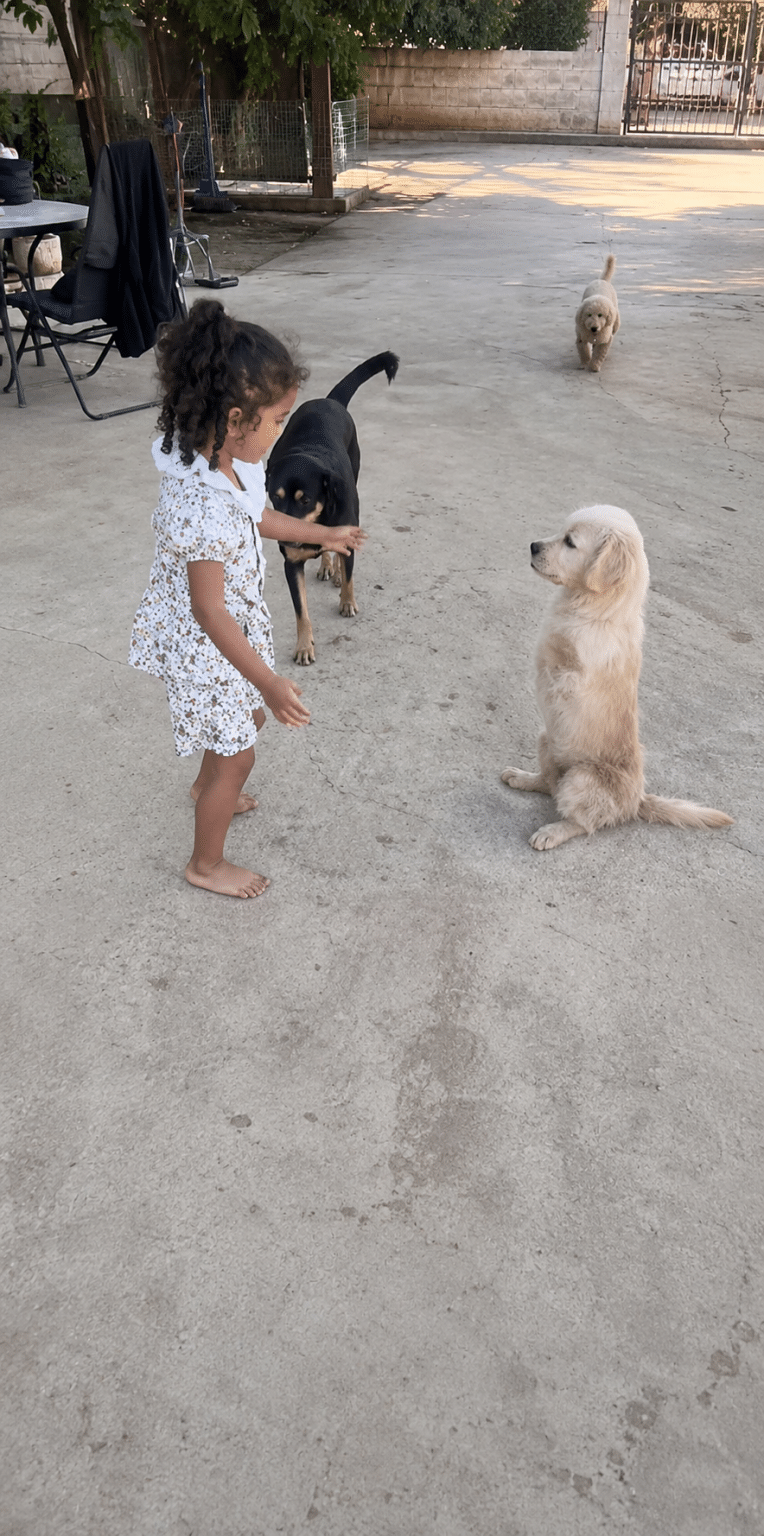
Most people notice his body first.
The small golden dog was born without front legs, leaving him to balance entirely on the two limbs at the back of his body.
Yet the moment he begins moving, attention shifts.
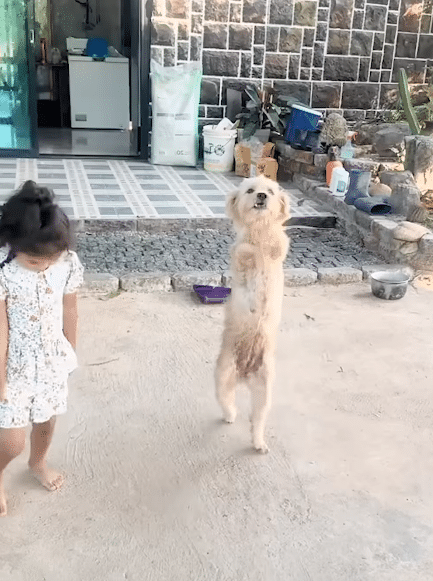
He lifts himself upright, hops across the ground, and follows the people he loves with an energy that makes his physical difference seem like only one part of who he is.
He does not move like other dogs.
But he has found his own way forward.
He Learned to Balance on Two Legs
For a dog born without front limbs, even ordinary movement requires extraordinary coordination.
Standing demands balance.
Changing direction requires careful shifts in weight.
Crossing uneven ground can be far more difficult than moving across a smooth floor.
Yet the little dog has adapted.
He raises his upper body, steadies himself on his hind legs, and moves forward through a series of quick hops. His tail helps express his excitement while his body makes constant adjustments to remain upright.
At times, he pauses to regain balance.
Then he continues.
His movements may look unusual, but they are no longer uncertain. The dog appears familiar with the way his body works and confident within the environments he knows.
Instead of remaining still while others play, he joins them.
Instead of waiting for someone to carry him everywhere, he moves toward the people and experiences that interest him.
Video: Two-Legged Dog Hops Beside His Best Friend and Refuses to Miss the Fun
A Young Girl Treats Him Like Any Other Friend
Much of the dog’s confidence appears while he is beside a young girl.
She plays outside as he hops close behind her, keeping pace in the way he has learned. When she changes direction, he follows. When she stops, he remains nearby, watching for what they will do next.
Their interaction is striking because it feels so natural.
The girl does not appear focused on the fact that the dog has only two legs.
She does not stand at a distance or treat him as though he is too fragile to participate.
She laughs.
She encourages him.
And she includes him.
The dog responds with visible enthusiasm. His tail moves rapidly, and he repeatedly turns toward her as they play together.
There is no need for a dramatic explanation of their bond.
It can be seen in the simple way they stay close.
To the girl, he is not a lesson or an unusual sight.
He is her companion.
Play Became Part of How He Grew Stronger
Movement is not effortless for the little dog.
His hind legs must carry his full body weight, and the muscles supporting his balance work differently from those of a four-legged dog.
But regular activity has helped him become increasingly capable.
Each hop strengthens the parts of his body he relies on most. Every turn teaches him how to reposition himself, while familiar surroundings allow him to move with less hesitation.
Play gives him a reason to practice without making every movement feel like an exercise.
He follows the children.
He explores the yard.
He reacts to voices, activity, and the possibility that something interesting may be happening nearby.
There are moments when he needs to stop or lower his body to rest. That does not take away from his progress.
Adaptation does not mean pretending a physical limitation creates no challenges.
It means finding safe and effective ways to live alongside those challenges.
This dog has done exactly that.
He Wants to Be Included in Every Adventure
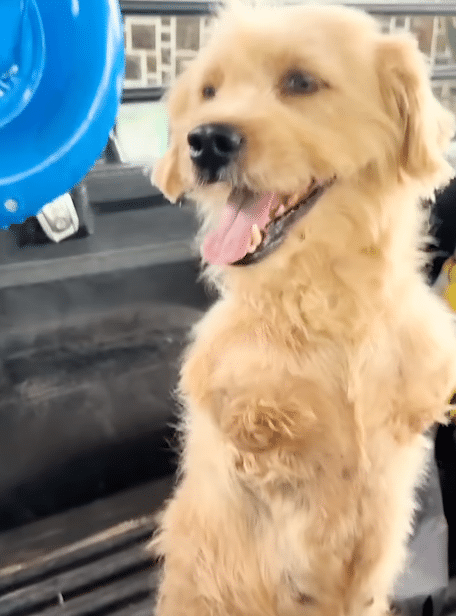
In one part of the video, the little dog appears with children in the back of a pickup truck.
He stands upright on his hind legs, facing the moving air while his ears and fur shift in the breeze. His posture is alert, and his tail moves with excitement as he watches the world around him.
The moment captures how eager he is to be included.
He does not want every experience to happen at a distance.
He wants to follow the people he trusts, observe new surroundings, and participate in family activities.
Travel with any dog—especially one with mobility differences—requires secure restraint and close supervision. A dog who balances on two legs can be particularly vulnerable to sudden movement or uneven surfaces.
What matters most in the scene is not the vehicle itself.
It is the dog’s clear interest in being wherever the children are.
He looks outward with curiosity while remaining close to the companions who have accepted him as part of their lives.
His Body Is Different, but His Needs Are Familiar
Although the dog moves in an unusual way, many of his needs are the same as those of any other companion animal.
He needs affection.
He needs stimulation.
He needs opportunities to play, explore, and rest.
He also needs thoughtful care tailored to his body.
Dogs who rely primarily on their hind legs may place additional strain on their joints, hips, and spine. Comfortable flooring, controlled activity, regular veterinary examinations, and mobility support can help protect them as they grow older.
Some two-legged dogs benefit from custom wheelchairs or other assistive devices. Others move independently for shorter periods and receive help when traveling longer distances.
The best approach depends on the individual animal.
This little dog’s enthusiasm should not hide the importance of that care.
His happiness exists not because his condition has no effect on him, but because the people around him have created a life in which he can participate safely and meaningfully.
He Is Known for His Energy, Not Only His Disability
A physical difference can easily become the first and only thing people remember about an animal.
But spending even a few moments watching this dog reveals much more.
He is curious.
He enjoys attention.
He wants to remain close to the children.
He becomes visibly excited when play begins.
And he appears determined to reach whatever has captured his interest.
His missing front legs explain how he moves.
They do not explain his entire personality.
The dog is not inspiring simply because he survives with two legs. Survival alone is not the full story.
What stands out is the ordinary life he is allowed to enjoy.
He has companionship instead of isolation.
Movement instead of being permanently confined.
Play instead of being treated only as fragile.
His family appears to recognize that he needs both support and freedom—the protection required by his condition and the opportunity to behave like the lively young dog he is.
Acceptance Gave Him Space to Thrive
The young girl’s role in his life offers one of the clearest examples of acceptance.
Children often respond to animals directly.
They notice whether a dog wants to play, whether he follows them, and whether he enjoys being close. They may be less interested in measuring him against an idea of what a dog is supposed to look like.
The girl invites him into her world without demanding that he move in a conventional way.
He hops.
She runs nearby.
And together, they make the necessary adjustments without turning them into the center of every interaction.
That kind of inclusion can be deeply important for animals born with disabilities.
They need assistance, but they also need opportunities to make choices.
They need protection, but they should not automatically be excluded from play or exploration.
The little dog appears happiest when he is part of what everyone else is doing.
His family does not ask him to become a different dog.
They help him live fully as the dog he already is.
His Happiness Comes From the Life Built Around Him
The little golden dog did not choose the body he was born with.
He cannot run on four legs, place front paws on someone’s lap, or move across every surface without difficulty.
But his life contains much more than those limitations.
He has a girl who plays beside him.
People who encourage his movement.
Outdoor space to explore.
And a place where his presence is welcomed rather than treated as a burden.
His story is not proof that love makes every physical challenge disappear.
It shows what can happen when care, adaptation, and acceptance work together.
With the right support, an animal born differently can still form close bonds, express excitement, and take part in the ordinary pleasures of family life.
The dog’s happiness can be seen in the speed of his tail.
In the way he follows the children.
In his eagerness to lift himself and move toward whatever comes next.
Most people may notice his missing legs first.
But those who spend time with him soon notice something else:
A lively little dog who has learned his own way of moving—and a family that makes sure he never has to face the world alone.


