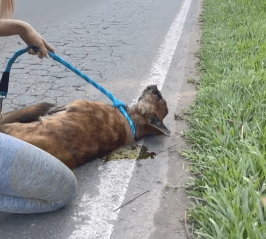
Querubim was lying beside the road when rescuers first noticed him.
The small dog appeared weak, disoriented, and barely able to remain upright. A severe untreated condition had caused extensive damage around both of his eyes, leaving him unable to see.
Yet when the rescue team moved closer, Querubim gathered what little strength he had and tried to escape.
He did not understand that they had come to help.
He only knew that unfamiliar footsteps were approaching—and fear told him to run.
He Tried to Flee Even as His Body Gave Way
Querubim struggled to move along the roadside.
His steps were uncertain because he could no longer see where he was going. He stumbled, paused, and nearly collapsed, but continued trying to create distance between himself and the people approaching.
The rescuers did not chase him aggressively.
They slowed down.
They spoke in calm voices and watched carefully for traffic, obstacles, or anything else that might place the frightened dog in greater danger.
Querubim’s reaction was not treated as aggression.
He was exhausted, injured, and unable to understand what was happening around him. Without sight, every sound and movement may have felt unpredictable.
The team gave him space while gradually closing the distance.
When they were finally close enough, they secured him carefully and lifted his fragile body away from the road.
Querubim remained tense.
But he was no longer alone.
Video: Blind and Frightened, Querubim Tried to Run From the People Who Came to Save Him
The Examination Confirmed That His Sight Could Not Be Restored
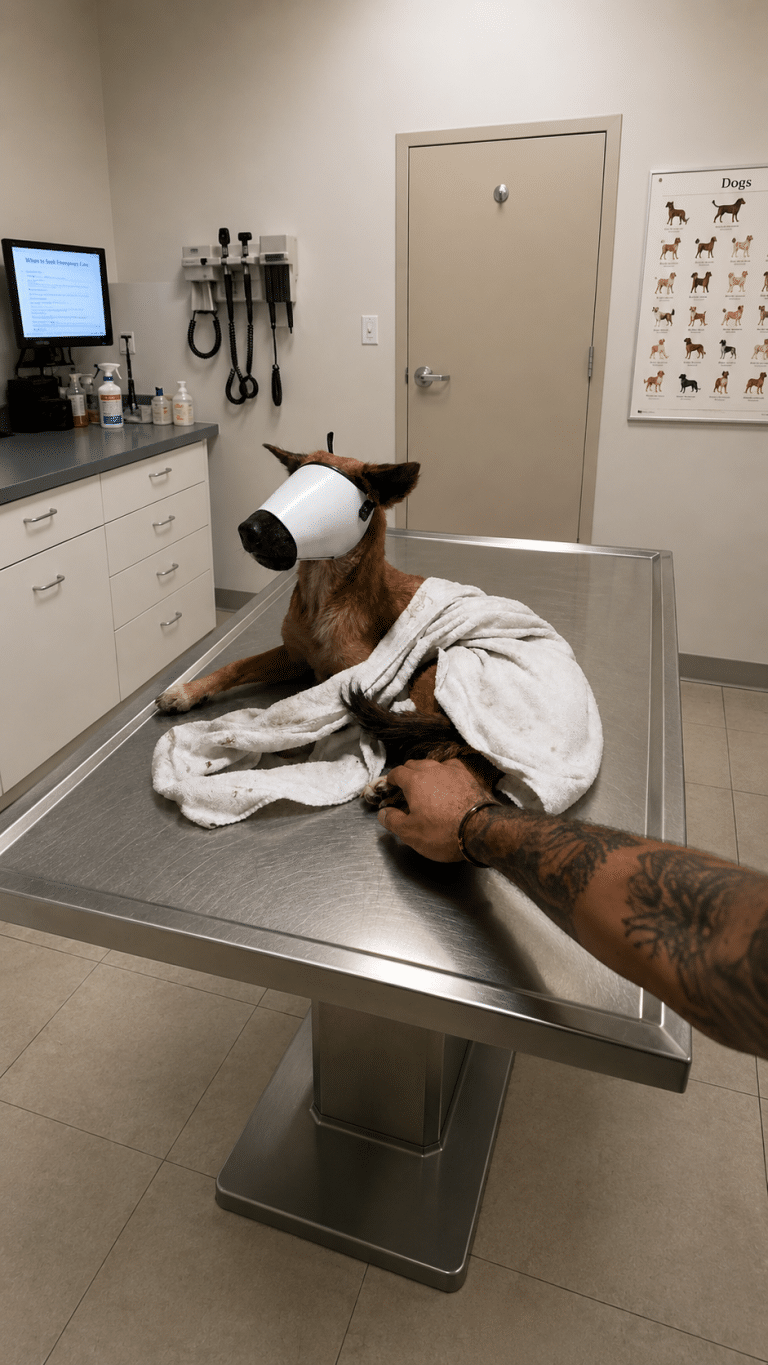
At the veterinary clinic, Querubim was sedated so doctors could examine and clean the injured area without causing additional distress.
The findings were serious.
A prolonged untreated infection and parasitic infestation had caused extensive damage to the tissues around his eyes. According to the rescue account, both eyes had been affected beyond repair.
Querubim would not regain his vision.
The diagnosis was devastating, but the medical team still had urgent work to do. His life was threatened not only by blindness but also by infection, weakness, and the damage surrounding his face.
The injured tissue needed to be cleaned.
Infection had to be controlled.
His hydration, nutrition, and general condition required close monitoring before more advanced treatment could begin.
Doctors could not promise an easy recovery.
But they believed Querubim still had a chance to live without the ongoing pain and danger caused by the untreated condition.
Surgery Gave His Injuries a Chance to Heal
Once Querubim was stable enough, veterinarians prepared him for reconstructive surgery.
The goal was not to restore his sight.
It was to remove damaged tissue, protect the affected areas, and help his face heal as safely as possible.
The procedure required careful planning because the injuries were extensive and his body remained weak. After surgery, swelling and discomfort had to be managed while the team watched closely for complications.
Querubim needed medication.
His wounds required repeated cleaning and observation.
He also needed enough nutrition and rest for his body to begin repairing itself.
Recovery did not move forward smoothly every day.
At times, swelling increased.
Some areas healed more slowly than expected.
The veterinary team adjusted treatment when necessary and continued evaluating him throughout the process.
There was no single moment when everyone could declare that the danger had passed.
His second chance was built one treatment at a time.
Unexpected Touch Was Frightening at First
As Querubim’s physical condition improved, caregivers faced another challenge.
He had to learn how to navigate life without vision.
During his first days in care, unexpected touch often made his body tense. Because he could not see a hand approaching, even a gentle movement could surprise him.
The caregivers began announcing themselves before coming closer.
They spoke his name.
They allowed him to recognize familiar voices and scents.
When touching him, they moved slowly and began in places where he was less likely to become startled.
Querubim was never punished for pulling away.
He was given time to understand each interaction.
Gradually, the familiar routines became reassuring.
The same voices arrived with food.
The same hands changed his bedding and administered medication.
The people around him stopped touching whenever he appeared overwhelmed.
Through repetition, Querubim began learning that not every unexpected sound would lead to danger.
He Learned to Navigate Without Seeing
Blind dogs often rely heavily on scent, sound, memory, and the texture of the ground beneath their paws.
Querubim began using all of them.
At first, he moved slowly through small, carefully arranged spaces. Furniture remained in predictable positions so he could begin memorizing safe routes.
He followed familiar voices.
He learned where his food and water were placed.
He used walls and nearby surfaces to understand the boundaries of each room.
With practice, his movements became more confident.
Querubim could walk toward caregivers when they called him. He ate independently and explored without needing someone to guide every step.
Outdoors, he stayed close to the people accompanying him.
Stairs required patience, but he learned to approach them cautiously and move one step at a time.
His blindness had changed how he experienced the world.
It had not removed his ability to adapt to it.
Trust Appeared in Small, Visible Moments
The change in Querubim’s behavior happened gradually.
At first, he remained alert whenever someone entered the room.
Then he began lifting his head toward familiar voices.
He allowed gentle contact without immediately becoming tense.
Eventually, his tail started moving when caregivers approached.
These were simple reactions, but they represented meaningful progress for a dog who had once tried to flee while barely able to stand.
Querubim began leaning toward people for affection.
He rested comfortably near them.
His playful side emerged as his body grew stronger and his surroundings became more familiar.
The scars across his face remained visible.
They were part of his history.
But they no longer described everything about him.
Caregivers now saw an affectionate dog who responded eagerly when called and enjoyed being included in daily activities.
An Entire Community Helped Rebuild His Life
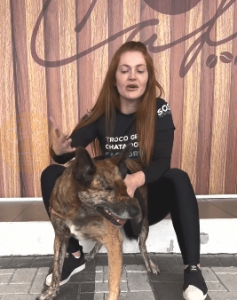
Querubim’s recovery required months of attention.
Veterinarians performed examinations and surgery.
Caregivers administered medication and helped him adapt to blindness.
Supporters contributed toward the substantial cost of treatment.
Each person played a role in keeping his recovery moving forward.
Rescue cases involving severe injuries often continue long after the first emotional video is recorded. Medical bills grow, follow-up appointments are needed, and caregivers must remain available through setbacks that viewers may never see.
Querubim survived because that support did not disappear after the initial emergency.
People continued showing up.
They funded treatment.
They changed dressings.
They guided him through unfamiliar rooms and reassured him when he became frightened.
His transformation was not created by one heroic moment.
It was created by sustained compassion.
Querubim No Longer Runs From the People Beside Him
Today, Querubim moves through familiar spaces with far more confidence.
He recognizes voices.
He responds when called.
He seeks affection and appears comfortable around the caregivers who once struggled to approach him beside the road.
He cannot see their faces.
But he has learned their footsteps, scents, and the gentle way they speak before touching him.
Querubim’s story does not suggest that blindness is easy or that severe trauma disappears completely.
It shows that a dog can build a meaningful life when his environment is adapted to his needs and the people around him remain patient.
He once tried to escape because he could not understand that help had arrived.
His rescuers stayed.
They followed without frightening him, carried him to safety, and continued caring for him through surgery and rehabilitation.
Now, when those same people approach, Querubim no longer struggles to get away.
He turns toward their voices.
His tail begins to move.
And he walks forward with the quiet confidence of a dog who has finally learned that he is safe.


