At first, it was hard to understand what they were seeing.
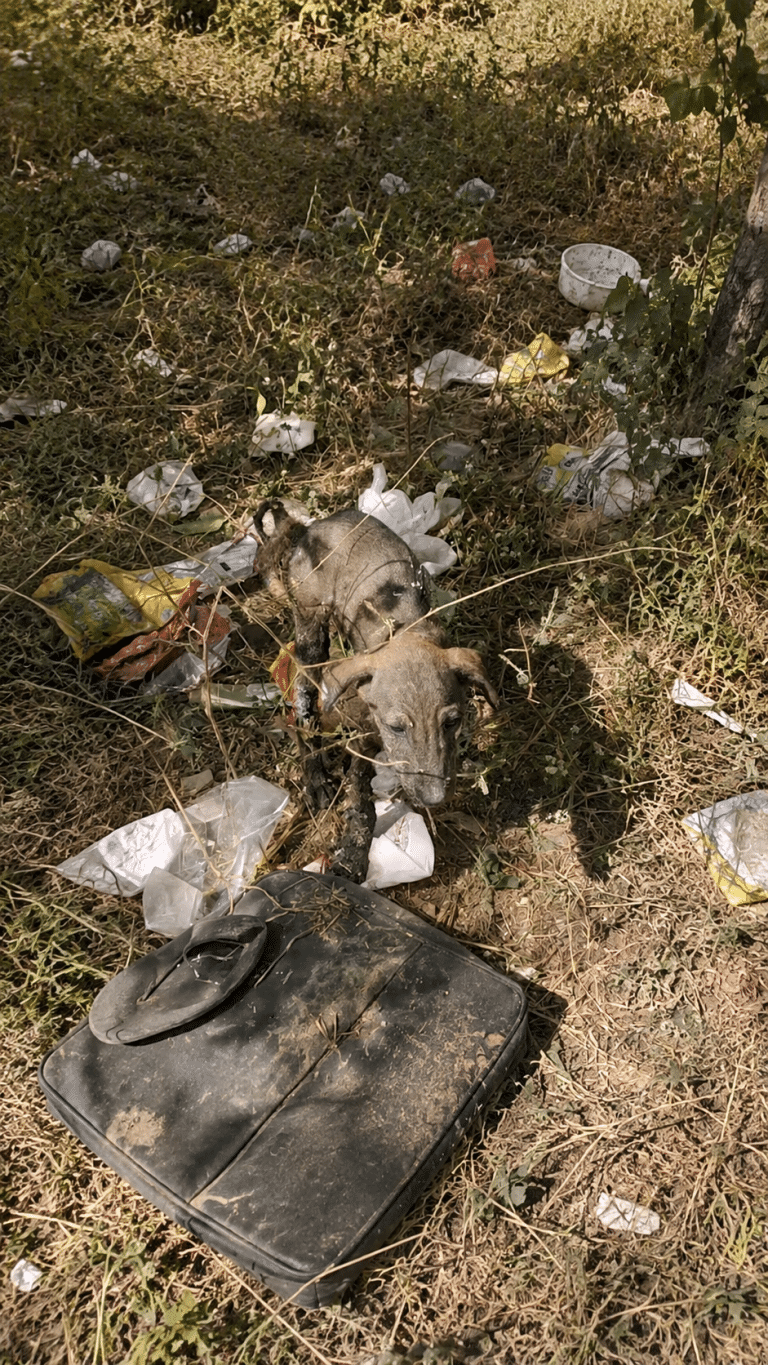
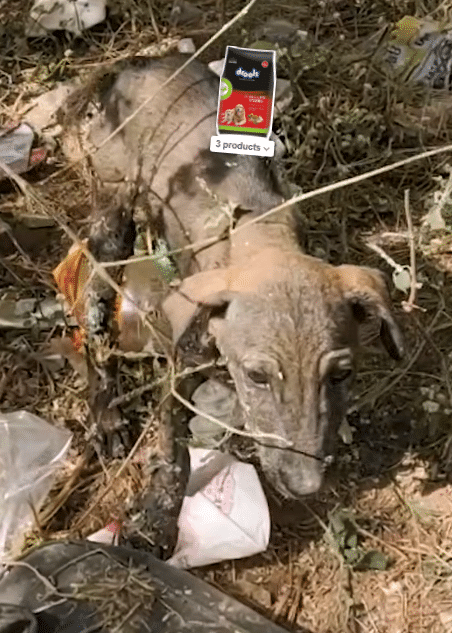
Near a garbage pile and thick overgrown bushes lay a tiny puppy coated almost completely in a black, hardened substance. From a distance, it could have looked like dirt or oil. But the closer rescuers came, the more disturbing the truth became.
This was not mud.
It was tar.
It had hardened over nearly his entire small body, locking his fur into a stiff shell and leaving the puppy barely able to move. He could not walk normally. He could not curl up comfortably. Even the smallest movement appeared difficult.
Alone beside trash and debris, he looked as though he had been trapped there for far too long.
He Was Still Alive — But Barely Able to Move
When the rescuer approached, the puppy showed almost no reaction.
That silence made the scene even harder to process.
Most puppies move toward sound or try to pull away when someone comes close. This little dog remained nearly still, his body restricted by the thick coating around him. The hardened tar had turned his fur into something rigid, limiting ordinary movements and likely adding weight to a body that was already small and weak.
The rescuer wore gloves and knelt down carefully.
Nothing about the situation allowed for rough handling. If the puppy was lifted too quickly, the stiff layers stuck to his fur and skin could cause even more discomfort. So the rescuer moved slowly, speaking softly while checking how best to pick him up.
Then the tiny dog was gently placed into a cardboard box and carried away from the dumping area.
No one knew exactly how long he had been lying there.
But it was clear that without help, he was unlikely to remain there much longer and survive.
Video: Rescuers Spend Hours Removing Hardened Tar From a Tiny Puppy Found Near Trash
The Rescue Had Only Just Begun
Once the puppy arrived at the rescue center, it became obvious that this would not be a simple bath and cleanup.
Tar does not wash away like dirt.
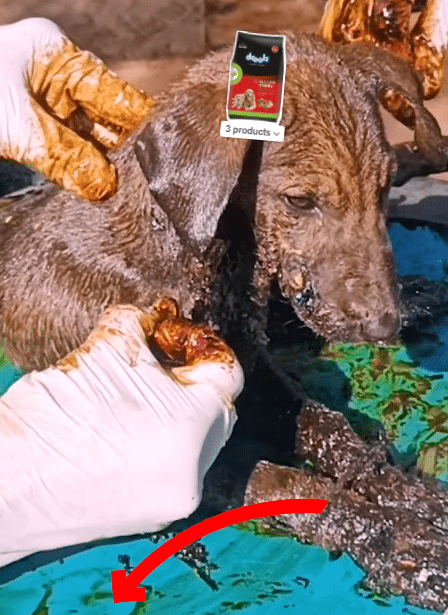
Water alone could do almost nothing against a thick, hardened layer that had already bonded with the puppy’s fur. The team needed to soften it gradually using oil and careful handling, all while protecting the fragile skin underneath.
That meant time.
It meant patience.
And it meant accepting that progress would come in tiny sections rather than one dramatic moment.
Caregivers began applying oil slowly across the blackened areas, allowing it to soak in and loosen the hardened material little by little. Each section had to be worked through gently. Pulling too hard could injure the skin beneath or cause unnecessary pain.
So they did not rush.
They worked a little at a time, wiping away what had softened and then continuing again.
The puppy remained quiet through much of the process, as though he no longer had the energy to resist.
Beneath the Black Coating, a Tiny Dog Started to Reappear
As the hours passed, the transformation became easier to see.
Small patches of fur appeared first.
Then more of his body emerged from under the heavy black shell.
The rescuers could finally begin to understand what the puppy actually looked like—and how vulnerable he had been beneath the hardened tar. He was extremely small, physically drained, and clearly in need of rest, hydration, and food.
Yet even in that condition, he had made it through to the rescue center.
And now, with each section removed, his body gained a little more freedom.
That was one of the most important changes.
This was not only about appearance. The tar had been physically restricting him. As more of it came off, the puppy could begin moving in ways that had been impossible while he was trapped inside that stiff coating.
The black crust had hidden him.
Now the dog underneath was slowly returning.
Then He Did Something Everyone Had Been Hoping For
After so much careful work, the puppy gave the rescuers a moment they would not forget.
He stood up.
Not perfectly.
Not for very long.
But long enough to show that his body was beginning to reclaim movements that had been taken from him.
For a dog who had recently looked almost frozen beside a trash pile, that brief effort meant a great deal. The puppy was still weak, and he would need more care before anyone could know how fully he might recover.
Still, standing even for a short moment changed the mood in the room.
It suggested that the little dog was not simply enduring the cleanup.
He was responding to it.
His body was beginning to work with the help being offered.
And that small sign of strength gave everyone more reason to keep going.
Water, Food, and Rest Became Part of His New World
By the later stages of the rescue, the difference between the puppy at the trash pile and the puppy at the center was striking.
He was able to drink water.
He was able to eat with clear interest.
And he could shift his body more naturally now that large sections of tar had been removed.
Those moments may have looked ordinary to someone watching quickly.
But they were anything but ordinary in the context of what had happened.
Earlier, this puppy had been trapped inside a hardened layer that limited nearly every movement. He had been lying beside garbage, unable to do much more than wait.
Now he had clean water within reach.
Food placed in front of him.
And people watching closely to make sure he remained safe and comfortable.
His recovery was not complete.
Parts of his fur and skin would still need continued care.
But the basic things every young dog should have—nourishment, warmth, and protection—had finally reached him.
What Touched People Most Was How Helpless He Looked
This rescue stayed with viewers because the suffering was so visible in such a small body.
The puppy had not been found running, barking, or searching for help.
He had been found nearly immobilized.
Covered in tar.
Left near garbage.
Barely able to move like a normal puppy.
That image carried a painful weight. It showed how quickly a small animal can disappear into the background of neglect when no one stops to look more closely.
From a distance, someone might have mistaken him for a dirty object or assumed there was nothing alive beneath the black coating.
But one rescuer came closer.
One rescuer realized this was a living animal still holding on.
And that decision changed everything that followed.
He No Longer Looked Like a Puppy Waiting to Be Overlooked
By the end of the rescue video, the puppy no longer resembled the stiff, blackened figure lying near the trash.
He looked like what he had been all along:
A very young dog in urgent need of care.
He was still fragile.
He was still recovering.
And the days ahead would still matter greatly for his healing.
But now he could drink, eat, and move with growing freedom. He no longer had to remain trapped inside the hardened shell that had turned his body into a prison.
The rescuers did much more than remove tar.
They restored comfort.
They restored movement.
And they gave a frightened, exhausted puppy the chance to continue life as something other than a forgotten shape beside a garbage pile.
His rescue is a reminder that some of the most important acts of compassion begin with a second look.
Someone saw what others might have missed.
Someone chose to stop.
And because of that, a tiny puppy who had almost disappeared beneath black tar was able to emerge again—alive, cared for, and finally safe.


