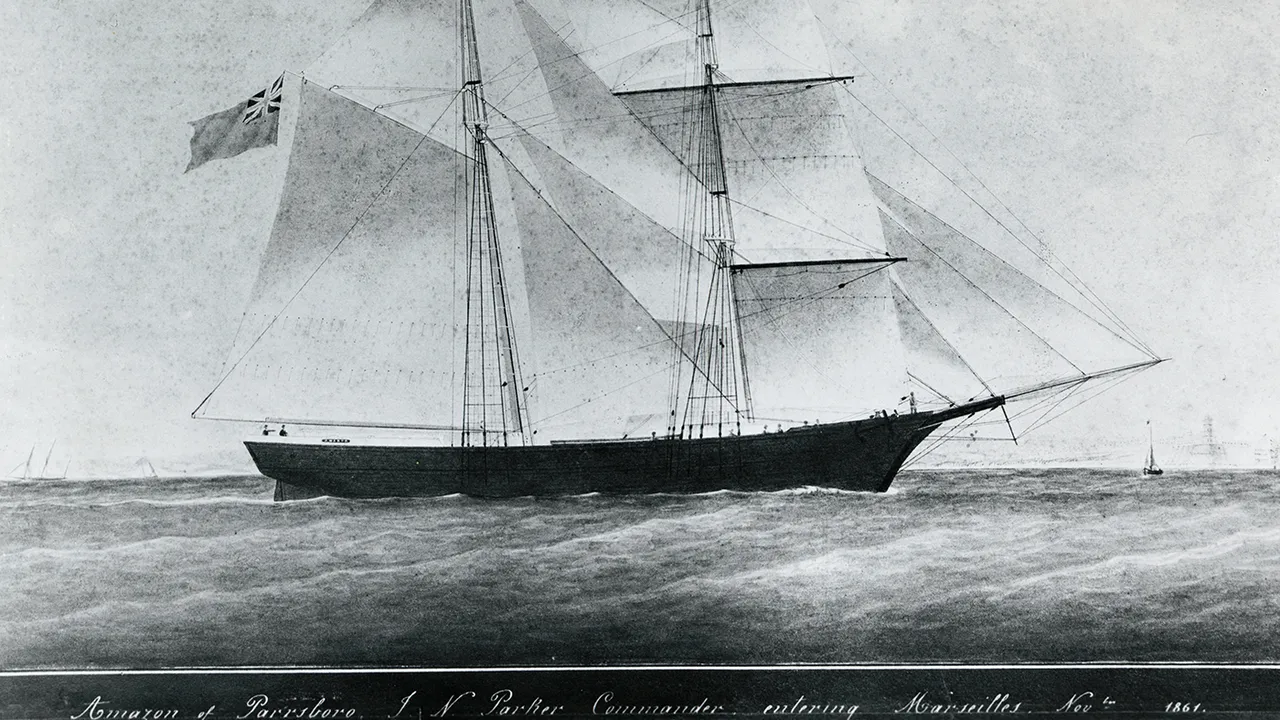
It was early afternoon on December 4, 1872, when the crew of the brigantine Dei Gratia spotted another vessel roughly six hundred miles west of Portugal. The ship was moving under partial sail, but something about her course was wrong—too erratic, too loose, as if no one was holding the wheel.
First Mate Oliver Deveau brought a small party alongside and called out. No answer came back across the water. When the men climbed aboard, they found a vessel that was still seaworthy, her cargo still secured in the hold, her provisions still stowed—and not a single person anywhere on deck or below.
The lifeboat was gone. Every crew member, the captain and his wife and infant daughter were gone with it. The Mary Celeste had been sailing herself.
What followed was one of maritime history’s most carefully examined and most persistently distorted mysteries. The inquiry is documented. The physical evidence was recorded. But the reason ten people climbed off a functioning ship and never reached land has never been conclusively established.
Story status: OPEN. The abandoned ship and missing crew are confirmed historical facts. The cause of the abandonment and the fate of the crew remain unresolved. No surviving evidence proves what happened after the lifeboat left the ship’s side.
The Confirmed Timeline
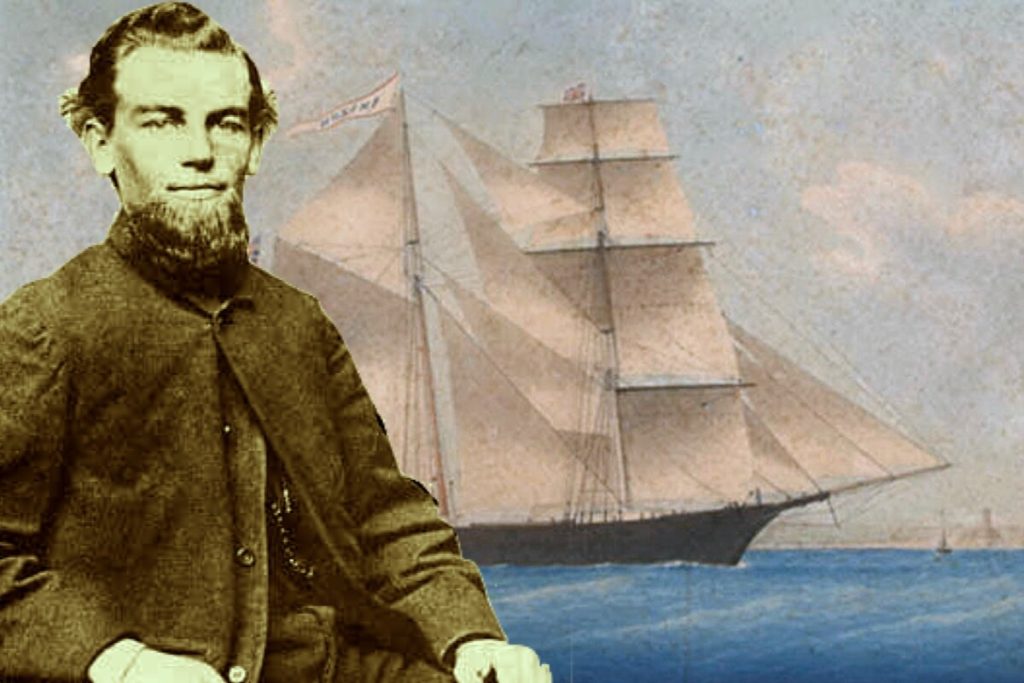
The Mary Celeste was an American brigantine, built in 1861 in Nova Scotia and originally named the Amazon. By 1872 she had changed ownership several times and been re-registered under her new name. That year she was placed under the command of Captain Benjamin Briggs, a 37-year-old Massachusetts mariner with a solid record and no known history of recklessness.
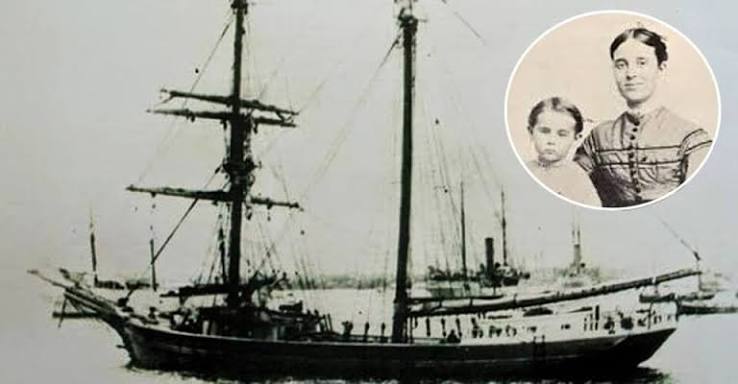
Briggs sailed from New York on November 7, 1872, bound for Genoa, Italy. Aboard were seven crew members, his wife Sarah, and their two-year-old daughter Sophia. The cargo was 1,701 barrels of commercial-grade alcohol, loaded for an American shipper named Meissner Ackermann and Company. The Dei Gratia, captained by David Morehouse—who knew Briggs personally—had departed New York just eight days later, following a similar transatlantic route.
The last entry in the Mary Celeste‘s log was dated November 25, 1872, and placed the ship near the Azores, specifically noting a position north of Santa Maria Island. The ship was then found on December 4, approximately 590 miles further east. This means that for at least nine days, the vessel had been adrift or sailing without her crew.
When Deveau’s party boarded, they conducted a systematic inspection. The ship was upright and largely intact. The main hatch was in place. The cargo hold had roughly three and a half feet of water in it—significant, but not unusual for a vessel that had been unmanned in Atlantic conditions. The pump’s sounding rod was found lying on deck rather than stowed, suggesting it had been used to measure water levels shortly before abandonment. The binnacle—the compass housing—had been knocked out of position. The ship’s clock and sextant were missing, items a navigator would carry when leaving. The chronometer was also gone. A rope was found trailing from the stern, frayed at the far end as if something had been towed and then cut loose or broken free.
Critically: the ship’s yawl—a small secondary boat typically kept on deck—was absent. The main lifeboat was also missing. Someone had left the ship deliberately and taken the means to do so.
The Dei Gratia crew brought the Mary Celeste into Gibraltar, where the British Vice Admiralty Court opened a formal inquiry. That inquiry ran from December 1872 into early 1873 and produced a detailed record—one of the strongest documentary anchors in this case.
YOUTUBE EMBED 1 — PRIMARY SEARCH QUERY: “Mary Celeste Smithsonian documentary”
What Investigators Found at the Inquiry
The Gibraltar inquiry was led by Solly Flood, the Attorney General for Gibraltar, who served as Advocate General for the court. Flood was skeptical of the Dei Gratia crew from the outset. He suspected foul play—specifically that Morehouse and his crew might have conspired with Briggs or attacked the Mary Celeste for the salvage payment. His suspicion shaped the inquiry’s tone even as the physical evidence failed to support it.
An examination of the ship was conducted, and a doctor named J. Patron and a surveyor named Ricardo Portunato inspected the vessel. They found stains on the deck and on the captain’s sword that Flood initially suggested could be blood. Later analysis determined the stains were not blood. The sword showed no signs of recent violence. The structural condition of the ship was consistent with weather and extended sailing without crew, not with a fight or attack.
The inquiry confirmed several important facts. The cargo—though one account notes that nine barrels were later found to be empty or leaking—was largely intact and still consigned to its destination. The ship’s stores of food and fresh water were sufficient. There was no evidence of fire aboard. The rigging, while damaged in places, showed weather-related wear rather than deliberate destruction.
Flood never charged anyone. The Dei Gratia crew received a salvage award, though a reduced one—the court’s unease about the circumstances never fully dissipated, even without supporting evidence. The inquiry closed without identifying a cause of abandonment.
The record from this inquiry is the most reliable documentary source in the case. It describes what was found on the ship, names the witnesses, and records the physical condition of the vessel. Anything that contradicts this record—and several popular claims do—should be treated as addition rather than evidence.
The Strongest Physical Clue: The Sounding Rod and the Missing Lifeboat
Among all the physical details recorded during the inquiry and Deveau’s initial inspection, two stand out as the most significant for understanding what happened in the hours before the ship was abandoned.
The first is the sounding rod. A sounding rod is a measuring instrument used to determine water depth in the hold. Finding it loose on deck—rather than stored—indicates that someone had recently used it to check how much water had entered the ship. If water was rising unexpectedly, or if the pump was not working properly, that reading would have produced alarm. The pump itself was reported to be in poor working order, with one account suggesting the pump’s leather valves had been removed or had failed. A malfunctioning pump and a sounding rod lying loose on deck together suggest a crew actively trying to assess a flooding situation.
The second is the missing lifeboat. The Mary Celeste carried a yawl on deck. That yawl was gone. The trailing rope found at the stern was frayed—or in some accounts, cut—at its end. The most straightforward reading of these details is that the yawl was launched, that a line was used to keep it close to the ship, and that at some point that line parted. Whether it was cut deliberately or snapped under tension is not established. But the physical sequence—pump trouble, sounding rod out, navigational instruments taken, lifeboat launched, rope trailing—reads like a temporary evacuation that was meant to be followed by a return.
This is the physical core of the leading theory. It does not require pirates, conspiracy or supernatural forces. It requires a crew that made a decision under pressure and then lost contact with their ship.
The Leading Explanation: Vapor, Panic and a Broken Line
The explanation that best fits the physical evidence was developed and refined over decades, drawing on maritime expertise, cargo chemistry and the specific details recorded at Gibraltar.
The cargo was commercial alcohol—1,701 barrels of it. This was not drinking spirits but industrial-grade denatured alcohol, which produces vapor differently from wine or whiskey. Some researchers and maritime historians, including those who have examined the case for institutions such as the Smithsonian and in peer-reviewed maritime history publications, have pointed to the following reconstruction:
Nine of the barrels were found empty or significantly depleted. Red oak barrels are known to be more porous than white oak, and the Mary Celeste‘s manifest listed barrels that may have been constructed from red oak staves. A surge of pressure during the voyage—caused by temperature change or compression in the hold—could have pushed vapor through the barrel seams. This would not necessarily cause a fire, but it could produce a concussive “burp” of vapor when the hatch was opened, or a sudden and alarming smell strong enough to suggest imminent explosion.
Captain Briggs had no prior experience carrying this type of cargo. A man who had spent his career moving more conventional freight might well have interpreted a vapor release as the prelude to a catastrophic fire or explosion. The decision to abandon ship temporarily—keeping the lifeboat close on a line, waiting for the hold to vent—would have been rational under those circumstances, if overly cautious.
Then the line parted. The ship, still partially rigged, caught wind and began to move. The lifeboat, with ten people aboard, could not keep pace with a brigantine running before the wind. The gap widened. By the time the crew understood what was happening, the Mary Celeste was out of reach.
This reconstruction accounts for the navigational instruments being taken (the crew planned to return), the pump sounding rod being on deck (they had just checked water levels), the log stopping on November 25 (nine days before discovery), and the trailing rope (the lifeboat’s tether). It does not explain why the lifeboat—with ten people, provisions likely limited—was never found and why no survivors ever reached land or were picked up at sea.
YOUTUBE EMBED 2 — SECONDARY SEARCH QUERY: “Mary Celeste maritime investigation theory”
The Theory That Competes With It
The vapor-and-panic explanation is the leading account among maritime historians and researchers who have engaged seriously with the inquiry record. But it is not the only coherent theory, and intellectual honesty requires presenting its closest competitor.
Some researchers have argued for a waterspout or severe weather event as the proximate cause. The Atlantic in late November can produce sudden and extreme weather, and a waterspout—a rotating column of water—could flood the hold rapidly without damaging the hull in ways that would be obvious to later investigators. Under this scenario, the crew saw an incoming waterspout or a sudden violent squall, took a reading of rising water in the hold (explaining the sounding rod), found the pump unable to keep pace, and launched the lifeboat to avoid being below deck if the ship went under.
This theory also accounts for the missing lifeboat and the quiet aftermath. A waterspout or severe sea state that prompted evacuation could just as easily have swamped a small yawl in open water, leaving no survivors and no trace of the boat.
Where this theory is weaker: there is no entry in the ship’s log describing extreme weather in the final days before November 25, though the log ends before the likely abandonment date. Weather records from the region for late November 1872 are incomplete. The Dei Gratia encountered rough weather in the same general area, which some have cited as support for a weather event, but the Dei Gratia‘s crew survived without incident, which reduces the strength of that comparison.
Both theories share the same core structure: a crew that left voluntarily in a moment of perceived emergency, took to a small boat, and died at sea before reaching any port or shipping lane where they might be found. Neither theory requires malice. Neither requires the supernatural.
Theories the Evidence Weakens
Several explanations have circulated widely in popular retellings, and each deserves a clear accounting of why the physical record does not support them.
Mutiny. Flood considered it. The inquiry examined the physical evidence for signs of violence. The stains were not blood. The sword showed no evidence of use in combat. No crew member was known to have a grievance serious enough to be documented, and Briggs had sailed with several of the men before. The inquiry could not prove mutiny, and later examination has not added evidence that was missing in 1873.
Piracy. A pirate attack that left the cargo and ship entirely intact, took only the people, and left no signs of a struggle is not consistent with how piracy operated in the Atlantic in this period. Pirates in the 1870s Atlantic were not a documented operational threat in the waters where the Mary Celeste was found. The theory requires a highly specific and unrecorded method of attack with no supporting evidence.

An arrangement between Briggs and Morehouse. This was Flood’s implied suspicion—that the two captains had orchestrated a fraud to collect salvage money. The problem is that the salvage payment was modest and the legal risk substantial. Briggs’s wife and daughter were aboard, a detail difficult to square with a premeditated scheme. Flood never found evidence to support the theory, and subsequent researchers have not either.
Sea creature attack or paranormal intervention. These claims appear in popular retellings but have no anchor in the inquiry record, the physical inspection, or any contemporaneous account. They are cultural accretions, not evidence.
The Detail That Still Does Not Fit
The vapor theory is compelling. The weather-event theory is coherent. And yet one detail in the case resists a clean resolution: the complete disappearance of the lifeboat and every person aboard it.
Ten people—seven adult seamen, a captain, a woman, and a two-year-old child—left the Mary Celeste in a small yawl and were never seen again. No bodies were recovered. The lifeboat was never found. No debris was reported. No coastal community in the Azores, Portugal, Spain or North Africa recorded the arrival of survivors from the vessel. No ships in the area reported picking up anyone.
A small open boat in the Atlantic in late November carrying ten people, with limited provisions and no shelter, would face extreme conditions. Death from exposure, capsizing in rough weather, or exhaustion and dehydration over several days are all consistent with a complete disappearance. But the total absence of any trace—no wreckage, no single survivor, no account from any rescue—has left the case permanently open.
The vapor theory requires the crew to have drifted long enough and far enough from the ship that neither the boat nor its occupants were ever found. That is a possible outcome in open Atlantic waters with strong currents. But it is not a certain one, and the silence of the historical record on this point is the part of the file that cannot be neatly closed.
It is also worth noting that the famous image of the Mary Celeste as a ghost ship with a half-eaten breakfast on the table, cups of tea still steaming, and a meal interrupted mid-bite is a fictional invention. That image originated in a short story published in 1884 by a then-unknown writer named Arthur Conan Doyle, writing under a pseudonym. The story, titled “J. Habakuk Jephson’s Statement,” changed the ship’s name slightly and dramatized a fictional account of the voyage. It was not presented as journalism or history, but elements of it filtered into popular retellings as if they were fact. The inquiry record describes no such scene. Deveau’s account does not mention an untouched meal. The fictional details have been attached to the real case for over a century.
How the Story Became Something Larger Than the File
The Mary Celeste entered popular culture through a combination of genuine mystery and deliberate storytelling. Conan Doyle’s fictionalized account was the first major amplification, but it was not the last. The case attracted newspaper coverage in the late 19th century that sometimes blurred the line between inquiry record and invention. By the time writers in the 20th century took up the story, the fictional additions had been repeated often enough that some authors treated them as established fact.
Television documentaries, paranormal speculation and internet retellings added further layers—sea monsters, time distortions, Bermuda Triangle connections (the ship was not near the Triangle), alien abductions and government cover-ups. None of these additions have any connection to the Gibraltar inquiry or the ship’s physical evidence. They are what happens when an unresolved and genuinely eerie case passes through enough retellings without a correction mechanism.
What makes the Mary Celeste endure as a story is not the paranormal speculation. It is the documented reality: a working ship, capable and loaded, found sailing herself in the Atlantic, with every person who should have been aboard simply gone. That documented reality is strange enough without invention. The inquiry is real. The missing people are real. The unanswered question is real.
Folklore researcher and maritime historian scholarship—including work published by the Peabody Essex Museum, which holds some of the most significant American maritime archives—has consistently pointed to the same conclusion: the case is genuinely unresolved, the vapor theory is the strongest evidence-based explanation, and the gap between what the evidence shows and what later retellings claim is substantial.
Where the Case Stands Now
The file on the Mary Celeste has been open for more than 150 years. What it contains is specific, and it is worth being precise about what falls on each side of the evidence line.
What is confirmed: The ship was found abandoned on December 4, 1872. The lifeboat was missing. The cargo was largely intact. The navigational instruments were gone. The sounding rod was on deck. A rope trailed from the stern. The last log entry was November 25. Ten people—Benjamin Briggs, Sarah Briggs, Sophia Briggs, and seven crew members—were never found. The Gibraltar inquiry produced a formal record and awarded salvage to the Dei Gratia crew. The inquiry did not identify a cause of abandonment.
What was reported but not verified: The specific condition of the pump valves is described differently in different accounts. The exact state of the nine empty barrels and whether they were structurally compromised is not definitively established in the inquiry record. The behavior of the weather between November 25 and December 4 in the ship’s estimated path is not fully documented.
What the leading explanation says: A vapor release from the alcohol cargo—possibly accompanied by a concussive pressure event when the hold was opened—caused the captain to order a temporary evacuation. The crew took the lifeboat, kept a line to the ship, and lost contact when the line parted or broke. The ship sailed on. The lifeboat did not survive the open Atlantic.
What remains unproven: The precise trigger for abandonment. The exact moment the crew lost contact with the ship. What happened to the lifeboat and its ten occupants. Whether anyone survived even briefly after separation. Where the lifeboat came to rest.
The evacuation theory remains the strongest fit for the physical evidence. It requires the fewest unsupported assumptions. It accounts for the navigational tools being taken, the sounding rod being used, the lifeboat being launched, and the trailing rope. What it cannot answer—and what no theory can answer with the current evidence—is the silence that follows the lifeboat leaving the ship’s side.
The missing yawl is the clue that keeps this file open. If that boat had washed ashore, if a single survivor had been pulled from the water, if one piece of wreckage had been matched to the Mary Celeste‘s crew—the case would likely be considered resolved. Instead, the trail ends at the water’s edge, where the rope frayed and the ship moved on without them.
The Mary Celeste eventually reached Gibraltar under the Dei Gratia‘s prize crew. She was repaired, returned to service, and changed hands multiple times over the following decade. She ran aground off Haiti in January 1885 in what some investigators later suspected was a deliberate insurance fraud by her then-captain. She was examined and found to have been loaded with near-worthless cargo despite a high insurance valuation. The captain was charged but not convicted. The ship was left on the reef and eventually broke apart.
The vessel that once sailed herself across the Atlantic ended in the shallows of a Caribbean bay, unmourned and deliberate in her final resting. The ten people who left her in 1872 left no such trace. Their file remains open, the evidence is mapped, the leading theory is plausible—and the lifeboat has never been found.

