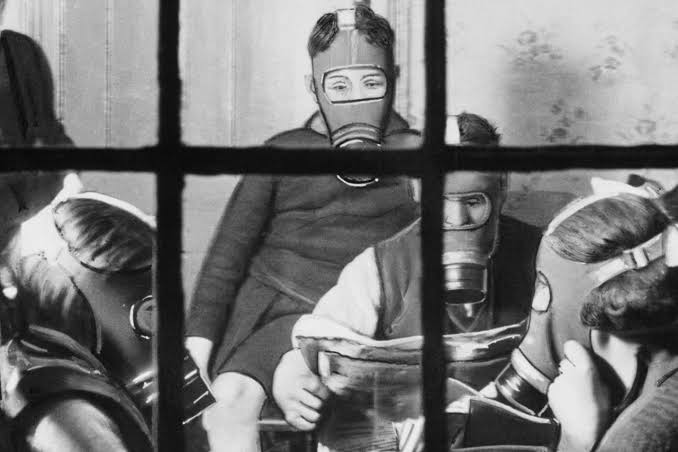
It was an ordinary late-summer night in Mattoon, Illinois. The kind of night when windows stay open because the air inside is still and warm, and the war news coming over the radio makes sleep difficult anyway. The year was 1944. Most of the young men in town were overseas, and the people left behind were living on ration books, factory shifts and a low-grade anxiety that had been present for three years.
Then a woman opened her bedroom window and noticed a strange odor—sweet, slightly floral, not entirely unpleasant—before her legs went numb. She would later tell police she saw a figure outside. By the following morning, her report had become the first of what would grow into dozens of similar accounts across a single Illinois city over the course of two weeks.
The story became known as the Mad Gasser of Mattoon.
What Witnesses and Authorities Reported
The first documented complaint reached Mattoon authorities on the evening of September 1, 1944. A woman on Urban Avenue reported that she had been unable to stand after noticing a peculiar odor entering her home. Her husband, who arrived later, reported a mild version of the same sensation. Neither was hospitalized. Police took the report and continued patrols.
By September 5, the Mattoon Daily Gazette had run a front-page story under the headline identifying a “Mad Anesthetist” who was allegedly stalking the town’s homes. The timing of that article matters. Before it appeared, a small number of complaints had been logged. In the days that followed its publication, the number of reports climbed sharply—a pattern that investigators would later treat as significant.
Through the second and third weeks of September 1944, police received between twenty and thirty-five separate complaint reports, depending on which count is used, from residents describing odors characterized as sweet, like flowers or ether, accompanied by nausea, weakness in the legs, temporary numbness, or a burning sensation in the mouth and throat. Some witnesses reported seeing a dark figure near their windows or in the surrounding streets. No description was consistent enough to produce a usable composite. No physical evidence was collected at any scene that confirmed the presence of a foreign chemical agent at the time of the reported symptoms.
Local police, the Mattoon fire department and the state’s Bureau of Criminal Investigation all conducted patrols and investigations. The FBI was notified. Thomas V. Wright, the city commissioner, and local health officers made public statements asking residents to stay calm and report anything suspicious. The increased official presence did not stop the reports; if anything, the combination of visible patrols, daily newspaper coverage and public statements sustained the atmosphere in which complaints continued to arrive.
By September 13, the reports had begun to slow. By the end of September, they had effectively stopped. No arrest was ever made. No suspect was named by investigators. The case remained officially unsolved.
YOUTUBE EMBED 1 — PRIMARY SEARCH QUERY: “Mad Gasser of Mattoon documentary”
The Physical and Documentary Clues
Several physical items were submitted to or examined by authorities during the investigation. They have become part of the evidentiary record, but none of them resolved the central question.
A piece of cloth described as pink or off-white was found near one of the reported incident locations. A resident submitted it to police as potentially contaminated material—possibly a rag used to apply chemical. When the cloth was tested by state chemists, no identifiable chemical agent was recovered from it. Investigators concluded it could not be treated as evidence of an attack.
State and local chemists conducted air-quality assessments in the days following the most reported incidents. No airborne chemical compound consistent with an anesthetic or incapacitating gas was measured at levels sufficient to cause the reported symptoms. Officials from the Illinois State Police and health department publicly stated that laboratory analysis had not supported the presence of a targeted chemical agent.
That conclusion was contested by some residents. Several pointed to the Atlas Imperial Decorating Company and other industrial facilities operating in and near Mattoon during the wartime production peak. The town’s industrial base had expanded significantly under war contracts. Factories were running longer shifts and processing materials—including certain solvents and chemical compounds—that could produce intermittent odors under specific wind and atmospheric conditions. Wartime production records and contemporaneous factory inspection reports have not been located in the public record in sufficient detail to establish exactly what was being processed or emitted on the relevant nights in September 1944. That absence of environmental measurement is one reason the industrial-odor hypothesis, while plausible, cannot be treated as a confirmed explanation.
The documentary record that does survive is primarily journalistic. The Daily Gazette‘s coverage has been preserved and analyzed by later researchers. The newspaper printed the early reports prominently, used language that implied an active criminal at large and, in the view of subsequent investigators, may have contributed to the spread of reports by establishing a shared template—odor, weakness, dark figure outside—that later complainants matched in their own accounts.
How the Reports Spread and Changed
One of the most carefully documented features of the Mattoon episode is the geographic and temporal clustering of the reports. They did not occur evenly across the city. They concentrated in specific neighborhoods during specific days and then subsided, a pattern consistent with what researchers in social psychology and epidemiology call community suggestion—situations in which people living under stress, sharing information through a common medium and alert to a perceived threat, begin to notice and attribute ordinary physical sensations to an extraordinary cause.
The Daily Gazette coverage served as the primary information channel. Each new story named the threat, described the symptoms and quoted official concern. Residents who read those accounts and then noticed a smell, headache or mild dizziness had a ready explanation available. That does not mean the symptoms were imaginary—anxiety itself can produce real physical sensations, and mild industrial odors, even below toxic thresholds, can irritate mucous membranes—but it does mean that separating genuine environmental exposure from anxiety-induced response was impossible without environmental measurements taken at the time of each complaint.
The reporting also evolved. The earliest accounts focused on odor and physical weakness. Later accounts added the detail of a dark figure outside. That progression—from sensory complaint to criminal sighting—is consistent with narrative escalation in a community event but cannot be used to dismiss the earlier reports as fabricated. Witnesses in the first days had no reason to construct a sighting; that detail appeared only after the “Mad Anesthetist” framing was established in print.
By the time state officials began issuing skeptical statements in mid-September, a division had appeared within Mattoon. Some residents accepted the reassurance and the reports slowed. Others, particularly those who felt their own experiences had been real, resented what they interpreted as dismissal. That internal disagreement was documented in local coverage and has been noted by later researchers as a characteristic feature of community-wide fear episodes.
The Leading Explanation—and Its Strongest Contradiction
The most systematic early analysis of the Mattoon case was published in 1945 by Donald M. Johnson, a sociologist at the University of Illinois, in the Journal of Abnormal and Social Psychology. Johnson reviewed the complaint records, the newspaper archive and the investigative reports available to him. He concluded that the episode was best understood as a case of mass hysteria—a term used at the time, though now replaced in clinical and academic settings by the more precise phrase “mass psychogenic illness” or “collective anxiety episode.”
Johnson’s argument rested on several observations: the rapid increase in reports following newspaper coverage, the geographic clustering of complaints, the absence of physical evidence confirming a chemical agent and the demographic profile of the complainants, who were predominantly women in households without adult male partners—a feature Johnson interpreted through the lens of wartime social stress. His conclusion was that the combination of wartime anxiety, press amplification and community suggestion had produced a self-sustaining episode of reported symptoms that did not require an actual attacker.
That interpretation became the dominant scholarly position for decades. It was reinforced by later researchers in sociology and psychology who revisited the case using updated frameworks. The most frequently cited contemporary reanalysis, produced by researchers including Ronald Bartholomew, applied modern criteria for mass psychogenic illness and found the Mattoon episode consistent with known patterns.
The strongest contradiction to this reading lies in the data Johnson himself collected. A minority of the earliest reports—those filed before the newspaper coverage that Johnson identified as the triggering medium—came from households that had no documented contact with the Gazette story before they made their complaint. If the newspaper was the vector through which the episode spread, those pre-coverage reports need a separate explanation. Johnson addressed this by suggesting that preliminary word-of-mouth or earlier, smaller articles had already begun a community-level information loop before the major front-page story appeared. That is plausible, but it is not proven, and it represents an assumption rather than a documented chain of transmission.
No surviving environmental data from September 1944 Mattoon can definitively rule out the possibility that some complainants, particularly in the earliest days, were exposed to real industrial emissions at irritating but below-toxic concentrations. The mass-psychogenic explanation is the best-supported theory in the scholarly literature. It is not the same as a proven explanation.
YOUTUBE EMBED 2 — SECONDARY SEARCH QUERY: “Phantom Anesthetist Mattoon mass hysteria study”
The Alternative Explanation—Industrial Emissions and Wartime Production
The industrial-odor hypothesis has been raised in various forms since the original investigation. Mattoon in 1944 was a manufacturing town operating at wartime capacity. The Atlas Imperial Decorating Company, located within the city, worked with petroleum-based solvents and other compounds that could, under specific atmospheric conditions—temperature inversions, low wind, particular weather patterns—produce ground-level odor concentrations detectable and irritating to residents in nearby neighborhoods.
The case for industrial emissions as at least a partial trigger rests on the geographic clustering of complaints, which showed some correlation with neighborhoods downwind from industrial sites, and the timing of reports, many of which occurred during evening hours when cooler air can trap ground-level emissions more effectively. Some researchers have argued that if even one or two of the earliest household exposures involved genuine industrial odor at an irritating but non-toxic level, those experiences would have been real, and the community response would have begun from a factual foundation rather than a purely psychological one.
The limitation of this hypothesis is significant: no environmental measurements from the relevant nights exist. Without data on what was being emitted, in what quantities and under what atmospheric conditions on the specific evenings of the first reports, the industrial-emission theory cannot be elevated beyond a plausible contributing factor. Subsequent investigators who pursued factory records found them incomplete for the relevant period. Wartime production pressures meant that emissions tracking was not a priority for regulators or manufacturers in September 1944 Mattoon.
It is worth noting that these two explanations—collective anxiety and industrial emission—are not mutually exclusive. A real environmental trigger at low concentration could produce genuine mild symptoms in the most sensitive individuals, establish the first reports and then be amplified many times over by the social and media mechanisms Johnson described. That combined model has been proposed by researchers and is arguably more consistent with the full data set than either a pure mass-psychogenic explanation or a pure industrial-exposure explanation taken alone.
The Detail That Still Does Not Fit
The Mattoon record contains one element that neither the mass-psychogenic explanation nor the industrial-emission hypothesis fully resolves: the sightings of a dark figure near windows.
These sightings were not universal. They appeared in a minority of the accounts, generally those filed after the newspaper framing had established the “Mad Anesthetist” narrative. The standard reading is that the figure is a narrative artifact—a visual element that emerged once the story had been given a human criminal as its central character. That reading is consistent with what is known about how community fear narratives develop.
But at least two of the witness accounts describing a figure were filed early enough in the episode that the newspaper framing cannot be easily cited as the sole source of that detail. Neither report was followed up with a physical search that produced evidence of an intruder. Neither produced a consistent description. Police found no tracks, no discarded equipment and no corroborating evidence at any of the locations where a figure was reported.
The absence of physical evidence does not mean no one was there. It also does not mean someone was. What it means is that this portion of the record—the sightings—remains in the documented-but-unverifiable category. The file does not contain enough information to close that question, and the researchers who have written most carefully about the Mattoon case have generally acknowledged it as a residual problem rather than claiming it is fully explained by their preferred theory.
How the Event Entered Strange History
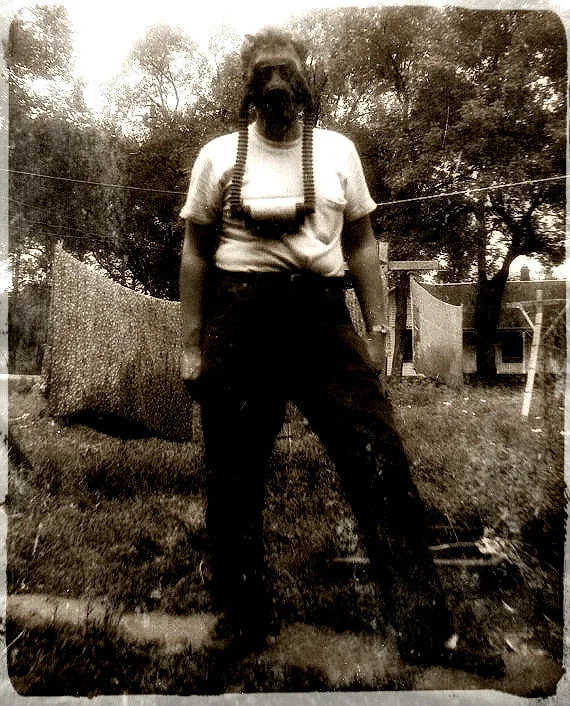
The Mad Gasser of Mattoon did not stay inside academic journals. The case was taken up by writers and broadcasters interested in anomalous events in the decades following Johnson’s 1945 paper. Each retelling made choices about which details to emphasize and which to omit.
Popular treatments tended to preserve the attacker narrative, describe the symptoms in more dramatic terms than the original reports and downplay or ignore the investigative conclusions. The “Mad Gasser” as a figure—an unknown poisoner prowling wartime streets—was a compelling character. The more accurate version, in which investigators found no gasser and the leading explanation involves collective anxiety, was less suited to the kind of storytelling that anomaly-focused publications favored.
Later internet-era treatments introduced new claims not present in the original record, including theories about government experimentation and enemy sabotage. None of these claims have been supported by documents produced by the relevant agencies, and the sabotage theory in particular was examined and dismissed by federal investigators at the time. The FBI’s involvement in the original investigation did not produce evidence of foreign action.
Johnson’s analysis itself became a subject of criticism over the years. Some critics argued that the “mass hysteria” framework was applied in ways that dismissed the genuine experiences of working-class women without adequately testing alternative explanations. That critique has merit as a methodological observation, even if it does not establish that an attacker existed. The stronger version of the criticism is simply that the evidentiary standard Johnson applied to the industrial-emission hypothesis was less rigorous than the evidentiary standard he applied to the collective-anxiety explanation—a point that later researchers have noted without necessarily overturning his overall conclusion.
What the Evidence Actually Supports
The confirmed record of the Mattoon episode is this: in September 1944, residents of a wartime Illinois city filed between twenty and thirty-five reports describing unusual odors and physical symptoms. Local police, state investigators, health officials and federal authorities investigated. No attacker was identified. No chemical weapon or delivery device was recovered. No environmental measurements from the relevant nights survive to establish or rule out industrial emission as a cause. The Daily Gazette‘s front-page coverage preceded a sharp increase in reports, a pattern consistent with press amplification of a community anxiety episode. The episode ended as abruptly as it began, which is also consistent with known patterns of collective anxiety, and consistent with the possibility that whatever environmental conditions existed in early September had simply changed by late September.
The mass-psychogenic explanation, updated from Johnson’s original framing, remains the best-supported interpretation in the scholarly literature. The industrial-emission hypothesis is a plausible contributing factor that cannot be confirmed or dismissed without data that no longer exists. The two are not mutually exclusive, and the most honest reading of the file is that both may have played a role in different portions of the episode.
What the Mattoon case ultimately demonstrates is that a community-wide fear can be entirely real—capable of producing genuine physical symptoms, police mobilization, press coverage and lasting cultural memory—even when the suspected criminal and weapon never appear in the evidence. The residents of Mattoon were not pretending. Their fear was documented. Their symptoms were reported by people who had no obvious reason to fabricate them. The question of what caused those symptoms is the one that remains open.
The town went quiet again after the headlines stopped. The windows closed. The sweet odor, whatever it was, was not reported again. The file was set aside, but it was never actually closed—and the question it leaves behind is one that belongs less to criminal investigation than to the study of how ordinary people respond when fear finds a name before it finds a cause.

