The relief vessel Hesperus had been delayed by storms for nearly two weeks. When she finally pushed through the Atlantic swell toward Eilean Mòr—the largest of the Flannan Isles, a cluster of rocky outcrops rising from the Scottish waters west of the Outer Hebrides—it was December 26, 1900. The island’s lighthouse had been dark for eleven days.
No flag was raised to greet the ship. No keeper appeared at the landing steps. The relief master sounded the horn repeatedly. No one came down.
When crew member Joseph Moore went ashore alone, he found the lighthouse door closed but unlocked. Inside, the clock had stopped. The fire was cold. Three men who had been stationed on Eilean Mòr were gone, and neither their bodies nor a credible account of their last moments would ever be recovered.
The disappearance of Principal Keeper James Ducat, Assistant Keeper Thomas Marshall and Occasional Keeper Donald McArthur in December 1900 is documented. The official investigation, conducted by Northern Lighthouse Board Superintendent Robert Muirhead, concluded that the three men were most likely swept into the sea from the island’s western landing during a storm. No bodies were ever found.
The disappearance and the storm damage are verified. The official conclusion is documented. What remains open is the exact sequence of the final minutes—and the popular version of this story, filled with overturned chairs, uneaten meals and ghostly logbook entries, is a later invention that does not appear in the official record.
The Confirmed Timeline
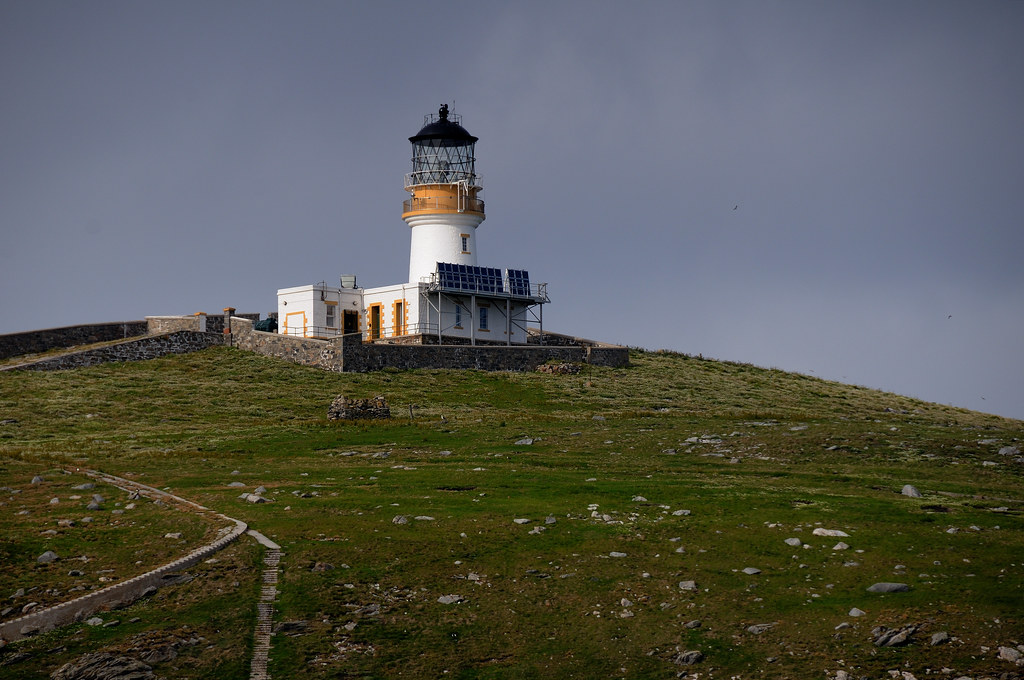
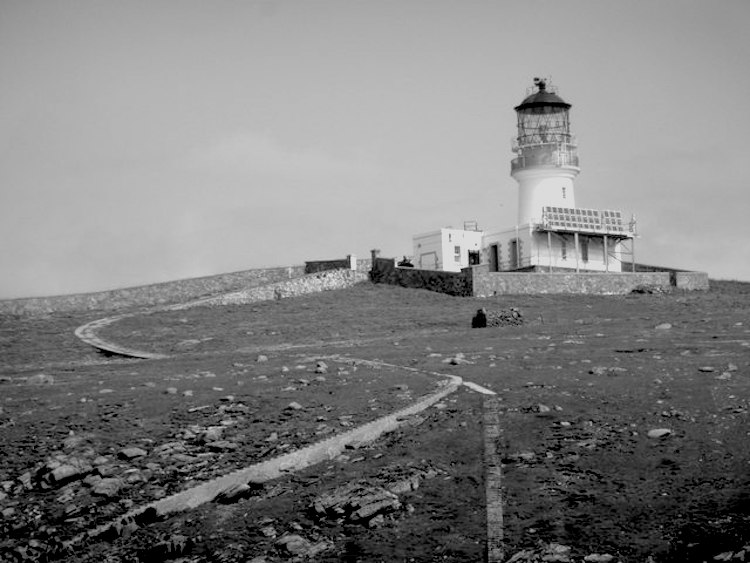
The Flannan Isles Lighthouse had been operational for only a matter of months when the disappearance occurred. Built by David Stevenson and completed in 1899, it sat atop Eilean Mòr—an island known in Gaelic tradition as one of the Seven Hunters, a place local fishermen had long avoided out of a sense of unease. The lighthouse itself was staffed by three keepers at a time, rotating on a schedule managed by the Northern Lighthouse Board.
On the night of December 15, 1900, a passing steamer, the Archtor, observed that the Flannan light was dark. The vessel logged it and reported the observation on arrival at port. This is the first confirmed evidence that something had gone wrong. The light had a responsibility to burn, and it had not burned.
The relief ship Hesperus, under Captain James Harvey, was scheduled to make her regular delivery run but was prevented by severe Atlantic weather. She was finally able to approach Eilean Mòr on December 26. As she drew closer, Captain Harvey noted the absence of the flag that keepers customarily raised when they spotted a relief vessel. No one appeared at the cliff top or the landing stage. The supply boxes of provisions and equipment sat ready on deck with no one to receive them.
Joseph Moore went ashore in the ship’s small boat. He climbed to the lighthouse, found the outer and inner doors closed but not locked, and entered. What he found inside was a stopped clock, a cold fireplace, an overturned chair at the kitchen table, and one set of oilskins still hanging on its peg. Two sets of oilskins were missing.
Moore returned to the Hesperus visibly shaken. Captain Harvey recorded the situation and departed to report to the Northern Lighthouse Board. A full inspection party returned to Eilean Mòr shortly afterward, with Superintendent Robert Muirhead arriving to lead the official investigation on behalf of the Board.
The keepers’ last confirmed entry in the station log—the actual operational log, not later fictionalized versions—was dated December 15, 1900. That was the same day the Archtor observed the light was out. It is the last certain point at which the three men can be placed on the island.
The Board notified the families of Ducat, Marshall and McArthur. A search of the island found no trace of the men. The waters surrounding Eilean Mòr were scanned. Nothing was recovered. The Northern Lighthouse Board opened a formal investigation and Superintendent Muirhead was tasked with compiling the official account.
YOUTUBE EMBED 1 — PRIMARY SEARCH QUERY: “Flannan Isles lighthouse keepers official documentary”
What Investigators Found Inside the Lighthouse
Muirhead’s inspection of the lighthouse interior established several facts that are often distorted in later retellings. The kitchen area had signs of ordinary daily life interrupted: the overturned chair is documented, as are the cold hearth and the stopped clock. These details appear in the official record and have been confirmed through the Board’s investigation files.
What the official record does not confirm is the legend of an untouched final meal—a tableful of uneaten food left as if the men had simply vanished mid-supper, with cups still full and plates still warm. That specific image does not appear in Muirhead’s report. It was added later, most influentially through W. W. Gibson’s 1912 poem “Flannan Isle,” a work of dramatic verse that took the outline of the real disappearance and filled it with invented domestic horror. The poem described set tables and chairs drawn back as if from sudden departure. It was fiction written for effect, not testimony.
The single overturned chair is the extent of indoor disruption in the documented record. One set of oilskins remained on its hook—a practical waterproof garment that keepers wore when working outside in wet conditions. Two sets were missing. This detail matters greatly, because it implies two of the men went outside prepared for the weather and one did not, or one followed in a hurry without stopping to take his oilskins.
The interior of the lighthouse itself was found to be in otherwise normal condition. The light mechanism had not been damaged. The lens and lamp apparatus were intact. There was no sign of violence, no sign of a fire beyond the cold hearth, no sign of struggle. The building was simply empty.
Muirhead documented these interior conditions carefully. He was an experienced Northern Lighthouse Board officer and understood what he was looking at. His conclusion did not rest on the indoor evidence. It rested on what he found outside, and specifically at the western landing.
The Strongest Physical Clue: The Western Landing
Eilean Mòr has two approach points—the eastern and western landings—each equipped with iron railings, lifting equipment and a rope storage box, all maintained by the Northern Lighthouse Board for the purpose of handling supply deliveries and equipment transfers when seas permitted.
When the inspection party moved to the western landing after examining the lighthouse, they found evidence of catastrophic wave action on a scale that went well beyond routine storm wear. The iron railings around the landing platform had been bent and partially torn away. The rope box—a heavy wooden storage container that held the ropes and tackle used to hoist equipment up the cliff—had been moved from its normal secured position. One account in Muirhead’s investigation describes it as having been shifted entirely and its contents disturbed.
Large quantities of rock and turf above the western landing had been displaced. Boulders described in the inspection notes as too heavy for one man to move without assistance had been shifted. The cliffs at the western landing had clearly taken the force of one or more enormous waves with sufficient power to rearrange significant stonework, damage permanent iron fittings and scatter equipment.
By contrast, the eastern landing was found to be largely undisturbed.
This asymmetry is critical to the official interpretation of events. The storm damage was concentrated at the western landing—the side of the island that faces directly into the Atlantic and bears the full force of weather systems coming from the open ocean. The lighthouse log confirmed that the weeks preceding December 15 had involved severe and unusual Atlantic storms. Weather reports from surrounding stations corroborated this. The seas during that period were, by multiple accounts, among the worst recorded in those waters in some time.
The investigation found no comparable damage on the eastern approach, which would have been the more sheltered side. This focused damage pattern pointed Muirhead’s conclusion directly toward the western landing as the location where something had gone catastrophically wrong.
The Leading Explanation: A Wave at the Western Landing
Muirhead’s official report, filed with the Northern Lighthouse Board, presented the following explanation as the most credible account of what happened to Ducat, Marshall and McArthur.
Two of the men—most likely Ducat and Marshall, given that two sets of oilskins were missing—had gone to the western landing to check on or secure equipment, possibly the ropes and lifting gear that the rope box held. The western landing would have required monitoring during and after severe storms, as ropes and equipment could be damaged or displaced by wave action, creating safety and operational hazards for future landings.
While the two men were at the western landing, a large wave—or a series of waves—struck the platform. This type of wave, sometimes called a rogue wave or a freak wave in informal usage, is an oceanographic phenomenon documented along exposed Atlantic coastlines. The waters off the Flannan Isles during December storm conditions would have been capable of generating waves that periodically and unpredictably overwhelmed cliff-top areas well above the normal waterline.
The third man, Donald McArthur, was likely either at the landing with the other two or came running from the lighthouse when he heard or saw what was happening. The missing oilskins belonging to two men and the one remaining set suggest that McArthur either did not have time to retrieve his oilskins before going out or had already been outside. Either way, the investigation concluded that all three men ended up at or near the western landing when the wave or waves struck, and that they were carried into the sea.
The Atlantic waters around Eilean Mòr in winter would have made survival extremely unlikely even for strong swimmers. The waters are cold, the currents are powerful, and the island offers no gradual shoreline—only cliffs meeting open ocean. The absence of any bodies is consistent with the sea in those conditions carrying the men into the Atlantic with no recovery possible.
Muirhead’s report did not speculate beyond the evidence available to him. He identified the physical damage at the western landing, the weather conditions of the period, the missing oilskins and the absence of any indoor evidence of accident or violence as the combined basis for his conclusion. The report characterized the explanation as the most consistent with the available facts, not as a certainty.
YOUTUBE EMBED 2 — SECONDARY SEARCH QUERY: “Flannan Isles 1900 official investigation“
The Theory That Competes With the Official Account
The official investigation’s conclusion has remained the dominant explanation accepted by the Northern Lighthouse Board and by most historians who have examined the primary documents. But the case has also attracted alternative interpretations, and some of them raise questions that the official record does not fully resolve.
One alternative theory focuses on the single remaining set of oilskins and the implied urgency of the third man’s departure from the lighthouse. Some researchers have suggested that the sequence of events may have been different: rather than two men already being at the western landing when a wave struck, it is possible that two men were struck first, and the third—seeing or hearing the emergency from the lighthouse—ran out without stopping to take his oilskins and was then swept away by a second wave while attempting to help or reach them.
This variation within the wave theory does not fundamentally challenge the official conclusion, but it does suggest a slightly different sequence in which one man’s instinct to help the others led to all three being lost rather than an event that caught all three simultaneously. It is a distinction the evidence cannot resolve, because there were no survivors and no witnesses from a position able to observe what happened.
A small number of writers and researchers have also raised the possibility of a single catastrophic wave of unusual height striking the entire western landing area simultaneously while all three keepers were present, rather than a sequence of waves. The oceanic conditions during that period, combined with the documented scale of damage to the railings, rope box and surrounding rock, are consistent with a wave of very large dimensions. The northern and western Atlantic is known to oceanographers as capable of producing waves that, under the right storm conditions, can exceed expected heights by a significant margin.
None of these variations contradict the core of Muirhead’s report. The competing interpretations differ only in the sequence and mechanics, not in the fundamental conclusion that the western landing was the site of the tragedy and that the sea was responsible.
Theories the Evidence Weakens
The mystery of the Flannan Isles has attracted a significant number of theories that the physical and documentary evidence does not support.
Murder followed by one survivor going into the sea has occasionally been proposed. The interior evidence does not support this. A violent altercation among three adult men in a confined lighthouse would typically leave more physical evidence than a single overturned chair. There was no blood documented in the inspection report, no sign of a struggle, no weapon found, no damaged furnishings beyond what was noted. The theory also fails to account for the damage at the western landing, which had an obvious natural explanation entirely separate from any interpersonal conflict.
Abduction by persons unknown is similarly unsupported. The lighthouse was remote, and there is no evidence of another vessel having approached the island during the relevant period. No third-party ship logged any approach to Eilean Mòr during the days in question. The theory requires an unrecorded vessel, an unrecorded crew and an unrecorded motive, with no physical evidence to support any of these elements.
Supernatural explanations—sea creatures, vanishing through some form of paranormal gateway associated with the island’s folk traditions, or apparitions connected to the island’s Gaelic reputation—are not supported by any physical evidence from the inspection and belong to the category of cultural legend rather than documented event.
The invented logbook entries that appeared in later tellings—describing the keepers as terrified, weeping, or recording storms where no storm existed—are not present in the actual station log as documented by the official investigation. These entries appear to have originated in fictional and dramatized accounts, most prominently Gibson’s 1912 poem, and were later repeated as if they were authentic historical records. They are not. The station log that existed at the time was reviewed as part of the investigation and did not contain the dramatic emotional content attributed to it in popular retellings.
The Detail That Still Does Not Fit Cleanly
Even within the official explanation, one element has attracted sustained attention from researchers: the single set of oilskins remaining on its hook inside the lighthouse.
Northern Lighthouse Board regulations and standard keeper practice both required the wearing of oilskins when working outdoors in wet or stormy conditions. This was not discretionary—it was a procedural rule, and experienced keepers like James Ducat would have known and followed it instinctively. The fact that one set of oilskins remained suggests that whoever did not take them left the lighthouse in a manner inconsistent with standard practice, which implies either that the departure was so urgent that there was no time to dress properly, or that conditions at the moment of departure seemed less severe than they quickly became.
This detail does not disprove the wave theory. It does, however, add a layer of complexity. If all three men went outside under storm conditions and one left without oilskins, the departure of the third man has a quality of sudden emergency to it—consistent with the hypothesis that he ran out in response to something he witnessed or heard, rather than going out as part of a planned equipment check.
The investigation could not resolve whether the oilskin omission was evidence of panic, an indication of different weather at the time of departure than the storm that caused the wave damage, or simply a decision that cannot be reconstructed. Muirhead noted the oilskins in his report as part of the interior inventory. He did not over-interpret them. The observation remains part of the file without a certain answer.
The rope box displacement and railing damage at the western landing remain the strongest physical evidence, and they point consistently to the sea as the cause of the disappearance. But the oilskins represent the edge of what the record can tell us—and it is precisely at that edge that legend began to fill the space the evidence left open.
Where the Case Stands Now
The official position of the Northern Lighthouse Board, established by Muirhead’s 1900 investigation and never formally revised, is that James Ducat, Thomas Marshall and Donald McArthur were swept into the sea from the western landing of Eilean Mòr during severe storm conditions in December 1900. Their bodies were never recovered. The lighthouse resumed operation with replacement keepers and continued to function.
The case has been examined repeatedly by historians, maritime researchers and investigators of unexplained disappearances. No new physical evidence has been found that materially changes the picture Muirhead assembled. The wave explanation remains the most coherent account of the physical evidence available. The damage to the western landing infrastructure, the severity of the documented storms, the missing oilskins and the absence of any indoor evidence of violence or accident all point in the same direction.
What the case does not have is a witness, a surviving account from any of the three men, recovered bodies or any physical record of the final moments. The exact sequence of what happened at the western landing on or around December 15, 1900 cannot be reconstructed with certainty from the evidence that exists. Muirhead’s conclusion was a judgment based on what was available to him—and it remains the strongest judgment available.
The legend that grew around the disappearance owes much of its staying power to the invented details added by fiction and later retellings. The image of an intact meal left mid-bite, ghostly logbook entries describing men brought to the edge of terror by inexplicable forces, and overturned furniture suggesting sudden supernatural departure—none of these appear in the official record. They were added, refined and amplified over more than a century of storytelling that found the real explanation too straightforward to satisfy the appetite for mystery that the location inspired.
Eilean Mòr carries that weight easily. A lighthouse on a rock in the Atlantic, accessible only by sea, staffed by three men alone, in a part of the ocean where winter conditions can be genuinely violent—it is a setting that makes the imagination work. When three men vanish from such a place and leave behind a cold hearth and a stopped clock, the instinct to find a stranger explanation than a wave is understandable.
But the western landing’s torn railings, the displaced rope box and the boulders moved by something large enough to bend iron are not ambiguous. The sea was there. The storm was documented. The men were gone, and their oilskins—two of three—went with them.
The file on the Flannan Isles disappearance is not closed in the sense of having a frame-by-frame reconstruction of what happened. It is closed in the sense that the evidence has a clear direction, and the official investigation followed that direction to the most credible conclusion available. What remains open is the gap between the last log entry and the moment the waves came—a gap of unknown minutes, in a place no one has been able to describe from the inside.
That gap is where the legend lives, and why it continues to be told after more than a hundred years.

