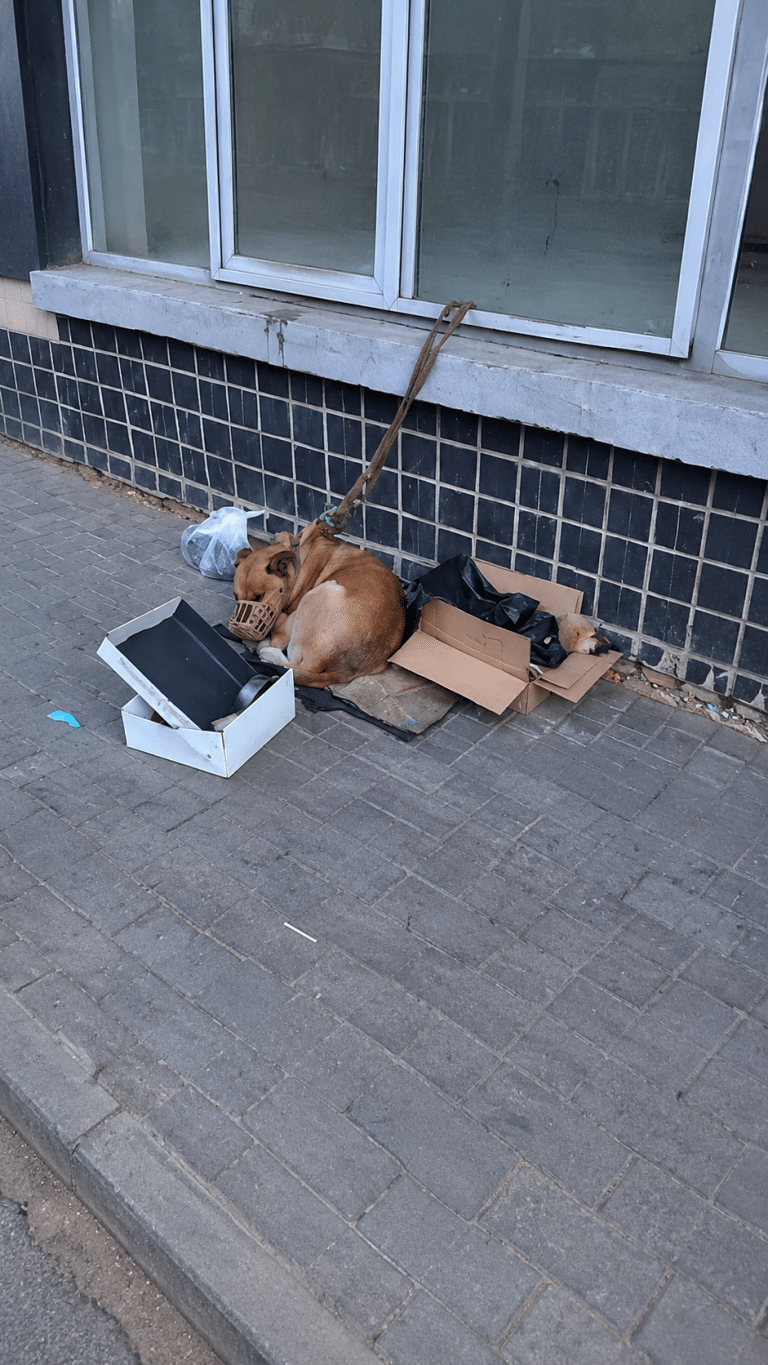
For months, people saw the same young dog wandering slowly through the streets.
Her body was thin, but her abdomen had swollen to an enormous size. It hung heavily beneath her, making every step appear more difficult than the last.
Her legs trembled.
Her breathing sounded strained.
Still, she continued moving from one street corner to another, surviving without dependable food, shelter, or medical care.
People stopped to look at her.
Some felt sorry for her.
But sympathy alone could not relieve the pressure building inside her body.
By the time volunteers finally reached the dog they would name Zhuzha, she was struggling simply to remain on her feet.
The Dog Everyone Saw but No One Knew How to Help
Zhuzha’s condition was impossible to ignore.
Although she was still a young dog, reportedly around two years old, her movements were slow and exhausted.
Her abdomen was so enlarged that it changed the entire shape of her body.
The swelling pulled downward as she walked.
Her legs appeared barely strong enough to support the added weight, and each breath required visible effort.
No one knew exactly how long Zhuzha had been living on the streets or when the swelling first began.
According to the rescue account, people in the area had watched her abdomen grow over several months.
Some assumed she was pregnant.
Others may have believed she had simply gained weight.
But the rest of her body told a different story.
Zhuzha did not look well-fed.
She looked physically depleted.
Her swollen belly stood in sharp contrast to her weakened frame, suggesting that something far more serious was happening beneath the surface.
Still, she continued walking.
She searched the streets for food and places to rest while the pressure inside her abdomen steadily increased.
Eventually, volunteers learned about her condition and came to investigate.
When they approached, Zhuzha did not have enough strength to run far.
She appeared cautious, but her physical exhaustion made resistance difficult.
The volunteers carefully moved her into transport and rushed her to a veterinary clinic.
For the first time, the enormous swelling would be properly examined.
Video: Zhuzha’s Belly Became So Swollen She Could Barely Walk—Then Doctors Found the Cause
Tests Revealed a Serious Problem With Her Heart
At the clinic, veterinarians began with a full examination.
Zhuzha’s breathing was labored.
Her abdomen was severely distended.
Her overall condition suggested that the problem had already placed significant strain on her body.
Ultrasound imaging and blood tests were performed while the rescue team waited for answers.
According to the original account, the results revealed severe heartworm disease.
Heartworms had reportedly damaged Zhuzha’s cardiovascular system so extensively that her heart was beginning to fail.
As her circulation became less effective, fluid accumulated inside her abdomen.
This condition is often described as ascites.
The fluid was not normal body weight.
It was collecting around her internal organs, increasing pressure inside the abdomen and making it progressively harder for her to move and breathe.
That explained the disturbing contrast rescuers had seen on the street.
Zhuzha’s body appeared weak and depleted, yet her stomach continued expanding.
The swelling was not evidence that she had been eating well.
It was a visible sign of a serious internal crisis.
The source does not provide Zhuzha’s full medical records or detailed laboratory results, so the exact severity of each complication cannot be independently assessed from the story alone.
However, the rescue account clearly describes her condition as life-threatening.
Veterinarians warned that without immediate intervention, the continued pressure and heart complications could leave Zhuzha with very little time.
Before doctors could begin longer-term treatment, they first needed to help her breathe.
More Than 10 Liters of Fluid Were Drained From Her Abdomen
Zhuzha’s abdomen had become so enlarged that reducing the pressure could no longer wait.
Veterinarians prepared to drain the trapped fluid while carefully monitoring her fragile heart and breathing.
The procedure had to be performed cautiously.
Removing abdominal fluid can provide relief, but a severely ill dog may react poorly if the process places sudden stress on circulation.
The medical team worked gradually.
As the drainage began, fluid flowed from Zhuzha’s swollen abdomen.
Then more followed.
The amount was far greater than anyone expected.
According to the rescue account, veterinarians ultimately removed more than 10 liters.
For a dog of Zhuzha’s size, the volume was extraordinary.
The fluid had been weighing down her body and placing constant pressure around her organs.
As it was removed, the enormous shape of her abdomen slowly began to change.
The difference became visible during the procedure.
Her belly grew smaller.
Her body no longer appeared stretched beneath the same extreme weight.
Most importantly, her breathing began to settle.
Zhuzha was not cured.
The heartworm disease and cardiovascular damage remained.
But for the first time in months, the pressure making every breath and movement so difficult had been reduced.
The procedure gave her immediate relief and created an opportunity for the next stage of treatment.
She was hospitalized for close observation.
Veterinarians continued administering heart medication, supportive care, and treatment related to the severe heartworm disease described in the rescue account.
The next several days would show whether her weakened body could stabilize.
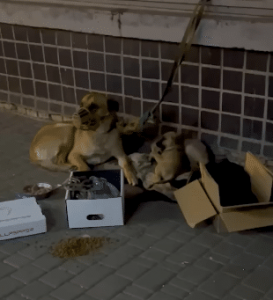
Ten Days Later, Zhuzha Walked Outside Again
Zhuzha’s first days after the drainage procedure required constant monitoring.
Her heart remained fragile.
Veterinarians watched for signs that fluid might begin accumulating again.
Her breathing, appetite, and energy levels were checked closely.
She also needed rest.
For months, nearly every movement had required her to carry the enormous weight inside her abdomen.
Even after that weight was removed, her muscles remained weak.
Her body needed time to adjust to its new shape and recover from prolonged illness.
Progress first appeared in small ways.
Zhuzha began resting more comfortably.
She showed greater interest in food.
She looked toward familiar caregivers when they entered.
Then she began standing more easily.
Approximately ten days after treatment began, Zhuzha was able to take short walks outside.
Her movements were still measured, but she no longer had to drag an enormously swollen abdomen beneath her.
She could place her paws more naturally.
She could stop and examine her surroundings without appearing as though she might collapse under the weight of her own body.
The source describes her eyes as brighter and her expression as happier.
Those feelings cannot be measured directly, but her behavior clearly became more engaged.
Zhuzha accepted treats gently.
She showed interest in the people caring for her.
Her tail began moving when familiar volunteers approached.
Only days earlier, she had been struggling to breathe while walking alone through the streets.
Now she could step outside with someone beside her.
Four Weeks of Treatment Changed Her Entire Body
The drainage procedure relieved the immediate pressure, but Zhuzha still required continued medical care.
The fluid had accumulated because of the serious condition affecting her heart.
Without ongoing treatment, the swelling could return.
Veterinarians therefore continued monitoring her and administering the medication described in the rescue account.
Week by week, Zhuzha became stronger.
Her breathing remained calmer.
Her walking improved.
The exhausted posture seen on the street gradually disappeared.
After approximately four weeks, the dangerous abdominal fluid had reportedly resolved completely.
Her body finally had a more natural shape.
The enormous belly that had once hung beneath her was gone.
Zhuzha could move without carrying liters of fluid around her organs.
The transformation was dramatic, but it did not mean her medical needs had ended.
According to the source, the damage caused by heartworm disease meant that Zhuzha would require heart medication for the rest of her life.
Lifelong treatment could help manage her condition, but future caregivers would need to understand that she was not simply a healthy dog who had completed a short course of medicine.
She would need consistency.
Regular monitoring.
Medication given as directed.
And people attentive enough to notice if her breathing, energy, or abdomen began changing again.
Zhuzha had survived the most dangerous stage.
Now she needed a life capable of supporting her long-term recovery.
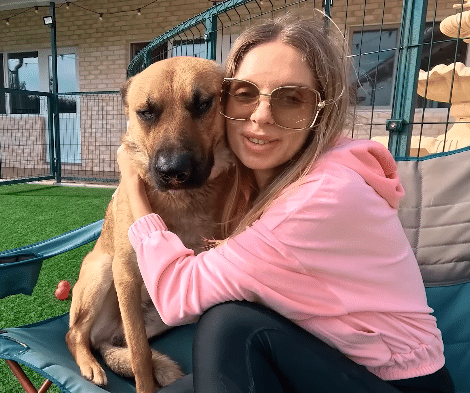
The Playful Dog Hidden Beneath the Illness Finally Appeared
When rescuers first met Zhuzha, illness shaped nearly everything she did.
She walked slowly because her abdomen was heavy.
She breathed with difficulty because fluid placed pressure inside her body.
She spent her energy surviving rather than interacting with the world around her.
Once treatment eased those symptoms, a different side of her began emerging.
Zhuzha became more interested in attention.
She approached familiar caregivers.
She accepted affection instead of remaining withdrawn.
She also began spending time around other rescue dogs.
The young stray who had once moved alone through the streets showed herself to be playful and social.
Her tail moved more often.
Her steps became livelier.
She explored her surroundings with growing confidence.
The rescuers described her as affectionate and eager for companionship.
Those qualities had not necessarily appeared suddenly.
They may simply have been hidden beneath the physical strain consuming her energy.
A dog carrying more than 10 liters of abdominal fluid has little opportunity to play.
A dog struggling to breathe cannot easily show curiosity.
Treatment did more than change Zhuzha’s appearance.
It gave her enough comfort and strength to participate in life again.
She could enjoy short walks.
She could interact with other dogs.
She could respond when someone offered a treat or called her name.
These were ordinary moments.
For Zhuzha, each one represented distance from the street where every step had once been exhausting.
She Survived the Crisis but Still Needed a Permanent Home
Today, Zhuzha is no longer wandering with an enormously swollen abdomen.
She has soft blankets.
Regular meals.
Medical care.
And people who monitor the heart condition that nearly ended her life.
The dramatic swelling is gone.
Her breathing has improved.
She can walk, play, and spend time with the other dogs around her.
But according to the original rescue story, one part of her journey remains unfinished.
Zhuzha is still waiting for a permanent family.
Her future home will need to be more than a place where she is fed and allowed to sleep.
Because of her heart damage, Zhuzha needs people prepared to continue her medication and veterinary monitoring.
They will need to understand that saving her once does not remove every medical risk.
Care must continue even when she appears healthy and playful.
The source does not confirm whether Zhuzha has since been adopted, so her current placement should not be presented as known.
At the end of the documented journey, however, she had already received something that once seemed increasingly unlikely.
Time.
Time to breathe without extreme pressure inside her abdomen.
Time to regain strength.
Time to reveal the affectionate young dog beneath the illness.
And time to wait for someone willing to care for her beyond the dramatic rescue.
For months, people had watched Zhuzha’s stomach grow while she continued walking alone.
The problem was visible, but its cause remained hidden.
Then volunteers stopped.
Veterinarians examined her.
More than 10 liters of fluid were removed.
Ten days later, she was walking outside.
Four weeks later, the swelling had disappeared.
Zhuzha’s story is not simply about a dog with an unusually large stomach.
It is about the danger of suffering that can be seen but not understood without medical care.
What looked like weight gain was a life-threatening accumulation of fluid.
What looked like slow movement was a dog struggling under constant internal pressure.
And what appeared to be a hopeless street case became a young companion capable of playing, trusting, and enjoying life again.
The rescue did not erase every consequence of her illness.
Zhuzha will continue needing treatment.
But she no longer carries that silent burden alone.
Now there are people watching her breathing.
People giving her medication.
People who know that every comfortable step she takes was made possible because someone finally looked beyond the swelling—and decided she deserved an answer.


