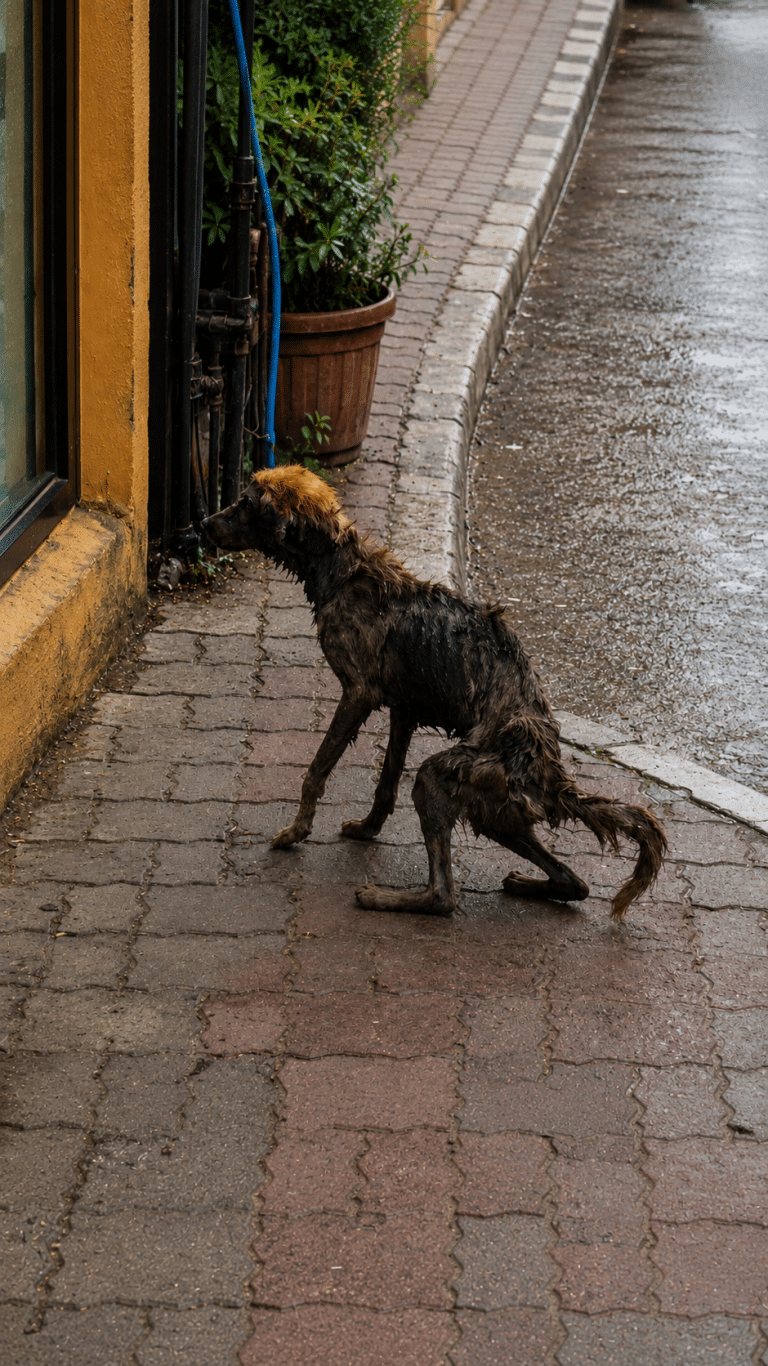
Maddie had made it close to a house.
But she could not bring herself to reach the door.
The tiny stray stood several feet away, her weakened body trembling as she watched the unfamiliar home in front of her.
Nearly all the fur had disappeared from parts of her body.
Her exposed skin looked irritated, and parasites remained attached to areas she could no longer protect or clean properly.
She was painfully thin.
Every step appeared to consume what little strength she had left.
Eventually, Maddie stopped moving.
She lowered herself onto the ground outside the home and remained there silently—too exhausted to continue wandering, yet still frightened whenever anyone tried to approach.
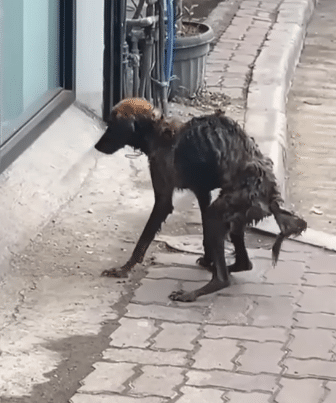
A passerby noticed her, recorded a short video, and contacted Stray Paws Animals Rescue.
By the time rescuers reached the area near Khan’s Tofu Shop, Maddie was in critical condition.
But even then, fear told her to run.
She Had Reached a House but Could Not Take the Final Steps
No one knew exactly how long Maddie had been living outside.
The rescue account did not explain where she came from, whether she had previously belonged to someone, or how far she had traveled before stopping near the house.
What could be seen was a dog whose body had almost no healthy reserves remaining.
Her ribs and hips were clearly visible.
Large sections of coat were missing.
The skin underneath looked inflamed and damaged, while parasites continued feeding on her weakened body.
Still, Maddie had walked far enough to reach an area where people might notice her.
She remained several feet from the entrance.
She did not bark for attention.
She did not scratch at the door.
She simply stood trembling until her legs could no longer support her comfortably.
Then she curled up on the ground.
The original narration suggests Maddie may have been afraid that people would chase her away. Her earlier experiences were unknown, so no one could confirm exactly why she stopped where she did.
Her behavior, however, clearly showed conflict.
She had moved close to human activity.
But when people approached, she still attempted to create distance.
Someone passing through the area recognized that the small dog needed more than food left outside.
The person filmed Maddie and contacted rescuers.
That decision created the first real opportunity to move her somewhere safe.
Video: Maddie Collapses Near a Stranger’s Home but Tries to Flee When Help Arrives
Even in Her Condition, Maddie Tried to Escape
The rescue team searched near Khan’s Tofu Shop, where Maddie had reportedly been seen earlier.
When they found her, she was barely strong enough to move.
Still, the sight of unfamiliar people caused her to react.
Maddie tried to get away.
Her legs shook beneath her.
She could not run quickly or travel far, but she continued attempting to place distance between herself and the rescuers.
The team did not interpret the behavior as aggression.
Maddie did not appear to be pursuing anyone or trying to attack.
She was retreating.
Every movement from the rescuers made her body more tense, so they slowed their approach.
They spoke quietly.
They avoided surrounding her.
They gave Maddie enough space to watch them while carefully limiting the possibility that she might stumble into traffic or disappear into another unsafe area.
Capturing a severely weakened dog requires balance.
Waiting too long can allow the animal’s medical condition to deteriorate.
Moving too quickly can cause panic and increase the risk of injury.
The rescuers remained patient until they were able to guide Maddie into a transport crate.
She was finally contained safely.
But the crate did not immediately make her comfortable.
Maddie continued trembling during the journey.
Her body was unfamiliar with the people around her, and she had no way to understand that they were taking her toward medical help.
All the rescuers could do was keep the environment quiet and reach the clinic as quickly as possible.
Chicken-Bone Fragments Revealed What She Had Been Eating
At the veterinary clinic, the full extent of Maddie’s condition became clearer.
She was severely malnourished and dangerously dehydrated.
Hookworms were affecting her digestive system.
According to the rescue account, she also tested positive for blood parasites and suffered from serious gastrointestinal problems.
Her body temperature was unstable.
She responded only weakly when touched.
Then veterinarians discovered fragments of chicken bones in her stool.
The finding suggested that Maddie had been eating discarded scraps while surviving outside.
Chicken bones can splinter after being cooked, creating sharp fragments that may irritate or injure the digestive tract.
The source does not describe a confirmed perforation or internal obstruction, so those complications should not be added to her diagnosis.
The fragments did show that the food available to Maddie had not been safe or nutritionally adequate.
Her body had been trying to survive on whatever she could find.
Meanwhile, hookworms and blood parasites were taking away resources that her weakened system desperately needed.
The combination left her with little energy to maintain her temperature, fight infection, or rebuild damaged tissue.
Emergency treatment began immediately.
Maddie received fluids to address dehydration.
Antibiotics, supplements, and other medications were administered according to the rescue account.
Warm blankets were wrapped around her small body to help stabilize her temperature.
Because she was not strong enough to eat reliably on her own, caregivers began feeding her with a syringe.
For Several Days, She Could Not Eat Without Help
Maddie’s first days in care remained uncertain.
Her body needed nourishment, but her digestive problems meant feeding had to be handled carefully.
Caregivers could not simply place a large bowl in front of her and expect her to recover.
She required small amounts offered slowly.
A syringe allowed the team to control each feeding and make sure she swallowed safely.
Then they waited to see how her body responded.
The routine continued throughout the day.
Fluids.
Medication.
Warmth.
Small feedings.
Temperature checks.
Rest.
Maddie spent much of the time lying beneath blankets.
She barely lifted her head when people entered, and her responses remained limited.
The medical team could not promise that she would survive.
Her condition had developed before the rescue, and treatment now had to address several problems at once.
The parasites needed to be removed without overwhelming her fragile system.
Her digestive tract needed time to settle.
Her temperature had to remain stable.
And her body needed enough nutrition to begin repairing itself.
For days, progress was difficult to see.
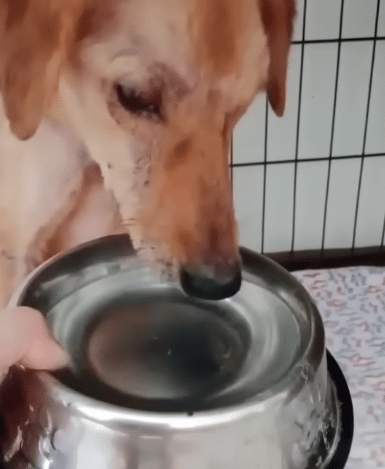
Then caregivers placed a small amount of boiled chicken near Maddie.
She sniffed it.
After hesitating, she ate a few bites without the syringe.
It was not a full meal.
But it was the first time since arriving that Maddie had chosen to eat independently.
For the rescue team, the moment marked an important change.
Her appetite was beginning to respond.
Her body was still weak, but she was engaging with food again.
Her Skin and Body Began Responding to Treatment
Once Maddie started eating small amounts on her own, caregivers could gradually adjust her meals.
Her appetite strengthened over time.
The portions remained controlled so that her digestive system was not overwhelmed, but she no longer relied entirely on syringe feeding.
Medical treatment continued alongside nutrition.
Maddie received medicated baths to clean her damaged skin and help address the parasites affecting it.
The process had to be gentle.
Areas where fur had disappeared were exposed and sensitive.
Harsh handling could have caused additional discomfort.
As the baths and medications continued, the condition of her skin slowly improved.
The parasites became less severe.
Her body remained thin, but she began lifting her head more often when caregivers entered.
The discharge around her eyes and nose also diminished during recovery, according to the original account.
These improvements did not happen at the same speed.
Some days brought noticeable progress.
Others required the team to repeat the same routines without seeing anything dramatic.
Maddie was also beginning to respond differently to familiar people.
Initially, she had tried to flee despite barely being able to walk.
Now she watched caregivers as they approached.
She tolerated treatment more calmly.
She allowed hands to adjust her blankets, offer food, and clean her skin.
It would be inaccurate to claim that all her fear had disappeared.
A dog can become familiar with a few caregivers while remaining cautious around new people or situations.
But Maddie was no longer reacting to every approach by using her remaining strength to escape.
The environment around her had become more predictable.
Food arrived.
Hands moved slowly.
And contact stopped when treatment was complete.
A Supportive Harness Helped Her Stand Again
Although Maddie’s appetite and skin were improving, her legs remained weak.
Prolonged malnutrition and illness had taken away much of the muscle strength needed for normal movement.
Sitting upright was difficult at first.
Standing placed even greater demands on her body.
The rescue team introduced a supportive harness to help Maddie practice.
The harness supported part of her weight while allowing her paws to touch the ground.
Caregivers could guide her posture without pulling directly on her fragile limbs.
At first, Maddie managed only small movements.
Her legs trembled.
She shifted one paw forward and then needed time to recover.
The team did not force her to walk long distances.
Each session focused on giving her body an opportunity to respond safely.
Stand briefly.
Place the paws correctly.
Attempt one step.
Then rest.
Deworming treatment also continued as veterinarians worked to reduce the internal parasite burden described in the rescue account.
As parasites were removed and nutrition became more consistent, Maddie had a better chance of gaining the strength needed for rehabilitation.
Gradually, she became more stable.
She could remain upright for longer periods.
The supportive harness still helped with balance, but Maddie began contributing more of the movement herself.
Every step was small.
Yet each one carried her farther from the dog who had collapsed near a stranger’s home.
The Dog Who Could Barely React Began Watching the World Again
By the later stage of the documented recovery, Maddie could sit comfortably on her own.
She approached meals with greater interest.
Her body remained in the process of healing, but she no longer appeared completely unresponsive to everything around her.
She watched people enter.
She showed curiosity about activity in the room.
She accepted care without the same urgent attempts to escape seen during her rescue.
The original story describes trust and courage replacing hopelessness.
Those emotions cannot be confirmed directly.
The visible changes are meaningful enough without assigning Maddie thoughts she could not express.
She was eating.
She was sitting upright.
She was practicing walking.
She was paying attention to caregivers and the environment around her.
These were significant changes for a dog who had arrived dehydrated, parasite-ridden, and unable to maintain a stable body temperature.
At the end of the source material, Maddie was safe and continuing to recover.
It does not confirm that she had been adopted or that every medical issue had been completely resolved.
Her story should therefore not be given an invented permanent home or a fully finished recovery.
What had changed was the immediate direction of her life.
Maddie no longer needed to search through discarded chicken bones for food.
She no longer had to sleep outside while parasites continued weakening her.
She no longer had to decide whether approaching a stranger’s home was more frightening than remaining alone.
She had blankets.
Medical treatment.
Meals designed for her condition.
And people who noticed when she needed help standing.
The person who filmed Maddie outside the house could easily have assumed someone else would intervene.
Instead, they contacted the rescue organization.
That single action connected a frightened stray to the clinic, medications, food, and rehabilitation she could never have reached alone.
Maddie did not knock on the door.
She did not bark loudly enough to demand attention.
She stopped several feet away and collapsed quietly.
Someone still saw her.
And because they looked closely enough to understand that silence was not the absence of need, Maddie finally received the care she had been unable to ask for.


