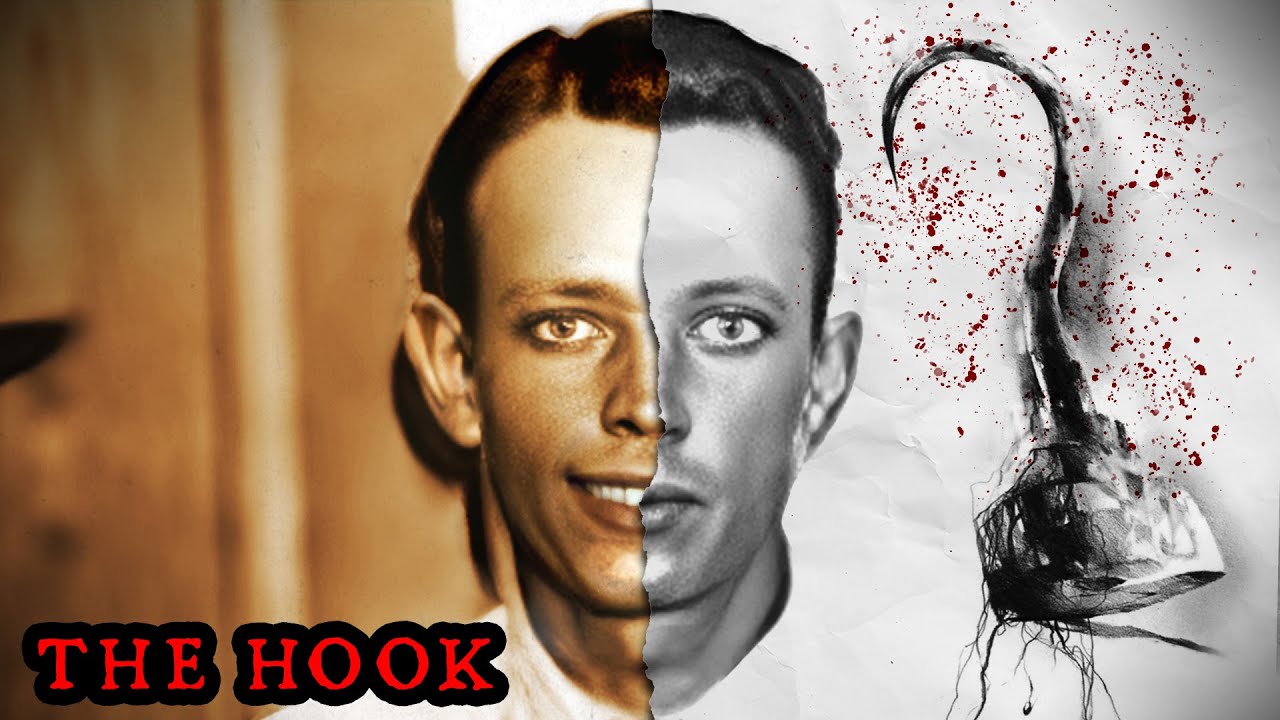
The car is parked just past the edge of the streetlights. The engine is off. Music plays low on the radio—one of those late-evening stations that fills the silence with slow songs and the occasional station identification.
Then the music stops. A bulletin. An announcer’s voice, calm and flat the way radio voices always were, delivering the kind of news that does not belong in a parked car at the end of a dirt road. An inmate has escaped from a nearby facility. He is dangerous. He has a hook in place of one hand.
One of the teenagers wants to leave immediately. The other is not convinced. But something outside—a sound, a scrape, something not quite right—ends the argument. The car pulls away fast, tires on gravel, the whole evening gone wrong. It is only later, when they are somewhere lit and safe, that they see it: a curved metal hook caught in the door handle, pulled free when they drove off.
That image—the hook left behind like evidence of something that almost happened—has been told and retold across American high schools, drive-ins and parked cars since at least the late 1950s. It is one of the most recognized pieces of American folklore.
The Earliest Known Version
Tracing urban legends to a single origin is rarely possible, and the Hookman is no exception. What folklorists can do is identify the earliest documented appearances and work backward from there.
The most widely cited early print appearance comes from September 1959, when a version of the story was submitted to and published by Dorothea Kent, a columnist writing for a newspaper in the American Midwest. But the account most often referenced in folklore scholarship arrived the following year. On November 8, 1960, the nationally syndicated advice column written by Pauline Phillips under the pen name Dear Abby published a version of the story in response to a letter. The letter writer framed the tale as something teenagers were already telling each other—a circulation story, not a news report. Abby’s response engaged with the cautionary content rather than the literal facts, treating it as a piece of traveling wisdom about the dangers of isolated parking spots.
That exchange is significant for two reasons. First, it establishes that by 1960 the story was already circulating widely enough that a letter writer assumed the columnist would recognize it. Second, the column’s national reach almost certainly accelerated the story’s spread to communities that had not yet encountered it. Dear Abby ran in hundreds of papers. A story printed there on a Tuesday could be retold verbally in a different state by the following weekend.
Folklorist Jan Harold Brunvand, who spent decades cataloging American urban legends in books including The Vanishing Hitchhiker (1981) and The Hook and Other Dangerous Tales (1995), documented the Hookman as one of the foundational examples of the American teenage cautionary legend. Brunvand noted that versions of the story were being collected by folklore researchers as early as the late 1950s—meaning the oral tradition preceded even the 1960 Dear Abby column by at least a few years. The legend had time to establish itself through word of mouth before it reached print.
Researchers at university folklore archives, including collections held at institutions that began systematically gathering student folklore in the postwar period, have documented the story appearing in class assignments, personal letters and oral testimony from the late 1950s onward. The geographic distribution is wide from the beginning, suggesting the story spread quickly rather than growing from one regional community.
What the earliest versions share is a compact narrative with very few variables: a couple, a parked car, a radio warning, a sound, a hasty departure and a hook. The ending is always physical. The hook is found. That consistency across early versions is itself a piece of evidence—it suggests the story arrived with its core already fixed, rather than accumulating details gradually over time.
YOUTUBE EMBED 1 — PRIMARY SEARCH QUERY: “Hookman urban legend origin documentary”
The Details That Repeat
One of the things that makes the Hookman legend so durable is the precision of its recurring details. Urban legends that survive tend to be those whose structural elements are easy to remember and easy to repeat without distortion. The Hookman is almost perfectly engineered for this.
The radio bulletin is the first consistent element. It is not a neighbor who calls, not a parent who arrives, not a news article read later. It is a broadcast—immediate, public and anonymous. This matters because the radio warning creates a specific kind of dramatic tension: the couple has been told about the danger before it arrives. The story is not about being caught off guard. It is about what happens when you know the risk and stay anyway.
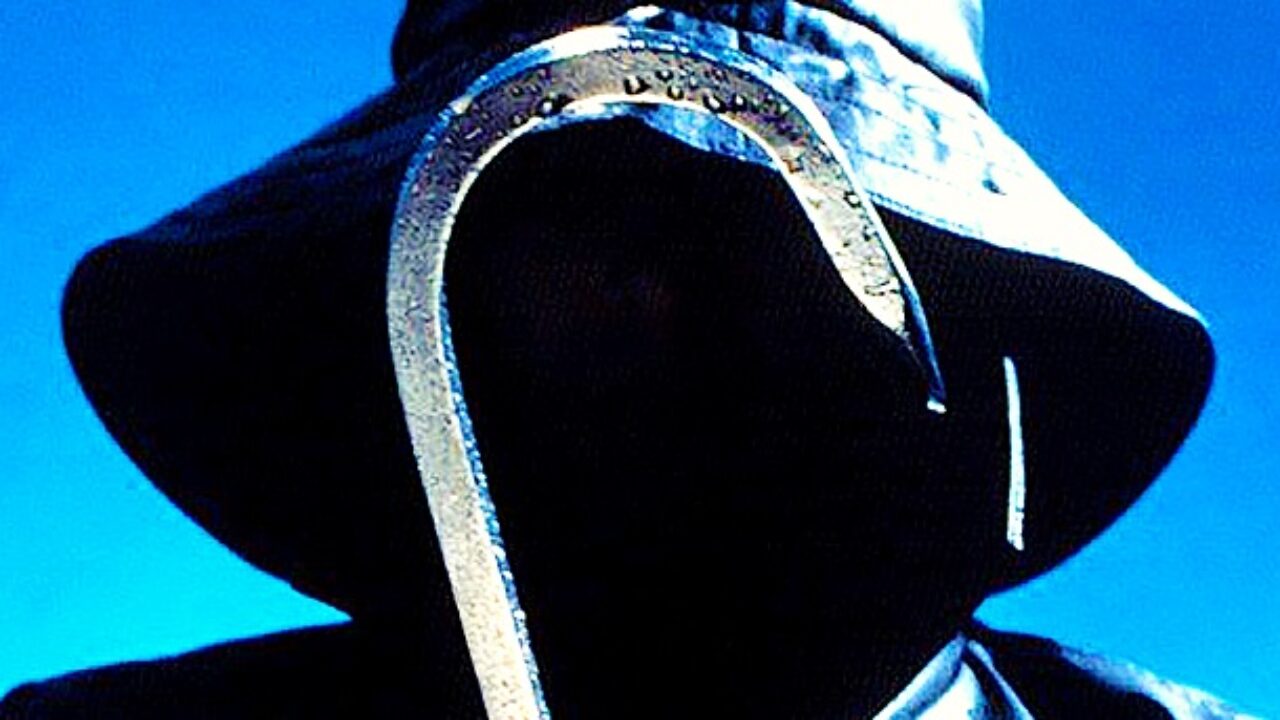
The hook itself is the second fixed element, and it is the one most likely responsible for the story’s longevity. A hook in place of a hand is a memorable physical detail, immediately visual and slightly grotesque without being graphic. It marks the would-be attacker as different—recognizable, categorized, the kind of person who has already passed through the justice system and been noted in official records. The hook says: this man exists in a file somewhere. He is not a random shadow. He is an escaped, documented threat.
The third consistent element is the physical evidence left behind. Most horror-adjacent folklore ends with fear or escape. The Hookman ends with a object. The hook is there. It can be held, shown, described. This transforms the story from a near-miss anecdote into something closer to testimony. The couple did not merely feel afraid. They have proof.
Folklorists describe this as the “legend trip” structure—the experience generates a tangible artifact that validates the story for those who hear it later. Whether or not anyone actually saw a hook on a door handle, the detail gives listeners a reason to believe the story happened, because it sounds like the kind of thing that leaves evidence.
The choice of setting—a lovers’ lane, a parking spot removed from traffic and light and adult supervision—is the fourth element that repeats without variation. The couple is always somewhere they are not supposed to be, doing something they would not tell their parents about. This is not incidental to the story’s meaning. It is the entire moral architecture of the tale.
The Real-World Fear Behind the Story
No single crime created the Hookman legend. But that does not mean the story grew in isolation from real events. The postwar American landscape provided several genuine sources of anxiety that the legend drew on and recombined.
Attacks on parked couples were not purely fictional in the 1950s. The Texarkana Moonlight Murders of 1946—a series of attacks targeting couples in parked cars near the Texas-Arkansas border—received extensive newspaper coverage and were never solved. The case left a documented cultural scar in the region, and researchers have noted that the pattern of targeting parked couples in isolated areas overlaps structurally with the Hookman setting. Scholars have been careful to note, however, that there is no verified connection between a specific Texarkana suspect and the Hookman legend. The resemblance is architectural—the same fear, differently housed.
More broadly, the 1950s saw sustained public anxiety about juvenile delinquency, the mobility that came with car ownership among teenagers, and the perceived moral hazards of unsupervised time. Senate hearings on juvenile delinquency in 1953 and 1954 received significant press coverage. Newspapers regularly ran stories framing teenage autonomy—particularly the combination of cars, evenings and privacy—as a social problem requiring adult concern.
The figure of the escaped convict also had deep roots in American crime news and regional folklore well before the 1950s. Escaped prisoners were the subject of radio bulletins, newspaper alerts and community warnings throughout the mid-twentieth century. The Hookman legend borrows the specific format of a real-world safety communication—the radio bulletin—and wraps it around a moral lesson. This is what gives the story its peculiar authority. It does not ask you to believe in ghosts or monsters. It asks you to believe in something the radio might actually say.
The hook as a physical feature of the attacker may owe something to general cultural awareness of veterans and wartime injuries. The postwar period left a significant number of American men with prosthetic limbs, and the hook prosthetic was among the most visually recognizable. Embedding this detail in the legend may have drawn on existing public familiarity with such devices while giving the story’s villain a mark that made him easy to describe and remember.
What the legend did with all of this was compress it. The fear of crime, the anxiety about unsupervised teenagers, the authority of the radio, the memory of real attacks on parked couples, the visible difference of the escaped convict—all of it folded into a story short enough to be told in full between one parking lot and the next.
How the Legend Spread
The Hookman traveled the way most mid-century American urban legends traveled: through oral tradition first, then through print, then through screen.
The oral phase is the one hardest to document but almost certainly the longest. University folklore archives contain student submissions from the late 1950s in which the story is already described as something everyone has heard—a second- or third-generation account rather than a fresh discovery. This kind of framing, where the teller insists the story happened to “a friend of a friend,” is so common in urban legend scholarship that folklorists coined the term FOAF (Friend of a Friend) to describe it. The Hookman is a canonical FOAF story. Nobody ever tells it as something that happened to them personally. It is always someone they know, or someone that person knows.
The Dear Abby column of 1960 represents the story’s first major print amplification. Because the column ran simultaneously in hundreds of newspapers across the country, that single publication could reach vastly more people than any local oral tradition. Readers who encountered the story in print were then positioned to introduce it into their own local oral networks, which extended the geographic spread further still.
Television and film arrived later. The story informed the structure of several horror films of the 1970s and beyond, most notably in the slasher genre, where the isolated couple and the threat lurking outside became a repeated template. These films did not typically reference the Hookman directly, but the structural DNA is visible. The couple in the parked car, the sounds from outside, the thing they should have fled sooner—these are Hookman mechanics.
A more direct treatment came with the 1998 slasher film I Know What You Did Last Summer, which features a hook-wielding killer as its central threat. The film draws explicitly on the legend’s iconography. Its commercial success introduced the Hookman image to a generation that may not have encountered it through oral tradition, closing a loop: the legend had influenced film, and film now refreshed the legend for new audiences.
Folklore researchers have documented the Hookman appearing in printed collections, high school textbooks used in media literacy and English classes, and academic folklore surveys. Each new medium that reproduced the story also gave it credibility by association—a story in a book, on television or in a film feels more real than a story told in a car, even when the content is identical.
YOUTUBE EMBED 2 — SECONDARY SEARCH QUERY: “Hookman lovers lane legend history”
The Folklore Explanation
Folklorists who study the Hookman legend are generally in agreement about what the story does, even if its precise origin remains uncertain. It is a cautionary tale, but one with a specific and somewhat unusual structure: the couple is warned in advance, they hesitate, and their escape is only partial. The hook is the punishment for staying too long.
Jan Harold Brunvand, whose work remains the standard reference on American urban legends, classified the Hookman as a morality legend about teenage dating behavior—specifically about the dangers of lovers’ lanes and the idea that privacy purchased through isolation comes with a cost. The story does not punish the couple for what they were doing in the parked car, exactly. It punishes them for being somewhere that left them vulnerable. The distinction is subtle but consistent across versions.
Sociologist Gary Alan Fine, who has also written extensively on contemporary legend, situates the Hookman within a broader tradition of stories that encode adult anxieties in teenage-facing narratives. The story circulates among teenagers, is often told by teenagers, and positions teenagers as both the potential victims and the moral agents. The couple who leaves when the girl insists survives. The couple who stays too long gets the hook. This is not a ghost story or a monster story. It is a story about listening to the person in the car with you who has more sense.
The radio bulletin as the mechanism of warning is significant in this analysis. The information the couple receives comes from an outside, authoritative, adult-operated system. The radio station, the police bulletin, the reported escape—these are institutional. The choice to ignore that information and remain parked is a choice to privilege private desire over public safety information. The legend frames this choice as the error that almost costs them everything.
Psychologically, the hook as the image of what was left behind functions as a displaced consequence. The attacker did not reach them. But he nearly did, and the object in the door handle is the proof. The story offers its audience a kind of safe terror: the bad thing almost happened, the exit was made in time, and there is an artifact to show for it. This is pleasurable in the way that near-miss stories are pleasurable—the fear is real, the outcome is good, and the evidence makes the story repeatable.
The Details Added Later
As the Hookman legend moved through decades and across different media, it accumulated details that are not present in the earliest documented versions.
Some later versions add a specific location—a named woods, a specific road, a local lovers’ lane with an actual history of crime. This localization is a common process in urban legend development. A nationally circulating story becomes more believable and more personally threatening when it is attached to a place the listener knows. Local newspapers occasionally contributed to this process by covering crimes in or near known parking areas, providing raw material for new versions of the legend.
Other later versions extend the aftermath. In some retellings, the hook is not merely found on the door handle but traced back to a specific facility or a specific escape. These additions create a false paper trail—they make the story feel more documented than it is. The original legend leaves the hook as a found object. Later versions try to give it a provenance, which is precisely what authenticated evidence would require and precisely what no verified version has produced.
The gender dynamics of the story shifted in some retellings. Early versions typically feature a girl who wants to leave and a boy who is reluctant. This framing positions female caution against male risk tolerance and rewards the former. Some later versions neutralize this or reverse it, possibly reflecting changing expectations about who in a couple might be the more cautious party. The core survival logic remains, but the social commentary travels with it through different cultural moments.
Film and television versions tended to add graphic detail that the oral legend carefully avoids. The original story’s power depends significantly on what it does not show. The hook is found, not used. The attacker is implied, not encountered. Screen adaptations, operating in a visual medium with audience expectations shaped by the slasher genre, filled in what the oral tradition left blank. This made the story more visceral but arguably less effective as folklore, since the ambiguity of the original is part of what makes it function as a warning rather than simply as a horror story.
What the Evidence Does Not Show
The Hookman legend has generated a recurring claim that it was based on a specific, verified criminal case. This claim appears in online retellings, informal histories and occasional journalism. The evidence does not support it.
No documented criminal case has been identified in which an escaped convict with a hook prosthetic attacked or attempted to attack a parked couple, was interrupted by the couple’s departure, and left behind a hook caught on the car door. This scenario—the full legend as a news event—has no verified occurrence in police records, court documents or contemporaneous newspaper archives.
The Texarkana connection is the most commonly cited, but folklorists have been explicit that no Texarkana suspect had a hook prosthetic, and the crimes involved different circumstances than the legend describes. The structural similarity—attacks on isolated couples—is real. The specific Hookman details are not present in the Texarkana case file.
Some versions of the legend cite a specific state, a specific institution and a specific year for the escape that triggered the radio bulletin. None of these details have been verified against institutional records. They are exactly the kind of localizing additions that accumulate in retellings over time, giving the story false specificity without genuine documentation.
The Dear Abby column of 1960, the most important early print record, does not present the story as a confirmed news event. It presents it as a tale that teenagers tell. This is a meaningful distinction. Abby was not reporting a crime. She was engaging with folklore, and she engaged with it as folklore.
The absence of a verified origin case does not make the legend less interesting or less culturally significant. It makes it more interesting—a story this persistent and this structurally consistent was not created by one event. It was built by many hands, many tellers and many slightly different parked cars at the end of many slightly different dirt roads.
Why the Story Survives After Midnight
The Hookman has been in circulation for more than sixty years. It has survived the disappearance of drive-in theaters, the decline of lovers’ lanes as a recognized institution, the emergence of the internet, the transformation of horror film as a genre and multiple cycles of urban legend debunking. It still gets told.
Part of the explanation is structural. The story is extremely well-built for oral transmission. It is short. It has a beginning, a complication, a decision point and a payoff. The payoff is physical and visible. Nothing in the story requires the listener to have any specific cultural knowledge beyond the basic premise of a couple in a parked car and a radio that delivers bad news. These are universally legible elements that require almost no context to land correctly.
Part of the explanation is emotional. The specific fear the story encodes—being in a private place, separated from safety, with a threat outside that you did not take seriously enough—is not historically bound. The lovers’ lane may be less common as a physical location, but the situation it represents is not. Any private place, any distraction, any moment of not quite listening to the news, can map onto the legend’s logic. The story is portable because the fear is portable.
Part of the explanation is the hook itself. It is the perfect closing image for a cautionary tale. It is concrete when everything else in the story is ambient dread. It is strange without being supernatural. It is evidence of something that almost happened, which is both more and less frightening than something that did. You can hold a hook. You cannot hold a near-miss. But if the hook is there in the door handle, the near-miss becomes real in a way that nothing else in the story can make it.
What the surviving record shows is a legend that did exactly what legends are supposed to do: it took the scattered anxieties of a particular cultural moment—teenage independence, isolated places, criminal news, the authority of radio—and gave them a form compact enough to carry in memory and urgent enough to pass on. No single escape, no single hook, no single parked car created it. The Hookman belongs to all of them, and to none of them, which is exactly why the story never quite lets go.