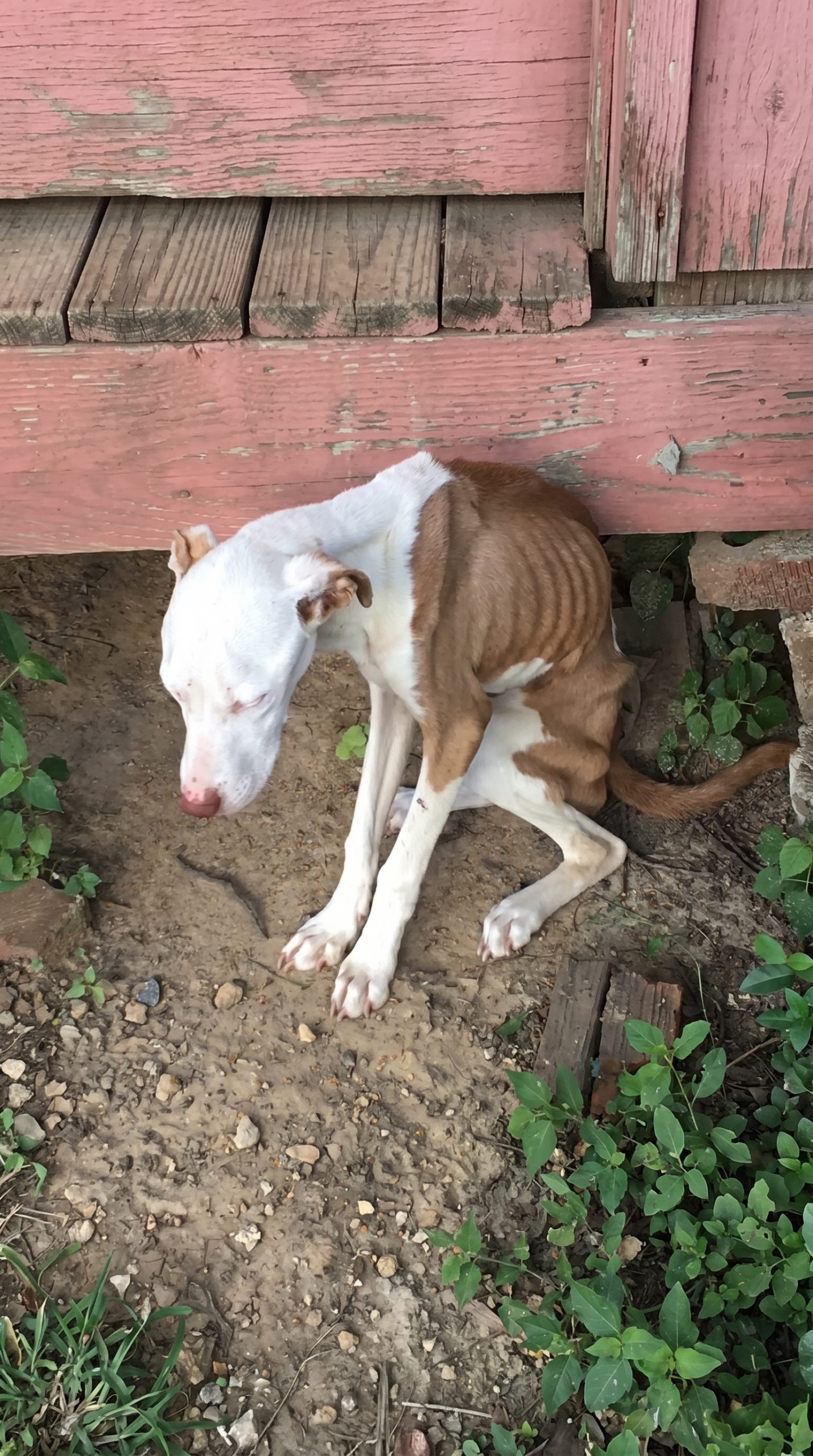
Behind a quiet home in Memphis, Tennessee, a young dog lay almost motionless in a dry backyard.
Summer heat pressed down on the fenced enclosure.
The grass had turned brown.
And the dog inside had become so thin that every rib could be seen beneath his skin.
His body barely moved except for the rise and fall of his breathing.
The dog would later be named Nino.
According to rescuers, he had been left there for approximately 90 days without proper care.
By the time Memphis Animal Services reached him, the question was no longer simply why he had been abandoned.
It was how he had managed to survive long enough to be found.
The Owner’s Admission Revealed How Long Nino Had Been Left Behind
When officers arrived at the property, Nino’s condition immediately showed that this was not a recent problem.
He was severely emaciated.
His body had almost no visible fat.
Even standing required enormous effort.
According to the rescue team, the dog’s 27-year-old owner said he had stopped caring for Nino after losing his job.
Rather than arranging for someone else to take the dog or surrendering him to a shelter, Nino remained confined in the backyard.
For roughly three months.
Alexis Pugh, a rescue director involved in the case, later described how openly the owner discussed what had happened.
She said the man appeared to explain the circumstances without fully understanding the seriousness of his responsibility toward the dog.
Whatever the reason, the result was now standing in front of rescuers.
A young dog so depleted that his body had almost nothing left to draw from.
Warning: The following video contains images of severe animal neglect that some viewers may find upsetting.
Video: Nino Was Left Alone for Nearly 90 Days — Rescuers Could Barely Believe He Was Still Alive
His Body Had Reached an Extreme Level of Starvation
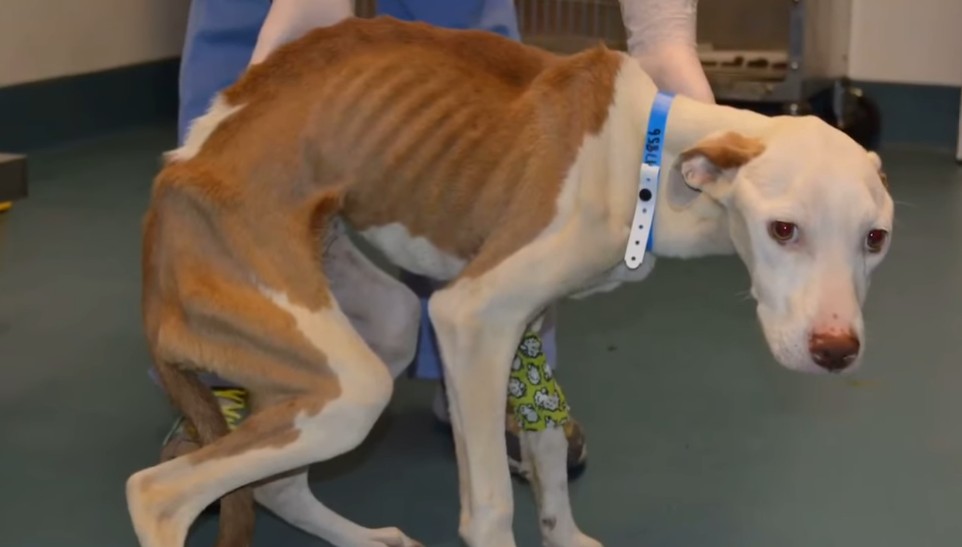
Once Nino was examined more closely, the severity of his condition became difficult even for experienced animal welfare workers to process.
His ribs were sharply visible.
His hips protruded.
His face had become hollow.
Alexis described him in stark terms, saying there was essentially no evidence of body fat remaining.
She compared his condition to “a skeleton with skin.”
For rescuers, this represented one of the most severe levels of starvation they encounter.
There were also questions about how Nino had survived inside the yard for so long.
Rescuers believed he may have tried eating whatever material or debris he could find, although the exact details of how he survived those weeks could not be known with certainty.
What they did know was that Nino could not simply be given a large bowl of food.
After prolonged starvation, feeding had to be handled carefully.
His recovery would begin with portions that might look surprisingly small.
Tiny Meals Every Two Hours Became Part of His Treatment
Nino’s digestive system had been through extreme stress.
Giving him too much food too quickly could create additional problems.
So his feeding schedule was carefully controlled.
Small, easily digestible meals were offered approximately every two hours.
Day and night.
Staff monitored his response closely while working to stabilize the rest of his weakened body.
At first, the changes were subtle.
Nino began lifting his head more often.
He became more aware of the people around him.
His body slowly started responding to regular nourishment.
Then the physical signs became easier to see.
The sharp outlines along his ribs began filling out.
He gained enough strength to move more comfortably.
And the dog who had once remained almost motionless in the dirt started showing more interest in his surroundings.
Recovery was still far from complete.
But his body was finally receiving what it had been missing for so long.
Rescuers Began Seeing the Dog Behind the Starvation
As Nino became stronger, another part of him became easier to notice.
His personality.
Despite his condition, rescuers did not describe him as aggressive.
He accepted care.
He responded to the people handling him.
And as the days passed, his body language gradually became less guarded.
Early on, his tail remained tucked.
Later, small wags began appearing.
He became more curious about familiar caregivers.
Those changes did not erase what had happened in the yard.
They simply showed that Nino was becoming more physically and behaviorally comfortable in his new environment.
Regular meals arrived.
People checked on him.
His condition was monitored.
No one expected him to survive another day alone without food.
The predictable routine gave his recovery somewhere to continue.
Leaving the Clinic Opened the Next Part of His Recovery
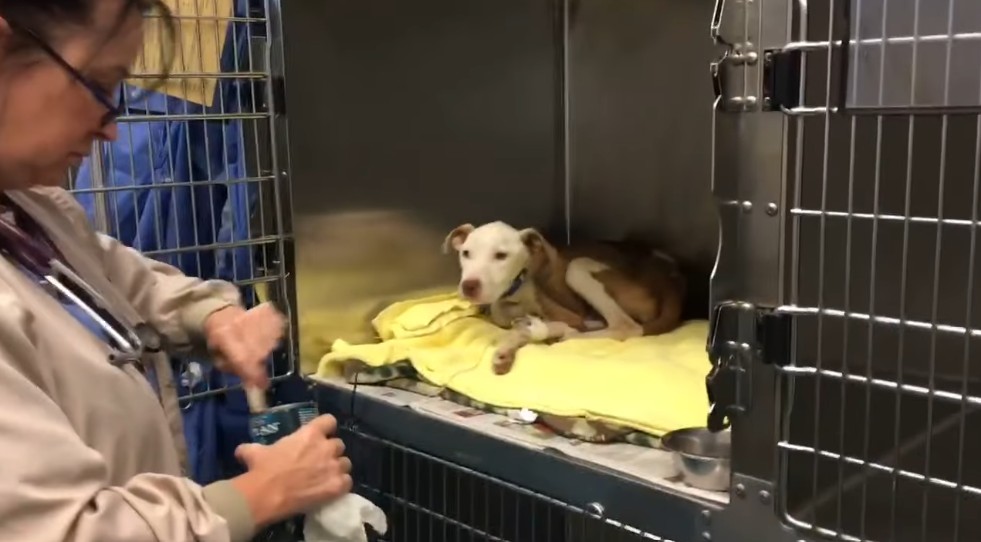
After weeks of intensive care, Nino became strong enough to move beyond the most critical stage of treatment.
He continued his rehabilitation through Blues City Animal Rescue.
The surroundings were now completely different from the yard where he had been found.
He had shelter from the weather.
Regular meals.
Comfortable places to rest.
And people paying attention to changes in his condition.
Eventually, Nino entered a foster home.
There, recovery became part of ordinary daily life.
He could sleep indoors.
Eat on a schedule.
Receive affection.
And continue gaining strength without the constant danger that had defined the previous months.
His story had not yet reached the final adoption chapter.
The rescue hoped that once his rehabilitation was complete, Nino could eventually move into a permanent home.
For now, foster care was already an enormous change.
Ninety Days of Neglect Did Not Decide the Rest of His Life
The image of Nino in that Memphis backyard is difficult to forget.
A skeletal young dog lying in dry grass beneath the summer heat.
Approximately 90 days had passed while his condition deteriorated.
Yet when help finally reached him, there was still enough strength left for treatment to begin.
That does not mean recovery was easy.
There was no single meal that fixed everything.
No instant transformation after he left the yard.
Nino needed controlled feeding every few hours.
Monitoring.
Veterinary care.
Weeks of patience.
And people prepared to continue helping after the emergency rescue ended.
Alexis Pugh described him as incredibly fortunate to still be alive.
Looking at his progress, it is easy to understand why.
Nino went from a dog with almost no visible body fat to one strong enough to leave intensive care and continue recovering in foster care.
His future was still unfolding.
But it no longer depended on surviving alone behind a fence.
For nearly 90 days, Nino had been left in a place where his body slowly disappeared.
Then someone finally intervened.
And from that moment forward, every meal, every checkup, and every quiet day in a safe home began building something the abandoned yard never gave him:
a real chance to recover.


