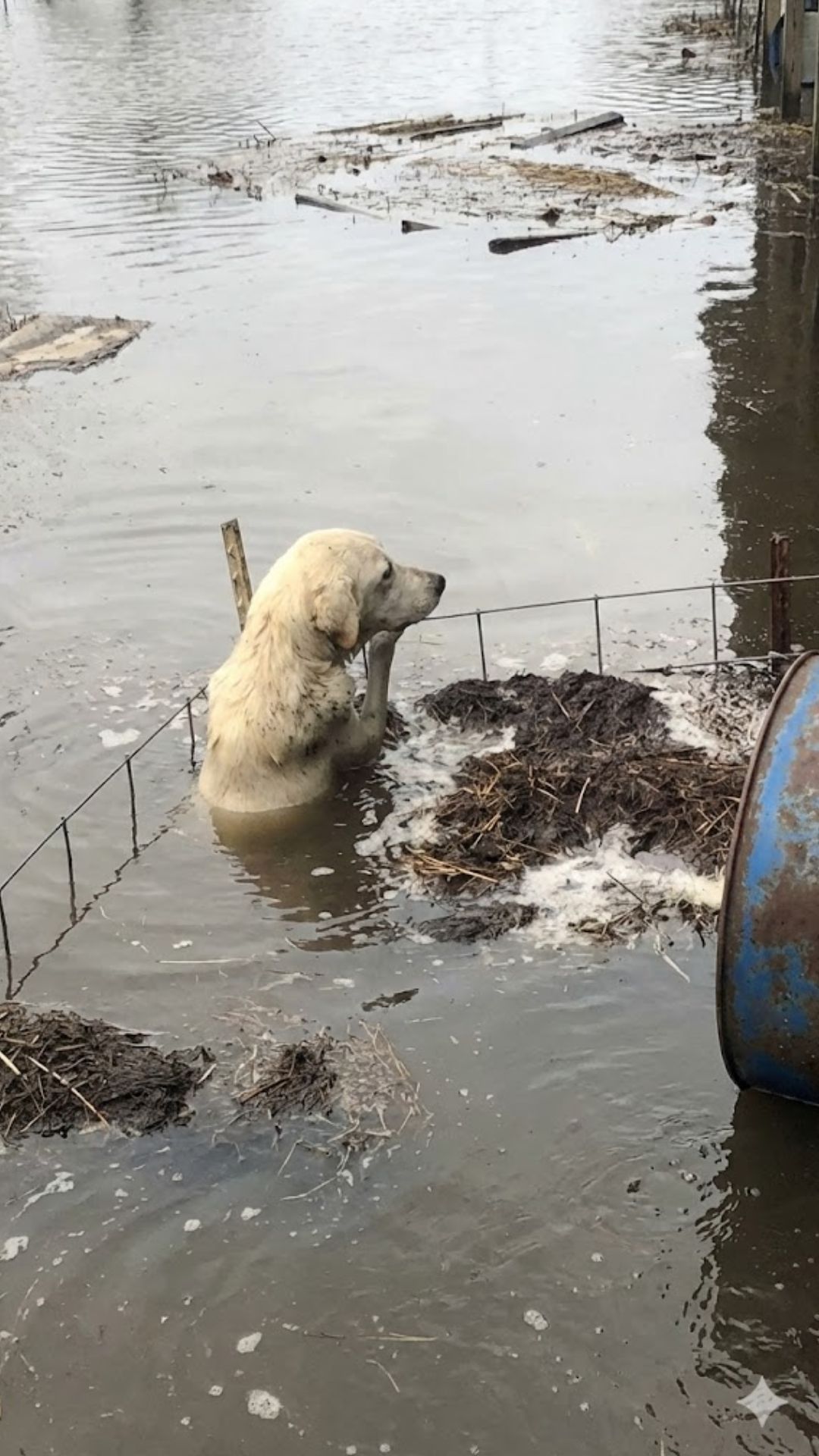
As floodwaters spread across Louisiana, animal shelters faced a problem that grew more urgent by the hour.
Families were evacuating.
Pets were being separated from their owners.
And shelters near affected communities needed room for animals being pulled from flooded neighborhoods.
But many kennels were already occupied.
Inside them were dogs who had been waiting long before the storm arrived.
Some had spent months in shelter care.
Others had little immediate prospect of leaving.
Moving those dogs somewhere else could accomplish two things at once.
It could give them another chance at finding homes.
And it could open desperately needed kennel space for animals displaced by the flooding.
More than 1,000 miles away in Pennsylvania, someone realized exactly that.
One Phone Call Created Space for Dogs on Both Ends
In Pennsylvania’s Lehigh Valley, rescue volunteer Liz Jones watched the situation in Louisiana unfold.
The flooding was forcing people from their homes, while shelters were preparing for more displaced animals.
Liz understood that the dogs already living in those shelters could easily become part of a second crisis.
Not because the floodwaters had necessarily carried them there.
But because every occupied kennel reduced the space available for newly displaced pets.
So she offered a practical solution.
Send some of the existing shelter dogs north.
By relocating them, Louisiana facilities could make room for animals whose families might still be searching for them after the disaster.
At the same time, the transferred dogs would reach a new network of fosters and potential adopters.
The plan began with a simple offer from Pennsylvania:
They would take the dogs.
Video: 26 Louisiana Shelter Dogs Begin a 25-Hour Journey Toward New Homes
Twenty-Two Crates Were Loaded for a Journey of Nearly 25 Hours
Making the plan happen required far more than a phone call.
Louisiana rescuer Greta Jones took responsibility for the transport.
Twenty-two crates were carefully loaded into a van for the long trip north.
In total, 26 dogs were being relocated.
The dogs inside had already experienced uncertainty before the flooding created new pressure on local shelters.
Now they faced another major transition.
A different shelter system.
Different people.
And a journey stretching across multiple states.
Greta began driving.
The trip to Pennsylvania would take nearly 25 hours.
Hour after hour, the van continued north with the dogs secured inside.
There were stops to manage.
Animals to check.
And hundreds of miles still ahead.
When Greta was asked why she was willing to take on such an exhausting transport, her response was simple.
“For the babies.”
“For the fur babies.”
The drive was long.
But every mile created more distance between those dogs and overcrowded Louisiana kennels.
Volunteers Were Waiting When the Van Arrived Late at Night
By the time the transport reached Pennsylvania, it was late Friday night.
Headlights appeared outside the Sanctuary of Haafsville.
But Greta did not arrive to an empty parking lot.
People were waiting.
Volunteers had gathered.
Foster families were there.
Neighbors arrived with leashes, blankets, and supplies.
Many had never met any of the dogs inside the van.
They came anyway.
Among those waiting were Eric Dams and his wife, who had friends and relatives in the Baton Rouge area.
They could not control the floodwaters hundreds of miles away.
But helping receive dogs transferred from affected shelters gave them a direct way to contribute.
As the van doors opened, the long transport finally ended.
One crate at a time, the dogs were brought out.
For the Louisiana shelters they had left behind, those empty spaces could now be used for other animals needing emergency accommodation.
For the dogs arriving in Pennsylvania, another kind of opening was waiting.
The possibility of a foster home.
And perhaps eventually, a permanent one.
Some Dogs Were Going Into Homes for the First Time
The dogs did not all react in the same way when they arrived.
Some were cautious in the unfamiliar surroundings.
Others became more animated as volunteers approached.
The journey had ended, but another transition was beginning immediately.
Foster families started taking dogs home.
Instead of remaining inside shelter kennels, they would sleep in houses.
They would experience routines built around people rather than rows of runs.
Liz Jones noted that for some of the dogs, foster care could represent the first real home environment they had ever experienced.
That made the night meaningful for reasons beyond the flood response.
These dogs had already been waiting for opportunities before the disaster.
Now a crisis hundreds of miles away had unexpectedly created a reason to move them into a completely different rescue network.
And before the night was even over, three of the dogs had already been adopted.
For them, the 25-hour drive ended with something much more permanent than another kennel.
Moving 26 Dogs Also Opened Space for Animals Still in Louisiana
The rescue was never only about the dogs inside the transport van.
Every dog moved north represented kennel capacity opening back in Louisiana.
That mattered during a disaster in which shelters could receive animals separated from families with little warning.
A flooded neighborhood might produce several displaced pets at once.
Another rescue operation could bring in more.
Owners might then need days or longer to locate where those animals had been taken.
Keeping space available for them could improve the chances of eventual reunification.
That was what made the transport strategy so useful.
Twenty-six dogs received access to new fosters and adopters.
At the same time, the shelters they left behind gained room to respond to an emergency still unfolding.
It was not a dramatic water rescue.
No one carried these 26 dogs from rooftops or pulled them from rushing currents.
Their rescue happened through logistics.
A phone call.
Available foster homes.
Twenty-two crates.
A van.
And one person willing to drive nearly 25 hours.
Sometimes creating space can save lives too.
A Disaster Hundreds of Miles Away Connected People Who Had Never Met
The Louisiana floods brought enormous disruption to affected communities.
People were forced to leave homes.
Animals became displaced.
Shelters faced rapidly changing demands.
No single transport could solve all of that.
But this one solved something specific.
Twenty-six dogs who had already been waiting in Louisiana shelters were moved to Pennsylvania.
Their departure opened kennel space where it was urgently needed.
Their arrival introduced them to volunteers, foster families, and adopters they might otherwise never have encountered.
Three found adoptive homes almost immediately.
Others went into foster care while their next chapter continued.
The story began with overcrowding and a natural disaster.
But the solution depended on people in two different regions recognizing that they could help one another.
One group needed space.
Another had space to offer.
Between them were more than 1,000 miles of highway.
Greta drove those miles.
Volunteers waited at the other end.
And 26 dogs crossed from one rescue network into another.
Not because the flood itself had swept them away.
But because people understood that protecting animals during a disaster sometimes means helping the ones who were already waiting before the storm ever began.
For those dogs, the flood changed their circumstances in an unexpected way.
A crowded Louisiana shelter became a transport van.
The van became a 25-hour journey.
And at the end of that journey were people standing in the darkness, ready to open the doors.


