April Morgan and her fiancé J.C. thought they were preparing for an ordinary new beginning.
They had found a house.
The paperwork was moving forward.
And during the final walkthrough, they stepped into the backyard to check the property one last time.
That was when they saw her.
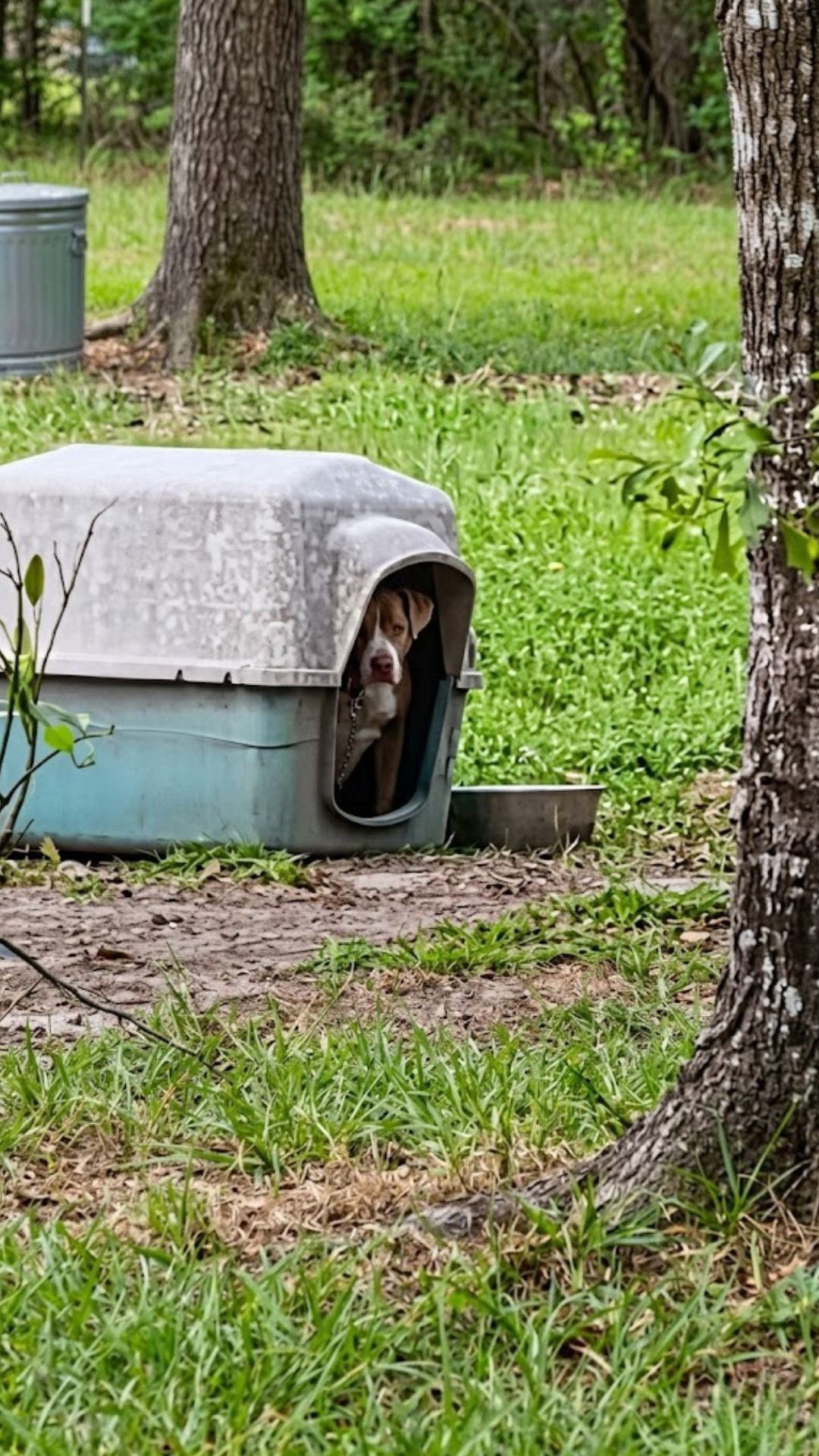
In a far corner of the yard, beside an old doghouse, a senior dog sat tied to a tree.
She was not a stray who had wandered onto the property.
She had lived there for years.
And according to information included with the sale, the previous owners were leaving her behind because they no longer wanted her.
April and J.C. had gone there expecting to inspect a house.
Instead, they found a dog whose entire life was about to change.
She Had Lived There Since She Was a Puppy
The dog was around 10 years old.
Her muzzle had begun turning gray, and she had reportedly spent most of her life with the family who previously occupied the home.
Then that family moved.
Furniture was packed.
Belongings were taken.
The house was emptied.
But the dog remained in the backyard.
April later recalled how difficult it was to imagine the senior dog sitting there after the people she knew had disappeared.
She remained near the old doghouse, still attached to the tree.
At times, she appeared focused on the house and the back door.
April and J.C. were not yet technically the property owners, which created another worry.
What would happen to the dog if the sale somehow fell through?
They could not control that yet.
So they waited for the paperwork to become final.
Then the keys were handed over.
And one of the first things J.C. did was walk directly into the backyard.
Video: They Bought a House and Found a 10-Year-Old Dog Still Tied to a Tree
The First Thing They Did Was Unclip the Leash
The senior dog watched J.C. approach.
Her response was cautious.
There was no dramatic rush toward him.
Her tail moved slightly while she studied the unfamiliar person walking into what had been her yard for years.
Then J.C. reached down.
He unclipped the tether.
The dog was no longer tied to the tree.
April and J.C. gave her a new name.
Molly.
But removing the leash was the easy part.
Molly had spent years living one routine, and suddenly every familiar person had disappeared while two strangers moved into the house.
A new life could not be explained to her.
It had to become familiar one day at a time.
So April and J.C. began with something simple.
They let Molly stay close.
Molly Followed Them Everywhere
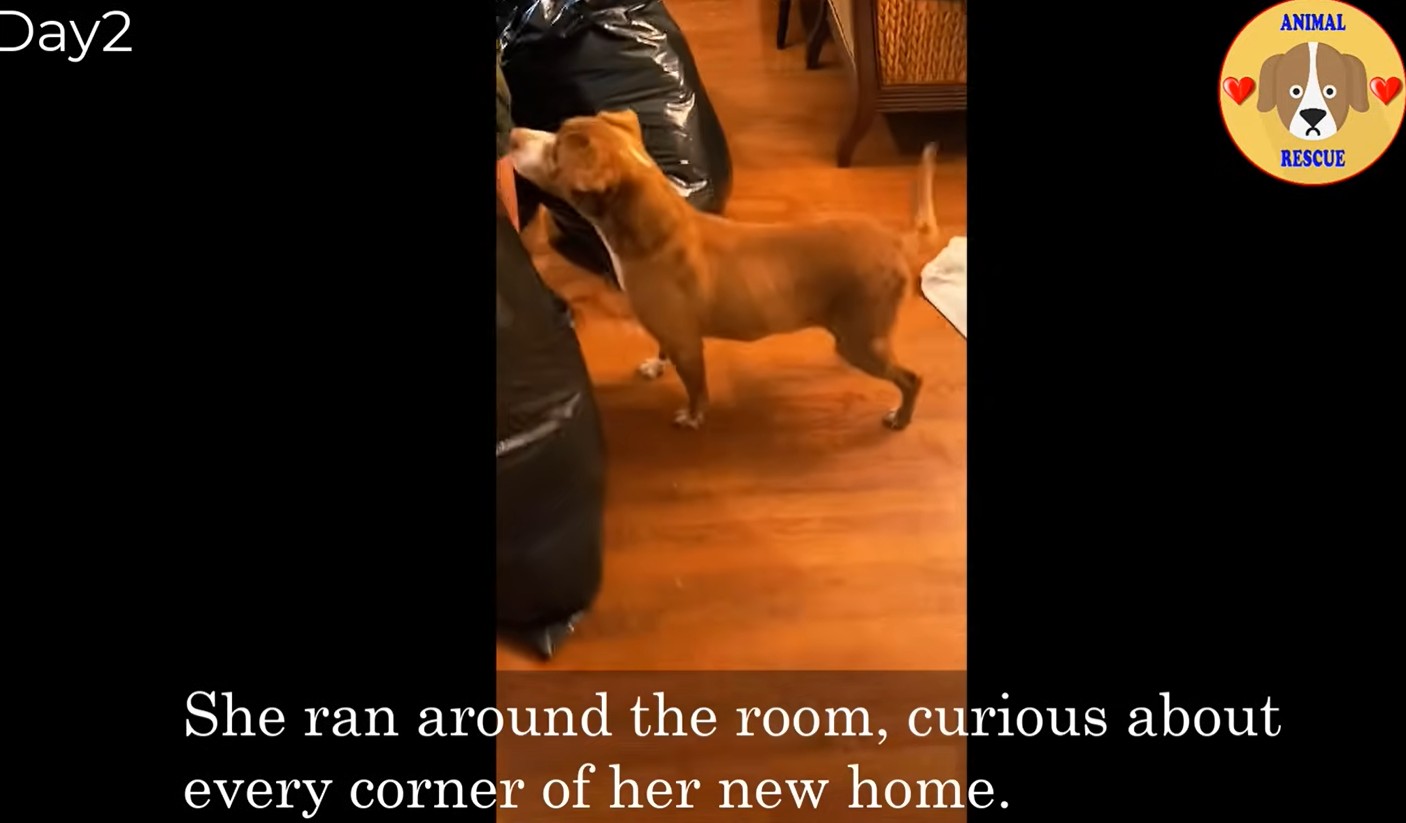
Once Molly was allowed into the home, she rarely wanted to be far from her new people.
If April moved into another room, Molly often followed.
If J.C. sat down, Molly stayed nearby.
She moved through the house almost as if keeping track of where everyone was.
No one could know exactly what Molly associated with the sudden disappearance of her previous family.
But her behavior made one thing obvious.
She preferred having people within sight.
So April and J.C. did not push her away when she followed them.
They gave her reassurance through routine.
Meals appeared every day.
Doors opened and closed, but people returned.
There were soft places to sleep.
And when Molly wanted to remain close, she was allowed to.
Gradually, the house stopped being only the place where her former family had vanished.
It became the place where her new family stayed.
Thunderstorms Were Especially Difficult
Some parts of Molly’s adjustment were harder than others.
Storms brought one of the clearest signs of anxiety.
When thunder began outside, Molly trembled and tried to hide.
For a dog that had spent much of her life outdoors, loud storms appeared particularly difficult.
This time, however, she was not tied beside a doghouse facing the weather alone.
April and J.C. stayed with her.
They used a ThunderShirt to help provide gentle pressure and comfort.
They spoke calmly.
They gave her somewhere secure to settle.
And most importantly, they remained nearby until the storm passed.
The weather itself had not changed.
Molly’s circumstances had.
She no longer had to face frightening nights without access to the people inside.
Ordinary Firsts Started Revealing a Happier Dog
As Molly became more comfortable, her new family began introducing her to experiences that made everyday life feel completely different.
She received a warm bath.
Years of dirt and outdoor grime were gently washed away.
Then came smaller pleasures.
Her first pup cup.
Comfortable places to nap.
Time indoors.
Affection whenever she wanted it.
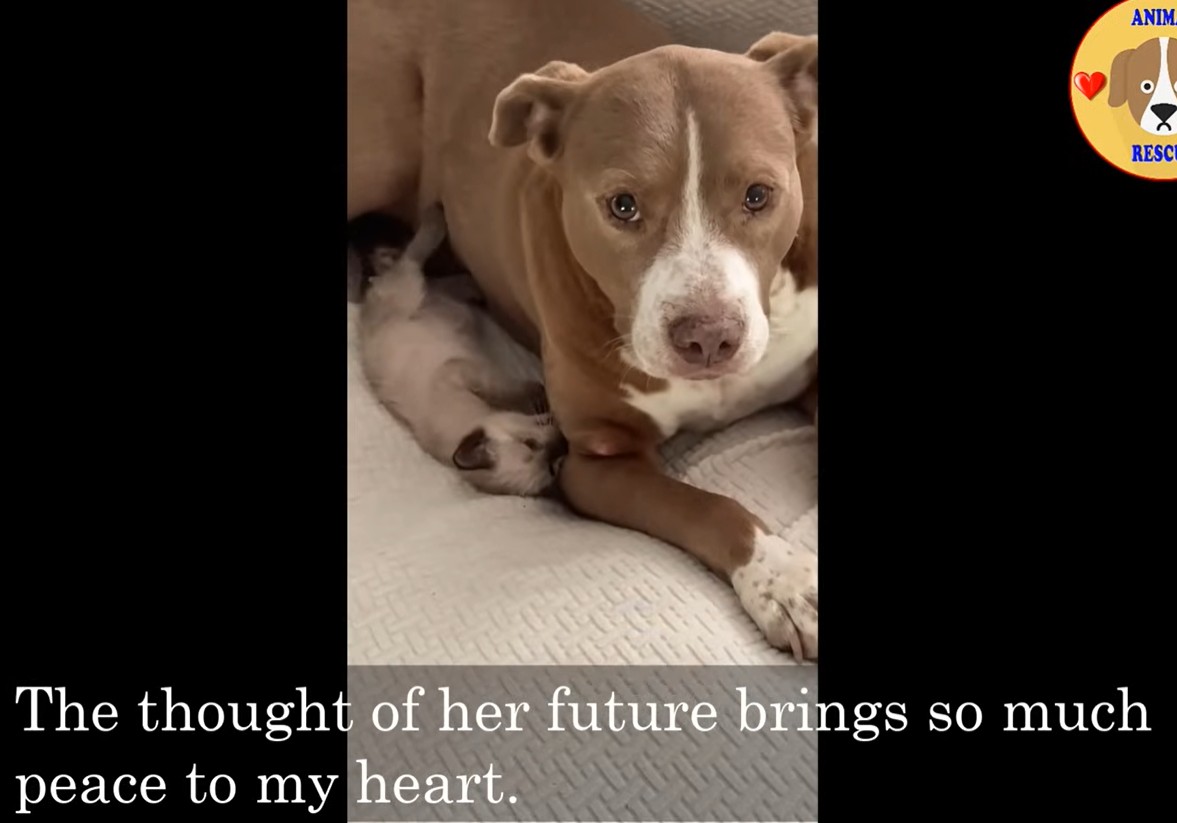
Molly also met the other animals in the household, including dogs and cats.
The adjustment required patience, but over time she settled into the larger family.
Her body language began changing.
Her tail wagged more easily.
She rested more comfortably.
She stretched across beds and furniture instead of remaining outside beside the tree.
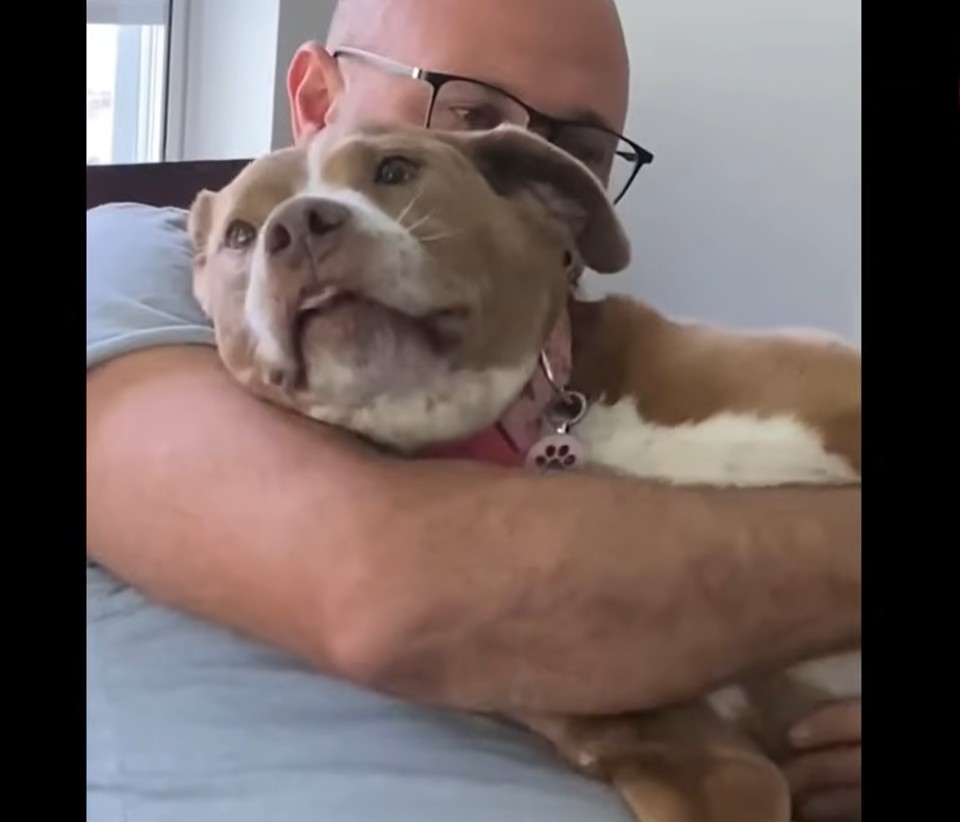
One evening, after dinner, Molly walked over to April and gently licked her cheek.
It was a small interaction.
But by then, small interactions were becoming the clearest signs of how different Molly’s life had become.
The Vet Found Problems That Had Gone Untreated
A veterinary examination revealed that Molly needed more than a change of environment.
She tested positive for heartworm.
She was also diagnosed with a heart condition.
For a senior dog, both issues required careful medical attention.
April and J.C. did not hesitate to begin treatment.
They had not planned on adopting a 10-year-old dog with medical needs when they started looking for a house.
But Molly was already part of the home.
The veterinary problems did not change that.
Her appointments became part of the routine.
Medication and treatment were added alongside meals, naps, and time with the family.
For the first time, health problems were not something Molly simply had to live with unnoticed.
Someone was paying attention.
The Backyard Is Still There — But Molly Doesn’t Live That Life Anymore
Today, Molly is no longer the dog sitting beside an old doghouse with a tether attached to a tree.
She lives inside.
She sleeps comfortably.
She plays.
She stretches across the bed as though she has always belonged there.
When storms come, someone stays close.
When she needs medical care, she receives it.
And when people walk through a doorway, Molly does not have to remain outside wondering whether they will return.
The strange part of her story is that April and J.C. did not set out to rescue a dog.
They were buying property.
Molly simply happened to be part of what they discovered there.
But unlike furniture or anything else left behind by the previous occupants, she was not an object to inherit or discard.
She was an aging dog who still needed a family.
And once April and J.C. saw her, they decided that was exactly what she would have.
They thought the biggest change that day would be receiving the keys to a new house.
Instead, one of their first acts as homeowners was walking into the backyard and unclipping a leash.
The house became theirs.
And Molly finally became part of a home that intended to keep her.


