At first, she looked like another small stray walking alone through the countryside.
Then someone noticed how slowly she was moving.
Each step seemed careful.
Measured.
As though her body had to think about every movement before taking the next one.
When rescuers looked closer, they understood why.
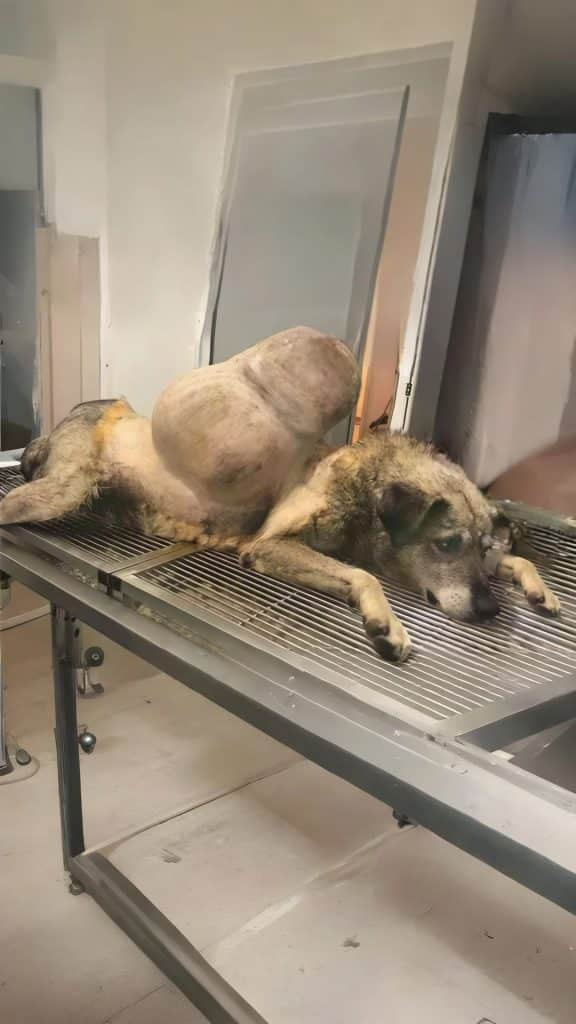
A large swelling rose from her back, adding weight to an already thin and weakened body.
She was still walking.
Still searching for somewhere to go.
But it was clear that she could not continue this way for much longer.
The Small Dog on the Road Was Carrying Something Enormous
By the time rescuers reached the area, the little dog was still moving slowly along the road.
She was underweight.
Her body looked tired.
And the large mass across her back changed the way she carried herself.
It was impossible to know exactly how long she had been living like that from appearance alone, but the size of the swelling suggested it had not developed recently.
The rescuers gave her a name.
Bunica.
The word means “grandmother,” although she was not necessarily an elderly dog.
There was simply something quiet and gentle about the way she watched the people around her.
But getting close enough to help would require patience.
Bunica did not bark or charge.
She simply moved away whenever someone entered the space she considered safe.
So the team stopped trying to close the distance quickly.
They sat down.
They brought food.
And they waited.
Video: Bunica Could Barely Walk With the Mass on Her Back — Then Rescuers Finally Earned Her Trust
She Did Not Run Far — But She Would Not Let Anyone Close
Bunica’s fear appeared in small movements.
When someone stepped toward her, she stepped away.
When a hand reached out, she increased the distance again.
There was no dramatic panic.
Just caution.
The rescuers stayed nearby beneath the heat of the day, speaking softly and placing small pieces of food on the ground.
They allowed Bunica to decide how close she was willing to come.
Minutes passed.
Then more.
Eventually, she stopped retreating every time someone moved.
She watched the rescuers instead.
Food brought her a little closer.
Curiosity did the rest.
The team still needed to transport her for medical care, and the large mass made delaying much longer undesirable.
To reduce stress and make the process safer, a mild sedative was used.
Bunica was carefully lifted into a carrier.
The dog who had spent the afternoon maintaining distance was finally on her way to the clinic.
The Mass Had Been Changing the Way She Moved
Veterinary examination confirmed that the swelling on Bunica’s back was substantial.
It had stretched the surrounding skin and added a considerable burden to her small frame.
Her low body weight created another concern.
Even if surgery was the best way to remove the mass, Bunica first needed to be strong enough to tolerate the procedure.
So the team did not rush directly into the operating room.
Her immediate needs were more basic.
Nutrition.
Hydration.
Rest.
A clean and comfortable environment.
The dog who had been walking alone beside the road was given time to stabilize.
For the first several days, caregivers focused on helping her body recover enough strength for what came next.
Before Surgery, She Had to Learn That Food Would Keep Coming
Bunica began receiving regular meals.
At first, the process remained quiet and cautious.
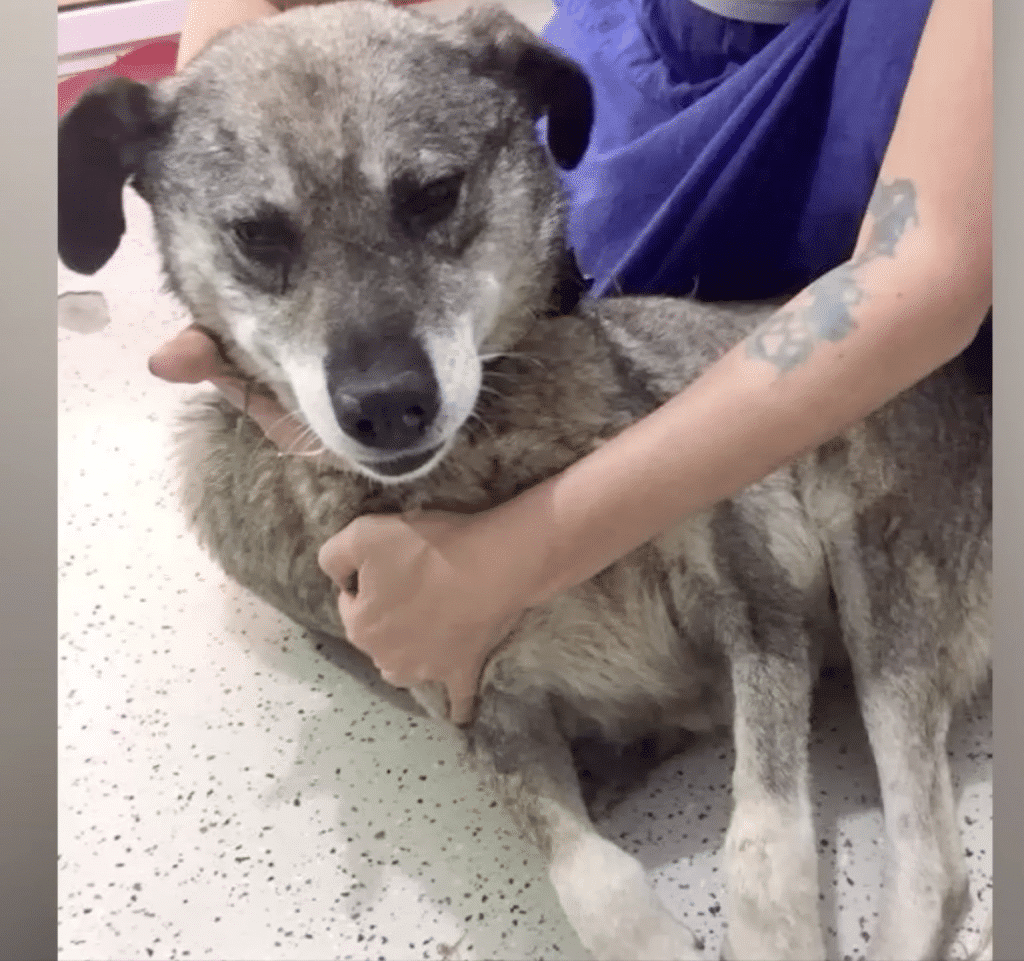
She accepted food.
Then she began taking it from familiar hands.
She allowed gentle contact.
And she rested in a clean bed without needing to keep moving from place to place.
Those small routines mattered.
Meals arrived predictably.
Water remained available.
The same caregivers returned.
As Bunica became more comfortable, her body also began responding to the improved care.
She gained enough strength for veterinarians to reconsider the surgery.
The mass was still there.
But now Bunica was in a better position to face the operation.
Surgery Finally Removed the Weight From Her Back
Once veterinarians felt Bunica was stable enough, surgery was scheduled.
The goal was to remove the large mass while protecting the surrounding tissue and allowing her body to heal afterward.
The procedure was completed successfully.
Then came another important piece of news.
Testing indicated that the tumor was benign.
For the people who had watched Bunica struggle beneath its weight, that result brought enormous relief.
The growth that had altered her movement and complicated her daily life was gone.
Now recovery could begin without the same burden attached to her back.
The change was not immediate.
She still needed rest.
The surgical area needed time to heal.
But something fundamental had already changed.
Bunica’s body was lighter.
Her First Walks Looked Different
As the days passed, Bunica gradually became more active.
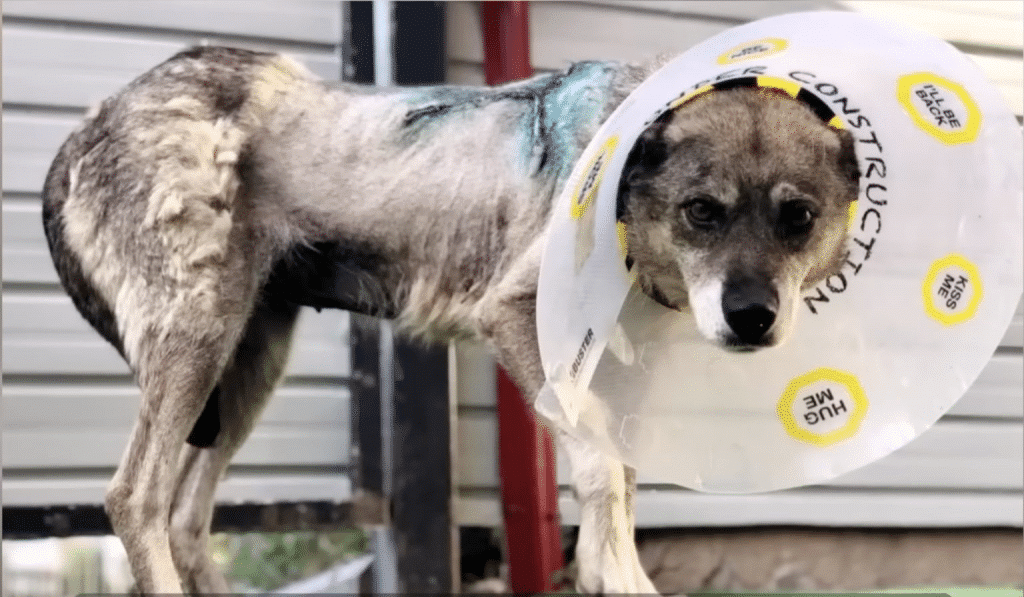
Without the large mass pulling across her back, her posture began to improve.
Her steps became steadier.
She moved with greater comfort.
Soon, caregivers began taking her on gentle walks.
Bunica explored at her own pace.
She stopped in the grass.
She lifted her head toward the air.
She began showing more interest in the environment around her instead of simply moving forward because she had nowhere else to go.
These were ordinary experiences.
But compared with the dog first spotted struggling along the countryside road, they represented a remarkable change.
The goal had never been to turn Bunica into a different dog overnight.
It was to remove what was hurting her and give her enough safety to discover what life could feel like without it.
The Dog Who Kept Walking Finally Has Somewhere to Rest
Today, Bunica is no longer traveling alone with a heavy mass across her back.
She has people monitoring her health.
Regular meals.
Comfortable places to sleep.
And the time to recover without having to search for the next safe corner.
Her story did not begin with a dramatic rescue scene.
There was no crowd.
No loud cry for help.
There was simply a small dog moving unusually slowly down an empty road.
Someone noticed.
Then someone looked closer.
That second look revealed the weight she had been carrying.
What followed was patience instead of pursuit.
Food instead of pressure.
Medical care instead of another day spent walking.
Bunica kept moving for as long as she could.
Eventually, she reached people who made sure she no longer had to.


