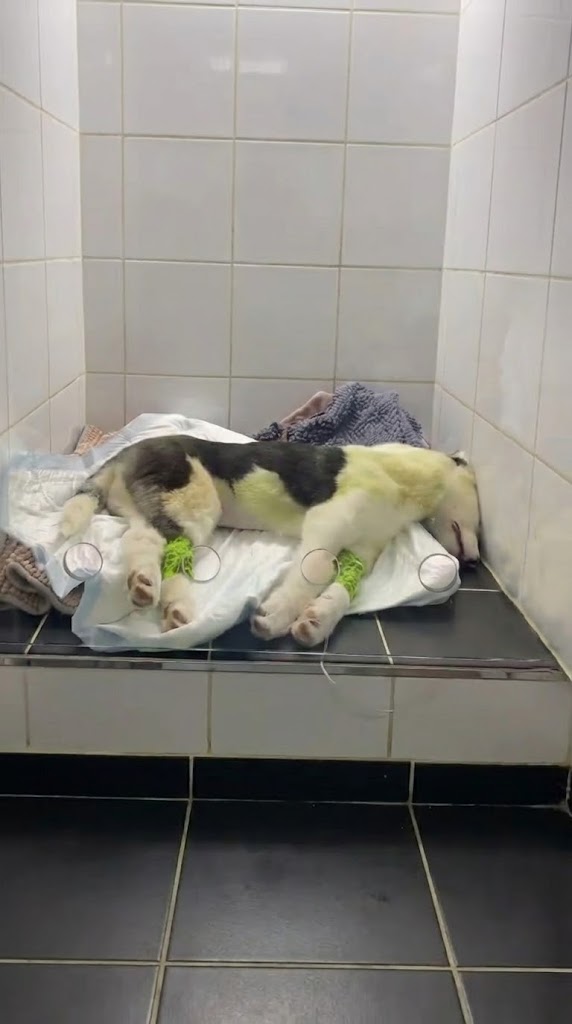
Rain had been falling for hours.
The ground had turned to thick mud, and along one soaked stretch of land, a small dog lay curled tightly against herself.
At first, she was easy to miss.
Her body barely moved.
Soft cries disappeared beneath the sound of the weather.
And when rescuers finally reached her, she could no longer stand.
They wrapped her in blankets and carried her out of the rain.
Later, she would be named Pakdasht.
But before anyone could think about what her future might look like, veterinarians had to determine whether she would survive the injuries she already carried.
Pakdasht Could No Longer Stand When Help Reached Her
Up close, her condition was deeply concerning.
Pakdasht was weak enough that even breathing appeared to require effort.
She remained curled into herself while rescuers approached and showed little ability to move away on her own.
No one knew how long she had been outside.
They also did not yet know what had happened to her.
What they could see was a dog in urgent need of medical attention.
She was lifted carefully, protected from the rain with warm blankets, and transported to a shelter clinic.
There, the veterinary team began examining her.
The findings would explain why her body had almost completely stopped cooperating.
The Examination Revealed Trauma, Bleeding, and an Old Bullet
Veterinarians found evidence of severe physical trauma.
Pakdasht was also dealing with internal bleeding.
Imaging revealed another troubling detail.
An old bullet remained lodged dangerously close to her spine.
Then came the discovery that would permanently change how she navigated the world.
Pakdasht was blind.
The damage to her eyes could not be reversed.
There was no procedure that could simply restore her vision and return everything to the way it had been before.
For the medical team, however, blindness was not the immediate priority.
Pakdasht first needed to become stable.
Her body was still recovering from serious injuries, and the days ahead would require close monitoring.
The First Days Were About Keeping Her Comfortable and Stable
Pakdasht remained under veterinary supervision.
Medication was used to manage discomfort.
Her condition was monitored carefully because of the internal injuries.
Food was offered in amounts she could manage.
And volunteers spent time quietly near her.
There were no dramatic improvements at first.
Progress appeared through very small changes.
Her breathing became more relaxed.
She responded more clearly to familiar voices.
Her tail moved slightly when someone she recognized came close.
These signs did not mean she had fully recovered.
But they showed that the dog who had been almost motionless in the mud was beginning to engage with her surroundings again.
Once her physical condition became more stable, another kind of recovery could begin.
Pakdasht needed to learn how to move through a world she could no longer see.
At First, Every Unfamiliar Space Stopped Her
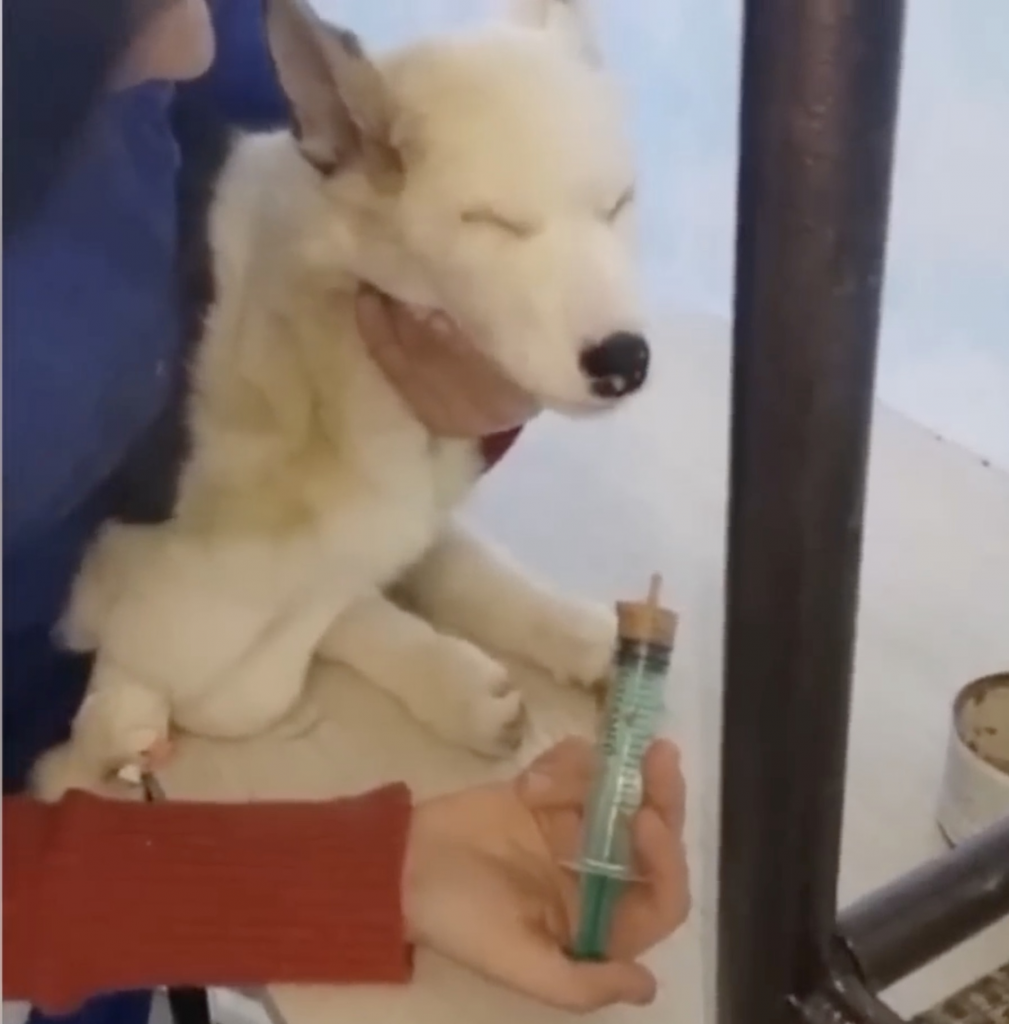
Blindness changed even ordinary movement.
When Pakdasht first began exploring, she sometimes bumped into walls.
In unfamiliar areas, she could freeze rather than continue forward.
Her caregivers did not pull her quickly from one place to another.
They allowed her time.
Pakdasht began learning the shelter through information that did not depend on vision.
Scents marked familiar areas.
Sounds helped her identify where people were.
She learned the footsteps of caregivers she saw regularly.
And when a familiar hand touched her, she increasingly leaned toward it instead of becoming tense.
Little by little, the shelter stopped being an unpredictable space.
It became a place she could map in her own way.
Soon, Familiar Voices Were Enough to Guide Her
As the weeks passed, Pakdasht moved with growing confidence.
She learned where important things were located.
Her food bowl became easy to find.
She recognized routine sounds around the shelter.
When familiar caregivers spoke, she could turn toward them and approach.
She also began playing carefully.
Instead of relying on sight, Pakdasht responded to sound, scent, memory, and touch.
Visitors sometimes stopped to watch how calmly she navigated spaces she already knew.
She did not need to see a familiar person approaching to recognize them.
A voice could be enough.
Footsteps could be enough.
And when someone held out a hand, Pakdasht often investigated with her nose before accepting affection.
Her blindness had changed how she experienced the world.
It had not stopped her from participating in it.
The Dog Found in the Rain Became a Quiet Favorite at the Shelter
Over time, Pakdasht became increasingly comfortable around the volunteers caring for her.
She approached gentle voices.
She nudged hands when she wanted contact.
In the evenings, she sometimes rested her head against the legs of people sitting beside her.
Her tail moved when familiar caregivers arrived.
These were simple behaviors, but they represented a remarkable contrast with the dog who had once been unable to stand.
Pakdasht had not regained her sight.
The old injuries had not vanished.
What changed was everything surrounding those limitations.
She knew where food would appear.
She knew the sounds of people she trusted.
She had safe places to sleep.
And she could move through familiar areas without facing the uncertainty of the road where she had been found.
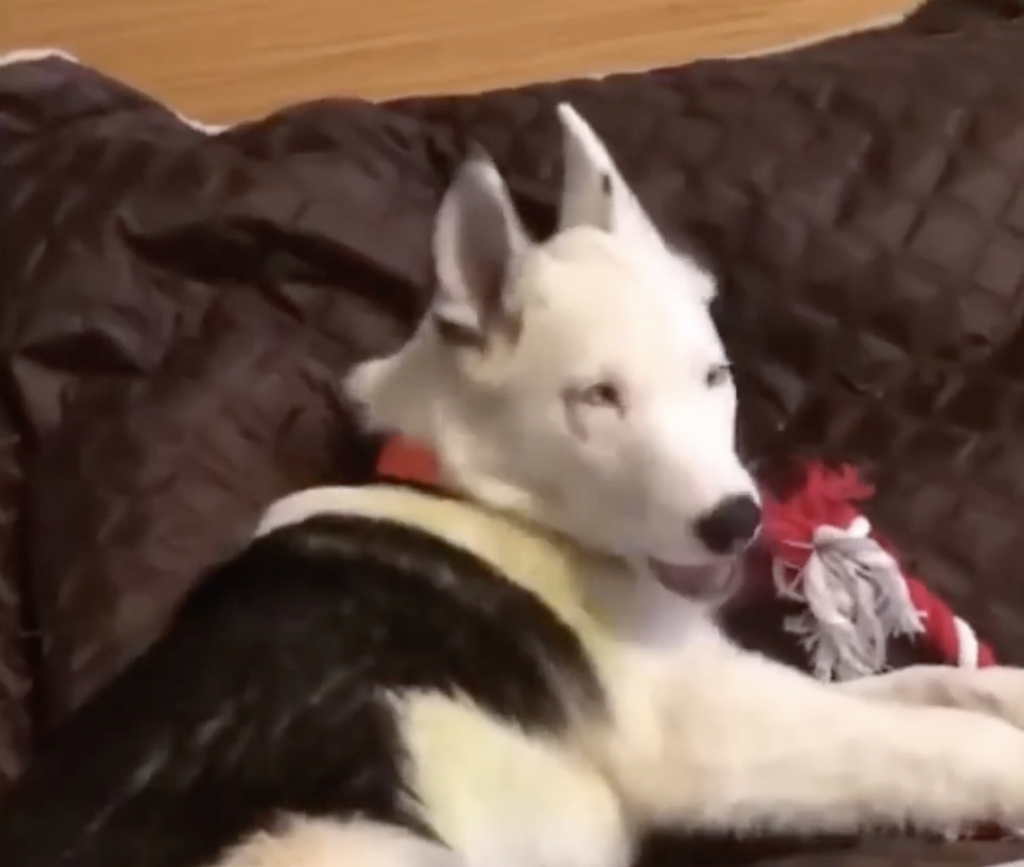
Pakdasht Still Cannot See — But She Knows Where She Belongs
Today, Pakdasht remains at the shelter that helped save her.
Her days follow familiar routines.
She finds her bowl without difficulty.
She recognizes trusted voices.
She rests beside volunteers in the evenings and responds to people she knows with gentle tail wags.
Her life is not the one she might have had without the injuries she suffered.
But describing it only through what she lost would miss what happened afterward.
Pakdasht adapted.
Her caregivers adapted with her.
Together, they built a world she could navigate through sound, scent, memory, and consistency.
The dog once found trembling in the mud now moves through familiar surroundings with confidence.
She does not need to see a person to know they are there.
She hears them.
Recognizes them.
And moves toward the voices she has learned are safe.
Pakdasht’s story began with serious injuries that could not all be undone.
Her sight never returned.
The past could not be repaired completely.
But rescue did not require making her body perfect again.
It required giving her the care, patience, and predictable environment she needed to build a meaningful life with the body she had.
And that is exactly what she learned to do.


